Oxygen Generator For Smelting Operations

Oxygen Generator For Smelting Operations
Product Introduction:
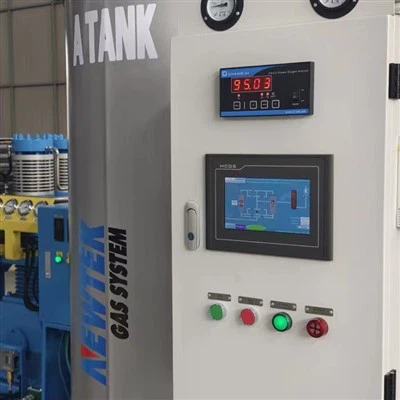
NEWTEK Twin Tower Oxygen Generator is an on-site PSA (Pressure Swing Adsorption) oxygen production system designed specifically for smelting operations in metallurgical plants, including copper, gold, silver, and lead-zinc smelting environments.
The system adopts a dual adsorption tower configuration to ensure continuous oxygen generation through alternating pressure cycles, eliminating downtime during adsorption and desorption phases.
Core system components include:
Dual PSA adsorption towers (Tower A / Tower B alternating cycle)
Industrial screw air compressor system
Multi-stage air purification unit (oil removal, moisture separation, particulate filtration)
Oxygen buffer tank for flow stabilization
PLC intelligent control system with cycle synchronization logic
Industrial-grade skid or container integration (optional configuration)
The system is engineered for continuous oxygen supply in high-temperature, high-dust, and chemically aggressive smelting environments.
Send Inquiry
Description
Technical Parameters

Why Smelting Operations Require Stable Oxygen Supply

In metallurgical smelting processes, oxygen is not a supplementary gas-it is a reaction driver in thermal and oxidation processes.

Core Applications
• Flash & bath smelting oxidation
• Converter oxygen enrichment
• Furnace combustion intensification
• Sulfide ore impurity removal
Direct Impacts
• Furnace temperature stability
• Reaction speed of sulfide oxidation
• Metal recovery rate protection
• Slag composition control
Fluctuation Penalty
• Incomplete oxidation reactions
• Increased energy consumption / ton
• Unstable furnace thermal balance
• Reduced refining efficiency
Smelting Economics Metric
In smelting economics, oxygen stability is directly tied to output quality and energy cost per ton of metal.
The Industrial Reality
Oxygen is not a utility input-it is a core process stability variable.
Continuous Production Requirement

Why Twin Tower PSA Architecture Is Critical

The dual-tower PSA structure is not a configuration choice-it is a mandatory infrastructure baseline for non-stop metallurgical lines.

Continuous Output Logic

Alternating Adsorption Cycle

How the twin tower system ensures uninterrupted non-stop oxygen output:

Tower A: Adsorption phase (captures nitrogen) Tower B: Desorption & regeneration phase • Continuous switching eliminates drops and transition instability.

Combustion Protection:

In smelting furnaces where oxygen flow is directly linked to combustion stability, even minor fluctuation translates into measurable process deviation.

Eliminated Risk: Sudden pressure drops during molecular sieve regeneration cycles.
Engineering Benchmark

Process Stability vs Single-Tower Systems

Simplified single-column units suffer flow fluctuation during switching and severe pressure instability at peak demand periods.

NEWTEK Twin Tower Security:

  • Constant flow rate under highly variable furnace demand profiles.
  • Stable oxygen concentration across all consecutive production cycles.
  • Reduced thermal stress on downstream critical combustion components.

Industrial Duty Cycle Optimization

Smelting operations typically run 24/7 continuous production under high thermal loads with zero shutdown tolerance.

Continuous regeneration loop without interruption High-frequency cycle durability adsorbent beds Reinforced valve switching systems for industrial cycles
Engineering Dissection

Why NEWTEK Twin Tower Systems Are Higher Cost

The price difference is driven by hardware choices that directly eliminate metallurgical risk.

High-Frequency Valves

Twin tower PSA systems rely completely on switching valves. Lower-cost lines use standard commercial valves with limited fatigue life.

NEWTEK uses industrial-grade pneumatic switching valves with extended cycle control resistance.

Valve Failure = Immediate Interruption & Process Deviation

Adsorbent Bed Stability

Uncontrolled airflow creates the channeling effect, causing premature degradation of molecular sieves.

We deploy optimized packing density, controlled flow distribution, and minimized tower pressure drops for a longer lifespan.

Thermal & Dust Resistance

Smelting plants generate intense ambient heat, heavy dust-rich atmosphere, and corrosive gas exposure near furnace zones.

NEWTEK integrates reinforced cabinet insulation, high-temperature pneumatic parts, and dust-isolated filtration stages.

Dynamic Load Adaptability

Oxygen demand peaks during ignition, levels at steady state, and fluctuates drastically during batch processing.

Our twin tower configuration uses buffer tank decoupling and PLC adjustment logic to match real-time requirements.

Economic Logic for Smelting Operations

In metallurgical production, oxygen cost is evaluated per ton of metal output, not per unit of gas.

Oxygen Instability Cost Multiplier

Unstable oxygen supply directly causes increased fuel consumption per ton of metal, lower furnace efficiency, higher slag loss of valuable metals, and longer production cycles.

These cumulative operational losses often exceed the total equipment price difference within a short period.

Downtime Cost in Continuous Smelting

Smelting lines cannot tolerate interruption. Furnace thermal imbalances require extended re-stabilization time, restarting equilibrium consumes additional energy, and disruption cascades heavily downstream.

System operational reliability is far more valuable than initial purchase cost.

Lifecycle Cost Optimization (OPEX Reduction)

NEWTEK twin tower systems significantly minimize operational risks by reducing valve replacement frequency, slowing adsorbent degradation rates, preventing compressor overloading cycles, and ending emergency external oxygen procurement dependency.

Engineered configuration drives total operational expenditure (OPEX) down over the equipment lifespan.

Dedicated Application Scenarios in Smelting Industry

Copper Smelting
Oxygen enrichment furnaces
Precious Metal Refining
Gold & silver furnaces
Blast Furnace Injection
Lead-zinc systems
Flash Processes
Flash smelting & converting
Combustion Opt.
Industrial furnace systems

Key Technical Advantages Summary

• Continuous oxygen output via dual tower PSA cycle switching
• Stable flow control under high-temperature industrial conditions
• Reduced oxygen fluctuation impact on furnace operation
• Reinforced industrial valve and adsorption bed design
• Suitable for 24/7 continuous rugged metallurgical production environments
• Significantly lower long-term operational risk compared to simplified PSA units

Conclusion

NEWTEK Twin Tower Oxygen Generator is designed for metallurgical environments where oxygen is not a utility input but a core process stability variable. The higher system cost is a direct reflection of structural safety safeguards.

Continuous Production Architecture Industrial-Grade Cycle Durability Furnace Stability Protection Lifecycle Cost Optimization

In smelting operations, oxygen instability translates directly into production loss. NEWTEK systems are engineered to eliminate that risk at the system level.


Hot Tags: oxygen generator for smelting operations, China oxygen generator for smelting operations manufacturers, suppliers, industrial oxygen generator, Industrial Oxygen Generator Machine, industrial oxygen making machine, Oxygen Generator for Industrial Use, Oxygen Generator Industrial, oxygene generator industrial

Send Inquiry
Ready to see our solutions?

PSA Oxygen Plant

●What is the O2 capacity needed?
●What is O2 purity needed? standard is 93%+-3%
●What is O2 discharge pressure needed?
●What is the voltage and frequency in both 1Phase and 3Phase?
●What is the working site temeperature averagely?
●What is the humidity locally?

PSA Nitrogen Plant

●What is the N2 capacity needed?
●What is N2 purity needed?
●What is N2 discharge pressure needed?
●What is the voltage and frequency in both 1Phase and 3Phase?
●What is the working site temeperature averagely?
●What is the humidity locally?

Send Inquiry