Why Choose Us?
Rich Experience
NEWTEK is the LARGEST supplier and Manufacturer of PSA oxygen and nitrogen gas generators in China. We have been in continuously R&D for the on-site gas generators since 1987.
Reliable Product Quality
Our long experience in advanced O2 and N2 generators designing and customization ensures the high energy saving,high quality and lowest investment cost for the client in market worldwide.
Wide Range of Applications
NEWTEK provides custom oxygen and nitrogen generator solutions to a wide range of industries. Whether it is wastewater treatment, mining, fish farming, healthcare, tire inflation or laser cutting, we can design and customize cost-effective solutions.
Reliable Product Quality
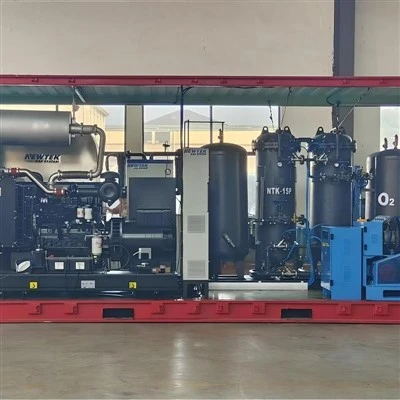
Our solutions range from oxygen/nitrogen generation units, modular oxygen units to containerized units with built-in air conditioning, all of which can include our innovative NTK series generators - basically whatever your requirements are, we can imagine, design and build your solution in our custom manufacturing environment.
-
![VPSA Oxygen Generator]() VPSA Oxygen GeneratorThe process principle of vacuum pressure swing adsorption (VPSA) oxygen production process is basically the same as PSA. The main difference is that after the adsorption reaches equilibrium (adsorption saturation), the way in which theread more
VPSA Oxygen GeneratorThe process principle of vacuum pressure swing adsorption (VPSA) oxygen production process is basically the same as PSA. The main difference is that after the adsorption reaches equilibrium (adsorption saturation), the way in which theread more

VPSA oxygen plant is a newer technology, designed as a solution to the growing demand for more energy-efficient oxygen generation.
VPSA works at a lower pressure and uses an efficient molecular sieve called zeolite. It uses vacuum pressure or the difference between atmospheric pressure and absolute pressure generated by the vacuum blower. VPSA oxygen plants are an effective means of supplying high volumes of oxygen for large aquaculture, mining and water treatment operations.
Advantages of VPSA Oxygen Plant
Low Energy Consumption and Operating Costs
Power consumption accounts for more than 90% of the total operating cost in the oxygen-generating process. With the continuous optimization of VPSA oxygen technology, its pure oxygen power consumption has dropped from 0.45kW·h/m3 in the 1990s to less than 0.32kW·h/m3 today, while even the lowest value of large-scale cryogenic ASU is around 0.42kW·h/m3. Compared with cryogenic technology, the VPSA oxygen technology has obvious economical advantages under working conditions where the user has no nitrogen demand and the oxygen process does not have too high requirements for oxygen purity and pressure.
Simple Process, Flexible Operation, Easy Start-Up and Shutdown
Compared with cryogenic oxygen generation technology, the VPSA process is relatively simple with comparatively brief operation and easy maintenance cause the main power equipment consists of the Roots blower and Roots vacuum pump. As there is no cooling and heating process during the start-up and shutdown, it only takes only 30 minutes for the VPSA oxygen equipment to generate qualified oxygen from the beginning and a few minutes to regenerate after a short suspension. The shutdown is even simpler- just turn down the power equipment and control program. Thus, VPSA oxygen plant technology is easier than the cryogenic process, which also significantly reduces the operating cost of starting and shutting down the oxygen plant.
Lower Investment and Short Construction Period
The VPSA oxygen unit is mainly composed of a small number of components including the power system, adsorption system and valve switching system, etc., which can greatly save its once-off investment. The oxygen unit covers a small footprint and can reduce the civil engineering cost and the construction land. Also, the manufacturing and processing cycle is short, main equipment components can be delivered within only 4 months so as to achieve oxygen production requirements within 6 months under normal circumstances, thus significantly shortening the construction period of the #oxygensystem compared to that of nearly 1 year of cryogenic air separation units.
Simple Equipment Composition and Easy Maintenance
The equipment used in the VPSA oxygen plants, such as blowers, vacuum pumps and program control valves, can all be domestically produced, so spare parts can be conveniently replaced to cut costs and makes the construction period under control. With simple equipment maintenance and on-time after-sales services, VPSA oxygen plant users do not need too much cost and professional workers compared to the maintenance of large centrifugal compressors used in cryogenic air separators.
Easy Turndown Ratio Regulation
Compared with the cryogenic liquid oxygen technology, VPSA oxygen plant process can realize the rapid adjustment of product O2 capacity and purity with slight fluctuations in the pure oxygen power consumption. Generally, the capacity can be adjusted from 30% to 100%, and the purity from 70% to 95%, especially when several sets of VPSA oxygen generators are built in parallel, the load adjustment is even easier.
Higher Operational Safety
As the VPSA oxygen plant is operated at low pressure and room temperature, there will be no liquid oxygen, acetylene enrichment and other phenomena, thus resulting in better safety compared with the low-temperature and high-pressure operation in the cryogenic oxygen generation process.
Application of VPSA Oxygen Plant
Blast Furnace Oxygen Enrichment
Due to many oxygen supply processes in iron and steel enterprises, the turndown ratio fluctuates every week or even every day. Considering the weak turndown ratio regulation of cryogenic process and long start-up and shutdown time, the excessive oxygen needs to be liquefied and stored for later use or sale when the oxygen consumption flow is low, and sometimes even ventilation occurs. In view of the low pressure and relatively lower oxygen purity requirements for BF oxygen enrichment, many iron and steel enterprises can build VPSA oxygen plants near the blast furnace directly. Meanwhile, as a regulator, when the oxygen volume by cryogenic air separation is surplus or insufficient, VPSA oxygen plants can start and shut down at any time to lift or decrease the oxygen for the blast furnace. At present, after adopting VPSA oxygen technology for oxygen supply, many iron and steel manufacturers substantially cut their oxygen cost. Blast furnace's adoption of VPSA oxygen plant as an enriched-oxygen source has been a common understanding in most iron and steel enterprises.
EAF Steelmaking
In the past, most China steel enterprises believe #electricfurnace steelmaking need to use pure oxygen generated by cryogenic air separation units, while in Japan about 60%-70% of the steelmakers use 93% oxygen by VPSA-O2 system for steel manufacturing. Theoretically, EAF steelmaking mainly relies on electric arc smelting and oxygen only plays an auxiliary role, thus 93% oxygen by VPSA oxygen production can be fully applied to the electric furnace steelmaking. According to the users' feedback, utilizing the VPSA oxygen system has no negative impact on the quality of steel products, and can significantly reduce the steelmaking production cost.
Nonferrous Metallurgy
In the past 10 years, VPSA oxygen generation technology has been highly recognized in the smelting of copper, lead and zinc. Most of the non-ferrous #metalsmelting processes generally require oxygen of 24%~90% with large turndown ratio fluctuations, and N2 is hardly necessary for non-ferrous metal smelting enterprises, which makes VPSA oxygen production technology suitable for non-ferrous metal smelting with the characteristics of simpler operation and lower power consumption.
Chemistry
At present, some small and medium nitrogen fertilizer factories use continuous enriched-oxygen generation process to improve the original intermittent gas production mostly by VPSA technology. Also, the oxygen-rich continuous gasification technology is highly applicable to coal by enhancing the capability of the gas production unit. Moreover, most #papermaking enterprises both at home and abroad choose VPSA technology to generate oxygen. VPSA oxygen generation technology is also widely used in other areas, such as oxygen-enriched combustion for float glass in the #glass fiber industry, #cement kilns and waste incineration, wastewater oxygen-enriched aeration treatment and ozone.
Components of VPSA Oxygen Plant


Air Blower
There’s an air blower that is connected to a vacuum pump which provides the setup with raw air, feeding it through the entire system. The pressure that supplies the air into the system must be calibrated to meet the requirements of the whole setup for this to be successful. The main function of the vacuum pump is to make sure that the entire system is analyzed, and at the same time, it keeps the whole set up in an idle vacuum state, which creates the right conditions for VPSA machines to absorb other gases while producing pure oxygen.
A Cooler
There are high temperatures and pressures that are involved in VPSA processes. This can impact the quality of the final product, and there has to be a mechanism through which the temperature and pressures are regulated. This comes in the form of a cooler. It is water-based, and the air that is received from the blower is passed through the cooler, where the temperature and pressure are significantly reduced to enhance the adsorption of the unwanted gases and other compounds.
Adsorption System
This is the main part of the entire system. It is usually made up of two towers and a pipeline full of valves that are sufficiently armed with zeolite molecular sieves and activated alumina that act as the main adsorbents. Here, things are kicked off with the arrival of compressed air that has low temperatures and high pressure that come into the first tower. This air flows over the adsorbent materials in the pipeline where water vapor, nitrogen, carbon dioxide, and any other material are adsorbed. What is left behind is mainly oxygen, and this is collected through an adsorption bed that is located at the top of the adsorption tower and given out as a gas output.
Oxygen Buffer Tank
This is the tank that acts as the storage for the final oxygen that has been harvested through the entire process. It has to be well secured to stop any mixing with ordinary air, which may introduce nitrogen and carbon dioxide back into it. The size of the tank varies depending on the scale of the operation. They are much bigger if the entire CPSA setup is much bigger and vice versa.
Control System
This is a control center that runs a program that is created specifically to control every aspect of this entire setup. This is usually a pre-written valve control program that is installed into the PLC controller, and it mainly adjusts the closing and opening of every single pneumatic valve in the entire pipeline. This is necessary for the adsorption as well as the regeneration of the sieves to take place efficiently without any interruptions. This wouldn’t be possible if the system was manual as that increases chances of human errors, and that could impact the production times and increase chances of contamination happening.
Air blower and vacuum pump, the blower provides raw air for the entire system. According to the design conditions of the VPSA oxygen generator and the user’s use conditions, select the exhaust pressure to supply air to the blower that meets the design conditions. The vacuum pump ensures the normal analysis of the entire system, keeps the system in an ideal vacuum state, and enables the entire equipment to continuously absorb nitrogen and produce oxygen.
Cooler: The high temperature and high pressure compressed air which is obtained after the blower is pressurized, and then the air temperature is reduced to the required process operation temperature through the water cooler, and then sent to the adsorption tower for adsorption.
Adsorption system, the adsorption system consists of two adsorption towers and pipeline valves equipped with zeolite molecular sieve adsorbents. Compressed air with low temperature and high pressure enters from the bottom of Tower A. When it flows through the adsorbent layer, nitrogen, carbon dioxide, water vapor in the air are adsorbed. The oxygen is collected through the adsorption bed to the top of the adsorption tower as product gas output. At the same time, Tower B is in regeneration mode. When the adsorption tower performing adsorption is about to reach adsorption saturation, under the adjustment of the control system, the low-temperature and high-pressure air is transferred to Tower B to start adsorption and oxygen production. Towers A and B alternately achieve the purpose of continuous oxygen production in this way.
Oxygen buffer tank stores product gas (oxygen) and stabilize the entire equipment.
Control system, the engineer inputs the pre-written valve control program into the PLC controller, and adjusts the opening and closing of each pneumatic valve through the solenoid valve to realize the adsorption and regeneration of the adsorption system within the specified time.
PSA Oxygen plant VS VPSA Oxygen Plant
The difference in work principle
PSA oxygen plant: PSA oxygen generation equipment, known as pressure swing adsorption PSA oxygen plant. The principle is to separate the gas mixture by using the difference in the “adsorption” performance of molecular sieves to different gas molecules. It uses air as raw material and uses a high-efficiency, high-selectivity solid adsorbent to selectively adsorb nitrogen and oxygen to separate nitrogen and oxygen in the air. Under normal temperature and pressure conditions, the special PSA molecular sieve is used to selectively adsorb impurities such as nitrogen, carbon dioxide and water in the air to obtain oxygen with higher purity. Please feel free to contact us to get the PSA oxygen plant price.
VPSA oxygen plant: The VPSA oxygen plant is called a low-pressure vacuum pressure swing adsorption VPSA oxygen plant. Under low-pressure conditions, the nitrogen and oxygen in the air are inhaled. After the adsorption is saturated, the molecular sieve is desorbed under vacuum conditions. Then the nitrogen is discharged from the discharge port, and the oxygen enters the purification system. The molecular sieve is continuously adsorbed and decompressed to circulate to produce high purity oxygen (90-95%). If you need to produce oxygen on a large scale, such as 1000m³/hr~3000m³/hr. You need to choose a VPSA oxygen plant.
Differences in equipment composition
PSA oxygen plant: Air compressor, refrigeration dryer, degreasing device, adsorption system, oxygen buffer tank, and control system.
VPSA oxygen plant: Blower, vacuum pump, cooler, adsorption system, oxygen buffer tank, and control system.

How to Keep Your VPSA Oxygen Plant Running Longer
Right Usage and Storage
Always follow the manufacturer’s directions and consult your medical professional before using an VPSA oxygen plant. In case you are not using it, keep it in a cool dry place away from direct sunlight and sources of heat or fire. This means you should avoid exposing your device to very cold temperature, humidity, dust as these factors tend to destroy internal parts of the machine thereby reducing its life span.
Regular Maintenance and Tune-ups
Set up regular service appointments with professionals who specialize in repairing VPSA oxygen plants. During these visits, they will inspect your equipment, change or clean filters, examine molecular sieves, as well as make any necessary repairs or adjustments. By regularly servicing them you are able to find out potential problems early enough so that they do not become more serious thus saving time and money in future.
Upgrade to High-Performance Parts
Advances in technology often result in the development of new and improved components for use with VPSA oxygen plants. Upgrading things like high-performance molecular sieves can help increase the efficiency of your system and extend its useful life. To be sure that the upgrade is right for you talk with a qualified repair technician about whether this option works well with existing machines or if it requires specialist installation.
1. Decreased Oxygen Output
Reduced oxygen output is one of the main challenges that confront users of this equipment. It arises from a variety of causes such as unclean filters, tube leakages or failing compressors. In some cases, low oxygen purity is also caused by molecular sieves.
Molecular sieves make sure that the produced oxygen remains pure. Because of contamination or deterioration with time, these sieves could become less effective than they used to be. The result would be a below-threshold level of impurities in the air necessitating professional help either for repairing broken VPSA oxygen plant sieve beds.
2. Strange Sounds
These noises could mean rattles, hums or whistles when it comes to your unit’s operation problems. This may happen if the components are loose; parts wear out or the compressor fails. If left unattended to, these problems can cause more harm and expensive repairs.
3. Power Issues
The power cord may have some problems which cause it not to turn on or switch off inappropriately when there are electric blackouts due to faulty electrical outlets or internal power sources within the device itself. In other instances, this blowout might also be attributed to a malfunctioning circuit board. Anytime you have power complications with your O2 generator get it checked out by an approved servicing shop.
Our Factory
NEWTEK is the LARGEST supplier and Manufacturer of PSA oxygen and nitrogen gas generators in China. We have been in continuously R&D for the on-site gas generators since 1987. Our long experience in advanced O2 and N2 generators designing and customization ensures the high energy saving,high quality and lowest investment cost for the client in market worldwide. Engaged in the design, production and sales of PSA oxygen generator, VPSA oxygen generator and other equipment.

Ultimate FAQ Guide to VPSA Oxygen Plant
We're well-known as one of the leading vpsa oxygen plant manufacturers and suppliers in China. If you're going to buy high quality vpsa oxygen plant made in China, welcome to get more information from our factory.
VPSA Oxygen Generator, vpsa plant, vpsa oxygen plant-
![Twin Tower PSA Oxygen Generators]() Twin Tower PSA Oxygen GeneratorsNEWTEK is a leading manufacturer of VPSA oxygen equipment. With extensive experience in cost engineering, we designread more
Twin Tower PSA Oxygen GeneratorsNEWTEK is a leading manufacturer of VPSA oxygen equipment. With extensive experience in cost engineering, we designread more -
![Modular PSA Oxygen Generators]() Modular PSA Oxygen GeneratorsFor industrial companies that want to achieve independent and controllable oxygen supply, NEWTEK has launched a newread more
Modular PSA Oxygen GeneratorsFor industrial companies that want to achieve independent and controllable oxygen supply, NEWTEK has launched a newread more -
![Containerized Oxygen Generator]() Containerized Oxygen GeneratorNEWTEK container oxygen production system can be regarded as a mobile oxygen center, providing continuous andread more
Containerized Oxygen GeneratorNEWTEK container oxygen production system can be regarded as a mobile oxygen center, providing continuous andread more -
![Energy Saving Container Type Oxygen Plant]() Energy Saving Container Type Oxygen PlantAn Energy Saving Container Type Oxygen Plant is designed for projects where oxygen must be produced continuously whileread more
Energy Saving Container Type Oxygen PlantAn Energy Saving Container Type Oxygen Plant is designed for projects where oxygen must be produced continuously whileread more -
![Air Separation Oxygen Plant Containerized]() Air Separation Oxygen Plant ContainerizedThe Air Separation Oxygen Plant Containerized is an onsite oxygen generation system built around PSA air separationread more
Air Separation Oxygen Plant ContainerizedThe Air Separation Oxygen Plant Containerized is an onsite oxygen generation system built around PSA air separationread more -
![Hospital Medical Containerized Psa Oxygen Generator]() Hospital Medical Containerized Psa Oxygen GeneratorThe Hospital Medical Containerized PSA Oxygen Generator is an onsite medical oxygen production system designed forread more
Hospital Medical Containerized Psa Oxygen GeneratorThe Hospital Medical Containerized PSA Oxygen Generator is an onsite medical oxygen production system designed forread more