-
![Twin Tower PSA Oxygen Generators]() Twin Tower PSA Oxygen GeneratorsNEWTEK is a leading manufacturer of VPSA oxygen equipment. With extensive experience in cost engineering, we design customized oxygen systems for VPSA (Vacuum Pressure Swing Adsorption System) and PSA (Pressure Swing Adsorption) accordingread more
Twin Tower PSA Oxygen GeneratorsNEWTEK is a leading manufacturer of VPSA oxygen equipment. With extensive experience in cost engineering, we design customized oxygen systems for VPSA (Vacuum Pressure Swing Adsorption System) and PSA (Pressure Swing Adsorption) accordingread more -
![Oxygen Generation Plant For Gold Leaching]() Oxygen Generation Plant For Gold LeachingThe Oxygen Generation Plant for Gold Leaching is an on-site oxygen production system designed to provide a stable oxygen supply for gold ore processing and leaching operations where controlled oxygen availability is required to support theread more
Oxygen Generation Plant For Gold LeachingThe Oxygen Generation Plant for Gold Leaching is an on-site oxygen production system designed to provide a stable oxygen supply for gold ore processing and leaching operations where controlled oxygen availability is required to support theread more -
![Oxygen Bottling Plant]() Oxygen Bottling PlantThe oxygen bottling plant is a fully engineered high-pressure gas bottling system designed for continuous compression, pressure regulation and cylinder filling of medical and industrial oxygen.Two proven process configurations areread more
Oxygen Bottling PlantThe oxygen bottling plant is a fully engineered high-pressure gas bottling system designed for continuous compression, pressure regulation and cylinder filling of medical and industrial oxygen.Two proven process configurations areread more -
![Oxygen Cylinder Filling Plant]() Oxygen Cylinder Filling PlantOur oxygen cylinder filling plant is a complete turnkey system designed for high-pressure filling of industrial and medical oxygen cylinders. Two technical solutions are available: cryogenic liquid oxygen pump filling system and oxygenread more
Oxygen Cylinder Filling PlantOur oxygen cylinder filling plant is a complete turnkey system designed for high-pressure filling of industrial and medical oxygen cylinders. Two technical solutions are available: cryogenic liquid oxygen pump filling system and oxygenread more -
![On-site Oxygen Generation System For Mining]() On-site Oxygen Generation System For MiningIndependent Oxygen Infrastructure for Remote Mining and Mineral Processing OperationsMining operations increasingly require stable oxygen availability for mineral processing, metallurgy, and auxiliary production processes. However, manyread more
On-site Oxygen Generation System For MiningIndependent Oxygen Infrastructure for Remote Mining and Mineral Processing OperationsMining operations increasingly require stable oxygen availability for mineral processing, metallurgy, and auxiliary production processes. However, manyread more -
![Oxygen Generator For Mineral Processing]() Oxygen Generator For Mineral ProcessingOxygen Generator for Mineral Processing is a pressure swing adsorption (PSA) system that produces oxygen from compressed air for mineral leaching and oxidation processes.The system is built as a skid-mounted unit consisting of:Screw airread more
Oxygen Generator For Mineral ProcessingOxygen Generator for Mineral Processing is a pressure swing adsorption (PSA) system that produces oxygen from compressed air for mineral leaching and oxidation processes.The system is built as a skid-mounted unit consisting of:Screw airread more -
![Gold Mining PSA Oxygen Generator]() Gold Mining PSA Oxygen GeneratorGold Mining PSA Oxygen Generator is a PSA gas separation system that produces oxygen from compressed air for CIP (Carbon in Pulp) and CIL (Carbon in Leach) gold leaching processes.The system consists of five main units:Air compressorread more
Gold Mining PSA Oxygen GeneratorGold Mining PSA Oxygen Generator is a PSA gas separation system that produces oxygen from compressed air for CIP (Carbon in Pulp) and CIL (Carbon in Leach) gold leaching processes.The system consists of five main units:Air compressorread more -
![Oxygen Generator For Seafood Farming]() Oxygen Generator For Seafood FarmingAs seafood aquaculture moves toward high-density and industrialized farming models, traditional aeration methods often become insufficient for maintaining stable oxygen conditions. PSA oxygen generators provide a reliable and continuousread more
Oxygen Generator For Seafood FarmingAs seafood aquaculture moves toward high-density and industrialized farming models, traditional aeration methods often become insufficient for maintaining stable oxygen conditions. PSA oxygen generators provide a reliable and continuousread more -
![Oxygen Generator For Tilapia Farm]() Oxygen Generator For Tilapia FarmIn modern tilapia farming, oxygen management is one of the most critical operational factors affecting:. Fish survival rate . Feeding activity . Growth speed . Feed conversion ratio (FCR) . Water quality stability . Biomass density.read more
Oxygen Generator For Tilapia FarmIn modern tilapia farming, oxygen management is one of the most critical operational factors affecting:. Fish survival rate . Feeding activity . Growth speed . Feed conversion ratio (FCR) . Water quality stability . Biomass density.read more -
![PSA RAS Oxygen Generator]() PSA RAS Oxygen GeneratorIn high-density RAS farming environments, oxygen is not simply a supporting utility. It directly influences fish metabolism, feeding activity, ammonia conversion efficiency, biological filtration stability, stocking density, and survivalread more
PSA RAS Oxygen GeneratorIn high-density RAS farming environments, oxygen is not simply a supporting utility. It directly influences fish metabolism, feeding activity, ammonia conversion efficiency, biological filtration stability, stocking density, and survivalread more -
![Aquaculture PSA Oxygen Plant]() Aquaculture PSA Oxygen PlantThe Aquaculture PSA Oxygen Plant is an on-site oxygen supply device designed for aquaculture scenarios. It adopts pressure swing adsorption technology, composed of air compressor, molecular sieve towers, precision filter and control unit.read more
Aquaculture PSA Oxygen PlantThe Aquaculture PSA Oxygen Plant is an on-site oxygen supply device designed for aquaculture scenarios. It adopts pressure swing adsorption technology, composed of air compressor, molecular sieve towers, precision filter and control unit.read more -
![Industrial Oxygen Generation System Aquaculture]() Industrial Oxygen Generation System AquacultureThe Industrial Oxygen Generation System for Aquaculture is a specialized on-site oxygen supply equipment designed to solve oxygen demand problems in intensive aquaculture scenarios. Based on pressure swing adsorption technology, theread more
Industrial Oxygen Generation System AquacultureThe Industrial Oxygen Generation System for Aquaculture is a specialized on-site oxygen supply equipment designed to solve oxygen demand problems in intensive aquaculture scenarios. Based on pressure swing adsorption technology, theread more


A PSA oxygen generator is an advanced device that utilizes the principle of pressure swing adsorption to produce oxygen at high purity from ambient air. Here, compressed air is passed through a molecular sieve bed in which nitrogen molecules are selectively adsorbed and oxygen molecules allowed to pass through. This allows the PSA system to separate oxygen from the mixture of gasses in the air by cyclically exposing the molecular sieves to high and low pressures so as to maintain a constant flow of gas rich in oxygen.
Advantages of PSA Oxygen Generator
Save Money
It can be more affordable to have an onsite oxygen generator than to repeatedly order and supply cylinder or bulk liquid oxygen from a supplier. There are no delivery fees with an onsite generator, and it features easy, low cost maintenance.
Reliable
An onsite oxygen generator is dependable as it uses the surrounding air in the atmosphere to create the oxygen you need for your project. You will never need to worry about having a shortage of oxygen when you have your own oxygen generator.
Safety
The safety of your employees is your priority which is why onsite oxygen generators are highly beneficial. Once they are installed there is no need to move or handle a gas suppliers cylinders or tanks. However, if you require oxygen tanks to be delivered and set up in your facility there is the potential for serious hazards and injury.
Types of PSA Oxygen Generator
PSA Oxygen Generation Plant
PSA oxygen generation plant is an advanced oxygen production equipment based on molecular sieve technology. Its main principle is to use the physical adsorption and desorption characteristics of molecular sieves. Under pressurized conditions, molecular sieves selectively adsorb nitrogen in the air, so that the unadsorbed oxygen can be generatored. After further purification, these generatorted high-purity oxygen is released and provided for patients to breathe.
PSA Based Oxygen Plant
PPSA oxygen production is a cyclic process that separates oxygen and nitrogen in the air by changing the pressure at a certain temperature according to the different adsorption amounts of oxygen and nitrogen in the air on the molecular sieve at different pressures. PSA based oxygen plant production does not require specific raw materials, only air; it is energy-saving and economical, and the power consumption is only slightly greater than that of an air compressor; it has a high degree of automation and can produce a steady stream of oxygen without human intervention; the product generatortion is high, and the oxygen generatortion produced by this method can generally reach 90% to 96%, and can even reach 99% or higher with other technologies.
Oxygen Plant PSA
The atmosphere contains 21% oxygen, 78% nitrogen and a small amount of inert gas. The PSA process uses special molecular sieve adsorbents (such as zeolites) to preferentially adsorb nitrogen under pressurized conditions to obtain an oxygen-rich mixed gas with an oxygen content of more than 93%. The oxygen plant PSA usually consists of two separation containers loaded with molecular sieve adsorbents, a complete pneumatic system (including valves, filters, pressure regulators, etc.) and an oxygen storage tank. The entire process is monitored and regulated by an automatic control device. Our technology can provide a convenient source of high-purity oxygen for the medical field.
Application of PSA Oxygen Generator
Various sectors cannot do without PSA oxygen generators because of their flexibility. It is in the medical field where they act as a reliable source of medical grade oxygen for hospitals, clinics and home health care situations. The systems ensure that there is steady and uninterrupted supply of oxygen which is essential in taking care of patients as well as emergencies. Moreover, PSA oxygen generators are heavily used in industrial applications. This ranges from water treatment and aquaculture to glass making and metal shaping all which require pure oxygen. Hence, PSA technology solves the challenge of transporting costly and logistically demanding liquid oxygen by providing an on-site means for producing it.
Additionally, natural gas industry highly depends on PSA oxygen generators. Molecular sieves are usually employed to get rid of moisture and impurities from the gas stream during natural gas dehydration or drying process. When integrated into these processes, PSA oxygen generators can enable efficient gas purification while generating oxygen for other downstream applications. Oxygen generation and gas purification using molecular sieves has been changed by this unity between them and PSA technology so that a sustainable cost effective solution for industries globally has been availed to us.

Key Components of PSA Oxygen Generator
Air compressors and air filters
Firstly, the journey towards oxygen begins with the compression of surrounding air. So as to at least adsorption level a top notch air compressor are used to pressurize air. Nevertheless, prior to the entry of compressed air into adsorber vessels, it must go through various types of filters. Dust particles, oil droplets and moisture among other impurities are filtered out by these filters hence ensuring preservation and purity of molecular sieves. The efficacy and life span molecular sieves hinge on the cleanliness degree of incoming air thus making filtration processes vital during PSA process.
Molecular Sieves
Molecular sieves are the heart of a PSA oxygen generator. These artificial zeolitic substances have a special internal structure, which makes them capable of adsorbing selectively nitrogen atoms while passing through oxygen ones. The molecular sieve most widely employed in the generation of oxygen is zeolite 13X with pore size approximately equal to ten angstroms. The purity and yield of generated oxygen are directly related to adsorption capacity and selectivity of molecular sieve.
Oxygen Storage Tank
The PSA process generates and purifies oxygen which is then put into a separate storage tank. The tank serves as an oxygen buffer that keeps the supply steady and consistent even during demand peak periods. When designing the size of this storage tank, one has to consider specific applications together with required oxygen flow rates. Therefore, proper sizing and maintenance of the O2 storage tank are absolutely essential for uninterrupted operation of PSA oxygen generators. So regular inspections and safety checks are done on the storage system to ensure it performs well without any fault in it.
Advanced Capabilities of PSA Oxygen Generators
High FiO2 Levels
One of the most significant advantages of PSA oxygen generators is their ability to deliver oxygen with a high FiO2 (Fraction of Inspired Oxygen) level. FiO2 indicates the generatortion of oxygen in the air, and in medical settings, higher FiO2 levels are often required. PSA oxygen generators can provide oxygen with FiO2 levels ranging between 0.90 and 0.96, ensuring that patients receive the oxygen they need for proper respiration.
Advanced Display & Control System
To guarantee the precise delivery of oxygen, PSA oxygen generators are equipped with advanced display and control systems. These systems allow medical professionals to monitor and adjust the oxygen generatortion as needed, ensuring that patients receive the optimal therapy. The real-time feedback and control provided by these generators make them indispensable in critical care situations.
At the core of a PSA oxygen generator, you will find the pressure swing adsorption process. This advanced technology exploits the discriminatory adsorption power of zeolite molecular sieves to isolate oxygen gas from air. The process is characterized by two main stages: Adsorption and desorption. In the course of adsorption, compressed air is fed into an adsorber containing the molecular sieve. As such, nitrogen gas molecules preferentially absorb into the pore system of the zeolite rather than pass through them, such that as much as possible, only oxygen reaches out while others are left behind in the sieve unabsorbed, hence enriching the resultant stream. As soon as the saturation point is reached by the molecular sieve, the system shifts to the desorption cycle. In this regard, when high pressure goes down in an absorber container, the absorbed nitrogen gas is released, thereby being vented outside. That revives it back, ready for another cycle of absorption. By repeating these two steps without interruption, high purity oxygen gas in large quantities can be produced continuously as required by customers in a psa oxygen plant. The efficiency and efficacy of the PSA process depends largely on the characteristics and performance of the molecular sieve employed therein.
Difference between Cryogenic and PSA Oxygen Generator
Pricing of Cryogenic and PSA technology is different
Customers new to the oxygen industry do not understand the difference between cryogenic based oxygen generators and PSA oxygen generators. Mostly, they are of the view that all O2/N2 gas generators are priced like PSA generators which is not true. pressure swing adsorption generator cost does not match with the cryogenic based generators since both the technologies are completely different.
Pressure swing adsorption technology is suitable for businesses requiring oxygen with lower volume and lower level of purity. PSA process runs on simple process of adsorption where adsorbing material such as Zeolite molecular sieves is used with one gas being adsorbed more than the other. When air is passed nitrogen is adsorbed while oxygen is allowed to pass through.
As PSA pressure swing adsorption process is employs simpler technology costs less to manufacture PSA generator price is way less than cryogenic based generators. Cryogenic technology is sophisticated and requires use of elaborate process with components that are way more costly than those used in PSA process.
Oxygen Purity with PSA Vs. Cryogenic Process
As mentioned earlier, PSA is ideal for generating oxygen with lower purity and volume as compared to cryogenic air separation which is used for generating oxygen with the highest possible purity and larger volume.
Tonnage cryogenic generators can produce oxygen on a huge scale with very high purity which is not possible with PSA generators. PSA generators are rarely available with configuration of 200m3/hr not to talk of tonnage generators.
Cryogenic generators can generate both oxygen and nitrogen
PSA generator can generate only one product gas either nitrogen or oxygen. On the other hand, a cryogenic generator can produce both oxygen and nitrogen. If you have an oxygen generator it can also produce nitrogen. However, it would require you to buy a nitrogen cylinder filling system.
Cryogenic process can generate oxygen in liquid and gaseous forms
Cryogenic oxygen generator can generate oxygen in both liquid and gaseous forms. And, psa oxygen generator generator can only produce either oxygen or nitrogen in the gaseous form only.
Different life-cycles
Both cryogenic and PSA generators have got different life-cycles. Where PSA is known to have life cycle of over 10 years cryogenic generators have life cycles of over 25 years. This becomes possible because the cryogenic O2/N2 generators are fabricated with cryogenic grade stainless steel which is capable of withstanding extreme temperature and pressure. Cryogenic air separation units are welded with TIG argon welding.
Key Considerations for Buying a PSA Oxygen Generator
Understanding the Working Principle of PSA Oxygen Generators
PSA oxygen generators utilize the process of adsorption to separate oxygen molecules from the surrounding air. By employing carbon molecular sieve (CMS) beds, the system filters out nitrogen and other impurities, allowing the production of generatorted oxygen. It’s essential to comprehend the working principle to ensure that the generator meets your specific requirements.
Assessing Your Oxygen Requirements
Before purchasing a PSA oxygen generator, evaluate your oxygen needs. Determine the required oxygen flow rate, purity level, and pressure specifications. Whether it’s for medical facilities, laboratories, or industrial applications, understanding your oxygen requirements will help you choose the right generator with the appropriate capacity and capabilities.
Researching Reputable PSA Oxygen Generator Manufacturers
When investing in a PSA oxygen generator, it’s vital to select a reputable and reliable manufacturer. Look for manufacturers with extensive experience in designing and producing oxygen generation systems. Consider factors such as the company’s reputation, customer reviews, certifications, and after-sales support. Well-established manufacturers often offer higher quality products and better customer service.
Comparing Pricing and Overall Value
Pricing is a crucial factor when buying an oxygen generator, but it shouldn’t be the sole determining factor. Compare prices from different manufacturers while considering the overall value offered. Evaluate the quality of components, system efficiency, maintenance requirements, and long-term operational costs. A generator that provides a good balance of affordability and performance should be the goal.
Ensuring Compliance with Safety Standards
Safety is of utmost importance, especially when it comes to medical applications. Ensure that the PSA oxygen generator you choose complies with industry safety standards and regulations. Look for certifications such as ISO 13485 (for medical devices) and ISO 9001 (for quality management systems). Adherence to safety standards ensures the generator’s reliability, performance, and patient well-being.
Evaluating Service and Maintenance Support
Consider the service and maintenance support offered by the manufacturer. A reliable supplier should provide comprehensive support, including installation assistance, regular maintenance, and responsive customer service. Proper servicing and maintenance are crucial for the generator’s optimal performance and longevity.
Maintenance Tips for PSA Oxygen Generators
The maintenance schedule for your PSA oxygen generator
Creating a maintenance schedule is the first step in ensuring the longevity of your PSA oxygen generator. Routine checks and scheduled servicing can prevent issues from escalating and reduce unexpected downtime.
01
Cleaning and servicing your PSA oxygen generator
Regular cleaning and servicing are essential to keep the generator running smoothly. Dust, dirt, and contaminants can accumulate over time, affecting the generator’s performance. Cleaning and servicing help prevent these issues.
02
Replacing filters and other components
Filters and other components in your PSA oxygen generator have a finite lifespan. Timely replacement of these parts is necessary to maintain the generator’s efficiency and the quality of the produced oxygen.
03
Troubleshooting common problems with your PSA oxygen generator
Having a troubleshooting plan in place can save valuable time when issues arise. Identifying common problems and their solutions is crucial for maintaining uninterrupted operations.
04
Regular inspection and preventive maintenance
Preventive maintenance is key to avoiding costly repairs and downtime. Regular inspections can identify potential issues before they impact your operations.
05
Our Factory
NEWTEK is the LARGEST supplier and Manufacturer of PSA oxygen and nitrogen gas generators in China. We have been in continuously R&D for the on-site gas generators since 1987. Our long experience in advanced O2 and N2 generators designing and customization ensures the high energy saving,high quality and lowest investment cost for the client in market worldwide. Engaged in the design, production and sales of PSA oxygen generator, VPSA oxygen generator and other equipment.

Ultimate FAQ Guide to PSA Oxygen Generator
We're well-known as one of the leading psa oxygen generator manufacturers and suppliers in China. If you're going to buy high quality psa oxygen generator made in China, welcome to get more information from our factory.
oxygene generator for fish farming, Oxygen Plant PSA, psa oxygen generator-
![Twin Tower PSA Oxygen Generators]() Twin Tower PSA Oxygen GeneratorsNEWTEK is a leading manufacturer of VPSA oxygen equipment. With extensive experience in cost engineering, we designread more
Twin Tower PSA Oxygen GeneratorsNEWTEK is a leading manufacturer of VPSA oxygen equipment. With extensive experience in cost engineering, we designread more -
![Modular PSA Oxygen Generators]() Modular PSA Oxygen GeneratorsFor industrial companies that want to achieve independent and controllable oxygen supply, NEWTEK has launched a newread more
Modular PSA Oxygen GeneratorsFor industrial companies that want to achieve independent and controllable oxygen supply, NEWTEK has launched a newread more -
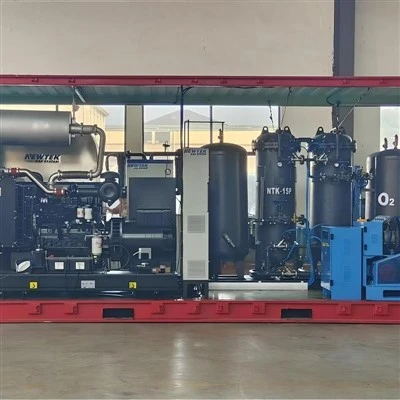
![Containerized Oxygen Generator]() Containerized Oxygen GeneratorNEWTEK container oxygen production system can be regarded as a mobile oxygen center, providing continuous andread more
Containerized Oxygen GeneratorNEWTEK container oxygen production system can be regarded as a mobile oxygen center, providing continuous andread more -
![Energy Saving Container Type Oxygen Plant]() Energy Saving Container Type Oxygen PlantAn Energy Saving Container Type Oxygen Plant is designed for projects where oxygen must be produced continuously whileread more
Energy Saving Container Type Oxygen PlantAn Energy Saving Container Type Oxygen Plant is designed for projects where oxygen must be produced continuously whileread more -
![Air Separation Oxygen Plant Containerized]() Air Separation Oxygen Plant ContainerizedThe Air Separation Oxygen Plant Containerized is an onsite oxygen generation system built around PSA air separationread more
Air Separation Oxygen Plant ContainerizedThe Air Separation Oxygen Plant Containerized is an onsite oxygen generation system built around PSA air separationread more -
![Hospital Medical Containerized Psa Oxygen Generator]() Hospital Medical Containerized Psa Oxygen GeneratorThe Hospital Medical Containerized PSA Oxygen Generator is an onsite medical oxygen production system designed forread more
Hospital Medical Containerized Psa Oxygen GeneratorThe Hospital Medical Containerized PSA Oxygen Generator is an onsite medical oxygen production system designed forread more