

A global partner network delivers fast, localized service with consistent technical standards.
PSA Oxygen Equipment
Design & Customization
Design service
Demand analysis
In-depth understanding of the customer's specific needs, including oxygen output, purity, pressure, dew point and other parameter requirements, as well as usage scenarios, environmental conditions, operating time, etc. For example, the medical field has extremely high requirements for oxygen purity and stability, usually requiring a purity of more than 99%; while in industrial cutting and other fields, a purity of about 90%-93% can meet the needs1.
Scheme design
Based on the results of demand analysis, design the most suitable PSA oxygen production equipment solution for customers, including process flow, equipment selection, system configuration, etc. For example, for small laboratory oxygen, a small PSA oxygen generator can be selected, using a single-tower or double-tower adsorption process; for large industrial oxygen, such as steel mills, chemical plants, etc., it is necessary to design a large PSA oxygen production system, using a multi-tower adsorption process to improve oxygen output and stability.
Engineering design
For PSA Detailed engineering design is carried out for the installation, pipeline connection, electrical control, etc. of the oxygen production equipment to ensure that the installation and operation of the equipment meet the requirements of safety, stability and efficiency. For example, a reasonable pipeline layout is designed to avoid excessive pipeline length and too many elbows to reduce pressure loss; a reliable electrical control system is designed to realize automatic operation and remote monitoring of the equipment.
Customized Service
1
According to the special needs of customers, the key components of PSA oxygen generators are customized, such as adsorption towers, molecular sieves, valves, compressors, etc., to improve the performance and adaptability of the equipment. For example, for PSA oxygen generators used in high-altitude areas, adsorption towers and compressors with higher pressure resistance can be customized to adapt to low-pressure environments; for customers with extremely high requirements for oxygen purity, special molecular sieves can be customized to improve the separation effect of oxygen.
2
Provide customers with personalized system integration solutions, integrate PSA oxygen generators with other related equipment, such as air compressors, dryers, filters, gas storage tanks, etc., to form a complete oxygen production system. For example, for customers who need continuous and stable gas supply, it can be designed into a system with multiple PSA oxygen generators running in parallel, equipped with backup equipment and automatic switching devices; for customers with strict requirements on noise, low-noise air compressors and vacuum pumps can be selected.
3
Customize PSA according to the customer's operating habits and management requirements The control system of oxygen production equipment, including human-machine interface, control logic, alarm system, etc., realizes the intelligentization, automatic operation and remote monitoring of the equipment. For example, an intuitive and friendly human-machine interface is designed to facilitate operators to operate and monitor; a complete alarm system is set up to issue an alarm in time and take corresponding measures when the equipment fails or is abnormal.
1.2 PSA nitrogen production equipment design and customization service
Design service
Demand research and analysis: In-depth understanding of customers' nitrogen usage needs, including key parameters such as nitrogen output, purity, pressure, dew point, as well as usage scenarios, environmental conditions, operating time, gas supply stability requirements, etc. For example, electronic chip manufacturing requires high-purity nitrogen, and the purity requirement is usually above 99.999%; while some common reaction protection gases in the chemical industry can meet the needs with a purity of 95%-99%.
Process design: According to the results of demand analysis, select the most suitable PSA Nitrogen production process plan, determine the number, structure, size, type and filling amount of adsorption towers, and various links in the process flow, such as air pretreatment, adsorption, desorption, buffering, etc. For example, for nitrogen used in small laboratories, a double-tower adsorption process can be used; for large-scale industrial nitrogen production, such as chemical and steel industries, multi-tower adsorption processes are often used to improve production and stability.
Equipment selection and configuration: Select suitable compressors, vacuum pumps, valves, pipelines, instruments and other key equipment and components for nitrogen production equipment, and make reasonable configurations to ensure the performance and reliability of the equipment. For example, select compressors with appropriate power and displacement according to nitrogen production and pressure requirements, and select high-pressure and corrosion-resistant valves according to process requirements.
Automation control system design: Design advanced automation control systems to realize automatic operation, monitoring and adjustment of equipment, including PLC Programming, human-machine interface design, remote monitoring functions, etc., improve the operational convenience and operating efficiency of the equipment. For example, the automatic control system can realize the automatic switching of the adsorption tower, the automatic adjustment of nitrogen purity and flow, the automatic alarm and diagnosis of equipment failure, etc.
Customized service
Equipment size and layout customization: According to the space conditions and installation requirements of the customer's site, the outer dimensions and structural form of the nitrogen production equipment are customized to enable it to better adapt to the installation environment and save space. For example, for factory workshops or laboratories with limited space, it can be designed as a skid-mounted or compact nitrogen production equipment for easy installation and movement.
Nitrogen purity and output customization: By adjusting the process parameters of the adsorption tower, the performance and filling amount of the molecular sieve, etc., the required nitrogen purity and output are customized for customers to meet the special needs of different customers. For example, for customers in the electronics industry who have extremely high requirements for nitrogen purity, special molecular sieves and optimized adsorption processes can be used to ensure that the nitrogen purity reaches 99.9995% Above; For chemical companies that need a large amount of nitrogen, the number and size of adsorption towers can be increased to increase nitrogen production.
Special functions and configuration customization: According to the special requirements of customers, special functions and configurations are added to the nitrogen production equipment, such as gas purification devices, dew point control devices, backup systems, explosion-proof designs, etc. For example, in the food preservation industry, gas purification devices can be added to further remove impurities and odors in nitrogen; nitrogen production equipment used in flammable and explosive environments such as coal mines needs to be explosion-proof designed and certified.
1.3 PSA oxygen and nitrogen design and customization service process
Consultation and communication: The customer consults the oxygen equipment supplier about the design and customization service of PSA oxygen equipment, and the supplier arranges professional technicians to communicate with the customer to understand the customer's needs and expectations.
On-site inspection: For some large projects or complex use environments, the supplier's technicians may go to the customer's site for on-site inspection to collect more detailed information, such as site space, power supply, gas source conditions, etc.
Scheme design and quotation: According to the customer's needs and on-site inspection results, the supplier's design team conducts scheme design and provides customers with detailed design schemes and quotations.
Scheme review and confirmation: The customer reviews the design scheme and quotation provided by the supplier and puts forward modification opinions and suggestions. The supplier modifies and improves the scheme according to the customer's feedback until the customer confirms it.
Contract signing: After the scheme is confirmed, the two parties sign a contract to clarify The rights and obligations of both parties include the specifications, quantity, price, delivery period, installation and commissioning, after-sales service and other terms of the equipment.
Equipment manufacturing and customization: The supplier manufactures and customizes the equipment in accordance with the contract requirements, strictly controls product quality, and ensures that the equipment meets the design requirements and customer needs.
Installation and commissioning: After the equipment is manufactured, the supplier arranges professional technicians to go to the customer site to install and commission the equipment to ensure that the equipment can operate normally.
Acceptance and delivery: After the equipment is installed and commissioned, the customer accepts the equipment. After the acceptance is qualified, the supplier delivers the equipment to the customer and provides relevant technical information and operation training.
After-sales service: The supplier provides customers with comprehensive after-sales service, including equipment repair, maintenance, spare parts supply, technical support, etc., to ensure the long-term stable operation of the equipment.

2. Equipment manufacturing and installation services
2.1 PSA oxygen production equipment manufacturing and installation services
Equipment manufacturing
Design and R&D: Design and develop PSA oxygen production equipment according to customer needs and usage scenarios. This includes determining the process flow of the equipment, the structure and size of the adsorption tower, the selection and loading amount of the molecular sieve, the configuration of the compressor and vacuum pump, etc., to ensure that the equipment can efficiently and stably produce oxygen that meets the requirements.
Raw material procurement: Select high-quality raw materials and parts, such as high-quality steel, molecular sieves, valves, pipelines, instruments, etc. Strict quality inspection is carried out on the purchased raw materials to ensure that they meet the design requirements and relevant standards, and provide guarantees for the quality and performance of the equipment.
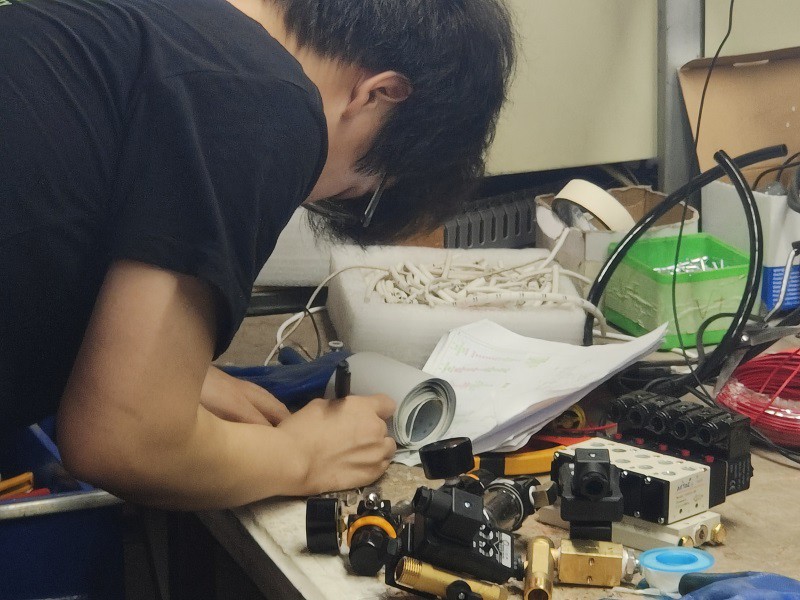
Parts manufacturing and processing: Manufacture and process parts according to design drawings and process requirements. This includes welding, machining, loading of molecular sieves, connection of valves and pipelines, etc. During the manufacturing process, strictly implement quality control procedures, inspect and test each component to ensure its quality.
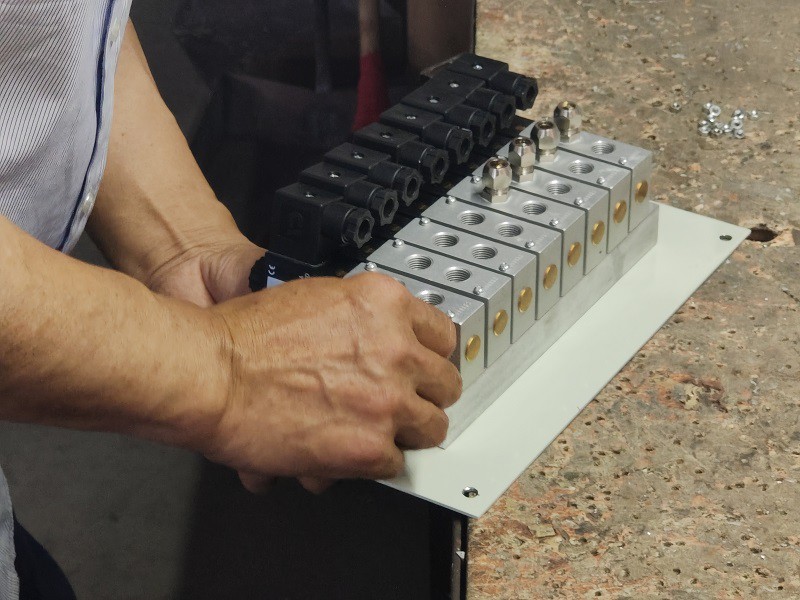
Equipment assembly and commissioning: Assemble the manufactured parts to form a complete PSA Oxygen production equipment. During the assembly process, strictly follow the assembly drawings and operating procedures to ensure the installation accuracy and connection tightness of the equipment. After assembly, the equipment is fully debugged and tested to check the equipment's operating conditions and performance indicators, such as oxygen output, purity, pressure, etc., to ensure that the equipment meets the design requirements and customer usage needs.
Quality inspection and certification: After the equipment is manufactured, strict quality inspection and certification are carried out. This includes appearance inspection, performance testing, safety inspection, etc., to ensure that the equipment meets relevant standards and specifications, such as ISO 9001 quality management system standards, GB 16912-2008 "Safety Technical Regulations for the Production of Oxygen and Related Gases by Deep Freezing", etc. At the same time, according to customer needs and usage scenarios, specific certifications may be required, such as CE certification, UL certification, etc.
Equipment installation
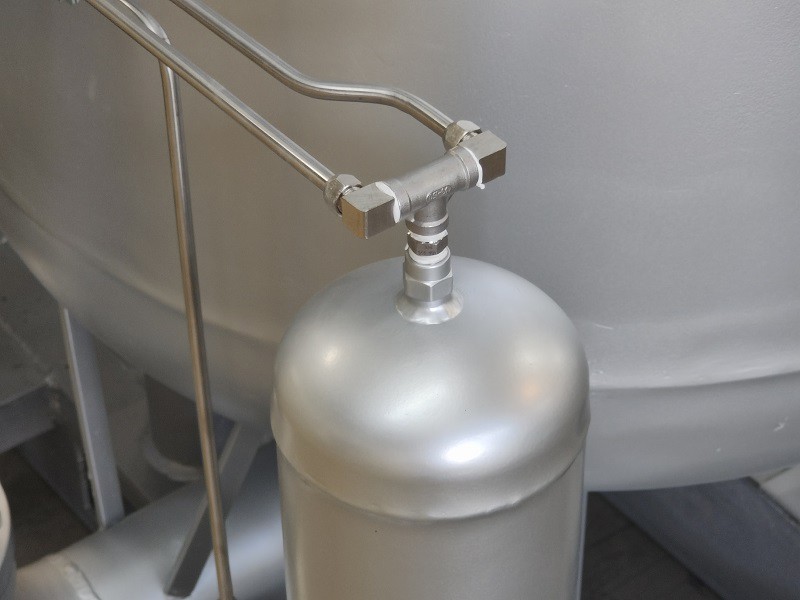
Preparation before installation: Before installing PSA Before installing the oxygen production equipment, sufficient preparation is required. This includes being familiar with the equipment's installation instructions and related technical documents, understanding the equipment's structure, performance, installation requirements and precautions; preparing the required installation tools, materials and auxiliary equipment, such as cranes, forklifts, wrenches, screwdrivers, sealants, pipes, etc.; cleaning the installation site to ensure that the installation site is flat, clean and free of debris; inspecting and accepting the foundation of the equipment to ensure that the size, strength and levelness of the foundation meet the requirements.
Equipment positioning and fixing: According to the equipment layout diagram, determine the installation location of the PSA oxygen production equipment, and use appropriate lifting tools and equipment to lift the equipment to the predetermined location. During the lifting process, pay attention to protecting the equipment to avoid collision and damage. After the equipment is in place, adjust the horizontality and verticality to ensure that the horizontality and verticality of the equipment meet the requirements. Then, use anchor bolts or other fixing methods to fix the equipment on the foundation to ensure that the equipment does not shake or shift during operation.
Pipeline and electrical connection: According to the equipment connection diagram, connect the PSA The import and export pipelines, valves and instruments of the oxygen production equipment. During the connection process, attention should be paid to the cleanliness, sealing and connection tightness of the pipeline to ensure that the pipeline is leak-free and blockage-free. At the same time, make electrical connections and connect the power cord, control cord and other equipment to the corresponding control system and power supply. During the electrical connection process, attention should be paid to the correctness and safety of the wiring to ensure the normal operation of the electrical system of the equipment.
Debugging and trial operation: After the pipeline and electrical connections are completed, the PSA oxygen production equipment is debugged and trial operated. During the debugging process, according to the debugging procedures and requirements of the equipment, various parameters of the equipment are set and adjusted, such as the pressure of the compressor, the vacuum degree of the vacuum pump, the switching time of the adsorption tower, etc. Then, a trial operation is carried out to observe the operating status and performance of the equipment and check whether there are any abnormal conditions or faults. During the trial operation, the oxygen output, purity, pressure and other parameters of the equipment should be monitored and recorded to ensure that the performance of the equipment meets the requirements.
Acceptance and delivery: After the PSA After the oxygen production equipment is tested and runs normally and its performance meets the requirements, the equipment acceptance work is carried out. During the acceptance process, it is necessary to conduct a comprehensive inspection of the equipment's various parameters, performance indicators and appearance quality to ensure that the equipment meets the installation requirements and technical standards. After the acceptance is qualified, the equipment will be delivered to the user unit, and corresponding training and handover work will be carried out, and the operating methods, maintenance points and precautions of the equipment will be introduced to the operators of the user unit.
2.2 PSA nitrogen production equipment manufacturing and installation service
Equipment manufacturing
Design planning: According to the customer's nitrogen production, purity, pressure and other requirements, combined with on-site working conditions and use conditions, the equipment is customized. Determine the number, size, structure of the adsorption tower, select appropriate molecular sieves, valves, pipelines, compressors, vacuum pumps and other components, and design a reasonable process flow and control system.
Raw material procurement: Strictly select high-quality raw material and parts suppliers, and purchase steel, molecular sieves, valves, pipelines, electrical components, etc. that meet the design requirements and quality standards. Strict quality inspection is carried out on the purchased raw materials to ensure their performance and quality.
Parts manufacturing and processing: According to the design drawings and process requirements, the adsorption tower, pipelines, valves and other parts are manufactured and processed. In the manufacturing process, advanced processing technology and equipment are used to ensure the accuracy and quality of the parts. Non-destructive testing and performance testing are carried out on key parts, such as weld inspection of the adsorption tower and performance testing of the molecular sieve.
Equipment assembly and commissioning: Assemble the manufactured parts in a clean assembly workshop to form a complete PSA Nitrogen production equipment. During the assembly process, strictly follow the assembly drawings and operating procedures to ensure the installation accuracy and connection tightness of the equipment. After assembly, the equipment is fully debugged and tested to check the equipment's operating conditions and performance indicators, such as nitrogen output, purity, pressure, etc., to ensure that the equipment meets the design requirements and customer usage needs.
Quality inspection and certification: After the equipment is manufactured, strict quality inspection and certification are carried out. According to relevant standards and specifications, the appearance, size, performance, safety and other aspects of the equipment are fully inspected and tested. At the same time, according to customer needs and usage scenarios, specific certifications may be required, such as ISO 9001 quality management system certification, CE Certification, etc.
Equipment installation
Preparation before installation: The installer will go to the site for investigation in advance to understand the environment, space, electricity, gas source and other conditions of the installation site to ensure that the site has the installation conditions. Prepare the required installation tools, materials and equipment, such as cranes, forklifts, wrenches, screwdrivers, sealants, pipes, etc. Unpack the equipment and check whether the model, specifications, quantity, etc. of the equipment are consistent with the contract, and check whether the equipment has damaged or missing parts.
Equipment placement and fixation: According to the equipment layout diagram, determine the installation location of the PSA nitrogen generator, and use appropriate lifting tools and equipment to lift the equipment to the predetermined location. During the lifting process, pay attention to protecting the equipment to avoid collision and damage. After the equipment is in place, adjust the horizontality and verticality to ensure that the horizontality and verticality of the equipment meet the requirements. Then, use anchor bolts or other fixing methods to fix the equipment to the foundation to ensure that the equipment does not shake or move during operation.
Pipeline and electrical connection: According to the equipment connection diagram, connect the PSA The inlet and outlet pipelines, valves and instruments of the nitrogen making equipment. During the connection process, attention should be paid to the cleanliness, sealing and connection tightness of the pipeline to ensure that the pipeline is leak-free and blockage-free. At the same time, make electrical connections and connect the power cord, control cord and other equipment to the corresponding control system and power supply. During the electrical connection process, attention should be paid to the correctness and safety of the wiring to ensure the normal operation of the electrical system of the equipment.
Debugging and trial operation: After the pipeline and electrical connections are completed, the PSA nitrogen making equipment is debugged and trial operated. During the debugging process, various parameters of the equipment are set and adjusted according to the debugging procedures and requirements of the equipment, such as the pressure of the compressor, the vacuum degree of the vacuum pump, the switching time of the adsorption tower, etc. Then, a trial operation is carried out to observe the operating status and performance of the equipment and check whether there are any abnormal conditions or faults. During the trial operation, the nitrogen output, purity, pressure and other parameters of the equipment should be monitored and recorded to ensure that the performance of the equipment meets the requirements.
Acceptance and delivery: After the PSA After the nitrogen production equipment is tested and runs normally and its performance meets the requirements, the equipment acceptance work is carried out. During the acceptance process, it is necessary to conduct a comprehensive inspection of the equipment's various parameters, performance indicators and appearance quality to ensure that the equipment meets the installation requirements and technical standards. After the acceptance is qualified, the equipment will be delivered to the user unit, and corresponding training and handover work will be carried out, and the operating methods, maintenance points and precautions of the equipment will be introduced to the operators of the user unit.


3. NEWTEK After-Sales Service
3.1 Equipment Maintenance Service
Fault Diagnosis and Troubleshooting
When a device fails, the after-sales service team will quickly diagnose the cause of the failure through telephone communication, remote monitoring data or on-site inspection. For example, if the oxygen / When the purity of nitrogen decreases, the technicians will check whether the molecular sieve of the adsorption tower is invalid, whether the valve is working properly, whether the pipeline is leaking, etc.
For some common simple faults, such as damage to electrical components and instrument failure, the technicians can guide the on-site personnel to replace or adjust by phone; for complex faults, such as damage to the internal structure of the adsorption tower and compressor failure, professional maintenance personnel will be arranged to carry tools and spare parts to the site for repair.
Parts Replacement
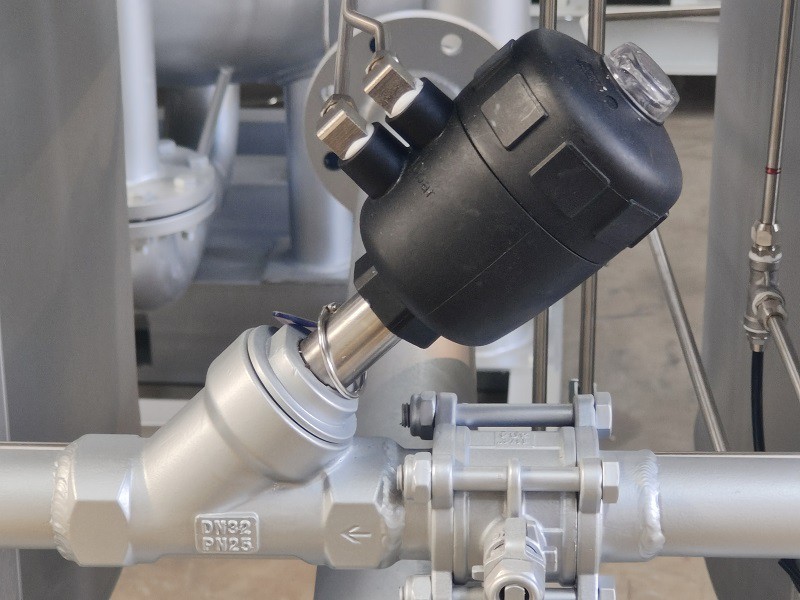
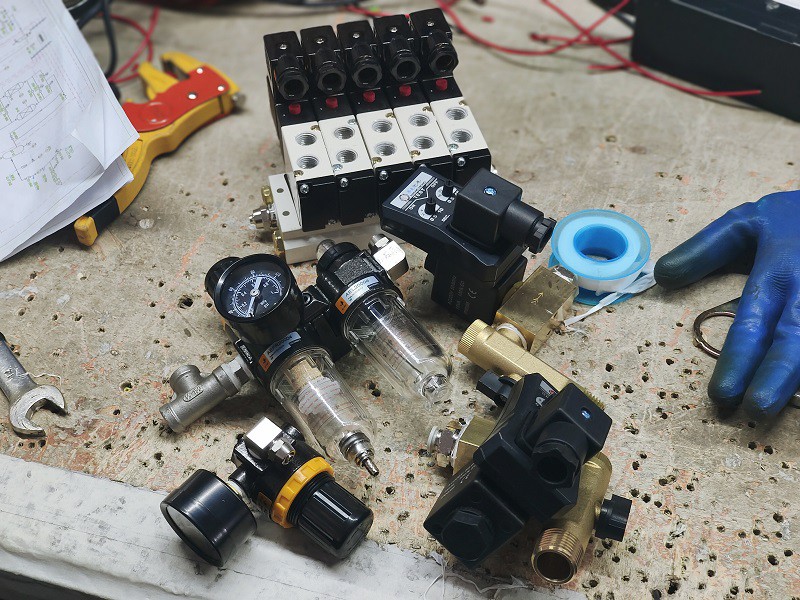
A complete parts inventory management system has been established to ensure that various parts required for the equipment can be provided in a timely manner. These parts include molecular sieves of adsorption towers, various valves (such as solenoid valves, stop valves, etc.), wearing parts of compressors and vacuum pumps (such as piston rings, bearings, etc.), instruments (such as flow meters, purity analyzers, etc.) and pipeline accessories.
According to the service life and operating conditions of the equipment, the after-sales service team will regularly remind customers to replace wearing parts to prevent equipment failures. For example, the molecular sieve in the adsorption tower usually needs to be replaced every few years to ensure the separation effect of oxygen or nitrogen.
3.2 Equipment maintenance service
Regular inspections
After-sales service personnel will conduct on-site inspections of oxygen and nitrogen production equipment on a regular basis, generally including a routine inspection once a month and a comprehensive inspection once a year. In the routine inspection, the operating parameters of the equipment (such as temperature, pressure, flow, purity, etc.) will be checked to see if they are normal, whether the appearance of the equipment is damaged or leaking, whether the electrical system is working properly, etc.
In the comprehensive inspection, in addition to the above, the internal structure of the equipment will also be checked, such as the internal condition of the adsorption tower, the wear of the compressor and the vacuum pump, etc. At the same time, the equipment will be cleaned, lubricated and other maintenance work will be carried out to extend the service life of the equipment.
Maintenance plan formulation and implementation
According to factors such as the model of the equipment, the use environment and the operating time, the equipment maintenance plan is tailored for the customer. The maintenance plan lists in detail the maintenance items, cycles, methods and responsible personnel.
According to the maintenance plan, the after-sales service personnel will carry out targeted maintenance on the equipment, such as regenerating the adsorption tower, replacing the oil and cleaning the filter of the compressor, etc. At the same time, the status changes of the equipment will be recorded during the maintenance process to provide data support for subsequent equipment management.
3.3 Technical support service
Operation training
Provide comprehensive equipment operation training for customers' operators, including equipment startup, shutdown, operation parameter setting, daily maintenance, etc. The training methods can be on-site training, online training, or provide operation manuals and video tutorials.
During the training process, we focus on the cultivation of practical operation skills so that operators can master the operation skills of the equipment. At the same time, operators will be assessed to ensure that they can operate the equipment correctly and safely.
Technical consultation
Set up a technical consultation hotline to provide customers with 7×24 hours of technical consultation services. If customers encounter any technical problems during the use of the equipment, such as equipment performance optimization, process improvement, adaptation of new application scenarios, etc., they can call the hotline for consultation at any time.
The technical experts of the after-sales service team will provide professional solutions and suggestions based on the customer's problems. For example, if the customer wants to increase the output of oxygen or nitrogen production equipment, the technical experts will provide feasible suggestions such as adjusting the adsorption time and replacing high-efficiency molecular sieves based on the existing configuration and operating conditions of the equipment.
3.4 Equipment upgrade service
Performance upgrade
Upgrade the performance of oxygen and nitrogen production equipment according to customer needs and technological development. For example, by replacing new molecular sieves to improve the purity of oxygen or nitrogen, or replacing compressors with higher power to increase the output of equipment.
During the equipment performance upgrade process, the after-sales service team will conduct a comprehensive evaluation of the equipment to ensure that the upgraded equipment can operate stably and is compatible with other systems in the factory.
Function upgrade
Add new functions to the equipment, such as remote monitoring and automatic control function upgrades. By installing advanced sensors and control systems, customers can remotely monitor the operating status of the equipment in the office or even through mobile phones, and realize intelligent management of the equipment.
For some customers with special needs, such as the food industry that has higher requirements for gas cleanliness, a gas purification function module will be added to the equipment to further improve the applicability of the equipment.


4. As a professional PSA oxygen and nitrogen production equipment manufacturer, NEWTEK provides value-added services
4.1 System optimization and energy-saving services
Process optimization consulting: Send a professional technical team to the customer's factory to conduct a comprehensive assessment of the existing oxygen and nitrogen production systems, and provide personalized process optimization solutions based on the customer's production needs, site conditions, energy supply and other factors to help customers improve equipment operation efficiency and product quality.
Energy-saving transformation plan: Use advanced energy-saving technologies and equipment, such as high-efficiency and energy-saving compressors, vacuum pumps, adsorbents, etc. to carry out energy-saving transformation of existing equipment to reduce equipment energy consumption and operating costs. At the same time, by optimizing the equipment's operating parameters and process flow, efficient use of energy is achieved.
4.2 Gas application technical support
Application solution customization: Customize professional gas application solutions for the special needs of customers in different industries, such as food preservation, electronic manufacturing, chemical production, etc., to ensure that the oxygen and nitrogen produced can meet the customer's production process requirements and improve product quality and production efficiency.
On-site technical guidance: After the equipment is installed and debugged, send technicians to the customer site for technical guidance to help the customer's operators familiarize themselves with the equipment's operating procedures and precautions to ensure the normal operation of the equipment. At the same time, when the customer encounters problems with gas application during the production process, provide on-site technical support and solutions in a timely manner.
4.3 Equipment leasing and sharing services
Short-term leasing services: For some customers with temporary or seasonal gas demand, we provide equipment leasing services. Customers can rent oxygen and nitrogen production equipment of corresponding specifications and quantities according to actual gas demand. The leasing period can be flexibly selected, from a few days to several months, to meet customers' short-term gas demand and reduce their equipment investment costs.
Equipment sharing platform: Build an equipment sharing platform to integrate the company's internal and customers' idle oxygen and nitrogen production equipment resources to achieve equipment sharing. Through the equipment sharing platform, customers can rent other customers' idle equipment when needed, improve equipment utilization, and reduce equipment idleness and maintenance costs.


