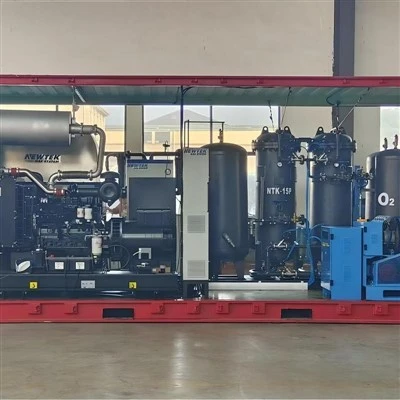
There are many practical issues involved in supplying oxygen to aquaculture, including:
►Water temperature - water temperature affects the oxygen content of the water, the higher the water temperature, the lower the oxygen content;
►Stocking density - the more fish there are, the greater the oxygen consumption.
►Biological activity - the decomposition of fish waste and microbial activity will increase oxygen consumption.
Traditional oxygen supply methods, such as air stones and paddle wheel aerators, often cannot meet the needs of high-density aquaculture systems. Liquid oxygen supply has management issues such as transportation and storage, and there is a possibility that oxygen cannot be supplied continuously. These deficiencies make it difficult for hatcheries and broodstock farms to maintain optimal conditions. Practice has proved that a more effective solution is to use PSA on-site oxygen generation, which can provide a stable, cost-effective oxygen supply; ensuring healthier fish, higher reproduction rates and higher overall production.

Advantages of on-site oxygen generation system in aquaculture oxygen supply:
- Stable oxygen supply: ensure stable oxygen supply level to support fish health and reproduction.
- Lower oxygen cost: eliminate the management work and cost of liquid oxygen transportation and storage. The equipment supports 7X24 hours of continuous operation and has low maintenance requirements.
- Compact and scalable: the equipment can meet the needs of small space placement, one-button start and stop; and the system can be expanded according to production needs.
Reliable oxygen supply is essential for hatchery and broodstock management. Choosing the right oxygen supply solution can help hatcheries and broodstock reproduction improve survival rate, breeding success rate and overall yield. This can not only bring more considerable economic benefits to farmers, but also occupy a more advantageous position in market competition.

NEWTEK Is Exactly What You Are Looking For
FAQ
Q: How does it ensure stable oxygen supply under varying fish density and growth stages?
A: It integrates real-time dissolved oxygen sensors with adaptive control algorithms to dynamically adjust oxygen output based on water quality data (e.g., fish biomass, temperature, and pH). This prevents hypoxia during high-density farming or rapid growth phases, ensuring optimal fish health.
Q: Can it seamlessly integrate with existing RAS (Recirculating Aquaculture Systems) or IoT-based aquaculture management platforms?
A: Yes, it supports API-driven connectivity to mainstream aquaculture IoT platforms, enabling centralized monitoring of oxygen levels, energy consumption, and equipment status. This interoperability reduces manual intervention and aligns with smart farming trends.
Q: What energy-saving features does it offer for cost-sensitive B2B clients?
A: It employs variable frequency drives (VFDs) and PSA technology to reduce power consumption by 30-40% compared to traditional systems. Modular designs also allow partial operation during low-demand periods, minimizing energy waste.
Q: How scalable is it for farms with fluctuating production volumes or expansion plans?
A: Its modular architecture supports incremental capacity upgrades. For example, a 20-ton fish farm can start with a base unit and add modules as production scales, avoiding overinvestment.
Hot Tags: oxygen generating equipment for fish farming, China oxygen generating equipment for fish farming manufacturers, suppliers, industrial oxygen, small oxygen generator, PSA medical oxygen plant, aquaculture oxygen generator, gas generation equipment, 1000 lpm oxygen plant