A suitable generation capacity should reflect the farm's operating demand rather than a general estimate based on pond area. The objective is to determine how much oxygen must be available during normal production and periods of higher demand.
Factors That Influence Oxygen Demand
| Farm operating factor | Consideration for equipment selection |
|---|---|
| Maximum fish biomass | Establishes the expected production load |
| Daily feed consumption | Helps assess oxygen demand during intensive feeding |
| Fish species and growth stage | Determines relevant biological requirements |
| Water temperature | Affects oxygen solubility and fish metabolism |
| Tank and pond arrangement | Influences the number and location of oxygen delivery points |
| Water circulation rate | Helps determine the appropriate oxygen transfer method |
| Oxygen transfer efficiency | Affects the amount of generated gas required to achieve the water-side target |
| Daily operating schedule | Defines the expected production hours and demand profile |
| Contingency requirements | Determines whether standby equipment or additional reserve supply is needed |

Where the farm already has operating records, these can help establish a more realistic design basis. For a new facility, preliminary biomass, feed consumption, water temperature, and system design can be used for an initial assessment.
The final capacity should be confirmed against the farm's oxygen balance and the performance of its water-side equipment. A generator's rated gas output alone cannot guarantee a specific dissolved oxygen concentration.
Oxygen Production Capacity, Purity, and Operating Conditions
The equipment specification should define the actual operating point rather than rely on a nominal capacity figure without supporting conditions.
| Technical item | Selection basis |
|---|---|
| Oxygen production rate | Required flow at the specified operating point |
| Oxygen concentration | Common PSA designs provide approximately 90–95%, depending on configuration and operating conditions |
| Delivery pressure | Required pressure at the connection to downstream equipment |
| Operating schedule | Expected daily operating hours and production pattern |
| Gas monitoring | Oxygen concentration measurement and agreed alarm functions |
| Control method | Automatic sequencing through a PLC-based control system, subject to configuration |
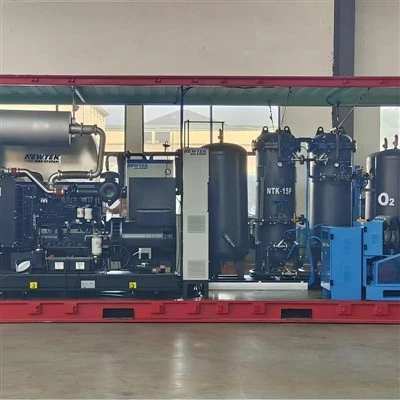
| Installation environment | Indoor equipment room or a suitable containerized arrangement |
| Electrical supply | Site voltage, frequency, and connected load requirements |
| Auxiliary equipment | Compressor, air treatment, buffer storage, and other specified components |
When comparing quotations, confirm that the stated oxygen flow, concentration, and outlet pressure correspond to the same operating conditions. These values should be documented in the technical offer.
The final capacity range, connected load, dimensions, and equipment arrangement should be provided by the manufacturer for the selected configuration.
Design the Oxygen Supply Around Your Farm Layout
A central oxygen plant can supply several production areas when the generation capacity and distribution network are designed for the combined demand. The layout should account for the location of the equipment room, distance to each tank, and the oxygen delivery method.
Centralized Oxygen Supply
For farms with multiple tanks or production zones, a central generation unit can feed a distribution manifold with separate branches to different areas.
This arrangement requires consideration of:
Total oxygen demand across all connected production areas.
Pipe diameter, pressure losses, and delivery distance.
Branch flow requirements and isolation valves.
Changes in demand between tanks or production stages.
Maintenance access to the generator and distribution equipment.
Emergency supply arrangements if the main source becomes unavailable.
Separate Production Zones
Where tanks have different operating requirements, the distribution arrangement may need individual flow regulation or dedicated supply branches. The system design should identify which areas operate simultaneously and how their oxygen requirements vary.
Connection to Existing Farm Infrastructure
For an operating farm, the new generation equipment should be assessed against existing oxygen piping, transfer devices, electrical services, and monitoring systems. Compatibility checks can help define which components can remain in service and which connections require modification.
NEWTEK can use the available layout and technical information to establish the proposed equipment configuration and identify the interfaces that need to be confirmed before ordering.
Match the Generation System to Your Oxygen Transfer Equipment
Generating oxygen and transferring oxygen into water are separate processes. The equipment downstream of the generator determines how the gas enters the water and how efficiently it is transferred under the farm's operating conditions.
| Oxygen delivery arrangement | Where it may fit | Main design consideration |
|---|---|---|
| Oxygenation cone | Compatible recirculating water circuits | Water flow, contact conditions, and transfer performance |
| Side-stream oxygenation | Selected RAS and intensive tank systems | Side-stream flow and return-water conditions |
| Diffuser network | Suitable tanks, ponds, or water channels | Water depth, diffuser performance, and gas distribution |
| Direct oxygen injection | Compatible water treatment or circulation lines | Injection pressure, flow, and equipment compatibility |
| Central manifold with branch lines | Farms with several tanks or production zones | Pipe sizing, pressure loss, and individual branch demand |
The best arrangement depends on the farm's water circulation process, required oxygen transfer performance, and existing infrastructure. A delivery device should not be selected solely on the basis of generator capacity.
Where the oxygen transfer equipment has already been purchased, its operating pressure and gas consumption should be supplied during the technical review.
Manage Oxygen Supply Costs Over the Equipment Life Cycle
For commercial aquaculture buyers, the purchase price is only one part of the cost comparison. The economics of on-site generation depend on the quantity of oxygen used, electricity consumption, maintenance, equipment utilization, and the cost of the alternative supply method.
Compare On-Site Generation With Purchased Oxygen
| Cost category | On-site PSA generation | Externally supplied oxygen |
|---|---|---|
| Initial investment | Equipment purchase and installation | Depends on the existing storage and supply arrangement |
| Oxygen procurement | Electricity and operating costs support production | Oxygen purchased under the supplier's pricing arrangement |
| Transportation | Can reduce routine oxygen delivery requirements | Delivery logistics may be recurring |
| Storage and handling | Depends on the selected buffer and reserve arrangement | Depends on cylinder or bulk storage requirements |
| Maintenance | Requires servicing of the compressor, treatment system, valves, and other components | Depends on storage, handling, and supply equipment |
| Supply management | Production is managed at the farm within equipment capacity | Replenishment must be coordinated with supplier availability |
Actual savings cannot be determined from the equipment price alone. A meaningful comparison should use the farm's current oxygen consumption, delivered oxygen cost, electricity tariff, expected operating hours, maintenance budget, and required reserve supply.
For farms consuming substantial quantities of oxygen over long operating periods, this analysis can help determine whether an on-site generation plant is economically appropriate.
Factory-Manufactured Oxygen Equipment From NEWTEK
For international aquaculture businesses, the supplier's manufacturing capability and clarity of equipment scope are important when purchasing industrial gas equipment.
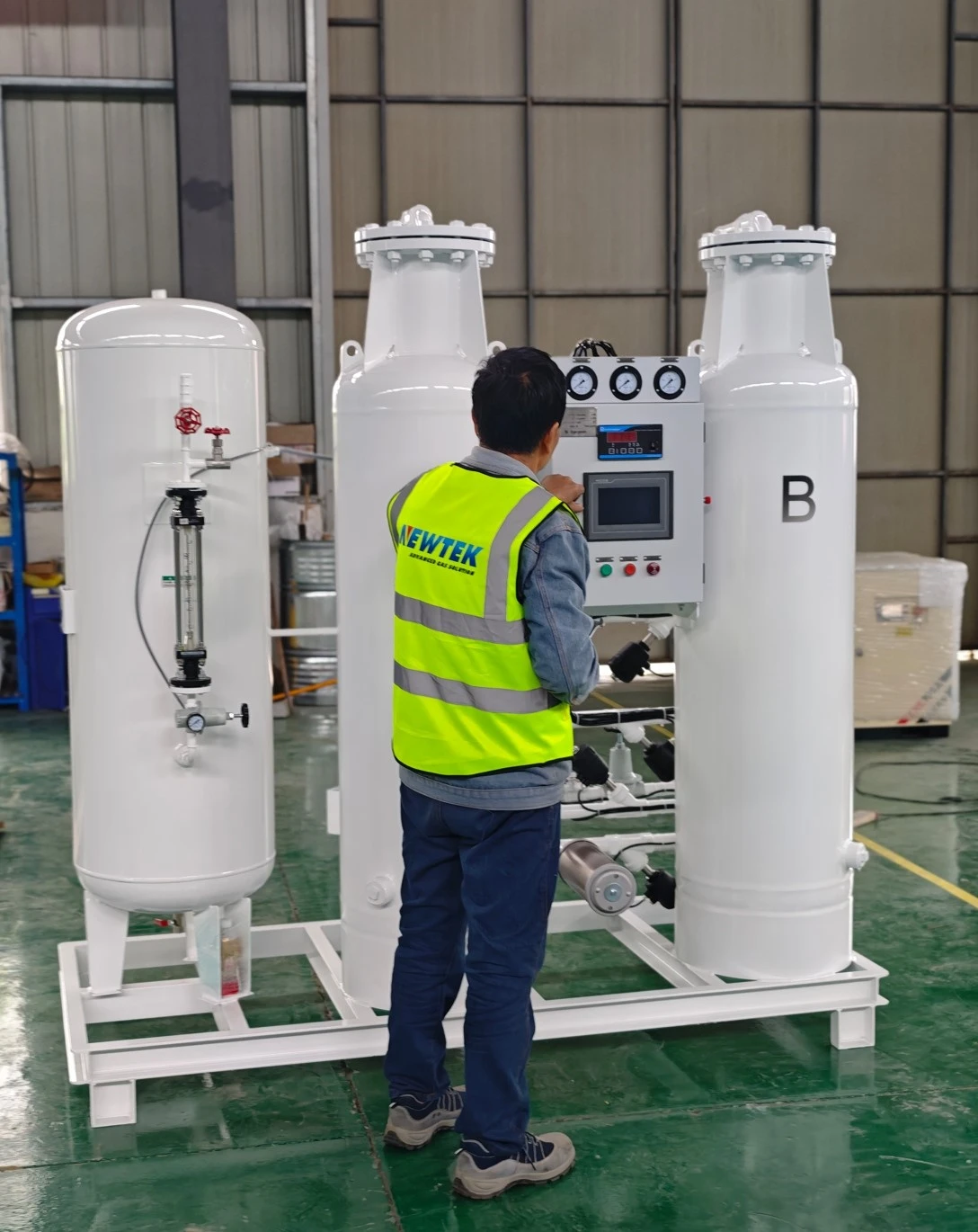
NEWTEK is an oxygen generation equipment manufacturer serving commercial and industrial customers. Our factory-based production approach covers equipment assembly, system configuration, and coordination of the components required by the agreed specification.
Manufacturing and Configuration
The proposed equipment can be defined according to the selected capacity, oxygen concentration, outlet pressure, control requirements, and installation conditions. This provides a clear basis for confirming the required components and the intended operating point.
Technical Documentation
Before production, the agreed specification should identify the main equipment, operating parameters, utility requirements, instrumentation, and included accessories. Any project-specific interface or monitoring requirement should be documented before the configuration is finalized.
Scope and Purchasing Clarity
For business customers, the quotation should distinguish standard supply from optional equipment and customer-side responsibilities. Installation, commissioning, operator training, delivery terms, and after-sales arrangements should be confirmed according to the agreed commercial scope.
Communication With Overseas Buyers
The person coordinating the purchase may be the farm owner, operations manager, engineering department, purchasing team, or an appointed sourcing company. NEWTEK can communicate with the designated contact to review the technical requirements and clarify the proposed equipment package.
Our goal is to provide a technically defined manufacturing offer that buyers can evaluate against their actual operating needs.
Installation Format and Site Preparation
The installation arrangement should be selected according to the available space, ambient conditions, maintenance requirements, and the location of the oxygen use points.
Indoor Installation
An indoor arrangement may suit farms with an existing equipment room or utility building. The layout should provide adequate ventilation, equipment access, drainage where required, and sufficient clearance for inspection and maintenance.
Containerized Installation
A containerized arrangement may be considered where the farm requires an enclosed equipment space or has limited permanent building infrastructure. Suitability depends on capacity, ventilation, ambient temperature, access, and the requirements of the selected compressor and auxiliary equipment.
Site Information to Confirm Before Delivery
Available installation footprint and access dimensions.
Local voltage and electrical frequency.
Ambient temperature and humidity conditions.
Ventilation and heat dissipation requirements.
Compressed-air and oxygen piping connections.
Maintenance access and equipment lifting arrangements.
Required communication or remote monitoring interfaces.
The final layout and utility requirements should be confirmed using the manufacturer's drawings and technical documentation before site preparation begins.
Operating Continuity and Maintenance Planning
An industrial oxygen generation plant requires routine maintenance to maintain its specified performance. The maintenance schedule should follow the selected equipment manuals and actual operating conditions.
| Equipment area | Maintenance consideration |
|---|---|
| Air compressor | Inspection, lubrication where applicable, and scheduled servicing |
| Air filters | Inspection and replacement according to operating conditions |
| Air dryer | Verification of drying performance and service requirements |
| PSA adsorption section | Monitoring of operating parameters and condition of the adsorption system |
| Switching valves | Inspection according to the manufacturer's maintenance recommendations |
| Oxygen analyzer | Calibration and verification as specified |
| Electrical controls | Inspection of connections, alarms, and control functions |
| Distribution network | Checks for leakage, damage, and abnormal pressure loss |
Maintenance requirements vary with equipment design, inlet-air quality, operating hours, and site conditions. The final maintenance schedule should be provided with the selected equipment.
FAQ
Is on-site PSA oxygen generation suitable for a commercial fish farm?
It may be suitable where the farm has sufficient and sustained oxygen demand to justify the equipment investment. The decision should consider oxygen consumption, alternative supply costs, operating hours, utility availability, and maintenance requirements.
Can the system supply multiple fish tanks?
Yes, if the generator and distribution network are designed for the combined flow requirement. The layout should account for pressure losses, simultaneous demand, and flow control at individual production areas.
What oxygen concentration is available?
Common PSA configurations provide approximately 90–95% oxygen concentration, depending on design and operating conditions. The required concentration and corresponding rated output should be confirmed in the technical specification.
Can it be connected to an existing RAS?
The system may supply compatible oxygen transfer equipment in an existing recirculating aquaculture system. The connection point, water flow, delivery pressure, and control interfaces should be reviewed before integration.
What determines the operating cost?
The main factors include electricity consumption, oxygen output, daily operating hours, equipment utilization, maintenance, and the cost of the oxygen supply method being replaced. A project-specific comparison is required to estimate the payback period.
Can the equipment be supplied for an overseas installation?
The supply arrangement can be evaluated according to the destination country's electrical standards, environmental conditions, delivery requirements, and requested documentation. Applicable requirements should be confirmed before ordering.
What information is needed for a quotation?
Provide the fish species, maximum biomass, daily feed consumption, target oxygen flow and concentration, outlet pressure, operating hours, site country, electrical supply, and existing oxygen transfer equipment. A site layout is useful when available.
Request an Equipment Configuration and Quotation
NEWTEK supports commercial aquaculture buyers seeking an industrial oxygen generation system based on their actual production and installation requirements.
To start the evaluation, please share:
Farm profile: Fish species, production method, and maximum biomass.
Oxygen demand: Required flow, concentration, and delivery pressure.
Operating conditions: Water temperature, daily operating hours, and expected demand variation.
System layout: Number of tanks, water circulation arrangement, and existing oxygen delivery equipment.
Installation details: Country, available space, power supply, and ambient conditions.
Commercial scope: Preferred installation format, monitoring functions, and backup requirements.
Our team can review the available information, clarify the required operating parameters, and prepare a quotation for the specified equipment configuration.
Contact NEWTEK to discuss your fish farm's oxygen requirements and request a manufacturer quotation for your project.
Hot Tags: fish farm psa oxygen generator, China fish farm psa oxygen generator manufacturers, suppliers, oxygen generator, oxygen generator plants, oxygen producing machine, oxygen psa generator, psa generator oxygen, psa oxygen