


How can we provide suitable oxygen incubation conditions?
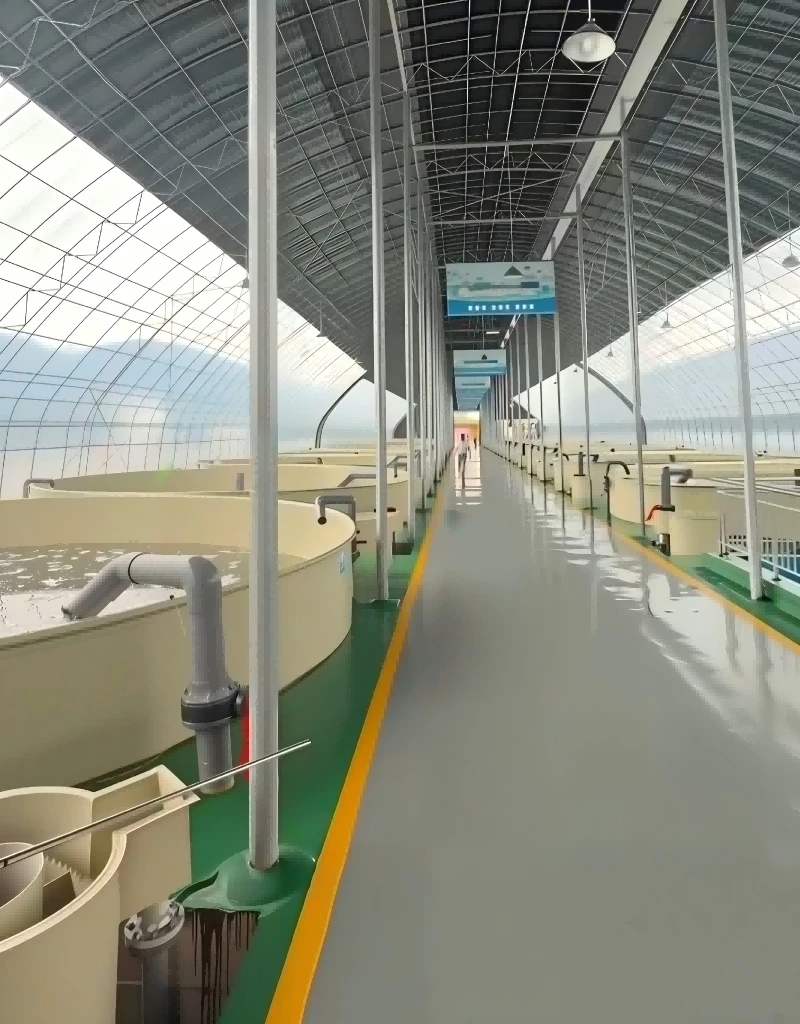
Oxygen demand changes as eggs develop, larvae emerge, and production batches move between stages. A system selected only for average consumption may not provide sufficient capacity during periods of increased demand.
When planning an oxygen supply, hatchery operators should evaluate the following operating requirements:
| Hatchery application | Oxygen supply consideration |
|---|---|
| Fish egg incubation | Maintain appropriate water circulation and oxygen availability around incubating eggs |
| Hatching tanks | Account for changes in biological demand during emergence and early development |
| Larval rearing | Consider stocking density, feeding activity, water temperature, and tank turnover |
| Recirculating aquaculture systems (RAS) | Coordinate oxygen delivery with circulation pumps, filtration, and water treatment |
| Multiple incubation units | Calculate combined demand and determine whether individual branches require flow control |
| Backup oxygen supply | Establish an emergency arrangement for power failure, equipment maintenance, or unexpected demand |
The appropriate dissolved oxygen target depends on the fish species, developmental stage, water temperature, and hatchery operating protocol. Oxygen generation capacity should therefore be determined from the facility's actual requirements rather than tank volume alone.
Select the Right Oxygen Output and Delivery Configuration
An oxygen plant must supply gas at conditions suitable for the hatchery's oxygenation equipment. Choosing a generator without considering delivery pressure, distribution piping, and transfer efficiency can result in a mismatch between the production system and the water treatment process.
| Technical parameter | Selection guidance |
|---|---|
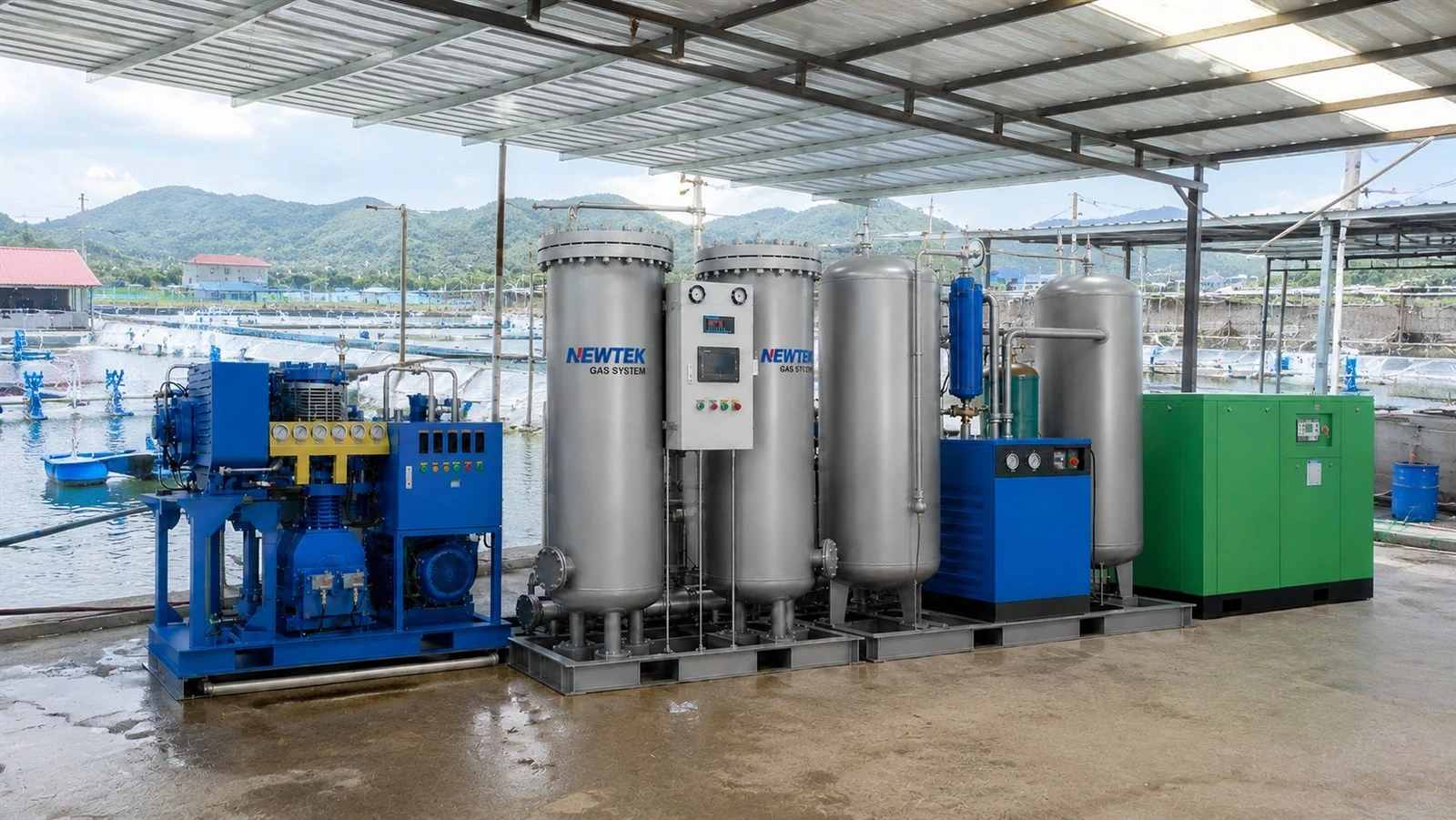
| Oxygen generation technology | Pressure Swing Adsorption (PSA) |
| Oxygen concentration | Commonly approximately 90–95%, depending on design and operating conditions |
| Production capacity | Selected according to calculated average and peak oxygen demand |
| Outlet pressure | Matched to the required injection or oxygenation equipment |
| Buffer storage | Sized according to demand variation and the intended supply arrangement |
| Control system | PLC and HMI options for operating status and process sequencing |
| Monitoring | Gas concentration, pressure, and other instruments as specified |
| Downstream connection | Compatible with the hatchery's oxygenation devices and distribution network |
Final output, concentration, pressure, and power consumption should be confirmed for the selected operating point. If the hatchery has not calculated its oxygen demand, useful starting information includes fish species, expected egg or larval production, tank quantity, water temperature, circulation flow, and existing oxygenation arrangements.
Connect Gas Production With Hatchery Water Management
Producing oxygen gas is only one part of maintaining suitable conditions for fish eggs and larvae. The delivery method determines how effectively oxygen enters the water and reaches the culture units.
Depending on the hatchery design, the downstream system may use oxygenation cones, side-stream oxygenators, diffusers, injection equipment, or a central distribution manifold. Selection should account for water flow, operating pressure, mixing conditions, and the sensitivity of the organisms being cultured.
For hatcheries with multiple incubation tanks, the distribution network should be reviewed for branch pressure losses, isolation valves, flow balancing, and the ability to service individual units without unnecessarily disrupting the entire facility.
Gas-side instruments indicate the condition of the generated oxygen, while dissolved oxygen sensors measure the oxygen available in the water. These measurements serve different purposes. Hatchery operators should monitor water conditions at relevant locations and maintain alarms and emergency procedures appropriate to the biological risk.
Configure the Equipment Around Hatchery Operations
NEWTEK manufactures industrial oxygen generation equipment and can configure the system according to the hatchery's installation conditions and operating requirements. The equipment scope may include an air compressor, air treatment components, PSA separation vessels, an oxygen buffer tank, control instruments, and a PLC-based operating system.
For facilities with limited indoor space, the equipment arrangement can be assessed against available floor area, ventilation, heat removal, service clearance, and access for component replacement. Where outdoor installation is required, environmental protection and the installation enclosure should be considered according to local climate and site conditions.
Before finalizing the configuration, buyers should confirm:
Required oxygen flow, concentration, and delivery pressure
Number and type of incubation or rearing units
Water circulation and oxygen transfer method
Operating schedule and peak-demand requirements
Available electricity and installation space
Monitoring, alarm, and backup oxygen requirements
These details help establish a suitable equipment specification and clarify the boundary between the generation system and the hatchery's water-side installation.
Request a Hatchery Oxygen System Quotation
Share your fish species, hatchery capacity, number of incubation tanks, estimated oxygen demand, and current oxygenation method with NEWTEK. If detailed consumption figures are not available, preliminary production and water-system information can be used to identify the data required for equipment selection.
The proposed configuration can then be assessed against the hatchery's operating conditions, installation requirements, and oxygen delivery needs, helping you compare technical scope and total project costs before placing an order.
Hot Tags: oxygen plant for hatchery, China oxygen plant for hatchery manufacturers, suppliers, industrial fish farming, oxygen and nitrogen gas plant, oxygen generat plant, psa generator, psa oxygen gas plant, psa oxygen generator


