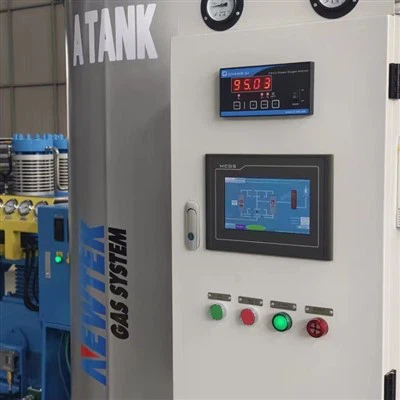
Portable Oxygen Generation Plant
Why Use a Portable Oxygen Generation Plant? For many field operations, oxygen requirement is not the only consideration. Oxygen logistics can become a major part of operating costs and project management. Transporting cylinders or liquid oxygen to remote sites requires repeated deliveries, handling equipment, and coordination.
Ambient Air → Air Treatment → PSA Oxygen Generation → Oxygen Buffer → Application
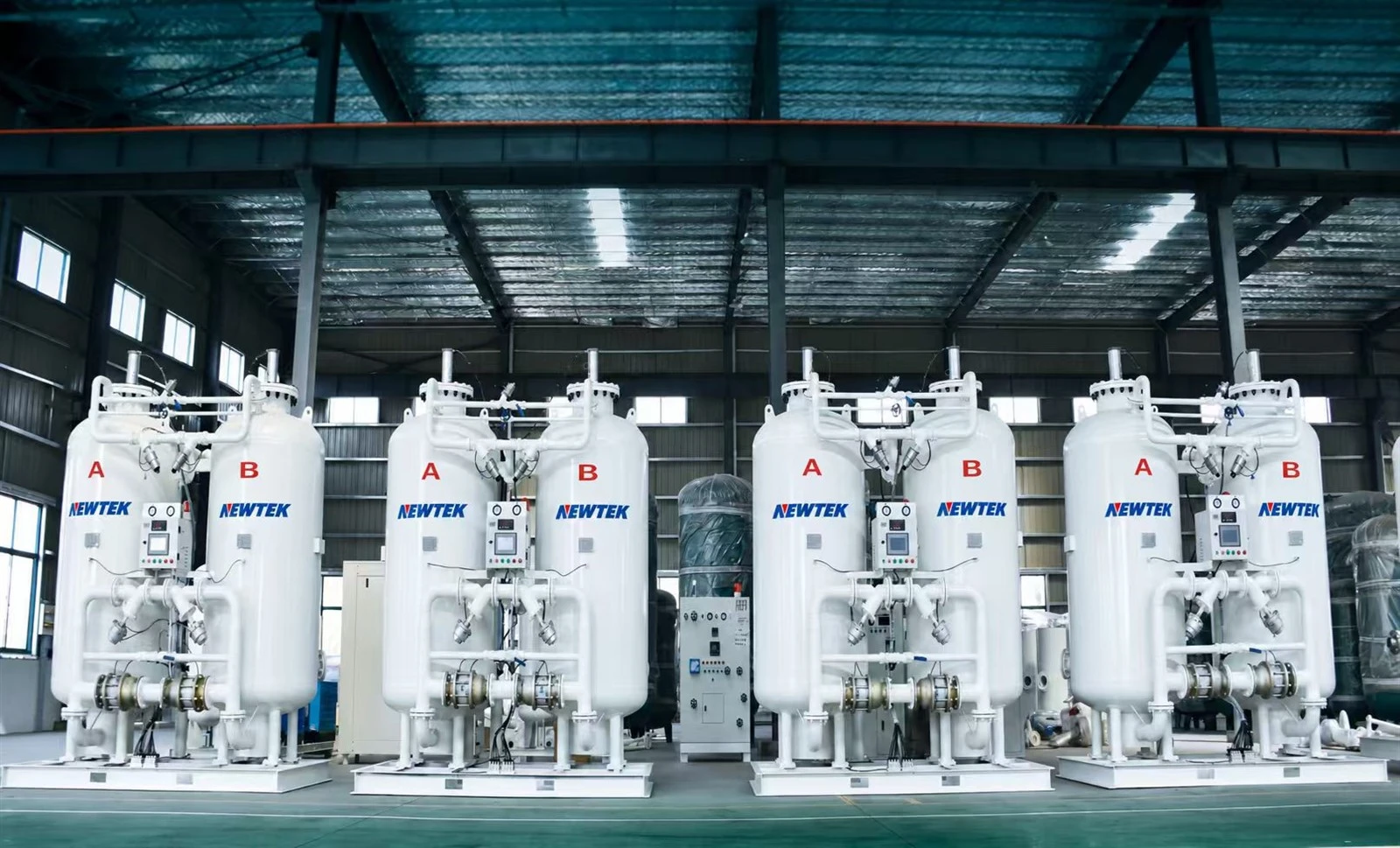
Typical Oxygen Supply Requirements
* Final technical parameters are determined according to the required oxygen flow, purity, pressure, altitude, ambient temperature, and project conditions.
Suitable for Projects Where
- Oxygen is required continuously or for extended working periods
- The project is located far from conventional oxygen suppliers
- Cylinder delivery creates logistical difficulties
- Oxygen demand changes according to the work schedule
- The oxygen system needs to be moved between project locations
- Existing infrastructure cannot support a permanent oxygen plant
- The customer wants to reduce dependence on delivered oxygen
How the Portable Oxygen Generation Plant Works
The system uses Pressure Swing Adsorption (PSA) technology to separate oxygen from compressed atmospheric air through 6 continuous steps:
Ambient air enters the system through the air intake and passes through the preliminary filtration stage.
The treated air is compressed to the required operating pressure before entering the oxygen separation system.
Moisture, oil aerosols, dust, and contaminants are removed to protect the adsorption system and maintain stability.
Treated air enters adsorption vessels. Adsorbent retains nitrogen while allowing oxygen-rich gas to pass through alternating adsorption and regeneration cycles.
Generated oxygen is stored temporarily in a buffer tank to stabilize downstream supply and accommodate demand fluctuations.
Oxygen is delivered through the outlet system at specified pressure and flow conditions for the application.
Main System Components
Portable Configuration for Field Projects
The system can be engineered as a compact skid-mounted or containerized oxygen plant, depending on the application.
Containerized Configuration Integrates:- Air compression & air treatment system
- PSA oxygen generation system & oxygen storage/buffer
- Electrical control cabinet & PLC control system
- Oxygen monitoring instruments & interconnecting piping
- Ventilation and auxiliary systems
Portable Oxygen Generation Plant Applications
1. Marine Salvage and Wreck Removal
For underwater cutting, metal separation, structural dismantling, and operations involving damaged or sunken vessels.
2. Industrial Demolition & Decommissioning
For cutting large steel structures, machinery, pipelines, tanks, and components directly at temporary or changing demolition sites without cylinder transport hassles.
3. Shipbreaking and Large Metal Cutting
Configured according to required oxygen flow and operating pressure for cutting equipment.
4. Mining Oxygen Supply
On-site oxygen production engineered around actual consumption close to mining and processing sites.
5. Medical Oxygen Cylinder Filling
Serves as local oxygen source for cylinder filling with required purification, storage, and compression.
Oxygen Generation → Oxygen Buffer → Oxygen Compression → Filling Manifold → Cylinders
6. Industrial Oxygen Cylinder Filling
On-site oxygen source matched to daily/hourly cylinder filling demand for distributors and end-users.
7. Wastewater Treatment and Ozone Systems
Provides high-purity feed gas for ozone generation in water treatment processes.
Portable Oxygen Plant vs. Delivered Oxygen
Engineering Around Your Oxygen Demand
NEWTEK configures according to actual parameters: Oxygen Flow (Nm³/h), Purity (%), Pressure (bar), Operating Hours, Site Conditions, Installation Method, and Downstream Equipment.
Control & Monitoring System:Automatic PLC control and oxygen analyzer continuously monitor purity, pressure, air pressure, equipment alarms, compressor status, and operating sequence to reduce routine manual intervention.
Customization Options
Technical Information Required for Quotation
| Required Information | Example Input |
|---|---|
| Oxygen Capacity | ___ Nm³/h |
| Oxygen Purity | ___ % |
| Oxygen Pressure | ___ bar |
| Operating Hours | ___ h/day |
| Application | Cutting / Mining / Ozone / Filling |
| Installation | Container / Skid |
| Site Location | Country / City |
| Ambient Temperature & Altitude | ___ °C / ___ m |
| Power Supply | ___ V / Hz |
| Project Duration & Delivery | Complete System / Main Equipment |
* If exact demand is not confirmed, NEWTEK can calculate required configuration from downstream equipment and operating schedule.
Frequently Asked Questions (FAQ)
A Portable Oxygen Generation Plant is a transportable oxygen production system that generates oxygen from ambient air at the project site. It can be supplied in skid-mounted or containerized configurations.
PSA-based systems can typically produce oxygen with purity up to approximately 95%, depending on the system configuration and operating conditions.
Yes. The main equipment can be integrated into a containerized system for transportation and field deployment.
Yes. A suitable configuration can include oxygen storage, compression, and a cylinder filling system. It can also be designed to provide an oxygen feed for ozone generators used in water treatment.
Yes, systems can be engineered for mining and mineral-processing applications. To select capacity, start with actual oxygen consumption of downstream equipment, required flow, purity, pressure, operating hours, altitude, and ambient temperature.
Get a Portable Oxygen Generation Plant for Your Project
Tell us your oxygen flow, purity, pressure, application, and project location. If the required oxygen capacity is not yet determined, send us the equipment or process that will consume the oxygen.
Hot Tags: portable oxygen generation plant, China portable oxygen generation plant manufacturers, suppliers, oxygen filling plant, Oxygen Plant PSA, oxygene gas generators, pressure swing adsorption psa oxygen plants, PSA medical oxygen plant, PSA Oxygen Generation Plant