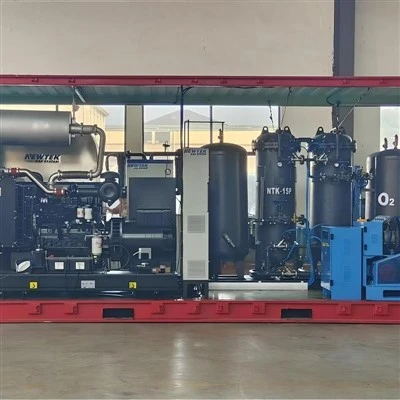
Reliable oxygen supply is critical for many remote industrial operations, including mining projects, aquaculture farms, construction camps, field hospitals and mineral processing facilities.
Unlike factories located in major industrial zones, remote sites often face limited transportation infrastructure, challenging environmental conditions and higher logistics costs. These factors make oxygen supply strategy an important part of long-term project planning.
Two common solutions are on-site PSA oxygen generation and bulk liquid oxygen (LOX) storage.
Each approach has advantages depending on project scale, oxygen demand and operating conditions. This article compares both solutions to help industrial operators evaluate the most suitable option for remote applications.
Challenges of Oxygen Supply in Remote Locations
Remote industrial projects often operate under conditions that differ significantly from urban manufacturing facilities. Typical challenges include:
Because of these factors, oxygen supply reliability becomes an important consideration during project design.
Understanding the Two Oxygen Supply Methods
Bulk Liquid Oxygen Storage: Liquid oxygen is produced at centralized air separation facilities, transported by cryogenic tanker trucks and stored in vacuum-insulated tanks before being vaporized for use. This solution is widely adopted where reliable transportation infrastructure and regular deliveries are available.
PSA Oxygen Generation: PSA (Pressure Swing Adsorption) systems generate oxygen directly from ambient air at the project site. Instead of depending on scheduled oxygen deliveries, operators produce oxygen continuously according to daily production requirements. PSA systems are commonly used in remote industrial projects where on-site oxygen generation offers greater operational flexibility.
Technical & Logistical Comparison Matrix
Below is the operational comparison evaluating how both supply methods perform under remote site conditions across logistics, financial metrics, and layout deployment:
| Pillar Metric | On-Site PSA Oxygen Generation | Bulk Liquid Oxygen Storage (LOX) |
|---|---|---|
| Logistics & Reliability | High Independence: Eliminates long-distance supply chain risks by generating oxygen directly on site. | High Vulnerability: Dependent on regular cryogenic tanker truck road access, weather conditions, and logistics scheduling. |
| Long-Term Cost | Initial capital equipment investment (CAPEX) with long-term OPEX tied predictably to local electricity and routine maintenance. | Recurring and fluctuating expenses including bulk oxygen purchase, long-distance haulage fees, storage tank rent, and boil-off losses. |
| Installation | Simplified: Containerized systems integrate air compressors, dryers, and generator blocks into a single pre-tested transportable module. | Requires specialized civil foundations, heavy cryogenic storage tank erection, vaporization lines, and safety buffer zones. |
| Maintenance | Focuses on standard mechanical components: regular air filter elements replacement and compressor oil/valve inspections. | Focuses on vacuum insulated pressure vessel inspections, cryogenic valve seals, and monitoring of evaporation product losses. |
Environmental Adaptability for Harsh Climates
Remote industrial sites often experience challenging operating environments, including extreme high or low temperatures, high humidity, wood or sand dust, and high altitudes. Equipment selected for these locations should be designed according to actual site conditions.
Containerized PSA oxygen systems can be customized with climate insulation, specialized multi-stage air intake dust filtration, and high-altitude compressor adjustments to support reliable long-term operation under extreme climatic variations.
Typical Remote Applications
On-site PSA oxygen generation is widely applied across a diverse range of remote industrial projects, including:
- Remote gold leaching plants and heavy mining processing operations.
- Off-shore and isolated coastal aquaculture biomass farms.
- Construction camps, military field utilities, and remote oil and gas support bases.
- Field hospitals and rural medical centers with restricted logistics access.
How NEWTEK Designs Remote Oxygen Projects
Every remote industrial project presents different engineering challenges. Rather than offering standard equipment configurations, NEWTEK customizes each oxygen generation system according to the project's actual site parameters:
Frequently Asked Questions
Q1: Is PSA oxygen suitable for remote industrial projects?
Yes. PSA oxygen systems are widely used globally where on-site oxygen generation helps projects completely eliminate long-term dependence on external bulk liquid transportation networks.
Q2: Can containerized PSA systems operate in harsh environments?
Absolutely. Containerized structures can be specifically engineered for severe environmental conditions, including desert dusty regions, high-altitude mines up to 4,000+ meters, and tropical high-humidity zones, depending on exact project requirements.
Q3: Is liquid oxygen always the better solution?
Not necessarily. Both PSA oxygen generation and liquid oxygen storage have suitable application scenarios. The most appropriate choice depends heavily on total daily oxygen demand, exact project geography, transportation road feasibility, and long-term operating cost strategies.
Conclusion
Selecting an oxygen supply strategy is an important decision for every remote industrial project. While bulk liquid oxygen remains suitable for many applications, on-site PSA oxygen generation has become an increasingly attractive solution for operators seeking greater supply independence, flexible installation and predictable long-term operating costs. NEWTEK provides customized PSA oxygen systems for remote industrial projects worldwide. By evaluating project location, oxygen demand, environmental conditions and future expansion plans, our engineering team helps customers develop practical oxygen solutions designed for reliable long-term operation.
Request Remote Sizing
Configure your containerized plant. Submit your off-grid environmental and oxygen flow parameters:
- Daily Target Flow Rate ($Nm^3/h$)
- Site Altitude (meters above sea level)
- Ambient Peak Max/Min Temp
- Power Grid Stability Parameters
Off-Grid Engineered Units
Containerized Gas Plants
Turnkey mobile units for remote sites.
Skid-Mounted Plants
Heavy duty indoor fixed configurations.
PSA Nitrogen generators
High-purity blanketing gas configurations.