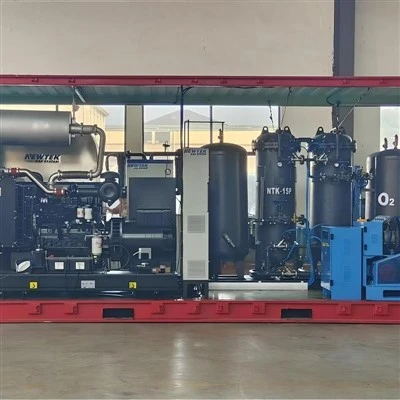
Executive summary - By 2025, pressure swing adsorption (PSA) oxygen generators have moved from a niche, hospital-centric technology into a broad platform for distributed, on-site oxygen supply across industries. Improvements in adsorbent materials, system modularity, control electronics, and operations models (skid-mounted, plug-and-play units) have combined to lower total cost of ownership, increase reliability, and enable new process optimizations - from higher recovery in mineral processing to simplified logistics in remote hospitals and fabrication yards. This article explains the technical drivers, deployment architectures, sectoral impacts, economics, and operational best practices that make PSA a defining on-site gas technology of 2025.
PSA fundamentals - a short technical refresher
A PSA oxygen generator separates oxygen from ambient air using beds of adsorbent material (typically zeolite molecular sieves) that preferentially adsorb nitrogen when air is placed under pressure. By cycling between pressurization and depressurization (the "pressure swing"), nitrogen is removed from the gas stream and the remaining product is oxygen-enriched - typically in the 90–95% purity range for industrial/medical PSA systems. Key practical variables are cycle time, bed volume and geometry, feed air compression energy, purge/sweep strategy, and pressure equalization steps that recover gas and reduce power consumption.
PSA's strengths are its simplicity, modularity, and the fact that it only needs compressed air and electricity to produce oxygen on demand; there is no cryogenic plant, tanker logistics, or cylinder handling required for continuous supply. Because PSA units operate at near-ambient temperatures, they scale well down to small portable concentrators and up to large skid-mounted systems used by mining and heavy industry.
What changed technically between 2018–2025
Several incremental but compounding technical advances have broadened PSA's reach:
Adsorbent improvements. Newer grades of zeolites and hybrid adsorbents deliver higher nitrogen selectivity and more stable performance over cycles, reducing the need for frequent replacement and enabling shorter cycle times with the same bed mass.
Faster cycles and process optimization. "Fast PSA" and optimized cycle strategies reduce adsorbent inventory and allow the same plant footprint to yield higher oxygen flow or lower energy per cubic metre. Process research through 2024–2025 has focused on optimizing timing, valve sequencing, and intermediate equalization to trim energy and improve recovery.
Modularity and skid design. Standardized, factory-tested skid modules (plug-and-play) reduce site commissioning time, and modular racks allow capacity to be increased by adding parallel modules rather than replacing systems. This makes PSA attractive for phased projects and remote sites with limited installation support
Control, sensors and IIoT. Integrated PLCs, real-time oxygen analysers, remote supervision, and predictive maintenance analytics now come standard in many commercial offerings, improving uptime and simplifying regulatory compliance reporting for medical installations.
Altitude and environment optimization. New control strategies adjust timing and pressures for high-altitude operations (important for mining and remote healthcare) to maintain output and purity with minimal energy penalty.
Together these technical upgrades made PSA not only cheaper per unit of oxygen produced in many use cases, but also more dependable and easier to operate by on-site technicians.
Deployment models you see in 2025
Today's deployments fall into three practical categories:
Portable / point-of-use concentrators: small PSA units for home care, ambulances or portable medical support (carried forward from consumer-oriented oxygen concentrators but at higher flows and reliability for institutional use).
Skid-mounted modular systems: factory-assembled, containerized or skid-mounted units for hospitals, remote mines, aquaculture farms, and industrial plants. These units are commonly delivered fully tested and require only utilities and minimal site work. Their modular nature allows staged capacity increases.
Large stationary PSA banks: integrated into central medical gas systems (MGPS) at hospitals or into industrial plant supply where continuous high flows are needed. These replace or supplement liquid oxygen and cylinder supply chains.
This diversity of form factors is a direct result of the maturity of PSA hardware and the emergence of downstream business models (rental, managed operation, remote service contracts) that reduce the buyer's operational burden.
Sectoral impacts: where PSA makes the biggest difference
Healthcare
On-site PSA dramatically reduces dependence on cylinder deliveries and liquid oxygen logistics - a major advantage for regional hospitals and clinics. Hospitals also gain finer control of oxygen purity and pressure, and can size supply to clinical demand without overstocking cylinders. Several studies and market analyses through 2024–2025 show material adoption by health systems seeking both cost savings and supply security. Cost savings, reduced delivery risk, and simplified stock management are the main drivers.
Mining and extractive industries
Oxygen enrichment improves gold leaching and other oxidative processes; on-site PSA allows mines to increase oxygen availability close to the process, raising recovery and throughput while avoiding the long lead times and costs of cryogenic deliveries to remote sites. Case studies from 2024–2025 report measurable improvements in metallurgical performance when oxygen is reliably available on site.
Metal fabrication, glass, and chemical processes
Oxy-fuel cutting and combustion benefit from continuous high-purity oxygen at lower operating cost. PSA systems sized for on-site use eliminate cylinder handling, and the predictable supply reduces downtime in fabrication shops and glass furnaces.
Emerging and niche uses
Aquaculture oxygenation, wastewater treatment (aerobic digestion enhancement), and onsite cylinder filling for remote industrial camps are expanding applications. PSA's ability to be switched on to match diurnal or process cycles makes it attractive where demand is variable.
Economics - capex, opex, and break-even logic
The financial case for PSA depends on three levers:
Local logistics cost of purchased oxygen (tanker + transport + handling). In remote regions or where tanker access is limited, the avoided transport cost shifts the balance strongly toward PSA.
Electricity price and compressor efficiency. PSA consumes electricity primarily for the air compressor and for auxiliary controls. Energy-efficient compressors and optimized cycle strategies reduce operating expense; recent literature through 2025 reports specific energy consumptions for well-designed PSA systems below 0.4 kWh per m³ of oxygen in many configurations.
Uptime, maintenance and service model. Where vendors provide managed service contracts (including remote monitoring, preventive maintenance and rapid spares), hospitals and industrial users can treat PSA as a predictable operating expense rather than a capital asset burden.
A common economic outcome in practical procurements is payback in the 2–4 year window when total logistics cost is high and the plant operates near continuous duty; shorter paybacks occur when cylinder delivery is costly or unreliable.
Reliability, safety and regulatory considerations
PSA units introduce new operational responsibilities even as they remove others (like cylinder safety and heavy-vehicle logistics). Key risk controls:
Purity monitoring: continuous oxygen analysers with alarms are essential when PSA feeds medical systems or sensitive combustion processes.
Pipeline interface and buffer management: medical gas pipeline systems require buffer storage and pressure regulation to avoid pressure transients; many hospital tenders now require proof of redundant capacity or backup cylinder banks in case of plant downtime. The 2025 public sector actions in some regions emphasize maintenance contracts and real-time monitoring for PSA plants. (The Times of India)
Preventive maintenance and adsorbent lifecycle management: adsorbent beds eventually degrade (due to moisture ingress or contaminants), so a predictable replacement schedule and pre-filters for feed air are standard best practices.
Standards and validation: medical installations must meet local regulatory and accreditation requirements for oxygen supply systems; industrial users should integrate PSA controls with plant safety interlocks and hot-work permits.
Operators increasingly rely on vendor-provided telemetry and predictive analytics to identify valve wear, compressor degradation, or humidity events before they cause supply interruptions.
Integration with energy systems and sustainability
Two sustainability trends are important in 2025:
Electric-driven O₂ vs fossil fuel logistics. As more sites electrify and shift to grid or renewable electricity, the carbon intensity of on-site oxygen can be lower than that of cryogenic oxygen which requires energy-intensive liquefaction and long-distance transport.
Demand response and hybrid operation. Some installations schedule PSA runs to coincide with low-cost/low-carbon grid periods or pair PSA compressors with onsite solar and battery storage to reduce peak grid draw and emissions. This is particularly attractive for off-grid mines and remote processing camps.
What procurement teams should ask in 2025
When evaluating PSA suppliers, procurement and technical teams should require:
Demonstrated specific energy consumption (kWh/m³) at the offered capacity and altitude. Look for tested performance curves rather than nominal ratings.
Factory acceptance test (FAT) and documented purity profiles over a duty cycle.
Availability of modular expansion and spare parts lead times.
Service packages that include remote monitoring, defined SLA response times, and spare adsorbent policy.
Clear regulatory and interface documentation for medical pipeline or process connections.
Risks and limitations
PSA is not a universal replacement for all oxygen supply modes. Limitations include:
Very high-purity needs (>99.5%) - cryogenic or PSA with post-purification steps may be necessary.
Very short, high-peak pulses - buffer storage tanks are required to handle transient demand spikes.
Sites with extremely high electricity cost and cheap pipeline/liquid supplies may still favor delivered oxygen depending on local economics.
Outlook to 2030 - where PSA goes next
Through 2025 we see PSA as a mature, rapidly proliferating option for decentralized oxygen supply. Into the late 2020s, expect:
Wider adoption of managed-service and "oxygen-as-a-service" business models, where vendors supply, operate and guarantee uptime.
Further reductions in energy intensity via optimized sorbents and compressor integration.
Broader industrial uptake as modular plug-and-play generators become a standard line item in project engineering for mines, fabrication yards, and remote process plants. Market analyses from 2024–2025 project continued CAGR in the PSA oxygen market driven by these trends.