1. Why Oxygen Matters in Aquaculture
Dissolved oxygen (DO) is one of the most critical factors affecting the health, growth and survival rate of aquatic species. Low DO levels can cause stress, reduce feed efficiency and even lead to mass mortality.
Oxygen Deficiency Is Becoming a Critical Challenge in Modern Aquaculture
As aquaculture operations continue moving toward higher stocking density and intensive recirculating systems, dissolved oxygen (DO) management has become one of the most important factors affecting survival rates, feed conversion, and production stability.
Many fish farms and shrimp farms still rely on traditional aeration equipment such as paddle wheels, blowers, or venturi systems. While these methods can provide partial oxygen transfer, they often struggle during:
- High-temperature seasons
- Nighttime oxygen depletion
- High biomass growth periods
- Emergency oxygen demand spikes
- Intensive RAS operation
- Long-distance water circulation systems
When dissolved oxygen becomes unstable, farms may experience:
2. How PSA Oxygen Generation Works
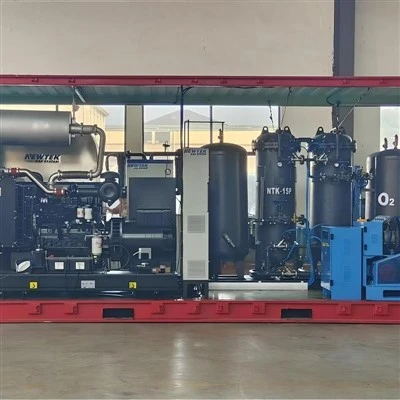
NEWTEK PSA oxygen generators adopt Pressure Swing Adsorption technology to separate oxygen from compressed air. Instead of relying on liquid oxygen deliveries or oxygen cylinders, the system produces oxygen directly onsite, continuously and automatically.
The operating logic is straightforward:
- Ambient air enters the air compressor
- Air passes through filtration and drying systems
- Nitrogen is adsorbed inside molecular sieve towers
- Oxygen is separated and stored
- Oxygen is delivered into the aquaculture oxygenation system


Key Advantages for Aquaculture Operators
- Stable Dissolved Oxygen Levels: Continuous oxygen production helps maintain more consistent DO values compared with intermittent aeration methods.
- Reduced Oxygen Supply Cost: Eliminates repeated cylinder replacement and liquid oxygen transportation expenses.
- 24/7 Automatic Operation: Industrial PSA systems can operate continuously with automatic control systems for long-term farm operation.
- Scalable for Different Sizes: Configurable for small shrimp ponds, medium fish farms, large industrial RAS projects, and mobile containerized stations.
- Easier Remote Deployment: Onsite generation reduces logistics dependence for remote farms.
3. Aquaculture Applications That Require Stable Oxygen
Modern onsite oxygen generation systems are increasingly used across different aquaculture sectors where continuous oxygen supplementation is required.
🐟 Fish Farming
Applicable for Tilapia, Salmon, Catfish, Trout, Grouper, and high-density pond culture. Maintains DO levels during feeding peaks.
🦐 Shrimp Farming
Prevents rapid oxygen depletion at night or during algae fluctuations. Improves survival rate and stocking density capacity.
🔄 RAS (Recirculating Systems)
Commonly integrated with oxygen cones, protein skimmers, degassing towers, and fine bubble diffusion systems.
🦞 Seafood Holding Tanks
Used by restaurants and distributors to keep lobsters, crabs, shellfish, and live fish in stable holding conditions.
4. System Configuration for Aquaculture
A complete aquaculture oxygen generation system usually includes the following core components:
Containerized Oxygen Plants for Aquaculture Projects
For remote aquaculture operations or outdoor installations, containerized oxygen plants integrate all elements inside a standardized structure. Benefits include faster installation, outdoor weather protection, and simplified project deployment. Especially suitable for coastal shrimp farms and offshore aquaculture bases.
5. FAQ
What oxygen purity is suitable for aquaculture?
Most aquaculture projects use oxygen purity between 90% and 95%. The exact requirement depends on fish species, water conditions, and oxygen injection method.
Can PSA oxygen generators run continuously?
Yes. Industrial PSA oxygen systems are designed for continuous 24/7 operation with automatic switching and control functions.
Is a containerized oxygen plant suitable for outdoor fish farms?
Yes. Containerized systems are widely used for outdoor aquaculture projects because they simplify transportation, installation, and environmental protection.
Can onsite oxygen generation replace oxygen cylinders?
In many commercial aquaculture operations, PSA oxygen systems significantly reduce or completely replace cylinder usage, especially for continuous oxygen demand applications.
How is oxygen flow capacity selected?
The required oxygen flow depends on water volume, stocking density, species type, feeding intensity, and daily oxygen consumption. System sizing should be calculated based on actual farm operating conditions.
Discuss Your Aquaculture Oxygen Requirements
Every aquaculture project has different oxygen demand characteristics. When requesting a solution proposal, it is helpful to provide:
- Aquaculture type (fish, shrimp, RAS, seafood holding, etc.)
- Water volume or pond quantity & Required oxygen flow rate
- Existing aeration method & Installation country/location
- Ambient temperature conditions & Power supply conditions
- Expected operating hours
Ask For A Quick Quote
Please provide your requirements and our engineers will recommend the suitable oxygen solution for you.
Contact Us ➔Recommended Related Solutions
PSA Oxygen Generator
Reliable and energy-saving production solution.
Containerized Oxygen Plant
Plug-and-play design for easy installation.
Aquaculture Oxygen Solutions
Customized oxygen supply for fish & shrimp farms.