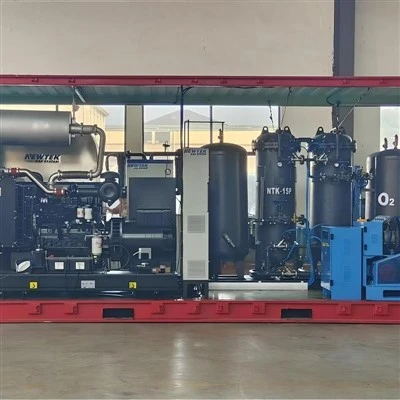
Industrial oxygen, often called the "blood of modern industry," is essential for key sectors such as steel smelting, chemical production, and medical emergencies. From cryogenic separation to intelligent molecular sieve technologies, its production processes continue to innovate; its applications expand from traditional manufacturing to new energy fields. This article analyzes the core value and technical breakthroughs of industrial oxygen from multiple angles-molecular properties, production technologies, purity standards, applications, safety management-and explores its strategic role in sustainable development, incorporating the latest 2025 industry trends.

The Essence and Molecular Properties of Industrial Oxygen
Industrial oxygen is high-purity oxygen extracted from air via physical or chemical methods, with a core component of O₂ molecules and a purity typically exceeding 99.2%. As a diatomic molecule, oxygen exhibits strong oxidizing properties, reacting with numerous substances-qualities that make it widely used as an oxidizer, combustion promoter, and reactant in industry.
Its molecular structure features a bond energy of 498 kJ/mol, with oxygen molecules readily breaking into reactive oxygen atoms under high temperatures or catalysis, accelerating chemical reactions. For example, in steelmaking, oxygen reacts with carbon to form CO₂, releasing significant heat (ΔH=-393.5 kJ/mol) that raises furnace temperatures above 1,600°C, drastically improving smelting efficiency.
Technological Evolution: From Cryogenic to Intelligent Adsorption
Industrial oxygen production has evolved from traditional cryogenic separation to intelligent adsorption technologies, with 2024 witnessing breakthroughs that enhance efficiency and sustainability.
Cryogenic Separation
Principle: Air is liquefied at extremely low temperatures (-183°C), and oxygen (boiling point -183°C) is separated from nitrogen (boiling point -196°C) via fractional distillation based on boiling point differences.
Advantage: Produces high-purity oxygen (≥99.5%), suitable for large-scale industrial demands.
Case: A steel manufacturing plant uses a cryogenic air separation unit to generate 20,000 m³ of oxygen per hour, supporting continuous blast furnace operations.
Pressure Swing Adsorption (PSA) Technology
Innovation: New intelligent molecular sieve PSA systems use parallel/series switching of dual air tanks to boost oxygen production efficiency by 20% and reduce energy consumption by 15%. This dynamic adjustment of adsorption tower connections flexibly meets varying purity needs-parallel mode for high efficiency, series mode for higher purity.
Applications: Ideal for small and medium enterprises, such as oxygen packaging in food processing or chip cleaning in electronics.

Water Electrolysis
Technical Breakthrough: Proton exchange membrane (PEM) electrolyzers achieve 85% electrical efficiency, reducing energy consumption to 4.5 kWh per m³ of oxygen-30% lower than traditional alkaline electrolyzers. Paired with renewable energy (wind, solar), this enables carbon-neutral oxygen production, a critical technology for the hydrogen value chain.
Purity Grading and Upgrades to National Standards
The revised 2024 National Standard for Industrial Oxygen (GB/T 3863-2024) tightens purity and impurity controls:
Purity Requirements: Minimum purity standardized at ≥99.2%, with new mandatory tests for moisture (≤0.07 g/m³) and oil (non-detectable).
Testing Technology: Gas chromatography is used to measure trace impurities like carbon monoxide (≤10 ppm) and methane (≤5 ppm), ensuring stability.
Purity grades match specific applications:
Standard Oxygen (99.2%): Used in steel smelting and glass manufacturing, where minor impurities are tolerable.
High-Purity Oxygen (99.99%): Critical for precision fields like semiconductor lithography and aerospace propellants.
Diverse Applications Across Industries
Industrial oxygen's uses extend from traditional manufacturing to emerging strategic sectors:
Steel and Nonferrous Metals Smelting
Blast Furnace Steelmaking: Top-bottom combined blowing technology consumes 40–50 m³ of oxygen per ton of steel, reducing smelting time by 30% and coke consumption by 15%.
Aluminum Electrolysis: Oxygen participates in alumina calcination, cutting energy use by 8% and reducing nitrogen oxide emissions.
Chemicals and Energy
Petroleum Refining: Oxygen accelerates heavy oil cracking in catalytic reforming units, increasing light oil yields by 5–8%.
Hydrogen Production: High-purity oxygen byproduct from water electrolysis for hydrogen can directly feed chemical synthesis, creating a "green hydrogen + green oxygen" closed loop.
Medical and Environmental Applications
Emergency Oxygen Supply: Medical oxygen must meet GB 8982 standards (≥99.5% purity), but industrial oxygen can be further purified for emergency medical use.
Wastewater Treatment: Oxygen is converted to ozone (O₃) via electrical discharge in ozonation, achieving a 90% COD removal rate in dyeing wastewater.
Electronics and Aerospace
Semiconductor Manufacturing: High-purity oxygen mixes with carbon tetrafluoride (CF₄) to form plasma for nanoscale silicon wafer etching.
Rocket Propulsion: Liquid oxygen (-183°C) paired with liquid hydrogen in cryogenic engines achieves a specific impulse of 455 seconds, supporting launch missions for carrier rockets.
End-to-End Safety Management
The flammable and explosive nature of industrial oxygen demands strict safety controls across the value chain:
Production
Explosion Prevention: Air separation units use stainless steel to avoid rust-oxygen reactions; molecular sieve towers monitor temperature to prevent adsorption heat-induced combustion.
Waste Gas Recycling: Nitrogen byproduct from cryogenic separation is reused for food preservation, and argon for welding protection, enabling resource circularity.
Storage and Transportation
Cylinder Management: Oxygen cylinders comply with GB 5099 standards, undergoing hydrostatic tests every 3 years; 防震胶圈 (anti-vibration rubber rings) and 固定支架 (固定支架) prevent collision during transport.
Liquid Oxygen Transport: Vacuum-insulated tankers maintain daily evaporation rates below 0.1% for safe long-distance transport.
Usage
Leak Monitoring: Oxygen concentration sensors in workshops trigger alarms and ventilation when levels exceed 23.5%.
Operation Protocols: In welding, oxygen and acetylene cylinders must be kept 5 meters apart to prevent mixed combustion explosions.
Innovations in Green Oxygen Production
Driven by "double carbon" goals, industrial oxygen production is shifting to low-carbon methods:
Renewable Energy Integration
Solar Oxygen Production: A new energy project in northwest China uses solar-powered electrolysis to produce 50,000 tons of oxygen annually, cutting carbon emissions by 120,000 tons.
Wind-Powered Electrolysis: Excess wind energy drives PEM electrolyzers, enabling "green electricity to green oxygen" for hydrogen heavy trucks.
Intelligent Upgrades
Energy Efficiency: New oxygen production units with multi-stage desiccant layers improve air purification efficiency by 40% and reduce energy use by 18%.
Smart Monitoring: AI algorithms predict molecular sieve saturation, dynamically adjusting switching cycles to extend equipment life by 20%.
Demand Transformation Driven by the Hydrogen Industry
As a core clean energy carrier, hydrogen is reshaping industrial oxygen demand:
Hydrogen Refueling Stations: Producing 1 ton of green hydrogen yields 8 tons of high-purity oxygen as a byproduct, directly usable in chemicals and electronics for a "hydrogen production-oxygen utilization" synergy.
Hydrogen Metallurgy: Hydrogen direct reduction iron (DRI) technology consumes 150 m³ of oxygen per ton of hot metal, cutting carbon emissions by 90% compared to traditional blast furnaces.
Conclusion and Future Trends
Industrial oxygen is evolving from a "basic industrial gas" to a "strategic resource":
Technical Trends: Intelligent adsorption, renewable energy integration, and hydrogen synergy will dominate, driving efficiency gains and cost reductions.
Market Expansion: Demand from (emerging sectors like semiconductors, aerospace, and environmental protection) will grow faster than traditional industries, with the global market expected to exceed $61.8 billion by 2030.
Sustainability: Green electricity-based production and resource recycling will position industrial oxygen as a key enabler for carbon neutrality goals.
For enterprises, focusing on technological innovation (dynamic adsorption control, hydrogen integration) and niche applications (semiconductor high-purity oxygen, hydrogen metallurgy) while strengthening safety and green practices will be critical to seizing opportunities in this evolving landscape.