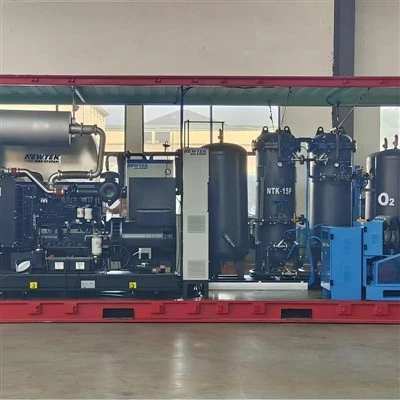
High-capacity oxygen cylinder filling requires more than a large PSA oxygen generator. The best configuration must coordinate oxygen production, gas buffering, pressure boosting, filling manifolds, cylinder handling, and control systems so that the plant can maintain its required filling rate without disrupting downstream operations.
For most industrial oxygen cylinder filling projects, a continuous PSA oxygen generation system with adequate buffer storage, a dedicated oxygen booster compressor, and a multi-cylinder filling manifold is a practical starting point. For higher output targets, parallel generation trains or a larger integrated system may provide better operational flexibility, depending on demand, required oxygen purity, filling pressure, and the site's available utilities.
The correct design should be based on the number and size of cylinders filled per shift, the target filling pressure, the required oxygen specification, and the acceptable level of downtime-not simply the nominal capacity of the generator.
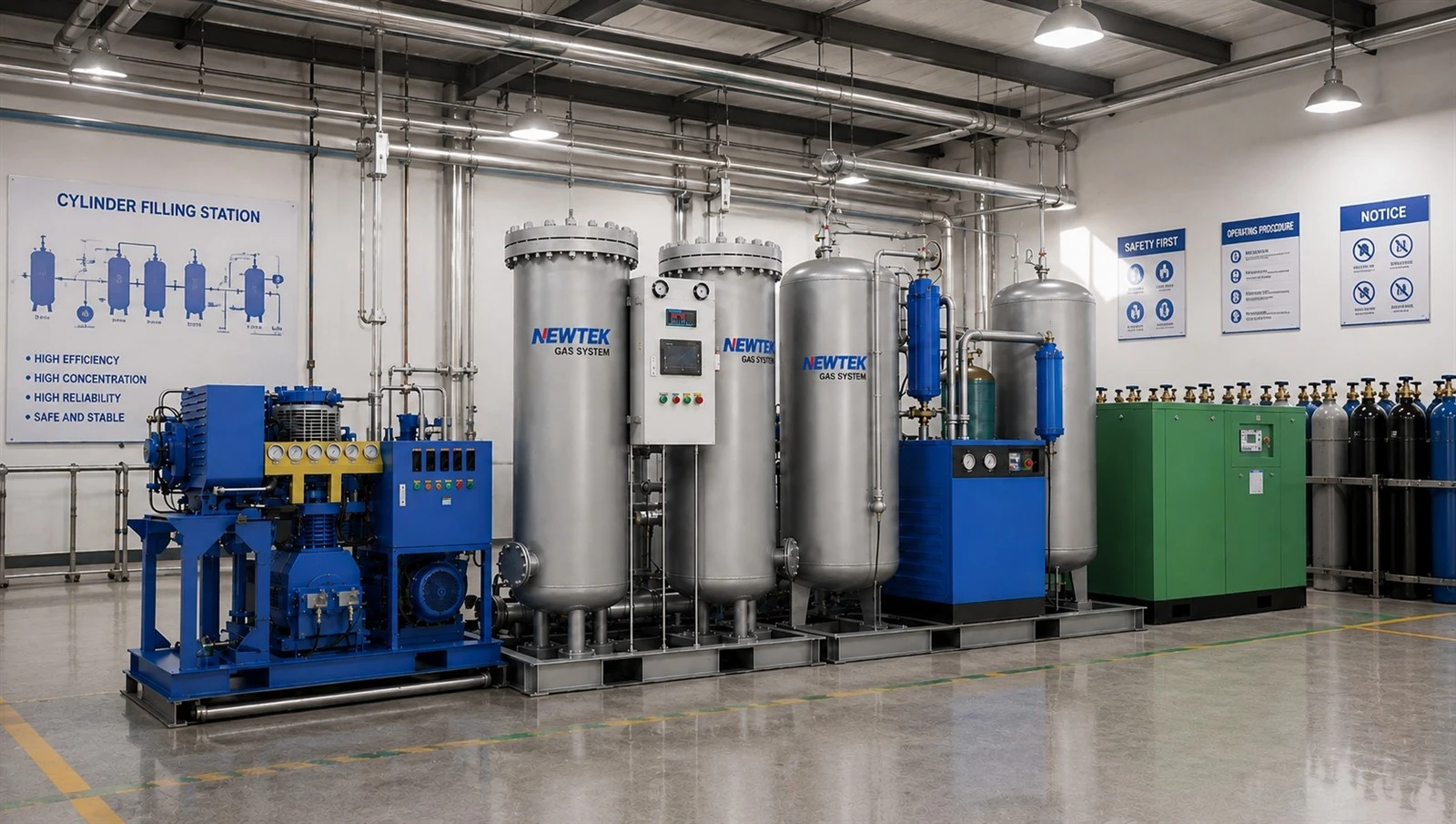
Start With the Required Cylinder Filling Capacity
Before selecting equipment, define the actual production target. A cylinder filling station may operate continuously or in batches, and these operating patterns create different demands on the oxygen supply system.
A plant filling standard industrial oxygen cylinders needs to consider:
The number of cylinders filled per hour or per shift.
The usable gas volume required per cylinder.
The operating pressure and filling time.
The daily production schedule and peak demand.
The expected number of cylinders delayed or rejected during inspection.
The time needed for cylinder connection, disconnection, weighing, inspection, and handling.
A system designed only around average daily consumption may fail to meet peak filling demand. Conversely, excessive generator capacity can increase capital expenditure and reduce the efficiency of equipment operating far below its design point.
Key parameters to establish before equipment selection
| Design parameter | What the buyer needs to specify |
|---|---|
| Filling capacity | Cylinders per hour, shift, and day |
| Cylinder size | Water capacity and intended gas content |
| Filling pressure | Required final pressure under the applicable filling standard |
| Oxygen purity | Required specification at the filling system inlet and, where applicable, at the cylinder |
| Operating schedule | Hours per day, shifts per week, and peak periods |
| Supply pressure | Pressure required at the booster inlet |
| Filling pressure boosting | Required discharge pressure and compressor duty |
| Availability | Required operating continuity and maintenance allowance |
| Site conditions | Ambient temperature, altitude, dust, humidity, and power supply |
| Expansion plans | Expected demand increase and provision for additional equipment |
These inputs establish the design basis for the entire plant, including the PSA generator, buffer vessels, compressor, piping, cooling equipment, and filling station.
Choose the Right PSA System Configuration
The generator arrangement determines how the plant responds to fluctuating demand, equipment maintenance, and unexpected faults. For a high-capacity filling facility, three common configurations deserve consideration.
Option A: One Large PSA Generation Train
Suitable when demand is relatively stable and minimizing initial equipment investment is a priority. A single train can simplify the layout, but a major generator or upstream compressor fault may interrupt production unless spare capacity or a backup source is available.
Option B: Multiple PSA Trains Operating in Parallel
Often a strong choice for larger filling stations with variable demand or strict continuity targets. Multiple trains can share the load, allow some equipment to be serviced while other trains operate, and support staged capacity increases. Actual redundancy depends on whether the remaining trains can meet the required production rate.
Option C: Redundant Critical Equipment
A system may use duty/standby air compressors, parallel dryers, duplicated filtration, spare booster capacity, and independent control or isolation arrangements. This can improve availability, but redundancy should be designed around actual failure risks rather than duplicating every component automatically.
For a high-output operation, a multi-train configuration with appropriately sized buffer storage and redundant critical equipment is often worth evaluating first. The final choice depends on the production target and the cost of lost filling hours.
Multiple trains do not automatically guarantee uninterrupted operation. Common electrical supplies, shared cooling systems, common control panels, or a single booster can still become points of failure.
Size the Oxygen Generator for Continuous Demand
PSA generator capacity should be specified as a guaranteed oxygen flow at a stated purity, pressure, and set of operating conditions. A headline flow rate without these conditions is insufficient for comparing supplier quotations.
Three factors are particularly important.
Flow at the required purity: Production capacity can change with the specified oxygen concentration and operating conditions. Ask the supplier to state the guaranteed flow at the contractual purity rather than relying on maximum flow at a lower concentration.
Site derating: High ambient temperatures, altitude, and compressed-air limitations can affect system output and energy consumption. The supplier should account for the actual installation environment.
Usable production margin: The generator must supply both average oxygen demand and the demand profile created by batch filling. Storage can smooth short peaks, but it cannot compensate indefinitely for insufficient average production.
For parallel units, the design should document the total output with all trains operating and the available output when one train is unavailable. This second figure is especially important when the filling station has delivery commitments.
Illustrative sizing example
Assume a facility needs to deliver 600 cylinders per day, with each cylinder holding a nominal gas quantity equivalent to 6 Nm³ under the project's defined reference conditions.
The daily gas requirement is:
600 × 6 = 3,600 Nm³/day
If the plant operates for 20 hours per day, the simple average generation requirement is:
3,600 ÷ 20 = 180 Nm³/h
This is a preliminary calculation, not a final equipment selection. The engineer must confirm the actual gas content per cylinder, reference conditions, filling losses, operating schedule, and any gas demand outside the filling station. A suitable production margin should then be established from the supplier's performance guarantees and the site's demand profile.
If the facility must continue at full output when one generation train is offline, the installed capacity must be sized against that contingency-not merely against the average flow.
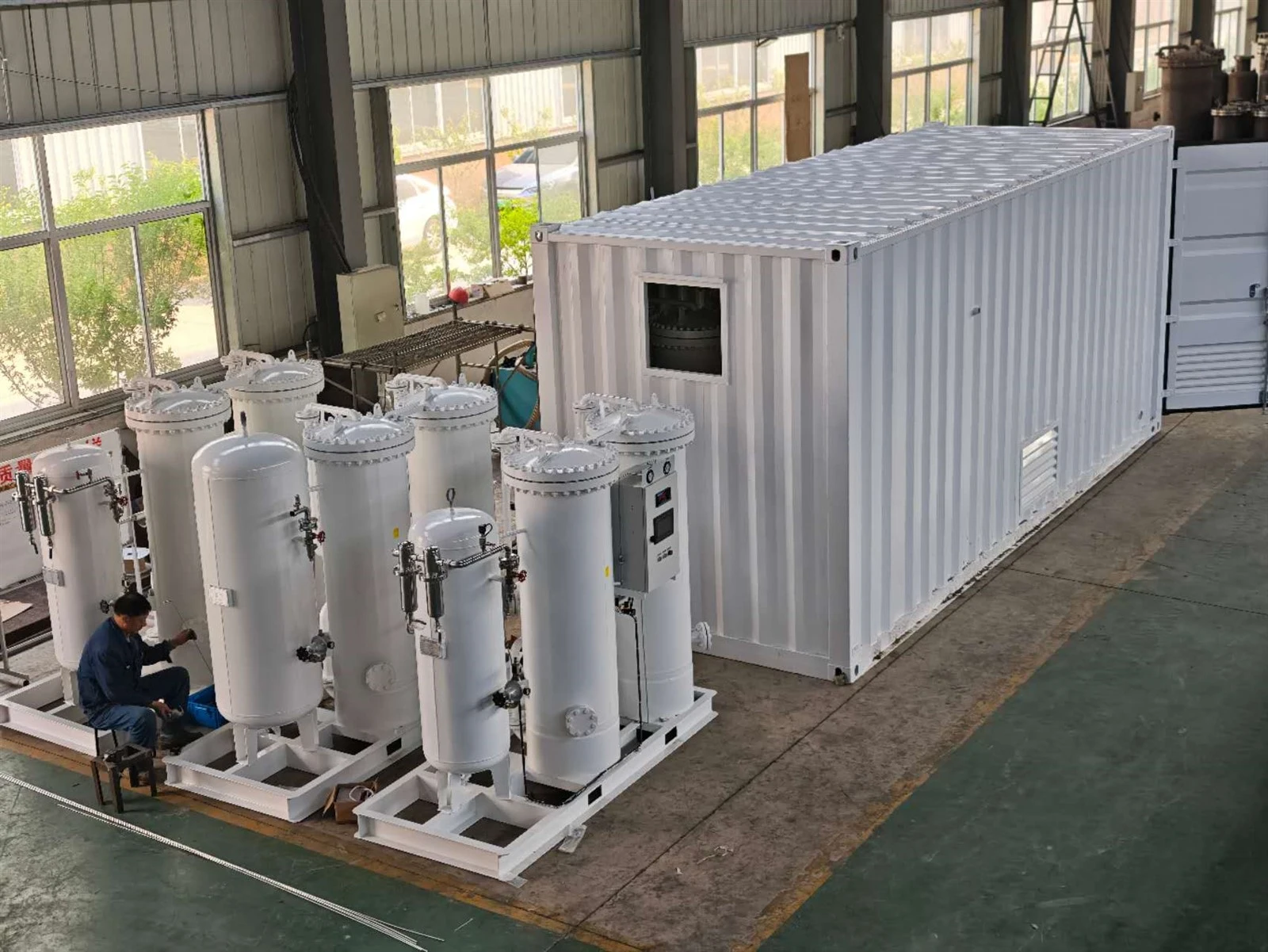
Integrate the Generator With Buffer Storage
An oxygen buffer tank sits between the PSA generator and the downstream booster or filling system. It provides a reserve of gas that can help absorb short-term differences between generation and consumption.
This is important because PSA generation is continuous and cyclical, whereas cylinder filling typically occurs in batches. Several cylinders may draw gas simultaneously, producing demand peaks that exceed the generator's instantaneous output.
A properly designed buffer can:
Reduce rapid pressure fluctuations at the booster inlet.
Provide a short reserve during changes in filling demand.
Help the generator operate more steadily.
Support orderly system control during startup and shutdown.
However, storage volume should not be chosen by a generic rule alone. The engineer needs the generator's delivery rate, the booster suction-pressure range, the required peak flow, and the time period the buffer must cover.
The buffer vessel must also be compatible with the gas service, design pressure, local pressure-vessel requirements, and applicable oxygen cleanliness requirements. Pressure instruments, isolation arrangements, and relief protection should be selected as part of the complete system design.
A large buffer tank is not a substitute for adequate generator capacity. If average oxygen production remains below average filling demand, the tank will eventually lose pressure and the filling rate will have to fall.
Select a Booster Compressor for the Required Filling Pressure
The PSA generator normally produces oxygen at a much lower pressure than the final pressure required in a high-pressure cylinder. A dedicated oxygen booster compressor is therefore a central component of the filling system. A typical arrangement places oxygen storage between the generator and booster, then routes compressed oxygen to a filling manifold.
When evaluating a booster, assess more than its maximum discharge pressure.
| Parameter | What to verify |
|---|---|
| Oxygen inlet pressure | Minimum and normal suction pressure available from the buffer |
| Discharge pressure | Required final filling pressure under the applicable cylinder standard |
| Flow capacity | Deliverable oxygen flow at the specified inlet and discharge pressures |
| Duty cycle | Continuous, intermittent, or batch operation |
| Cooling method | Suitability for local ambient conditions and expected running hours |
| Oxygen compatibility | Materials, seals, lubricants where applicable, and cleanliness requirements |
| Maintenance | Service intervals, consumables, spare parts, and local technical support |
| Redundancy | Whether standby capacity is needed to maintain filling output during maintenance |
The booster must be rated for oxygen service. Ordinary industrial gas compressors should not be assumed suitable for oxygen simply because their pressure ratings appear sufficient. Oxygen-compatible design, cleanliness, correct assembly, and operating procedures are essential because oxygen-enriched environments can make materials ignite more readily and burn more intensely.
For a high-capacity station, compare a single large booster with two smaller units in duty/standby or parallel operation. The better arrangement depends on the required filling rate, compressor turndown, maintenance access, and whether one unit can maintain a commercially acceptable output during the other's downtime.
Match the Filling Manifold to the Production Target
The filling manifold determines how many cylinders can be connected and filled concurrently. Increasing the number of filling positions can improve throughput, but only if the generator, booster, piping, and cylinder-handling process can support the added demand.
The manifold layout should consider:
Number of cylinder connections and the number used simultaneously.
Rated pressure of the manifold, valves, hoses, connectors, and associated components.
Pressure drop through the piping and connections at peak flow.
Cylinder identification, inspection, weighing, and handling procedures.
Isolation and emergency shutdown arrangements.
Operator access and separation of full and empty cylinders.
A manifold with more connections does not necessarily deliver more filled cylinders per hour. The booster may become the bottleneck, or the cylinder exchange process may take longer than the gas filling cycle. A realistic throughput assessment should include connection time, pressure equalization, final pressure verification, disconnection, and movement of cylinders.
For very high volumes, the plant layout may need dedicated cylinder staging areas, mechanical handling equipment, clear traffic routes, and a filling schedule that minimizes idle time at each position.
Build Oxygen Quality Monitoring Into the System
A high-capacity filling facility needs a defined quality-control plan covering the PSA outlet, buffer storage, booster discharge where applicable, and filled cylinders. Monitoring only the generator display may not demonstrate that the final product meets every requirement.
The quality specification must be agreed with the intended market and application. Industrial oxygen, medical oxygen, and oxygen supplied under other regulated specifications may have different acceptance criteria. A medical cylinder-filling project, for example, requires verification against the applicable medical oxygen specification and local regulatory requirements; a generic PSA generator specification is not sufficient by itself.
The system specification should define:
Required oxygen concentration and test method.
Relevant impurity limits and sampling points.
Continuous or periodic monitoring requirements.
Alarm thresholds and corrective actions.
Procedures for isolating or rejecting off-specification gas.
Calibration and maintenance intervals for analyzers.
Records needed for batch traceability and customer acceptance.
Where required, an automatic diversion or isolation arrangement should prevent off-specification oxygen from entering the filling process. The control logic should specify what happens when purity falls below the acceptance threshold, an analyzer fails, or a sensor signal becomes unreliable.
Include Safety, Controls, and Backup Supply
A well-designed high-capacity plant combines process controls with physical safety measures. The control system should monitor key operating variables, including generator status, oxygen concentration, buffer pressure, booster operation, discharge pressure, and relevant alarms.
A project specification should also address:
Emergency shutdown and safe isolation of equipment.
Oxygen-compatible piping and fittings selected for the pressure and service.
Leak testing and oxygen-cleaning requirements.
Ventilation and management of oxygen-enriched atmospheres.
Separation from incompatible materials, oils, greases, and ignition hazards.
Pressure relief and protection against overpressure.
Electrical supply reliability and backup power where justified.
Preventive maintenance, operator training, and emergency response procedures.
A backup oxygen source may be necessary where delivery commitments or safety requirements do not allow filling to stop during power failure, maintenance, or a major equipment fault. Its capacity and automatic or manual changeover arrangements should be specified against the required response time and duration of backup operation.
For medical or other regulated installations, confirm applicable national rules, required certifications, commissioning tests, and documentation before placing the system into service. General oxygen safety guidance can support the design process, but applicable local regulations and the equipment manufacturer's instructions remain essential.
Compare the Main Configuration Options
The following comparison can help buyers prepare a preliminary equipment specification.
| Configuration | Main advantage | Main limitation | Best fit |
|---|---|---|---|
| Single PSA train + one booster | Lower initial equipment cost and simpler layout | A major equipment fault may stop filling | Smaller facilities with flexible production schedules |
| Single PSA train + standby booster | Backup for booster maintenance or failure | Does not cover generator failure | Facilities where booster availability is the primary concern |
| Parallel PSA trains + one booster | Flexible oxygen generation capacity | Shared booster remains a potential bottleneck | Variable demand where booster downtime is acceptable |
| Parallel PSA trains + redundant booster capacity | Better operational resilience and maintenance flexibility | Higher capital and maintenance costs | High-output facilities with strict delivery targets |
| Multi-train system with redundant critical utilities and controls | Better protection against selected equipment failures | More complex engineering, controls, and commissioning | Large facilities where continuity is commercially important |
No configuration is automatically best for every plant. The design should identify the failure scenarios that matter most and establish the minimum production rate that must remain available under each scenario.
Evaluate Total Operating Cost, Not Just Equipment Price
For a high-capacity cylinder filling station, the purchase price is only one part of the investment. The operating cost per filled cylinder depends on electricity consumption, maintenance, consumables, labor, utilization, and the number of saleable cylinders produced.
Ask suppliers to provide comparable data for:
Total installed electrical load and expected energy consumption.
Guaranteed oxygen flow at the specified purity and operating conditions.
Booster performance at the specified suction and discharge pressures.
Recommended service intervals and estimated annual maintenance costs.
Replacement parts, consumables, and service availability.
Performance during partial-load operation.
Warranty coverage, commissioning, training, and performance testing.
A low-priced system may become expensive if it consumes more electricity per unit of oxygen, requires frequent servicing, or cannot sustain the required filling output. On the other hand, unnecessary duplication can increase capital costs without improving the plant's actual availability. The procurement objective is to achieve the required output and uptime at a competitive lifecycle cost.
What to Request in the Supplier's Technical Proposal
Before comparing quotations, ask each supplier to provide a complete technical package rather than a generator-only price.
High-capacity filling system quotation checklist
Guaranteed oxygen flow, purity, and generator outlet pressure.
Number of PSA trains and capacity available with one train offline.
Air compressor, dryer, filtration, and air receiver specifications.
Oxygen buffer tank volume and design pressure.
Booster capacity at specified suction and discharge conditions.
Filling manifold quantity, connection count, and rated pressure.
Oxygen analyzer, alarm, isolation, and control logic.
Electrical load, cooling requirements, and site utility requirements.
Piping and oxygen-cleanliness specifications.
Installation layout, P&ID, and equipment list.
Commissioning tests, acceptance criteria, and operator training.
Spare parts, maintenance schedule, warranty, and service response.
A supplier should also explain the performance assumptions behind its proposal. In particular, clarify whether the quoted output is guaranteed at the required purity, what happens at the site's maximum ambient temperature, and how much filling capacity remains available during planned maintenance.
FAQ
Is one large PSA generator better than multiple smaller units?
Not necessarily. One large unit can reduce equipment duplication, but multiple units can provide load flexibility and make maintenance easier. For high-capacity projects, compare the total installed cost with the required output when one train is unavailable.
Can a larger oxygen buffer tank replace additional generator capacity?
No. Buffer storage can support short-term peaks and smooth pressure fluctuations, but it cannot resolve a persistent shortfall in oxygen production. Generator capacity must cover the long-term demand profile.
Does the filling station need more than one booster compressor?
That depends on the target throughput and acceptable downtime. A single correctly sized booster may be sufficient for a flexible operation. Where filling must continue during booster maintenance or failure, a standby or parallel arrangement may be justified.
What information is needed to select a suitable configuration?
At minimum, provide the target cylinders per hour or per day, cylinder size, required filling pressure, oxygen specification, daily operating hours, site conditions, and continuity requirements. These inputs allow the supplier to size the generation, storage, compression, and filling sections as one integrated system.
Conclusion
For high-capacity oxygen cylinder filling, the most suitable PSA configuration is usually determined by the relationship between continuous oxygen generation and batch filling demand. A practical starting point is a PSA generation system sized for the required purity and flow, an adequately engineered buffer tank, a dedicated oxygen booster, and a multi-position filling manifold.
For facilities with demanding production targets, evaluate parallel PSA trains and redundant booster capacity, while checking for common points of failure in the electrical supply, controls, and utilities. The final specification should include guaranteed performance, oxygen quality controls, pressure protection, maintenance arrangements, and a documented commissioning plan.
The key is to size the complete filling system around saleable cylinders per hour, required oxygen quality, and acceptable downtime-not simply the nominal output printed on a generator datasheet.