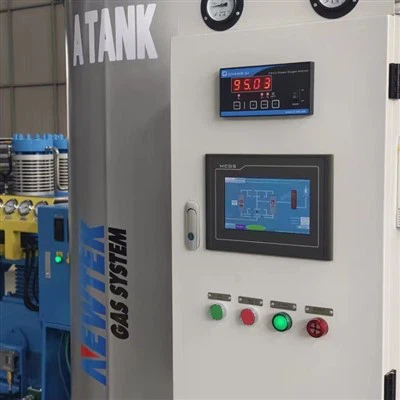
Medical Psa Oxygen Generation Plant User Guide
Installation: The plant should be installed in a well-ventilated area by qualified technicians. Ensure proper connection to a compressed air source and electrical supply.
Startup: Follow the manufacturer's instructions to start the plant. The system will automatically begin the oxygen generation process.
Operation: The plant operates automatically. Regularly monitor the oxygen purity and pressure levels through the control panel.
Shut down: In case of power failure or maintenance, shut down the plant according to the manufacturer's instructions.

Traditional Oxygen Cylinders vs PSA Oxygen Generation Plants
| Feature | Traditional Oxygen Cylinders | PSA Oxygen Generation Plants |
|---|---|---|
| Oxygen Source | Pre-filled cylinders of compressed oxygen gas. | Generates oxygen on-demand from ambient air using Pressure Swing Adsorption (PSA) technology. |
| Purity | Typically 99.5% or higher. | Medical grade, typically 93% +/- 3% (can be higher depending on model and configuration). |
| Availability | Dependent on supplier and delivery schedules. Can be limited during peak demand or supply chain disruptions. | Continuous and on-demand oxygen generation, providing independence from external suppliers. |
| Storage | Requires significant space for cylinder storage and handling. | Compact design requires minimal space compared to cylinder storage. |
| Cost | Recurring costs for cylinder refill and delivery. | Initial investment with significantly lower operating costs over time. Eliminates costs associated with cylinder refill, delivery, and handling. |
| Maintenance | Minimal maintenance required for cylinders themselves, but logistics and handling involve some operational overhead. | Regular maintenance of the PSA plant is essential, including filter replacements, valve checks, and general system inspections. |
| Portability | Portable cylinders are available for ambulatory patients, but larger cylinders are heavy and not easily transportable. | Stationary installation. Not designed for portability. |
| Safety | Potential hazards include cylinder rupture, valve failure, and risks associated with high-pressure systems. Proper handling and storage procedures are crucial. | Designed with safety features like pressure relief valves and oxygen sensors. Regular maintenance is necessary to ensure safe operation. |
| Noise Level | Generally quiet. | Can be noisier than cylinders due to the operation of the compressor and other mechanical components. Soundproofing options are often available. |
| Scalability | Scalability is achieved by adding more cylinders, which requires additional storage space and logistics. | Scalable by increasing the capacity of the PSA plant or adding additional modules. Offers greater flexibility in adapting to changing oxygen demands. |
| Environmental Impact | Cylinder production and transportation contribute to carbon emissions. | More environmentally friendly due to reduced transportation and less frequent need for cylinder production. Uses electricity, so the environmental impact depends on the source of the electricity. |
| Medical Oxygen Function |
How Oxygen is Used in Medical Settings: Respiration Support: Oxygen is essential for patients with respiratory illnesses, such as COPD, asthma, or pneumonia, helping them breathe easier. Anesthesia: Used in combination with other gases to maintain anesthesia during surgery. Oxygen Therapy: Administered to patients with low blood oxygen levels due to various medical conditions. Wound Healing: Hyperbaric oxygen therapy (HBOT) uses high-pressure oxygen to promote healing of certain wounds. Cardiac Support: Helps patients with heart conditions by improving oxygen delivery to the heart muscle. Pain Management: Oxygen can be used as an adjunct therapy to manage pain in some cases. |
How Oxygen is Used in Medical Settings: Respiration Support: Oxygen is essential for patients with respiratory illnesses, such as COPD, asthma, or pneumonia, helping them breathe easier. Anesthesia: Used in combination with other gases to maintain anesthesia during surgery. Oxygen Therapy: Administered to patients with low blood oxygen levels due to various medical conditions. Wound Healing: Hyperbaric oxygen therapy (HBOT) uses high-pressure oxygen to promote healing of certain wounds. Cardiac Support: Helps patients with heart conditions by improving oxygen delivery to the heart muscle. Pain Management: Oxygen can be used as an adjunct therapy to manage pain in some cases. |
Maintenance Manual
- Regular Inspections: Conduct regular visual inspections of the plant, including checking for leaks, loose connections, and unusual noises.
- Filter Replacement: Replace the air intake filters according to the manufacturer's recommended schedule to ensure optimal performance and prevent contamination.
- Molecular Sieve Replacement: The zeolite molecular sieves have a limited lifespan and need to be replaced periodically. Follow the manufacturer's guidelines for replacement.
- Cleaning: Keep the exterior of the plant clean and free of dust and debris.
- Calibration: Regularly calibrate the oxygen purity sensor to ensure accurate readings.
- Professional Servicing: Schedule periodic professional servicing by qualified technicians to inspect and maintain the plant, ensuring its continued reliable operation.
Explanation of Chemical Equations and Medical Functionality
1. Hemoglobin Binding
The equation O₂ + Hb → HbO₂ represents the binding of oxygen to hemoglobin, forming oxyhemoglobin. This process is crucial for transporting oxygen from the lungs to tissues and releasing it where needed.
2. Cellular Respiration
The equation C₆H₁₂O₆ + 6O₂ → 6CO₂ + 6H₂O + Energy illustrates how oxygen is used in cellular respiration to break down glucose, releasing energy stored in ATP. This process is vital for the functioning of cells, especially in high-energy-demand organs like the brain and heart.
3. Hyperbaric Oxygen Therapy
In hyperbaric chambers, increased oxygen pressure accelerates wound healing by promoting the formation of new blood vessels and reducing infection risk. This is particularly beneficial for chronic wounds and tissue damage.
4. Medical Functionality of Oxygen
- Respiratory Support: Oxygen therapy helps patients with conditions like COPD or asthma by supplementing the oxygen they can inhale.
- Anesthesia: During surgeries, oxygen is crucial for maintaining patient oxygenation and supporting vital functions.
- Wound Healing: In hyperbaric oxygen therapy, high oxygen levels enhance tissue repair and fight infections.
- Cardiac and Neurological Support: Oxygen therapy improves oxygen delivery to the heart and brain, aiding in recovery from strokes or cardiac events.
Parameter
| Models | Capacity (Nm3/hr) | Purity | Power consumption of 1Nm3 oxygen produced (kw/h) | Number of bottles filled in 12 hours (pcs) | Operator needed |
| NTK95-5P | 5 | 95%+-1% | 3.54 | 10 | 2 |
| NTK95-10P | 10 | 95%+-1% | 2.52 | 20 | 2 |
| NTK95-15P | 15 | 95%+-1% | 2.31 | 30 | 2 |
| NTK95-20P | 20 | 95%+-1% | 2.13 | 40 | 2 |
| NTK95-25P | 25 | 95%+-1% | 2.01 | 50 | 2 |
| NTK95-30P | 30 | 95%+-1% | 2.09 | 60 | 2 |
| NTK95-40P | 40 | 95%+-1% | 1.81 | 80 | 2 |
| NTK95-50P | 50 | 95%+-1% | 1.94 | 100 | 2 |
| NTK95-60P | 60 | 95%+-1% | 1.62 | 120 | 2 |
| NTK95-80P | 80 | 95%+-1% | 1.92 | 160 | 2 |
| NTK95-100P | 100 | 95%+-1% | 1.83 | 200 | 2 |
| Design basis: Altitude:≤500m;RH:≤80%;Temperature:0℃-38℃;Filling pressure: 150Bar 40L Type Standard Cylinder | |||||
FAQ
Q: We're a small medical clinic, and we're constantly running out of oxygen cylinders during peak seasons. It's disruptive and affects patient care. What are our options?
A: I understand the challenges of relying solely on traditional oxygen cylinders. You might want to consider a PSA Oxygen Generation Plant. While the initial investment is higher, it offers a continuous and reliable supply of oxygen on-demand, eliminating the risk of running out and reducing the logistical headaches of cylinder management. This can significantly improve patient care during busy periods, especially since oxygen is vital for critical therapies like respiratory support.
Q: We're building a new hospital in a remote area. The cost of transporting oxygen cylinders is extremely high. How can we ensure a cost-effective and consistent oxygen supply?
A: Transporting oxygen cylinders to remote locations can indeed be very costly. It could be an ideal solution. It uses locally available air to produce oxygen, drastically reducing transportation costs. The plant utilizes the Pressure Swing Adsorption process, which involves materials like zeolite that selectively adsorb nitrogen from air, leaving behind high-purity oxygen. This ensures a consistent and affordable supply for your hospital, which is crucial for various medical procedures, including wound healing.
Q: We're concerned about the environmental impact of disposable oxygen cylinders. Are there more sustainable options?
A: Your concern for the environment is commendable. It is a much more sustainable option. They eliminate the need for frequent cylinder deliveries and the associated environmental impact of manufacturing and disposing of metal cylinders. By generating oxygen on-site from the air, they have a significantly lower carbon footprint. This aligns well with the increasing emphasis on eco-friendly practices in healthcare, while still ensuring the vital supply of oxygen needed for medical treatments, such as aiding in better cardiac function.
Q: Our facility experiences power outages. How can we ensure a reliable oxygen supply during these periods?
A: Power outages are a serious concern, especially for facilities relying on oxygen. While it require electricity, they can be integrated with backup power solutions like generators or uninterruptible power supplies (UPS). This ensures a continuous oxygen supply even during outages.
Q: We're a research facility that requires high-purity oxygen for our experiments. Can this meets our stringent requirements?
A: Absolutely. PSA Oxygen Generation Plants are capable of producing high-purity oxygen, typically ranging from 90% to 95%, which is often sufficient for most medical and research applications. For even higher purity demands, additional purification steps can be integrated into the system. Reliable and consistent oxygen purity is crucial for accurate and reproducible results in your research.
Q: We're a large hospital with high oxygen consumption. How can we optimize our oxygen supply chain and reduce costs?
A: For large hospitals with high oxygen consumption, a PSA Oxygen Generation Plant can offer significant cost savings and supply chain optimization in the long run. While the upfront investment is higher, the ongoing operational costs are generally lower compared to constantly purchasing and refilling oxygen cylinders. The plant provides a continuous and on-demand supply, eliminating the need for storage space and the administrative overhead of managing cylinder inventory.
Hot Tags: medical psa oxygen generation plant, China medical psa oxygen generation plant manufacturers, suppliers, medical oxygen manufacturing plant, medical oxygen generator, PSA Oxygen Plant for Hospital, medical oxygen gas generator, oxygen nitrogen gas plant, oxygen gas refilling plant