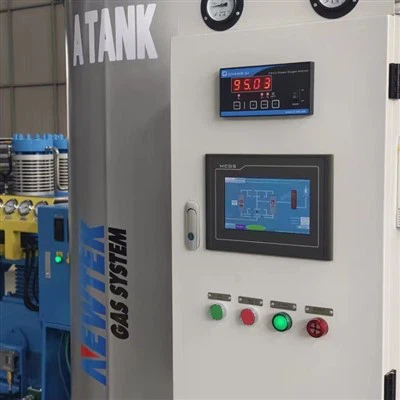
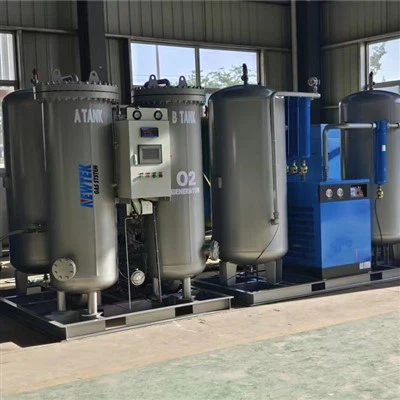
Why choose NEWTEK GAS PSA oxygen plant?
NEWTEK's purity level fully meets the stringent requirements for oxygen purity in various medical scenarios, including key areas such as regular wards, operating rooms, and ICUs, which can effectively support the smooth progress of various medical treatments and protect the life and health of patients.
Low-cost operation
Stable and reliable operating performance
Flexible and convenient operation and maintenance

Free
one-year warranty
Free
on-site installation
Free
commissioning and training
Free
gifts when visiting our factory

Multiple adaptation scenarios
Medical PSA oxygen generators provide continuous and stable oxygen supply for many patients with respiratory diseases (such as chronic obstructive pulmonary disease, asthma, etc.), cardiovascular and cerebrovascular diseases (such as coronary heart disease, heart failure, etc.) and postoperative rehabilitation. Through oxygen therapy, the patient's hypoxia condition can be effectively improved, symptoms such as dyspnea can be relieved, and physical recovery can be promoted.
Private clinic
Field hospital
Temporary shelter
Model and parameter description (customizable)

| Models | Capacity (Nm3/hr) | Purity | Power consumption of 1Nm3 oxygen produced (kw/h) | Number of bottles filled in 12 hours (pcs) | Operator needed |
| NTK95-5P | 5 | 95%+-1% | 3.54 | 10 | 2 |
| NTK95-10P | 10 | 95%+-1% | 2.52 | 20 | 2 |
| NTK95-15P | 15 | 95%+-1% | 2.31 | 30 | 2 |
| NTK95-20P | 20 | 95%+-1% | 2.13 | 40 | 2 |
| NTK95-25P | 25 | 95%+-1% | 2.01 | 50 | 2 |
| NTK95-30P | 30 | 95%+-1% | 2.09 | 60 | 2 |
| NTK95-40P | 40 | 95%+-1% | 1.81 | 80 | 2 |
| NTK95-50P | 50 | 95%+-1% | 1.94 | 100 | 2 |
| NTK95-60P | 60 | 95%+-1% | 1.62 | 120 | 2 |
| NTK95-80P | 80 | 95%+-1% | 1.92 | 160 | 2 |
| NTK95-100P | 100 | 95%+-1% | 1.83 | 200 | 2 |
Maintenance Manual for Medical Oxygen Generators
Please read the maintenance manual carefully before using. If you have any questions, please consult our professional after-sales staff.
Check the compressed air inlet pressure (0.7-1.3MPa) and oxygen outlet pressure (0.3-0.5MPa) daily.
Confirm that there is no abnormal fluctuation in the pressure gauge. If it exceeds the range, shut down for inspection.
Drain the water in the pre-filter every 48 hours, and clean/replace the particle filter and activated carbon filter in the air pretreatment system every month.
Record data such as oxygen purity (95%±1%), flow, dew point (≤-40℃), and trigger the alarm system in case of abnormality.
Check the adsorption performance of the molecular sieve (ZMS) every 6 months. If the oxygen purity is continuously lower than 90%, it needs to be regenerated or replaced (design life is 10 years).
Perform pressure circulation through the automatic switching valve to ensure that there is no residual moisture or oil contamination.
Check the sensitivity of the solenoid valve and pneumatic valve every month, and lubricate the valve stem; use a leak detector to detect the sealing of the pipeline every quarter.
Calibrate the oxygen analyzer (once every quarter), reset the PLC program parameters, and ensure that the automatic start and stop and purity adjustment functions are normal.
Ensure good ventilation to avoid the risk of nitrogen asphyxiation; hot work requires approval in advance. Only use original molecular sieves and filter elements, and unauthorized modifications are prohibited.
- 📞 + 86-15336587300
- 📧 sales@newtekgas.com
- 🌐 www.newtekgas.com
Send us an inquiry to tell us your customization needs
FAQ
Q: How precisely can it control the oxygen purity to meet the strict medical - grade requirements in a hospital setting?
A: It can control the oxygen purity with utmost precision to meet the stringent medical - grade requirements. Advanced control systems are integrated into it, which continuously monitor and adjust the PSA (Pressure Swing Adsorption) process. The system is designed to automatically compensate for any fluctuations in the incoming air quality or changes in demand, ensuring a consistent and reliable supply of high - purity oxygen for patients.
Q: What is the maintenance schedule and associated costs for it in a busy hospital with continuous oxygen demand?
A: In a busy hospital with continuous oxygen demand, the maintenance schedule for it is well - defined. Regular inspections of key components such as the adsorption beds, valves, and control panels are typically carried out every 1 - 2 months. The adsorption beds, which are crucial for the PSA process, may need replacement every 1 - 3 years, depending on the operating conditions and the quality of the incoming air. The associated costs include the price of replacement parts, which are often specialized and may be relatively expensive, and the labor cost for trained biomedical engineers to perform the maintenance. However, compared to the cost of purchasing oxygen from external suppliers over time, the long - term maintenance cost of the PSA oxygen plant is justifiable as it provides a reliable on - site oxygen source.
Q: How easily can it be installed and integrated into our hospital's existing medical gas pipeline system and infrastructure?
A: It can be installed and integrated into your hospital's existing medical gas pipeline system and infrastructure with relative ease. The PSA oxygen plant is designed to be modular, and we usually provide detailed installation guidelines and support. In most cases, the plant can be connected to the existing air intake system of the hospital, and the oxygen output can be seamlessly integrated into the medical gas pipeline network. Some minor adjustments to the pipeline layout or pressure regulation may be required, but with the help of experienced technicians, the installation process can be completed within a few weeks. The control system of the plant can also be interfaced with the hospital's monitoring and alarm systems, ensuring that any issues are promptly detected and addressed.
Q: How reliable is it in providing a continuous and uninterrupted supply of oxygen, considering the life - support nature of its use in a hospital?
A: It is highly reliable in providing a continuous and uninterrupted supply of oxygen in a hospital setting. Redundant components are built into its design to prevent system failures. The plant also has backup power systems, such as uninterruptible power supplies (UPS), to ensure that oxygen production continues during power outages. This high level of reliability is essential for maintaining the safety and well - being of patients who rely on a continuous oxygen supply.
Q: Can it be customized to meet the specific oxygen flow rate and pressure requirements of different departments within our hospital, such as the intensive care unit (ICU) and the general wards?
A: Yes, it can be customized to meet the specific oxygen flow rate and pressure requirements of different departments within your hospital. For the intensive care unit, which may require a higher oxygen flow rate and more precise pressure control for critically ill patients, the plant can be configured to deliver the necessary oxygen supply. Similarly, for general wards with lower but still continuous oxygen demands, the plant can be optimized to provide a stable and suitable oxygen flow. This customization ensures that each department in the hospital receives the right amount of oxygen at the appropriate pressure, enhancing patient care and treatment effectiveness.
Hot Tags: psa oxygen plant for hospital use, China psa oxygen plant for hospital use manufacturers, suppliers, medical oxygen gas generator, medical oxigen, hospital oxygen generator, medical oxygen generator, medical oxygene generator for hospital, oxygen concentrator plant for hospital