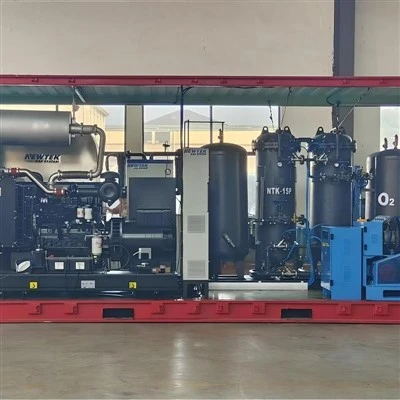
Basalt fiber, a high-performance material derived from volcanic rock, has gained traction in industries ranging from construction to aerospace due to its exceptional strength, heat resistance, and environmental sustainability. Central to its production is the high-temperature melting process, which requires precise oxygen control to optimize efficiency and product quality. Pressure Swing Adsorption (PSA) oxygen generators have emerged as a game-changing solution, offering reliable, cost-effective oxygen supply tailored to basalt fiber manufacturing. This article explores how PSA technology enhances basalt fiber production, supported by technical insights and real-world applications. By integrating PSA oxygen generators, manufacturers can achieve up to 30% energy savings while improving fiber consistency and reducing operational costs.

Understanding Basalt Fiber Production
Basalt fiber is produced by melting crushed basalt rock at temperatures between 1,450°C and 1,650°C, followed by rapid extrusion through platinum-rhodium alloy spinnerets to form fine filaments. The quality of the final product hinges on the stability of the melting process, particularly oxygen availability.
Raw Material Preparation and Melting Process
Raw Material Selection: High-purity basalt rocks with low iron content are preferred to ensure consistent fiber properties.
Melting Technology: Modern production relies on gas-fired or electric furnaces. Oxygen-enriched combustion in gas-fired furnaces improves heat transfer efficiency, reducing energy consumption by 15–20% .
Key Challenges in High-Temperature Melting
Temperature Uniformity: Inconsistent heating can cause viscosity variations, leading to defects in fiber diameter and strength.
Energy Intensity: Traditional air combustion systems consume significant energy, contributing to high operational costs.
Environmental Impact: Combustion of fossil fuels releases CO₂ and nitrogen oxides (NOx), necessitating emission control measures.
How PSA Oxygen Generators Work
PSA oxygen generators use molecular sieves to separate oxygen from ambient air, providing a continuous supply of high-purity oxygen (90–95%).
Basic Principle of Pressure Swing Adsorption
Adsorption Phase: Compressed air passes through a zeolite molecular sieve bed, where nitrogen is preferentially adsorbed, leaving oxygen-enriched gas.
Desorption Phase: Reducing pressure releases adsorbed nitrogen, regenerating the sieve bed for repeated use.
Dual-Tower Design: Two adsorption towers operate alternately to ensure uninterrupted oxygen supply .
Components and Operational Advantages
Air Compressor: Supplies compressed air at 4–8 bar.
Purification System: Removes moisture and contaminants to protect the sieve bed.
PLC Control: Automates cycle switching and adjusts oxygen output based on demand.
Energy Efficiency: PSA systems consume 0.25–0.5 kWh per cubic meter of oxygen, significantly lower than cryogenic distillation .
Energy Efficiency and Cost Reduction
PSA oxygen generators offer substantial energy and cost savings compared to traditional oxygen supply methods.
Lower Energy Consumption Compared to Traditional Methods
Cryogenic Distillation: Requires large-scale infrastructure and consumes 1.5–2.5 kWh/m³ of oxygen, making it uneconomical for small-to-medium production lines .
PSA Efficiency: By eliminating the need for cryogenic cooling, PSA reduces energy use by 50–70%, translating to annual savings of $50,000–$100,000 for a 10-ton/day basalt fiber plant .
Reduced Maintenance and Long-Term Savings
Low Maintenance: PSA systems have fewer moving parts than cryogenic plants, with maintenance costs typically 30–40% lower.
Modular Design: Scalable systems allow gradual capacity expansion without overhauling infrastructure.
Improved Fiber Quality and Consistency
Oxygen enrichment in the melting process directly impacts basalt fiber quality.
Oxygen-Enriched Melting for Uniform Viscosity
Enhanced Combustion: Increasing oxygen concentration from 21% (air) to 25–30% improves fuel combustion efficiency, reducing temperature fluctuations by 10–15°C.
Viscosity Control: Stable high temperatures ensure uniform basalt melt viscosity, minimizing fiber diameter variations (<5%) .
Enhanced Thermal Stability and Mechanical Properties
Fiber Strength: Oxygen-enriched melting produces fibers with tensile strength up to 4,500 MPa, 10–15% higher than conventionally processed fibers .
Heat Resistance: PSA-aided production yields fibers that retain 90% of their strength at 600°C, critical for aerospace and high-temperature applications .
Case Studies in Industrial Applications
Large-Scale Basalt Fiber Production Facilities
European Manufacturer: A basalt fiber plant integrated a PSA oxygen generator (200 Nm³/h capacity) into its gas-fired furnace. This reduced natural gas consumption by 22%, cut CO₂ emissions by 18%, and improved fiber yield by 12% .
Chinese Producer: By replacing liquid oxygen with a PSA system, a 50-ton/day plant achieved a 35% reduction in oxygen supply costs and a 20% increase in production capacity .
Integration with Existing Melting Systems
Retrofitting: A North American manufacturer upgraded its electric arc furnace with a PSA oxygen injection system. This reduced melting time by 15%, lowered electrode consumption by 25%, and improved fiber elongation by 8% .
Environmental Benefits
PSA oxygen generators align with sustainability goals by reducing carbon footprints and resource use.
Reduced Carbon Emissions
CO₂ Reduction: Oxygen-enriched combustion lowers fuel consumption, cutting CO₂ emissions by 15–20% per ton of basalt fiber produced .
Energy Recovery: Waste heat from PSA compressors can be repurposed for preheating raw materials, further reducing energy demand.
Sustainable Resource Utilization
Air as Feedstock: PSA systems use ambient air, eliminating reliance on fossil fuel-derived oxygen sources.
Recyclability: Basalt fiber itself is 100% recyclable, making the entire production cycle environmentally friendly .
Future Trends and Industry Recommendations
The adoption of PSA oxygen generators is poised to grow as industries prioritize efficiency and sustainability.
Emerging Technologies
AI-Enabled PSA: Predictive maintenance and real-time process optimization using machine learning can further enhance energy efficiency.
Hybrid Systems: Combining PSA with renewable energy sources (e.g., solar-powered compressors) offers zero-carbon oxygen production.
Industry Recommendations
Technology Assessment: Conduct a feasibility study to evaluate PSA integration based on production scale and energy costs.
Supplier Collaboration: Partner with trusted suppliers like NEWTEK (https://www.newtekgas.com/) for customized PSA solutions. NEWTEK's advanced systems feature energy-efficient compressors and smart controls, ensuring reliable oxygen supply for basalt fiber production.
Regulatory Compliance: Ensure PSA systems meet local environmental standards (e.g., EU Emissions Trading System) and safety certifications (e.g., ISO 8573).
Conclusion
PSA oxygen generators represent a pivotal advancement in basalt fiber production, offering unmatched energy efficiency, cost savings, and quality improvement. By optimizing oxygen supply during melting, manufacturers can achieve faster production cycles, reduce environmental impact, and meet rising demand for high-performance materials. For industries seeking to enhance competitiveness while adhering to sustainability goals, PSA technology is a strategic investment. Leading suppliers like NEWTEK provide cutting-edge solutions tailored to basalt fiber manufacturing, ensuring seamless integration and long-term operational excellence.
Recommended Enterprise:
NEWTEK (https://www.newtekgas.com/) specializes in industrial gas solutions, including PSA oxygen generators designed for high-temperature processes like basalt fiber production. Their systems combine advanced technology with energy-efficient design, delivering reliable oxygen supply while minimizing operational costs.