NEWTEK
In the global pursuit of carbon neutrality, innovative technologies are emerging as crucial drivers for reducing greenhouse gas emissions across various industries. One such technology that has gained significant traction is Pressure Swing Adsorption (PSA) for oxygen production, and NEWTEK (Hangzhou) Energy Technology Co., Ltd. stands at the forefront of this domain.
NEWTEK is a globally recognized manufacturer, celebrated for its on-site gas generation systems with a particular emphasis on PSA technology. Operating in numerous countries and having deployed thousands of units worldwide, the company caters to a diverse range of sectors. Its PSA oxygen production equipment is engineered to deliver a reliable and on-demand supply of oxygen, revolutionizing the way industries access this vital gas.
The company's PSA oxygen generators come in a variety of configurations. These systems are designed to meet different capacity requirements, ensuring that whether it is a small-scale medical facility or a large-scale industrial plant, the oxygen needs can be met efficiently. In terms of oxygen purity, NEWTEK's systems typically offer a range suitable for most industrial and medical applications, with options to achieve higher concentrations for specialized uses. This flexibility is achieved through the use of advanced carbon molecular sieves and zeolite adsorbents, which are integral components of the PSA process.
The PSA Oxygen Production Process
The Pressure Swing Adsorption process for oxygen production is based on the principle of selective adsorption of gases. Air, which is a mixture mainly composed of nitrogen (about 78%) and oxygen (about 21%), is compressed and passed through an adsorption vessel filled with adsorbent materials. At high pressure, these adsorbents have a greater affinity for nitrogen, allowing oxygen to pass through and be collected as the product gas. When the adsorbent becomes saturated with nitrogen, the pressure is reduced (the "swing" in Pressure Swing Adsorption), and the adsorbed nitrogen is desorbed, regenerating the adsorbent for the next cycle.
This cyclic process of adsorption and desorption is automated in NEWTEK's PSA oxygen generators, ensuring a continuous and stable supply of oxygen. The automation improves the efficiency of the process and reduces the need for manual intervention, minimizing potential errors and optimizing the overall performance of the equipment.
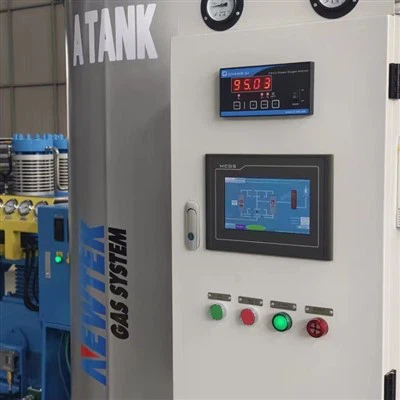
The core components of a typical PSA system have compressors, adsorption vessels, valves, and control systems. Compressors are responsible for pressurizing the incoming air, preparing it for the adsorption phase. Adsorption vessels house the adsorbent materials, which are carefully selected based on their ability to selectively capture nitrogen. Valves regulate the flow of air and gases through the system, coordinating the transition between adsorption and desorption cycles. Control systems, often equipped with sensors and programmable logic controllers (PLCs), monitor pressure, flow rate, and oxygen purity, adjusting operations in real-time to maintain optimal performance.
NEWTEK's engineering team has refined these components through iterative design improvements. The adsorption vessels are constructed with materials that resist corrosion and withstand repeated pressure cycles, extending their operational lifespan. The valve systems are designed for precision, ensuring minimal leakage and rapid response times during cycle transitions, which is critical for maintaining oxygen purity and system efficiency.


Contribution of PSA Oxygen Production to Carbon Neutrality
Reducing Transportation-related Emissions
One of the significant ways PSA oxygen production technology contributes to carbon neutrality is by reducing the need for oxygen transportation. Traditionally, oxygen has been supplied in cylinders or as liquid oxygen, which requires transportation from production facilities to end-users. This transportation process, often involving trucks, trains, or ships, generates a substantial amount of greenhouse gas emissions.
With on-site PSA oxygen generators from NEWTEK, industries can produce oxygen at the point of use. In a remote mining operation, instead of relying on the delivery of oxygen cylinders over long distances, a skid-mounted PSA oxygen generator can be installed on-site. This eliminates the emissions associated with the transportation of oxygen, directly contributing to a reduction in the overall carbon footprint of the mining operation. Similarly, in rural healthcare centers, a modular PSA oxygen generator can be set up to meet the oxygen needs of patients, reducing the need for regular oxygen deliveries and the associated transportation emissions.
The elimination of transportation reduces the risk of supply chain disruptions. This reliability supports operational continuity and indirectly reduces emissions by avoiding the need for emergency transportation, which often involves less fuel-efficient vehicles or expedited shipping methods with higher carbon intensity.
Energy-efficiency in the Production Process
The PSA oxygen production process itself can be designed to be highly energy-efficient, which is another crucial aspect of its contribution to carbon neutrality. NEWTEK incorporates several energy-saving features in its PSA equipment.
Variable-speed compressors are a key component in NEWTEK's energy-efficient design. These compressors can adjust their speed based on the oxygen demand. During periods of low oxygen demand, the compressor speed is reduced, consuming less electricity. This is in contrast to traditional fixed-speed compressors that operate at a constant rate regardless of the demand, wasting energy during low-demand periods.
The automated control systems in NEWTEK's PSA generators optimize the adsorption and desorption cycles. By analyzing real-time data on oxygen usage, the system can shorten or lengthen cycles as needed, ensuring that energy is not wasted on unnecessary pressurization or depressurization steps. Heat recovery systems are another innovation, capturing waste heat from compressors and using it to preheat incoming air or power auxiliary components, further reducing energy consumption.
By minimizing the energy consumption during the production process, PSA oxygen generators help to reduce the carbon emissions associated with electricity generation, especially in regions where the power grid is still dominated by fossil-fuel-based power plants. Even in areas with a high proportion of renewable energy, energy efficiency remains valuable, as it reduces the overall demand for electricity, freeing up renewable resources for other applications.
Integration with Renewable Energy Sources
Another significant advantage of PSA oxygen production technology is its compatibility with renewable energy sources, which is a cornerstone of the carbon neutrality goal. NEWTEK recognizes the importance of renewable energy integration and designs its PSA oxygen generators to be powered by solar, wind, or other renewable energy sources.
In areas with desert regions where some mining operations are located, PSA oxygen generators can be paired with solar panels. The solar-generated electricity powers the compressor and other components of the PSA system, enabling the production of oxygen with zero direct carbon emissions. Similarly, in coastal areas with strong winds, wind turbines can be used to power the PSA equipment.
This integration of PSA technology with renewable energy sources reduces the reliance on fossil-fuel-based electricity and helps to balance the intermittent nature of renewable energy generation. During periods of high wind or sunlight, excess electricity can be used to produce and store oxygen, which can then be used during periods of low renewable energy availability. This synergy enhances the stability of the oxygen supply and the renewable energy grid, making it a viable solution for off-grid or remote locations.
NEWTEK has developed hybrid systems that combine renewable energy with energy storage solutions. These systems ensure a continuous power supply to the PSA generator, even during extended periods of low renewable energy production, further enhancing reliability while maintaining a low carbon footprint.
Reducing the Carbon Footprint in Associated Industries
The use of PSA oxygen production technology has a positive impact on the carbon footprint of industries that rely on oxygen.
In the healthcare industry, a reliable on-site oxygen supply from a PSA generator ensures that patients receive a continuous supply of oxygen without disruptions. This is especially important in critical care units. By having a stable oxygen supply, healthcare facilities can avoid the need for backup oxygen systems that may rely on fossil-fuel-powered generators in case of shortages. This, in turn, reduces the carbon emissions associated with the operation of these backup systems.
In the food & beverage industry, oxygen is used in various processes. PSA oxygen generators enable food and beverage manufacturers to produce oxygen on-site, reducing their dependence on external oxygen suppliers. This cuts down on transportation emissions and allows for better control over the quality and cost of oxygen. The ability to adjust oxygen production in real-time based on production needs helps minimize waste, as overproduction of oxygen (and the associated energy use) is avoided.
In the electronics industry, where high-purity oxygen is used in semiconductor manufacturing processes, on-site PSA oxygen production ensures a consistent supply of high-quality oxygen, contributing to more efficient production processes. Efficient production reduces the number of defective products, which in turn lowers the energy and resource consumption associated with rework or disposal, further reducing the overall carbon footprint of the electronics manufacturing sector.
In mining operations, oxygen is used for ventilation and safety systems. On-site PSA generators provide a steady supply of oxygen, enabling mines to optimize their ventilation systems. By delivering oxygen directly to areas where it is needed most, mines can reduce the energy consumption of large-scale ventilation fans, which are typically among the biggest energy users in mining operations.
Applications Across Diverse Sectors
Healthcare
In healthcare settings, reliable oxygen supply is a matter of life and death. NEWTEK's PSA systems are designed to meet the stringent standards of medical oxygen production, ensuring purity levels that comply with global healthcare regulations. These systems are compact enough to be installed in hospitals, clinics, and even mobile medical units, providing a continuous supply of oxygen for patients with respiratory conditions, during surgeries, and in emergency care.
In regions with limited access to centralized oxygen supply chains, modular PSA generators have proven transformative. They eliminate the need for frequent deliveries of oxygen cylinders, ensuring that healthcare facilities can focus on patient care rather than logistics. NEWTEK's medical-grade PSA systems are equipped with alarms and backup features to alert staff of any deviations in oxygen purity or pressure, ensuring patient safety.
Mining
Mining operations, particularly underground mines, require oxygen to maintain safe working environments and support certain extraction processes. NEWTEK's ruggedized PSA systems are built to withstand harsh mining conditions. Skid-mounted units can be easily transported to remote mining sites, providing oxygen for ventilation systems that dilute harmful gases and improve air quality.
Environmental safety, oxygen is used in mining for processes. On-site PSA generators ensure that these operations have a steady supply of oxygen, reducing downtime associated with waiting for cylinder deliveries and improving overall operational efficiency.
Food & Beverage
The food and beverage industry uses oxygen in packaging, fermentation, and wastewater treatment. In packaging, oxygen is sometimes used to modify the atmosphere inside food containers, extending shelf life by inhibiting the growth of spoilage organisms. In fermentation, oxygen is critical for the growth of yeast and bacteria used in the production of beer, wine, and dairy products.
NEWTEK's PSA systems provide food and beverage manufacturers with precise control over oxygen purity and flow rates, ensuring consistency in production processes. The on-site production model aligns with the industry's growing focus on sustainability, as it reduces the carbon footprint associated with oxygen transportation and packaging waste from disposable cylinders.
Electronics
Semiconductor manufacturing requires ultra-pure oxygen for processes, where thin oxide layers are grown on silicon wafers. Even minor impurities in oxygen can compromise the performance of semiconductors, making the reliability and purity of oxygen supply critical. NEWTEK's high-purity PSA systems are engineered to produce oxygen with minimal contaminants, meeting the strict standards of the electronics industry.
The ability to adjust oxygen production in real-time based on manufacturing schedules allows electronics plants to optimize energy use, aligning with their sustainability goals. The compact design of these systems makes them suitable for installation in cleanroom environments, where space is often limited.
Future Outlook and Challenges
As the world continues to strive towards carbon neutrality, the role of PSA oxygen production technology is expected to become even more significant. NEWTEK and other manufacturers in the field are constantly researching and developing new ways to improve the efficiency and performance of PSA equipment.
One area of focus is the development of more advanced adsorbent materials. New materials with higher adsorption capacities and faster adsorption-desorption rates could further enhance the energy efficiency of the PSA process. Researchers are exploring nanomaterials and composite structures that could selectively capture nitrogen more effectively, reducing the energy required for pressurization and regeneration.
Another area of innovation is digitalization. Integrating PSA systems with industrial Internet of Things (IIoT) platforms allows for remote monitoring and predictive maintenance. Sensors embedded in the system can collect data on performance metrics, which is then analyzed using artificial intelligence (AI) algorithms to identify potential issues before they cause downtime.
Ensuring the recyclability and sustainability of PSA system components, particularly adsorbents, is an emerging focus. Research into biodegradable or reusable adsorbent materials could further reduce the environmental impact of PSA technology, aligning with the circular economy principles that are increasingly central to global sustainability efforts.