Throughout public-health crises and routine hospital operation, oxygen supply failure represents a high-consequence risk for healthcare establishments. In many regions worldwide, hospitals have historically depended entirely on externally delivered compressed oxygen cylinders as their primary oxygen source. Under this operating pattern, hospitals do not generate oxygen locally; instead, gas manufacturers fill high-pressure steel vessels at centralized production workshops, and logistics fleets transport batches of full cylinders to medical premises, while collecting empty vessels for refilling and re-certification. This model demands continuous coordination with external suppliers, stable road-transport networks, sufficient on-site storage space, and dedicated staff for handling, inventory management, and manifold switching.
In contrast, PSA oxygen systems produce medical-grade oxygen directly from ambient atmospheric air at hospital premises. Relying only on stable grid electricity as major consumption input, PSA equipment completes physical gas-component separation inside sealed process vessels, outputting continuous gaseous oxygen that feeds into centralized hospital medical-gas pipeline networks. Over the past decade, on-site PSA oxygen plants have gained growing adoption in newly-constructed general hospitals, upgraded tertiary medical centers, remote regional hospitals, and temporary emergency medical facilities. Nevertheless, cylinder oxygen still retains irreplaceable value as emergency backup, for small-volume outpatient clinics, and for locations facing persistent electrical-grid instability.
Many hospital decision-makers face practical confusion: under what conditions should an institution select PSA on-site generation? When should compressed cylinders remain the main supply? Can the two systems operate in hybrid combined configurations? To answer these practical questions, this paper conducts multi-dimensional comparison, avoiding overly one-sided promotion of one technical path. Instead, it describes trade-offs, engineering constraints, and real-world operational pain-points observed across thousands of medical-gas project deployments.

Fundamental Working Principles of Two Hospital Oxygen Supply Modes
PSA On-Site Oxygen Generation System Working Logic
A complete hospital-grade PSA oxygen system consists of air-compression modules, multi-stage air purification and drying assemblies, dual-bed separation processing units, product-oxygen buffer tanks, real-time gas-quality monitoring sensors, PLC automatic control cabinets, safety alarm circuits, and outlet pressure-stabilizing components.
Ambient air containing roughly 21 percent oxygen enters oil-free or high-efficiency filtered air compressors, where pressure rises to process working levels. Subsequent drying and multi-grade particle-removal filtration eliminate moisture, oil aerosol, and airborne particulate contaminants before air flows toward separation vessels. Inside these vessels, cyclic pressure-swing physical separation processes take place: under elevated pressure, non-oxygen gas components are captured; when pressure reduces, captured components release back toward atmosphere, regenerating processing capacity for the next work cycle. Two parallel vessels alternate between adsorption and regeneration phases, achieving uninterrupted continuous oxygen output. Real-time sensors track oxygen concentration, outlet pressure, and system status. When gas quality deviates from preset thresholds, local visual and audible alarms activate, and dry-contact signal output can feed into hospital building-management systems for remote notification. The produced medical-grade gaseous oxygen flows into buffer tanks and then into the hospital's centralized medical-gas piping network toward each ward terminal outlet.
PSA equipment does not require any incoming gas deliveries; raw material exists ubiquitously in surrounding atmosphere. System startup is fully automatic after power connection, and stable qualified oxygen output arrives within minutes after cold startup.
Compressed Oxygen Cylinder Supply Working Logic
Compressed cylinder oxygen originates from centralized off-site gas-production facilities. After production and compression, oxygen fills heavy-duty high-pressure steel cylinders. Each cylinder bears official pressure-vessel certification markings and periodic re-validation timestamps. Completed full cylinders are loaded onto transport vehicles and shipped to hospital sites.
Within hospital premises, cylinders are stored inside designated well-ventilated gas storage rooms that satisfy fire-safety codes. Multiple cylinders connect through manifold valve assemblies. When one group of cylinders depletes, on-site staff manually switch manifold supply toward a second bank of full cylinders. Empty cylinders are marked and collected by supplier logistics teams for return to filling plants.
At ward-level terminals, pressure-reducing regulators adjust high-pressure cylinder output down to working pressure matching medical-gas pipeline requirements. In small facilities without central piping, individual cylinders can be rolled directly near treatment points with separate pressure-reduction hardware.
Cylinder-based supply carries no requirement for large-scale on-site gas-processing machinery. However, every aspect of availability hinges on external manufacturing capacity, delivery timeliness, and manual human operations.
Key Technical-Parameter Reference Table
The table below lists typical working parameters for hospital-scale PSA oxygen systems and compressed cylinder oxygen supply systems, representing industry-standard reference values for medium-sized general-hospital scenarios.
| Comparison Item | PSA On‑Site Oxygen Generation System | Compressed Oxygen Cylinder Supply |
|---|---|---|
| Oxygen Output Purity | 93 % ±3 % (medical‑gas standard range) | 99.5 %+ high‑purity compressed oxygen |
| Output State | Continuous gaseous oxygen | Discrete high‑pressure compressed gaseous oxygen |
| Typical Outlet Working Pressure | 0.3–0.6 MPa (adjustable for hospital piping) | 15 MPa cylinder storage pressure; reduced to 0.3‑0.5 MPa pipeline working pressure |
| Production Raw Material | Ambient atmospheric air | Externally pre‑filled compressed oxygen inside steel vessels |
| Core Energy Consumption | Electrical power (compressor, control system, monitoring sensors) | Minor on‑site electricity only for alarm monitoring; energy consumed during off‑site production & transportation |
| Supply Continuity | 24‑hour continuous output under stable power; requires backup power for grid‑failure scenarios | Depends on manual cylinder‑switching and delivery cycles; risk of supply gap during cylinder‑exchange operations |
| Peak‑demand Response | Scalable modular design; multiple units can run in parallel for sudden flow spikes | Extra cylinders must be pre‑stocked in advance for surging oxygen consumption |
| On‑Site Footprint | Equipment room / containerized skid space; varies with system flow capacity | Dedicated ventilated cylinder storage chamber + manifold station; large space required for cylinder inventory stock |
| Main Consumable Components | Filter elements, pneumatic valves, sensor calibration kits | Steel cylinder periodic hydrostatic testing, valve maintenance, regulator components |
| Alarm & Monitoring Function | Built‑in continuous oxygen‑purity, pressure, fault‑status digital alarms | Basic high/low‑pressure alarm on manifold; no automatic real‑time oxygen‑purity monitoring |
| Emergency‑switch‑over Capability | Can link to cylinder‑manifold emergency backup via automatic switching valves | Serves as primary source; requires additional third‑party hardware to connect to other backup sources |
| Noise Level | 65‑75 dB(A); sound‑insulated containerized versions available | Low noise at manifold station; noise occurs during cylinder transport and handling |
Note: Parameters in this table represent typical commercial-product reference values. Actual performance depends on specific model selection, on-site installation quality, maintenance execution level, and local regulatory requirements.

Multi-Dimensional Operational Comparison Between Two Supply Modes
Supply-Chain Resilience and Operational Reliability
Supply-chain vulnerability constitutes the most significant shortcoming for cylinder-relying hospitals. Hospital oxygen demand fluctuates unpredictably: mass-casualty incidents, seasonal respiratory-condition surges, or public-health emergencies can push oxygen consumption far above baseline daily levels. Under cylinder-supply arrangements, hospitals must forecast future consumption and place advance orders with gas vendors. Road congestion, vehicle breakdowns, regional fuel shortages, extreme weather events, or industrial-plant maintenance shutdowns can delay cylinder deliveries. If inventory reserves become exhausted before new batches arrive, patient-care activities face immediate jeopardy. Even when deliveries arrive as scheduled, manual cylinder-swap operations create short-term transition risks if staff perform switching incorrectly.
PSA systems shift oxygen production onto hospital grounds. Once equipment commissioning completes, oxygen generation no longer depends on external gas-delivery fleets. As long as stable electrical supply exists, the plant continuously produces oxygen matching real-time hospital consumption. Modular multi-unit PSA architecture further enhances reliability: if one processing module enters maintenance mode, remaining parallel units can still cover partial or full facility oxygen requirements.
Nevertheless, PSA systems carry their own reliability preconditions. Unplanned total power outage will halt oxygen generation. For this reason, standardized hospital engineering specifications demand backup power sources such as on-site generator sets for PSA primary-supply installations. Proper preventive maintenance cycles must be strictly followed; neglected filter replacement or sensor calibration gradually degrades output gas quality. Therefore, industry best practice for PSA-primary hospitals still retains a bank of compressed cylinders as final-layer emergency redundancy, forming "PSA primary + cylinder reserve" hybrid architecture.
Total-Cost-of-Ownership Economic Analysis
Cost evaluation must separate capital expenditure (CAPEX) and recurring operational expenditure (OPEX).
For compressed-cylinder oxygen supply: initial CAPEX stays comparatively low. Major upfront investments cover cylinder-storage-room modification, manifold assemblies, pressure-reduction hardware, and central-piping network construction. Hospitals may rent rather than purchase cylinders outright. However, OPEX accumulates steadily year-over-year. Recurring expenses include purchasing or rental fees for cylinders, per-unit-volume gas charges, repeated delivery transportation fees, periodic pressure-vessel safety-testing costs for steel cylinders, labor wages for staff assigned to cylinder receiving, inventory counting, heavy-vessel handling, manifold switching, and supplier-relationship coordination. Additionally, physical residual gas trapped inside each used cylinder creates measurable gas waste, estimated in industry reports between 10-15 percent of total purchased gas volume. Gas market pricing fluctuates with energy and logistics-cost shifts, so long-term budget forecasting faces uncertainty.
PSA on-site generation demands higher upfront CAPEX: covering compressors, separation units, monitoring instrumentation, installation commissioning work, and suitable equipment-room space preparation. For containerized PSA variants, integrated housing unit costs also factor in. After project completion, recurring operating costs shrink substantially. Main OPEX items become electricity consumption for running machinery, scheduled spare-part replacement (filter cartridges, valves, sensor recalibration), and periodic technical-service labor. No repeated payment for gas raw material occurs, because feed-stock comes from free ambient air.
Payback periods for PSA systems vary directly according to hospital daily oxygen consumption volume. Large-and-medium-scale general hospitals with high continuous oxygen demand often achieve capital payback within 18-36 months. Small medical sites with very low oxygen throughput may see extended payback cycles, making cylinder supply economically more reasonable. Over the full 8-12-year service lifespan of well-maintained PSA hardware, total cumulative expenditure frequently proves significantly lower compared with long-term cylinder procurement contracts of equal capacity.
On-Site Safety and Facility-Management Risks
Compressed-oxygen cylinders store gas under extremely high pressure. Improper handling creates multiple hazard vectors. Physical impact, dropping, or tipping cylinders may damage valves, potentially causing high-pressure vessel propulsion incidents. Storage rooms must enforce strict fire-safety protocols: open-flame sources, oil-based contaminants, and incompatible combustible materials must be excluded. Hospitals need dedicated storage-area access control. Large cylinder inventories occupy considerable building floor area; many older-building hospitals struggle to allocate adequate dedicated storage zones. Staff performing cylinder exchange work receive mandatory safety training to avoid human error.
PSA systems operate under moderate process pressure, far below cylinder storage pressure. Large-volume high-pressure gas-vessel stockpiles disappear from hospital grounds, which reduces overall site-level hazard exposure. Modern PSA units integrate multi-layer safety interlocks: automatic alarms for gas-quality deviation, over-pressure protection circuits, fault-event status logging, and remote signal output. Containerized PSA models add built-in ventilation and fire-monitoring features inside ISO housing structures.
PSA safety risks mainly originate from two sources: contaminated incoming compressed air due to neglected filter maintenance, and electrical-system hazards, which can be mitigated through standardized installation and routine inspection. It must be emphasized that PSA does not eliminate all medical-gas risks; downstream hospital piping networks, terminal outlets, and backup manifold hardware still require regular safety verification as specified by medical-gas standards.
Manpower Requirement and Daily Workflow Impact
Facilities relying heavily on cylinder oxygen allocate consistent human resources toward gas-supply workflows. Personnel tasks include checking inventory levels, placing purchase orders with suppliers, receiving truck deliveries, moving heavy steel cylinders, swapping manifold banks, marking empty vessels, and recording inventory logs. During demand peaks, this workload surges sharply. Understaffing may create dangerous delays in replenishment.
After commissioning, properly-installed PSA systems run largely automatically. Daily routine work reduces to visual inspection of the control-panel status display, reviewing alarm history logs, and following scheduled preventive-maintenance checklists. Heavy manual handling of pressure vessels disappears from daily workflows. Engineering teams still require trained technicians capable of understanding PSA system alerts and coordinating qualified service engineers for component-replacement work. Remote-monitoring-enabled PSA equipment further allows technical teams to view operational data off-site and receive early fault notifications before performance deteriorates.
Nevertheless, hospitals cannot completely eliminate training requirements. Even with PSA as primary source, staff must master operating procedures for cylinder-based emergency backup manifolds for power-loss or major-equipment-failure scenarios.
Footprint, Installation Flexibility and Scalability
Cylinder-based systems require two key physical zones: manifold equipment location and secure, ventilated cylinder-storage space. Storage-room dimensions scale with the size of safety-stock inventories. Hospitals maintaining multi-day emergency reserves must allocate substantial floor area for stacked cylinder racks. Renovating older hospital buildings often encounters difficulties retrofitting compliant gas-storage chambers.
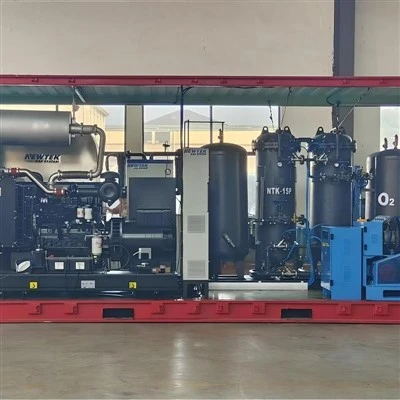
Indoor PSA equipment occupies dedicated mechanical-equipment-room space, and footprint scales with system-output flow rate. Modular design brings good expandability: when hospital bed numbers expand in future years, additional PSA modules can be paralleled into existing pipeline infrastructure to raise total oxygen output capacity without replacing the whole installation. Containerized PSA solutions ship as fully pre-assembled, pre-tested units inside standard ISO containers. Hospitals only need to prepare flat ground space, electrical-power access points, and pipeline-interface connections. This drastically cuts on-site civil-construction and commissioning timelines, well-suited for newly-built field hospitals, temporary disaster-relief medical bases, or sites lacking suitable indoor mechanical rooms.
Where PSA shows limitations: extremely small clinics with minimal oxygen usage may find even compact PSA units oversized for their space constraints. In these circumstances, cylinder supply offers simpler space arrangements.
Regulatory and Medical-Gas-Quality Compliance
Global medical-gas standards such as EN ISO 7396-1, NFPA 99, and relevant pharmacopoeia specifications define requirements for hospital oxygen-supply infrastructure.
Cylinder oxygen quality is controlled at the off-site filling plant. Hospital-side operators do not conduct continuous real-time oxygen-purity testing for incoming cylinders; compliance trust depends on supplier quality-management systems and cylinder batch documentation. Hospitals still must implement regular manifold-system pressure-safety-valve inspection and pressure-vessel re-certification according to local pressure-equipment codes.
Qualified hospital-grade PSA plants must continuously monitor output-gas quality right at point-of-generation, with automatic alarm triggers when oxygen concentration falls below permitted thresholds. System design must include multi-stage air-filtration chains to remove moisture, oil mist, and particulates, ensuring output gas meets contaminant-limit requirements defined within medical-gas norms. During acceptance testing after installation, third-party inspectors verify gas-quality indicators, alarm-trigger thresholds, interlock-logic performance, and emergency-backup switching functions.
Both supply models can achieve regulatory compliance. The difference lies in where quality-control responsibilities sit: cylinder-supply models outsource most gas-quality control to external vendors; PSA models place continuous gas-quality monitoring duties onto on-site hospital infrastructure, which demands correct equipment configuration and ongoing sensor-calibration management.
Suitable Application Scenarios for Each Oxygen-Supply Mode
Recommended Scenarios for PSA Oxygen Systems as Primary Source
Medium-and-large-scale general hospitals with stable grid power and sustained high daily oxygen consumption. Return-on-investment calculations favor on-site generation, and independence from logistics-driven supply risks improves institutional resilience.
Regional, remote, or rural medical centers where road-transport conditions are unstable, and cylinder-delivery reliability cannot be fully guaranteed year-round.
New-build hospital projects, in which medical-gas-system layout can be planned at architectural-design phase, reserving mechanical-room or container-placement space.
Temporary emergency-response medical facilities, field-treatment bases, and disaster-relief hospitals adopting containerized plug-and-play PSA configurations.
Medical institutions aiming to reduce long-term exposure to gas-commodity price volatility and cut recurring logistics-related operational costs.
Even in these scenarios, industry engineering best practice advises retaining compressed-cylinder groups as final-tier emergency backup for power outages or major-unit maintenance events.
Recommended Scenarios for Cylinder Oxygen as Primary Source
Small clinics and outpatient-treatment sites with very low total oxygen-consumption volume, where PSA capital-investment payback extends beyond economically reasonable timelines.
Medical locations facing chronically unstable electrical-grid conditions without feasible backup-power-supply investment. PSA core function depends on electricity; frequent extended blackouts disable on-site generation capacity.
Short-term temporary medical points with service duration of only several weeks, where installing PSA plant hardware cannot justify project-setup expenditure.
Special-procedure sites requiring high-purity oxygen specifications exceeding standard PSA output-gas ranges.
Even when cylinders act as primary supply, hospitals are advised to evaluate partial PSA-augmentation possibilities if consumption grows in future.
Hybrid Combined-Supply Architecture
Numerous modern hospitals adopt hybrid-mode design: PSA plant serves as daily primary oxygen source, and cylinder-manifold groups connect via automatic switch-over valves as emergency reserve. Under normal conditions, PSA delivers oxygen to wards. When PSA system triggers major-fault alarms or grid power fails without backup-generator support, hardware automatically switches pipeline feed onto cylinder-bank supply, avoiding service interruption. This design merges the cost-and-resilience strengths of PSA generation with the zero-power emergency capability of compressed cylinders, representing a balanced mainstream solution for new-generation hospital-medical-gas infrastructure. During phased facility-renovation projects, hospitals can run both systems in parallel for months, validating PSA performance before fully shifting primary supply away from cylinder manifolds.
Common Misconceptions in Hospital-System Selection
The first widespread misunderstanding is viewing PSA systems as a complete standalone solution requiring zero backup. No on-site generation hardware achieves absolute zero-failure probability. Power-grid events, major component faults, or scheduled maintenance will temporarily halt output. Hence compliance-oriented design always includes secondary emergency gas sources.
Second, some decision-makers assume PSA technology suits every hospital regardless of oxygen-consumption scale. For sites with very low oxygen demand, cylinder supply remains more economically rational. Blindly pursuing on-site generation will result in under-utilized capital-asset investment.
Third, people occasionally equate PSA installation to "zero safety hazards". Although PSA removes large high-pressure cylinder stockpiles, mechanical equipment still needs regular inspection, filter replacement, and sensor calibration. Skipping preventive-maintenance cycles will degrade gas quality and create hidden operational risks.
Fourth, people may overlook backup-power requirements. Without generator or UPS backup configuration, PSA systems cannot function during grid blackouts, exposing hospitals to identical emergency-supply risks as facilities without on-site generation.
Conclusion
PSA on-site oxygen generation and compressed-cylinder oxygen supply represent two technically mature, compliant medical-gas-delivery pathways, neither universally superior in all contexts.
Cylinder-based oxygen supply features low initial-capital threshold, deployment simplicity, and independent operation without electricity input. Yet it suffers from supply-chain vulnerability, cumulative recurring logistics-and-labor costs, high-pressure-vessel storage-safety burdens, and residual-gas waste. It fits small-volume sites, short-term deployments, and locations with unreliable power infrastructure.
PSA on-site oxygen generation eliminates dependence on external gas-delivery logistics, delivers stable continuous output, reduces long-term total-cost-of-ownership for high-consumption hospitals, and allows modular capacity expansion. Its prerequisites include higher upfront capital investment, stable electrical-power access (plus backup-power arrangements), and disciplined preventive-maintenance workflows. It performs excellently for medium-and-large-scale hospitals, remote medical campuses, and rapid-deployment emergency-medical bases.
For most modern comprehensive-hospital new-construction or renovation projects, hybrid architecture combining PSA primary generation plus cylinder emergency-reserve manifold delivers balanced outcomes in reliability, safety, and economy. Hospital engineering and procurement teams should base final selection decisions on comprehensive analysis of local power-supply stability, actual historical oxygen-consumption statistics, available building-space resources, long-term budget projections, local logistics-service reliability, and applicable medical-gas regulatory requirements.
As global healthcare infrastructure continues upgrading, on-site PSA oxygen technology will keep evolving toward higher modularity, enhanced intelligent remote-diagnostic capability, and containerized rapid-deployment forms. Even so, compressed oxygen cylinders will retain indispensable roles within hospital emergency-redundancy frameworks for the foreseeable future.