One Oxygen Plant, Different Industrial Requirements
Oxygen procurement requirements can be very different from one project to another. A ship dismantling contractor may prioritize high-flow oxygen for continuous cutting. A cylinder filling station needs stable oxygen production and suitable filling pressure. A mine may need a robust onsite oxygen source at a remote location, while a wastewater treatment project may require stable oxygen supply for ozone generation.
The plant is therefore configured around the oxygen application first, with the generation system selected afterward.

Industrial Application Scenarios
Ship Salvage, Industrial Demolition & Heavy Metal Cutting
For sunken vessel removal, marine salvage contractors, industrial demolition, plant decommissioning contractors, ship dismantling companies, and large-scale metal cutting operations, oxygen consumption can increase significantly when multiple cutting stations operate simultaneously.
The procurement concern is usually not simply "how much oxygen can the generator produce?" It is whether the oxygen system can support the actual cutting operation without becoming a production bottleneck.
System Design Considerations:- Number of cutting stations
- Individual torch oxygen consumption
- Simultaneous cutting ratio
- Daily operating hours
- Required oxygen pressure
- Peak oxygen demand
- Oxygen buffer capacity
- Distance between plant and cutting area
A central oxygen-generation system can supply multiple cutting points through a distribution pipeline or oxygen storage/filling arrangement. For marine salvage and demolition projects, the containerized format also allows the oxygen plant to be positioned close to the working area where site conditions permit.
Medical Oxygen Cylinder Filling Stations
Medical oxygen filling stations require more than a basic PSA generator.
Project Process Flow:The PSA system provides a continuous onsite oxygen source, while the downstream filling system determines cylinder filling pressure and filling capacity.
For medical projects, the oxygen purity, monitoring, storage, compression, pipeline materials, cleanliness, redundancy, alarms, and certification must be designed according to the applicable medical-gas requirements of the destination market.
Industrial Oxygen Cylinder Filling Stations
Industrial cylinder filling stations serve customers who require oxygen in portable cylinders for cutting, welding, maintenance, construction, and other industrial applications. A PSA oxygen plant can provide the upstream oxygen source for the filling station.
| Customer Requirement | Relevant Configuration |
|---|---|
| Cylinder Filling Capacity | Oxygen generator + high-pressure compressor sizing |
| Daily Filling Volume | Generator operating capacity |
| Filling Pressure | Downstream oxygen compression system |
| Continuous Filling | Oxygen buffer and compressor arrangement |
| Multiple Cylinder Sizes | Filling manifold configuration |
| Stable Oxygen Purity | Online oxygen analyzer |
| Remote Filling Station | Containerized generation package |
This configuration allows the oxygen-production capacity to be separated from the cylinder filling operation, making it easier to design the overall station around actual daily cylinder demand.
Mining Oxygen Generation
Mining projects can have very different oxygen requirements depending on the mineral, extraction method, and processing technology. The system can be configured for oxygen supply in:
For remote mines, the key purchasing considerations often include continuous operation, transportation, power availability, dust, ambient temperature, maintenance access, and oxygen logistics.
A containerized PSA plant places the main oxygen-generation equipment in a protected package that can be transported to the project site and connected to the process oxygen pipeline. The plant can be designed for continuous oxygen production where the mine's process requires a stable oxygen flow rather than periodic cylinder delivery.
Wastewater Treatment & Ozone Generation
Oxygen is commonly used as the feed gas for onsite ozone generation in water and wastewater treatment.
Compared with feeding an ozone generator with atmospheric air, oxygen-enriched feed gas can support higher ozone concentration and more controlled ozone-generation conditions, depending on the ozone generator design.
Selection parameters with the ozone generator:
This makes the oxygen generator part of an integrated oxygen-to-ozone treatment system, rather than an isolated gas-production unit.
Dual-Tower PSA & Containerized PSA: Select the Form Around the Project
The main product forms are Dual-Tower PSA Oxygen Generator and Containerized PSA Oxygen Plant.
Dual-Tower PSA Oxygen Generator
The dual-tower configuration uses two adsorption towers filled with zeolite molecular sieve. While one tower is producing oxygen under adsorption conditions, the other tower undergoes depressurization and regeneration. The control system alternates the towers to maintain continuous oxygen production.
This configuration is suitable when the customer has an existing equipment building or plans to install the oxygen system as part of a permanent industrial facility.
Typical configuration:It can be integrated with oxygen compressors, cylinder filling systems, process pipelines, or downstream oxygen-use equipment.
Containerized PSA Oxygen Plant
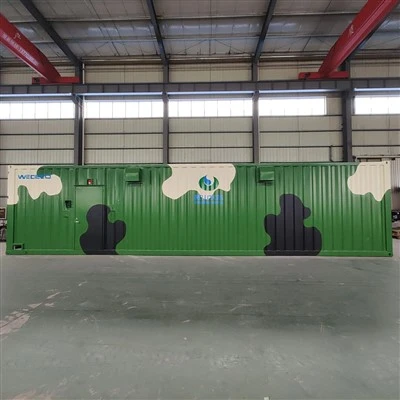
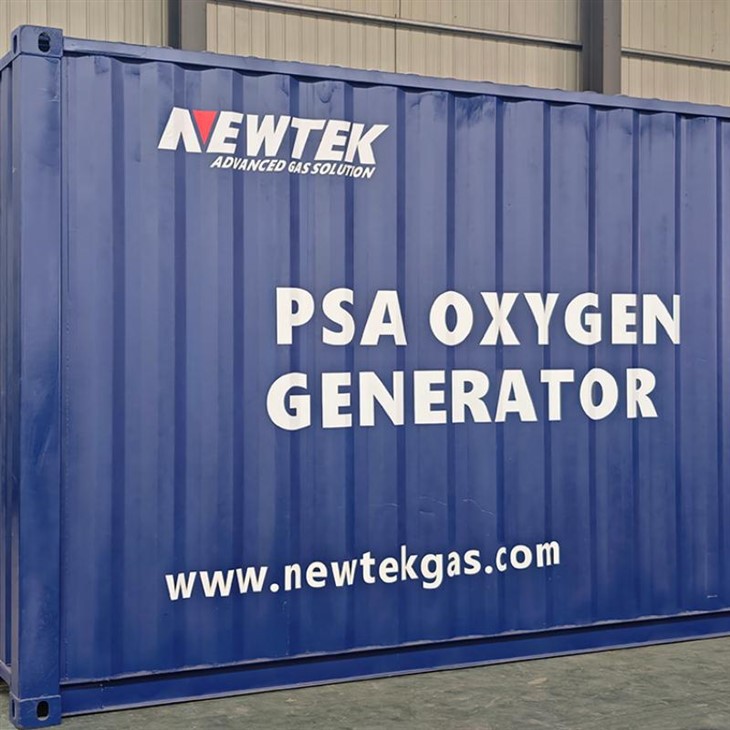
The containerized version places the major oxygen-generation equipment inside a customized container.
| System | Function |
|---|---|
| Air Compressor | Provides compressed air |
| Air Receiver | Stabilizes feed-air supply |
| Air Treatment | Removes moisture and contaminants |
| Dual-Tower PSA | Generates oxygen-rich gas |
| Oxygen Buffer | Stabilizes product-gas pressure & flow |
| Oxygen Analyzer | Monitors oxygen concentration |
| PLC + HMI | Controls and monitors operation |
| Ventilation/Cooling | Manages internal temperature |
| Electrical System | Provides integrated power control |
| Oxygen Outlet | Connects to downstream equipment |
The containerized design is particularly useful for remote mines, shipyards, demolition sites, marine salvage projects, temporary industrial sites, and facilities where constructing a dedicated oxygen building is inconvenient. The container can be adapted for hot climates, high humidity, dusty environments, coastal locations, and other demanding installation conditions.
Configure the Oxygen Plant Around the Buyer's Process
Choosing an oxygen generator should begin with the downstream process rather than the machine catalogue.
Key calculation:
Consider peak demand and buffer capacity. Crucial for ship dismantling and industrial demolition where torches operate intermittently.
Focus calculation:
High-pressure oxygen compressor, storage arrangement, filling manifold, and generator capacity must be matched as a complete system.
Select based on process oxygen flow, purity, pressure, operating hours, altitude, ambient temperature, dust, power, and maintenance.
Containerization simplifies deployment and reduces permanent site infrastructure.
Match directly to the ozone generator specifications.
Begins with required ozone output to provide precise flow, purity, pressure, and stability rather than just maximizing raw volume.
What the Buyer Needs to Confirm Before Ordering
A quotation based only on "PSA oxygen generator, XX Nm³/h" may not accurately represent the complete oxygen solution. For a practical project configuration, provide the following:
| Project Information | Why It Matters |
|---|---|
| Oxygen Application | Determines system configuration |
| Required Oxygen Flow | Determines generator capacity |
| Oxygen Purity | Influences PSA configuration |
| Outlet Pressure | Determines downstream equipment |
| Peak Oxygen Demand | Determines buffer and capacity |
| Operating Hours | Influences equipment duty cycle |
| Cylinder Filling Requirement | Determines compression/storage system |
| Cutting Station Quantity | Determines peak cutting demand |
| Ozone Production Requirement | Determines oxygen feed requirement |
| Mine Process | Determines process-specific oxygen demand |
| Site Temperature | Determines cooling requirements |
| Altitude | Influences compressor and PSA sizing |
| Available Power | Determines compressor configuration |
| Installation Space | Determines container arrangement |
FAQ
Hot Tags: air separation oxygen plant containerized, China air separation oxygen plant containerized manufacturers, suppliers, container oxygen plant manufacturers, Containerized Oxygen Generator, gas production equipment, oxgen generator, Oxygen Generator In Container, oxygen supply