NEWTEK
NEWTEK (Hangzhou) Energy Technology Co., Ltd., a leading provider of on-site gas generation solutions with over 15 years of industry experience, specializes in Pressure Swing Adsorption (PSA) and Vacuum Pressure Swing Adsorption (VPSA) technologies. With a global presence spanning more than 100 countries, the company has established itself as a trusted partner for industries ranging from healthcare to manufacturing.
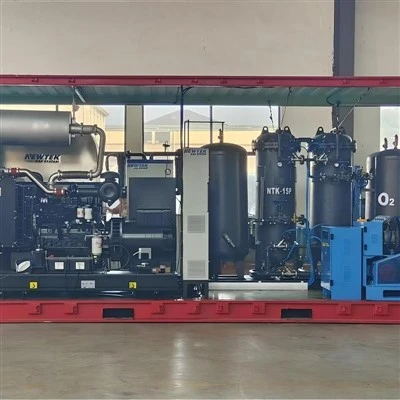
NEWTEK's PSA oxygen generators are engineered to deliver high-purity oxygen (93%±3% or 99%) through a chemical-free process that separates oxygen from atmospheric air using zeolite molecular sieves. For ceramics, glass, and metal industries-where oxygen is critical for combustion enhancement, annealing, and oxidation. NEWTEK offers industrial-scale systems with adjustable flow rates to match production demands. These generators are designed for continuous operation, with robust components that withstand the high temperatures, dust, and vibration common in manufacturing environments.
Key features of NEWTEK's industrial oxygen systems have modular designs for easy integration into existing production lines, energy-efficient compressors to minimize operational costs, and intelligent control panels that allow real-time monitoring of oxygen purity and flow. The company provides heat-resistant enclosures for proximity to furnaces and redundant systems to prevent production downtime. Backed by global technical support and maintenance services, NEWTEK's PSA generators have become a preferred choice for manufacturers seeking reliable, cost-effective oxygen supply solutions.
NEWTEK further distinguishes itself by offering pre-installation site assessments, where its engineers ventilation, power supply, and space constraints to ensure seamless system deployment. This attention to detail reduces installation delays and ensures the oxygen generator operates optimally from the start.


The Role of Oxygen in Ceramics, Glass, and Metal Industries
Oxygen plays a pivotal role in enhancing efficiency and quality across ceramics, glass, and metal manufacturing processes. In ceramics production, oxygen-enriched air is used in kilns to accelerate firing, reduce energy consumption, and ensure uniform sintering of materials. This results in stronger, more consistent ceramic products with fewer defects.
For glass manufacturing, oxygen is critical in melting furnaces, where it supports complete combustion of fuels, lowers emissions, and reduces the formation of impurities that can cloud or weaken glass. Oxygen injection allows for higher furnace temperatures, enabling faster melting and increased production rates.
In metal processing, oxygen is used in cutting, welding, and annealing. Oxygen-fuel cutting produces higher temperatures than air-fuel methods, allowing for precise cutting of thick metals, while oxygen-enriched environments in annealing chambers promote uniform oxidation, enhancing metal hardness and corrosion resistance.
Given oxygen's impact on production efficiency, quality, and cost, selecting the right equipment manufacturer is a decision that directly affects operational performance. Manufacturers must prioritize reliability, compatibility with existing processes, and long-term support when evaluating potential partners.
Oxygen is increasingly used in advanced manufacturing techniques, where controlled oxygen levels prevent oxidation during layer deposition, ensuring the integrity of complex metal components. This expanding role underscores the need for flexible oxygen systems that can adapt to evolving production methods.
Key Criteria for Choosing Oxygen Equipment Manufacturers
Technical Expertise in Industrial Applications
Ceramics, glass, and metal industries have unique oxygen requirements, from specific purity levels to flow rates that align with production cycles. A reputable manufacturer should demonstrate deep understanding of these needs, with a track record of designing systems tailored to industrial environments.
NEWTEK has extensive experience in adapting PSA technology to the demands of high-temperature manufacturing. Its engineers collaborate with clients to assess furnace size, production volume, and fuel type, ensuring oxygen systems integrate seamlessly without disrupting workflows. Manufacturers lacking industry-specific expertise may offer generic solutions that underperform or require costly modifications later.
Prospective buyers should evaluate a manufacturer's portfolio of industrial clients, request case studies, and inquire about customizations made for similar facilities. This ensures the chosen system will meet current and future production needs. Manufacturers with in-house research and development teams are better equipped to innovate and address adapting to new fuel types or stricter emission standards.
Reliability and Durability
In manufacturing, PSA oxygen generators must operate continuously under harsh conditions without compromising performance.
High-quality manufacturers use corrosion-resistant steel and heat-shielded components to extend equipment lifespan. NEWTEK's industrial PSA generators feature reinforced filters to prevent dust ingress from ceramic or metal processing, and their compressors are rated for heavy-duty, 24/7 operation.
Buyers should review warranty terms, maintenance requirements, and mean time between failures (MTBF) data. A manufacturer that stands behind its products with lengthy warranties and transparent maintenance schedules is more likely to deliver reliable equipment. Systems with built-in redundancy provide an extra layer of protection against unexpected downtime, a critical feature for high-volume production facilities.
Efficiency and Cost-Effectiveness
Oxygen production can account for a significant portion of a manufacturer's energy costs. Efficient systems minimize energy consumption without sacrificing oxygen purity or flow, directly impacting the bottom line.
PSA technology, as used by NEWTEK, is inherently efficient because it generates oxygen on-site, eliminating the energy and transportation costs associated with delivered oxygen (cylinders or liquid tanks). Modern PSA systems have variable-speed compressors and smart controls that adjust oxygen output based on real-time demand, reducing waste during lulls in production.
When comparing manufacturers, buyers should assess kilowatt-hours per cubic meter of oxygen produced, and calculate long-term savings relative to upfront costs. A system with higher initial investment but lower operational expenses may offer better value over its lifespan. Manufacturers that provide energy audits or cost-benefit analyses can help buyers make informed decisions, highlighting potential savings in fuel consumption or labor costs associated with cylinder handling.
Compliance with Safety and Environmental Standards
Industrial oxygen systems operate in proximity to high temperatures and flammable materials, making safety a critical concern. Manufacturers must adhere to those governing pressure vessel design, electrical safety, and fire prevention.
NEWTEK's oxygen generators comply with ISO and CE, with pressure relief valves, leak detection sensors, and explosion-proof enclosures for use in hazardous areas. The company provides documentation and training to ensure clients operate equipment safely, reducing the risk of accidents.
Environmental compliance is equally important. Oxygen systems should minimize emissions and waste, aligning with local regulations and corporate sustainability goals. Manufacturers that prioritize eco-friendly designs help clients reduce their environmental footprint. Systems that enable fuel efficiency in furnaces (by optimizing combustion) contribute to lower overall greenhouse gas emissions, supporting industry-wide efforts to reduce carbon impact.
After-Sales Support and Service
Industrial oxygen systems require filter replacements, sieve regeneration, and calibration. A manufacturer's ability to provide timely support-whether through local service teams, remote troubleshooting, or readily available spare parts-directly affects equipment uptime.
NEWTEK offers global technical support, with regional service centers in key manufacturing hubs to ensure quick response times. The company provides training for client technicians, detailed maintenance manuals, and online portals for ordering parts, simplifying upkeep. Manufacturers with limited support networks may leave clients stranded during emergencies, leading to prolonged downtime.
Buyers should inquire about service response times, the availability of local technicians, and whether the manufacturer offers preventive maintenance plans. A proactive support strategy can extend equipment life and prevent unexpected failures. M4anufacturers that provide remote monitoring capabilities allow clients to track system performance in real time, enabling early detection of issues before they escalate into breakdowns.
Scalability and Future-Proofing
As production volumes grow or processes evolve, oxygen demand may increase. A flexible system should allow for easy expansion-whether through adding modules, upgrading compressors, or integrating with new production lines.
NEWTEK's modular PSA designs enable scalability, allowing clients to increase oxygen output by adding sieve beds or parallel generator units without replacing the entire system. This adaptability is particularly valuable for growing manufacturers or those experimenting with new processes.
Manufacturers that prioritize innovation-investing in research to improve efficiency, integrate with smart factory systems, or reduce maintenance- help clients stay competitive. NEWTEK's ongoing development of IoT-enabled monitoring allows remote tracking of oxygen system performance, enabling predictive maintenance and seamless integration with production management software.
Evaluating Manufacturer Partnerships
Choosing an PSA oxygen generator manufacturer is a long-term partnership. Prospective buyers should engage in detailed discussions with site visits to their facilities to assess production quality. They should seek references from current clients in the ceramics, glass, or metal industries, asking about reliability, support, and overall satisfaction.
Trials or pilot projects can provide valuable insights, allowing manufacturers to demonstrate how their systems perform in real-world conditions. NEWTEK often collaborates with clients on small-scale trials to optimize oxygen flow and purity before full-scale installation, ensuring alignment with production goals.
Buyers should consider the manufacturer's supply chain resilience. In an increasingly global market, disruptions to component sourcing can delay deliveries. Manufacturers with diversified supply chains or local production capabilities are better positioned to meet deadlines, even during global disruptions.
The best manufacturer will balance technical capability with a commitment to understanding and supporting the client's unique needs, from initial design to ongoing operation. By prioritizing these factors, manufacturers in ceramics, glass, and metal processing can select an oxygen equipment partner that enhances efficiency, reduces costs, and supports long-term growth.