Oxygen is a process reagent in gold cyanidation rather than a general utility gas. In Carbon-in-Leach (CIL) and Carbon-in-Pulp (CIP) plants, dissolved oxygen directly influences gold dissolution kinetics, cyanide utilization, slurry oxidation conditions, and overall recovery performance.
As ore throughput increases, oxygen demand inside the leaching circuit also rises. Many mining operations located in remote regions traditionally depend on liquid oxygen deliveries or cylinder transportation to maintain oxygen supply. However, transportation distance, road accessibility, weather conditions, and inventory management can increase operating costs and introduce supply risks.
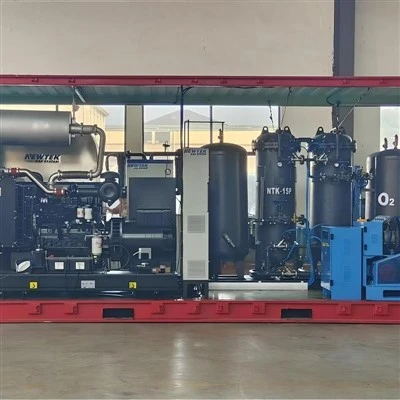
To reduce dependence on external oxygen logistics, mining operators increasingly deploy on-site PSA oxygen generation systems. A NEWTEK PSA Oxygen Plant converts compressed air into oxygen at the mine site and continuously supplies oxygen to the leaching process without relying on routine oxygen deliveries.
This article explains how PSA oxygen technology supports CIL and CIP operations, how the system integrates with mining processes, and why containerized oxygen plants are becoming a practical solution for remote mining projects.
Why Oxygen Is Required in CIL and CIP Gold Recovery
Oxygen Supports Gold Dissolution Reactions
Gold cyanidation requires both sodium cyanide and dissolved oxygen. The leaching reaction can be represented by the Elsner Equation:
This reaction shows that oxygen directly participates in the dissolution of metallic gold. When dissolved oxygen levels decrease, the reaction rate may slow even if cyanide concentration remains unchanged. For this reason, gold processing plants routinely monitor:
· Dissolved oxygen concentration
· Cyanide concentration
· Slurry pH
· Retention time
· Slurry density
to maintain stable leaching conditions.
Air Injection Is Often Insufficient
Many leaching circuits initially rely on compressed air injection. However, atmospheric air contains only: 21% oxygen and 78% nitrogen. As slurry density increases and ore throughput rises, oxygen transfer from air becomes less effective.
Typical challenges include:
· Slow oxygen dissolution
· Limited oxygen transfer efficiency
· Increased retention time requirements
· Reduced oxygen concentration in downstream tanks
Injecting PSA-generated oxygen allows operators to increase dissolved oxygen levels without significantly increasing gas volume.
Oxygen Demand Increases with Throughput
As milling capacity expands, oxygen consumption increases. For example, a gold plant processing 1,500 TPD ore may require substantially less oxygen than a plant processing 5,000 TPD ore. Oxygen requirements are influenced by: ore mineralogy, sulfide content, leaching residence time, and dissolved oxygen targets. Because oxygen consumption is process-dependent, oxygen generation capacity should always be determined from metallurgical design data rather than estimated from plant size alone.
How a NEWTEK PSA Oxygen Plant Works
Air Compression Section
The process begins with an air compressor. The compressor raises atmospheric air pressure to approximately: 7–10 bar. Compressed air then enters the treatment section. The compressor package generally includes: air-end assembly, cooling system, lubrication system, and air receiver tank. The compressed air serves as the raw material for oxygen production.
Air Purification Section
Before entering the adsorption vessels, compressed air passes through: water separator, refrigerated dryer, coalescing filter, and activated carbon filter. These components remove: moisture, oil aerosols, and dust particles. Air quality directly affects molecular sieve performance and service life.
Dual-Tower PSA Oxygen Generator & Continuous Production
The core of the system consists of: Adsorption Tower A, Adsorption Tower B, pneumatic valve assemblies, and zeolite molecular sieve. The adsorption vessels are typically fabricated from carbon steel pressure vessels designed according to applicable pressure equipment standards. Inside the towers, molecular sieve selectively adsorbs nitrogen while allowing oxygen to pass through.
The dual-tower design alternates between: adsorption and regeneration. While one tower produces oxygen, the second tower releases adsorbed nitrogen and prepares for the next cycle. The PLC controller automatically switches valve positions based on programmed timing sequences. Typical oxygen purity ranges between: 90% and 95% depending on production flow requirements.
Integration with CIL and CIP Processing Circuits
- Oxygen Injection Before Leaching: Many mining operations inject oxygen upstream of leaching tanks. Oxygen may enter the slurry through: static mixers, venturi injectors, oxygen cones, or diffuser assemblies. The objective is to increase dissolved oxygen concentration before cyanide dissolution begins.
- Oxygen Supply to CIL Tanks: In CIL circuits, activated carbon and leaching occur simultaneously. A typical CIL train may contain: 6–10 leach tanks, agitators, carbon transfer screens, and slurry pumps. The PSA oxygen plant supplies oxygen continuously through the plant distribution network. The generated oxygen supports oxidation conditions throughout the tank sequence.
- Oxygen Supply to CIP Operations: In CIP plants, leaching and carbon adsorption occur separately. Oxygen may be introduced into: leaching reactors, conditioning tanks, or slurry transfer pipelines. The PSA system functions as a centralized oxygen source serving multiple process locations.
Why Containerized Oxygen Plants Are Increasingly Used in Mining
Simplified Site Deployment: Remote mines often face construction challenges. Building a conventional oxygen plant may require: structural steel installation, equipment shelters, electrical buildings, and ventilation systems. A NEWTEK Containerized Gas Solution integrates major equipment into a standard ISO container before shipment. The container can house: air compressor, air dryer, filtration system, PSA oxygen generator, and PLC control cabinet. This configuration reduces field installation activities.
Transportation Advantages: Containerized systems can be transported using: flatbed trucks, rail transport, or cargo vessels. This is particularly useful for mountain mines, desert projects, island mining operations, and early-stage development sites. The same container used for transportation becomes the operating enclosure after installation.
Environmental Protection: Mining environments often expose equipment to dust, temperature fluctuations, rainfall, and corrosive atmospheres. Container structures help isolate critical equipment from external contaminants. Additional options may include insulated wall panels, filtered ventilation systems, epoxy-coated steel surfaces, and stainless steel tubing depending on site conditions.
Mining Project Example
A gold mining operation processing approximately 3,000 TPD of ore relied on oxygen injection to support its CIL recovery circuit. The mine was located more than 350 km from the nearest industrial gas supplier and previously depended on liquid oxygen deliveries transported by road tanker.
The original oxygen infrastructure included: cryogenic storage tank, ambient vaporizer, oxygen distribution manifold, and process injection system. Average oxygen demand ranged between: 180–220 Nm³/h depending on plant throughput and ore characteristics. To reduce logistics dependence, the operation installed a NEWTEK 200 Nm³/h Containerized PSA Oxygen Plant.
The system configuration included: screw air compressor, refrigerated dryer, multi-stage filtration package, dual-tower PSA oxygen generator, oxygen buffer tank, and PLC control system. The plant generated oxygen at approximately: 93% purity and supplied oxygen directly into the existing leaching circuit. Following commissioning, the mine eliminated routine liquid oxygen transportation requirements and established a continuous on-site oxygen source for daily production operations.
PSA Oxygen vs Liquid Oxygen Supply for Mining
| Liquid Oxygen Systems | PSA Oxygen Systems |
|---|---|
| · Typical equipment includes: Cryogenic storage tanks, vaporizers, vacuum-insulated pipelines. · The system depends on recurring oxygen deliveries. · Transportation becomes part of the operating cost structure. |
· Typical equipment includes: Air compressors, air treatment systems, adsorption towers, oxygen storage vessels. · The system generates oxygen continuously from ambient air. · Once installed, oxygen production remains available without routine oxygen transportation. |
Maintenance Considerations
Air Treatment Equipment: Routine inspection should include filter replacement, condensate drainage, and dryer performance verification. Contaminated air can reduce molecular sieve life.
Molecular Sieve Monitoring: Operators should monitor oxygen purity, flow rate, and pressure differentials. Performance changes may indicate adsorption bed degradation.
Valve Inspection: The PSA process depends on continuous valve switching. Maintenance personnel should inspect pneumatic actuators, solenoid valves, and seal assemblies. Valve leakage may affect oxygen production stability.
Conclusion
Oxygen is a critical process input for CIL and CIP gold recovery operations. Maintaining sufficient dissolved oxygen levels helps support cyanidation reactions and stable leaching performance. A NEWTEK PSA Oxygen Plant generates oxygen directly from atmospheric air through pressure swing adsorption technology and supplies oxygen continuously to mining processes. By integrating air compression, purification, adsorption, storage, and automated controls, the system reduces dependence on recurring liquid oxygen or cylinder deliveries.
For remote mining projects, a NEWTEK Containerized Gas Solution combines oxygen generation equipment and protective infrastructure into a transportable package that simplifies deployment and supports long-term operation. As mining projects move into increasingly remote regions, oxygen generation infrastructure is becoming part of the core process plant rather than a standalone utility system.
For many operators, a containerized PSA oxygen plant is no longer viewed as a simple equipment purchase. It is increasingly becoming a long-term infrastructure investment that supports production continuity, reduces logistics dependence, and provides a stable oxygen source for future production expansion.
Submit Plant Parameters
If you are evaluating oxygen generation capacity for a remote aquaculture or mining project, provide the following project details:
- Fish species / Ore type
- Stocking density / Daily throughput
- Daily biomass / Slurry volume
- Water volume / Resident leach timing
- Oxygen consumption targets
- Available electrical power lines
- Installation location profiles
Mining & Gas Infrastructure
Dual-Tower PSA Units
90%-95% continuous on-site pure oxygen gas.
Containerized Gas Stations
Pre-assembled ISO shelters built for mining elements.
Heavy-Filtration Modules
Protects sieve beds from aggressive dust particles.