Understanding Oxygen Supply Strategies in Modern Aquaculture Systems
In aquaculture engineering, oxygen management is not simply an operational parameter-it is a core determinant of system carrying capacity, biological stability, and economic output. As aquaculture transitions from extensive and semi-intensive models toward high-density and recirculating systems, the method of oxygen supply becomes a structural decision rather than a supplementary one.
Two widely adopted oxygen supply approaches are PSA (Pressure Swing Adsorption) oxygen generation systems and compressed oxygen cylinders. While both deliver oxygen to aquatic systems, their functional roles, limitations, and system-level implications differ significantly.
This article examines these two approaches from an engineering and operational perspective, focusing on their impact on aquaculture system performance rather than simple cost or equipment comparison.
Oxygen Demand Characteristics in Aquaculture Systems
To understand the suitability of different oxygen supply methods, it is necessary to first consider how oxygen demand behaves in aquaculture environments.
Oxygen consumption in fish farming systems is influenced by multiple dynamic factors:
Biomass density
Feeding intensity and metabolic activity
Water temperature (affecting oxygen solubility)
System type (pond, raceway, or RAS)
Microbial activity and organic load
Unlike static industrial gas consumption, aquaculture oxygen demand is non-linear and time-sensitive. Demand peaks often occur:
Immediately after feeding
During nighttime (especially in algae-based systems)
During temperature increases
Under stress or disease conditions
This variability places strict requirements on oxygen supply systems in terms of response time, continuity, and controllability.


Functional Nature of PSA Oxygen Generation
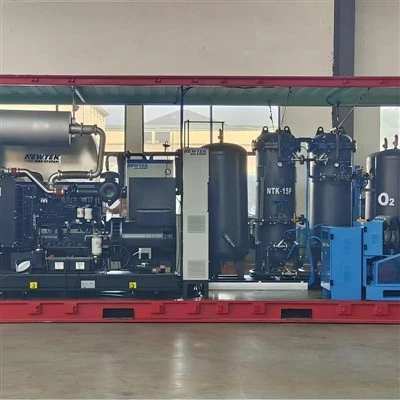
PSA oxygen generators operate as continuous production systems integrated into the aquaculture infrastructure.
From a system perspective, PSA introduces several key characteristics:
Continuous Supply Behavior
PSA systems produce oxygen in real time, creating a steady baseline supply that can be adjusted according to system demand. This aligns well with the continuous metabolic requirements of aquatic organisms.
Integration into Process Control
Because PSA systems are fixed installations, they can be integrated with:
Dissolved oxygen (DO) sensors
Automated control systems
Oxygen injection equipment
This allows oxygen supply to become part of a closed-loop environmental control system, rather than a manually managed input.
Role in Intensive Systems
In high-density aquaculture-particularly in Recirculating Aquaculture Systems (RAS)-oxygen supply is directly linked to system carrying capacity. PSA systems support this by enabling:
Stable oxygen baselines
Predictable system performance
Reduced risk of oxygen-related system collapse
From an engineering standpoint, PSA shifts oxygen from a consumable resource to an embedded utility.
Functional Nature of Oxygen Cylinders
Oxygen cylinders, in contrast, function as stored oxygen reserves rather than continuous production systems.
Their operational characteristics reflect this role:
Discrete Supply Model
Cylinder systems deliver oxygen in fixed quantities. Once depleted, supply depends on replacement. This creates a stepwise supply pattern rather than a continuous flow.
Limited System Integration
While cylinders can be connected to diffusers or oxygen cones, they are rarely integrated into automated control systems at scale. Oxygen delivery is often:
Manually regulated
Reactive rather than predictive
Dependent on operator intervention
Role as Supplemental or Backup Supply
In many aquaculture operations, cylinders are not used as primary supply systems but rather as:
Emergency oxygen sources
Backup during power failure
Supplemental supply during peak demand
This reflects their inherent limitation in supporting continuous, large-scale oxygen demand.
System-Level Comparison: Continuous vs Stored Oxygen Paradigms
The fundamental difference between PSA systems and cylinders lies in their supply paradigm:
PSA → Continuous generation system
Cylinders → Finite storage system
This distinction has several implications.
Response to Demand Fluctuations
PSA systems can adjust output dynamically (within design limits), making them suitable for environments where oxygen demand changes rapidly.
Cylinder systems, however, are constrained by available volume and cannot inherently respond to sudden demand increases without prior capacity planning.
Risk Distribution
PSA systems concentrate risk in mechanical and power reliability. If properly maintained and supported with backup power, they provide stable long-term operation.
Cylinder systems distribute risk across logistics, inventory management, and human operation, introducing more variables into supply continuity.
Impact on System Design Philosophy
The choice between PSA and cylinders influences how aquaculture systems are designed:
PSA-based systems are engineered for continuous equilibrium
Cylinder-based systems often operate under intermittent correction (adding oxygen when needed)
This difference becomes more pronounced as system intensity increases.
Implications for Aquaculture Intensification
As aquaculture moves toward higher stocking densities and controlled environments, oxygen supply becomes a limiting factor for production scaling.
In Low-Density Systems
In traditional or low-density pond systems, atmospheric aeration often provides the primary oxygen source, and cylinders may serve as occasional supplementation.
In this context, cylinders can be operationally sufficient.
In Medium to High-Density Systems
As stocking density increases, oxygen demand begins to exceed what passive or mechanical aeration can provide.
At this stage:
Oxygen supply must become continuous
DO levels must remain within narrow thresholds
System stability becomes dependent on oxygen control
PSA systems are better aligned with these requirements.
In Recirculating Aquaculture Systems (RAS)
RAS environments represent the most oxygen-intensive aquaculture systems.
Key characteristics include:
High biomass concentration
Limited water exchange
Continuous filtration and recirculation
In such systems, oxygen supply is directly tied to:
Biofilter performance
Fish metabolism
Waste oxidation processes
PSA systems function as core infrastructure, whereas cylinders serve primarily as backup.
Operational Risk and System Resilience
Oxygen supply failure is one of the most critical risks in aquaculture operations.
PSA Systems
Risks include:
Power failure
Equipment malfunction
Maintenance neglect
These risks can be mitigated through:
Redundant system design
Backup generators
Preventive maintenance
Cylinder Systems
Risks include:
Supply chain disruption
Delivery delays
Human error in monitoring or replacement
Insufficient reserve during peak demand
These risks are more difficult to control at scale, particularly in remote locations.
Strategic Perspective: Oxygen as Infrastructure vs Consumable
At a strategic level, the comparison reflects two different ways of treating oxygen:
PSA systems treat oxygen as infrastructure
Cylinders treat oxygen as a consumable input
As aquaculture industrializes, there is a clear shift toward infrastructure-based approaches, where critical resources are generated and controlled on-site.
Conclusion
PSA oxygen generators and oxygen cylinders serve different roles within aquaculture systems, and their suitability depends largely on system scale, intensity, and operational philosophy.
Cylinders remain relevant for small-scale operations, temporary setups, or emergency backup. However, as aquaculture systems become more intensive and technologically advanced, continuous oxygen generation through PSA systems aligns more closely with the requirements of stable, high-efficiency production.
From an engineering standpoint, the transition from stored oxygen to on-site generation reflects a broader shift in aquaculture-from input-dependent operations toward integrated, controlled production systems where oxygen is not just supplied, but actively managed as part of the ecosystem.