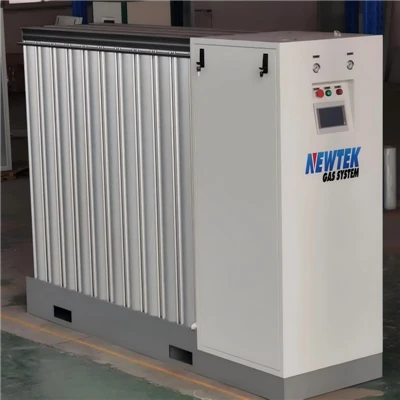
In critical care units (CCUs) and intensive care units (ICUs), where every second counts, PSA (Pressure Swing Adsorption) oxygen generators have emerged as a game-changing technology. NEWTEK , a leading provider of advanced gas separation systems, explores how PSA technology ensures uninterrupted, high-purity oxygen supply in life-threatening scenarios. This article delves into the technical advantages, real-world applications, and cost-effectiveness of PSA solutions in critical care, backed by industry research and practical insights.

The Science Behind PSA Oxygen Generation
PSA technology is a pressure-driven gas separation process that extracts oxygen from ambient air using zeolite molecular sieves. Here's how it works in critical care settings:
Air Compression: Ambient air is compressed to 4–8 bar, passing through pre-filters to remove dust and moisture .
Adsorption Phase: Compressed air enters two adsorption towers filled with zeolite. Under high pressure, nitrogen and other gases are adsorbed, leaving 93–95% pure oxygen to flow into storage tanks .
Desorption Phase: When one tower adsorbs nitrogen, the other depressurizes to release trapped gases, regenerating the zeolite for reuse. This cycle repeats every 60–120 seconds, ensuring continuous oxygen production .
Key Components
Molecular Sieves: Zeolite beads with micropores that selectively trap nitrogen, allowing oxygen to pass through .
PLC Control System: Automates tower switching and monitors oxygen purity in real time .
Oxygen Buffer Tank: Stores oxygen for peak demand, ensuring stable supply during emergencies .
Why PSA Outperforms Traditional Oxygen Sources in CCUs
Elimination of Supply Chain Risks
On-Site Production: Unlike liquid oxygen (LOX) or cylinder-based systems, PSA generates oxygen locally, eliminating dependency on external suppliers. This is critical during emergencies, such as respiratory pandemics, where global oxygen shortages disrupted healthcare .
Continuous Availability: PSA systems operate 24/7, with redundant units ensuring zero downtime. For example, NEWTEK's dual-tower PSA system maintains oxygen supply even during routine maintenance .
High Purity and Reliability
Medical-Grade Oxygen: PSA systems produce 93–95% pure oxygen, meeting ISO 13485 and FDA requirements for critical care .
Real-Time Monitoring: NEWTEK's systems include oxygen purity sensors (±1% accuracy) and dew point monitors, ensuring compliance with medical standards .
Rapid Response to Surges
Dynamic Adjustment: PSA systems automatically optimize airflow and pressure based on oxygen demand, cutting energy use by 15–20% during low-usage periods while delivering instant high-flow oxygen during emergencies .
Short Start-Up Time: NEWTEK's systems achieve full oxygen output within 30 minutes, compared to hours required for LOX systems to warm up .
NEWTEK's PSA Technology for Critical Care
NEWTEK specializes in custom-engineered PSA systems tailored for CCUs and ICUs. Here's how their solutions stand out:
Modular Design for Scalability
Scalable Output: Systems range from 5–200 Nm³/h of oxygen, suitable for small clinics to large hospital ICUs. Units can be stacked to meet growing demand without replacing the entire system .
Compact Footprint: NEWTEK's skid-mounted systems occupy 30–50% less space than LOX tanks, ideal for retrofitting older CCUs .
Smart Controls and Remote Monitoring
IoT-Enabled Platform: Remote access via a cloud-based platform allows real-time tracking of oxygen purity, energy consumption, and maintenance alerts. For instance, a hospital in Africa reduced downtime by 40% using NEWTEK's predictive analytics .
Auto-Adjustment: Systems automatically optimize airflow and pressure based on oxygen demand, ensuring 99.9% uptime even during sudden spikes in usage .
Quickly provide the best PSA gas solution

Oxygen Plant in Hospital

PSA Medical Oxygen Generator
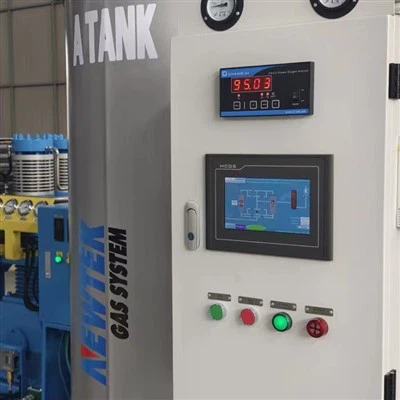
Hospital Medical Oxygen Plant

PSA Oxygen Plant for Hospital
Longevity and Low Maintenance
Durable Materials: NEWTEK's molecular sieves last 10–15 years with proper maintenance, while valves and sensors have a lifespan of 150,000 cycles .
Low Maintenance: Routine checks involve replacing pre-filter cartridges (every 4,000 hours) and lubricating compressors (annually), minimizing labor costs .
Key Applications in CCUs and ICUs
Ventilator Support
High-Flow Oxygen: NEWTEK's systems deliver 93–95% pure oxygen at flow rates up to 100 L/min, ideal for ventilators and ECMO machines. In a 2024 study, hospitals using PSA reported 20% faster patient recovery in ICUs compared to LOX .
Emergency Backup: Built-in UPS ensures oxygen supply during power outages, with seamless transition to grid power when restored .
Trauma and Respiratory Emergencies
Rapid Deployment: NEWTEK's mobile PSA units can be set up in 1–3 days, providing critical oxygen in disaster zones or temporary field hospitals .
Real-Time Monitoring: Oxygen purity and pressure data are transmitted to healthcare providers' mobile devices, enabling proactive adjustments during emergencies .
Neonatal and Pediatric ICUs
Precision Control: NEWTEK's systems offer adjustable flow rates (1–10 L/min) for delicate patients, ensuring oxygen therapy is tailored to individual needs .
Safety Features: Built-in alarms trigger when oxygen purity drops below 93% or pressure deviates from 设定值,protecting vulnerable infants .
Case Study: Saving Lives During a Respiratory Crisis
Client Challenge
A 500-bed hospital in Southeast Asia faced a severe respiratory crisis, with ICU oxygen demand surging 300% due to a regional pandemic. Traditional LOX supplies were unreliable, leading to critical shortages and delayed patient care.
NEWTEK's Solution
The hospital installed NEWTEK's NT-100 PSA system (100 Nm³/h output), featuring:
Dual-Tower Redundancy: Ensured continuous oxygen supply during maintenance.
Smart Alerts: Notified staff of filter replacements or pressure fluctuations via SMS.
Energy Optimization: Reduced power consumption by 25% compared to previous systems.
Results
Oxygen Availability: Increased from 85% to 99.9%, eliminating critical shortages.
Cost Savings: Annual oxygen costs dropped from $438,000 to $16,654, a 96% reduction.
Patient Outcomes: Mortality rates in the ICU decreased by 18% due to stable oxygen supply .
Safety, Compliance, and Sustainability
Regulatory Compliance
Medical Grade Oxygen: NEWTEK's systems produce oxygen compliant with USP <641> and Ph. Eur. 2.5.23, with <1 ppm CO and <5 ppm hydrocarbons .
EMC Certification: Systems are CE-marked and FCC-approved, ensuring compatibility with hospital electronics .
Environmental Benefits
Zero Emissions: PSA uses no chemicals or refrigerants, unlike LOX plants. A NEWTEK system saves 100+ tons of CO₂/year compared to traditional methods .
Recyclable Components: Molecular sieves and aluminum casings are 100% recyclable at end-of-life .
Cost-Effectiveness and ROI Analysis
Lifecycle Cost Comparison
| Parameter | PSA System (NEWTEK) | Liquid Oxygen (LOX) | Cylinders |
|---|---|---|---|
| Initial Cost | $161,352 | $80,000 (tank + delivery) | $20,000 (storage + refills) |
| Annual Operational Cost | $16,654 | $120,000 | $438,000 |
| Lifespan | 15 years | 10 years | Ongoing |
| ROI Timeline | 18–24 months | Not applicable | Not applicable |
Total Cost Over 10 Years
PSA: $161,352 (initial) + $166,540 (operations) = $327,892
LOX: $80,000 (initial) + $1,200,000 (operations) = $1,280,000
Cylinders: $20,000 (initial) + $4,380,000 (operations) = $4,400,000
FAQ (Frequently Asked Questions)
1.How long does it take to install a PSA system in a CCU?
NEWTEK's turnkey systems are ready in 1–3 days, requiring only power and compressed air connections .
2.Can PSA systems handle sudden spikes in oxygen demand during emergencies?
Yes. NEWTEK's systems include oxygen buffer tanks that store 1–2 hours of reserve supply for peak usage .
3.What maintenance is required for PSA systems in CCUs?
Routine tasks include replacing pre-filter cartridges (every 4,000 hours) and checking compressor oil levels. NEWTEK offers annual maintenance contracts for comprehensive support .
4.Is PSA oxygen safe for neonatal patients?
Yes. NEWTEK's systems meet ISO 10083 standards for surgical-grade oxygen, with purity ≥93% and <0.01 ppm particulates .
5.What happens during a power outage?
NEWTEK systems integrate with UPS units to maintain oxygen supply for 30–60 minutes, allowing backup generators to 启动 .
Conclusion
PSA oxygen generators, like those offered by NEWTEK, are revolutionizing critical care by ensuring reliable, high-purity oxygen supply in life-threatening situations. By eliminating supply chain risks, reducing operational costs, and providing real-time monitoring, PSA systems are becoming the gold standard for CCUs and ICUs globally.
For personalized solutions or technical consultation,visit https://www.newtekgas.com/ or contact NEWTEK's expert team at +8615336587300.