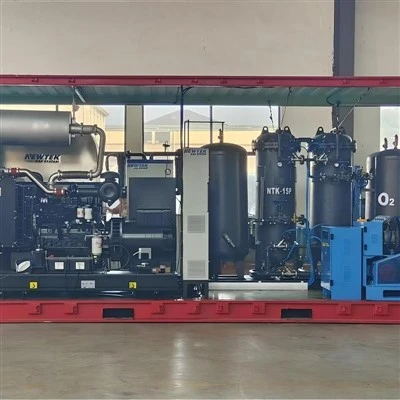
Industry Insight: How On-Site Oxygen Generation Supports Modern Aquaculture Systems
Aquaculture has become one of the fastest-growing sectors of global food production. As demand for seafood continues to increase, fish farms and aquaculture facilities are under pressure to produce higher yields while maintaining stable aquatic environments that support healthy fish growth. Among the many environmental factors influencing aquaculture productivity, dissolved oxygen levels in water play a decisive role.
Insufficient oxygen can quickly lead to fish stress, reduced feeding efficiency, disease outbreaks, and high mortality rates. For intensive aquaculture operations-particularly high-density fish farming-maintaining optimal oxygen levels is essential for both productivity and economic sustainability.
To address this challenge, many modern aquaculture facilities are adopting PSA (Pressure Swing Adsorption) oxygen generators to produce oxygen directly on-site. By supplying a reliable source of high-purity oxygen, these systems enable fish farms to maintain stable dissolved oxygen levels, improve fish survival rates, and support more efficient production systems.
This article explores how PSA oxygen generators are used in aquaculture and how they help improve fish farm productivity and operational stability.
The Importance of Dissolved Oxygen in Aquaculture
Fish and other aquatic organisms rely on dissolved oxygen in water for respiration. Unlike terrestrial animals that breathe oxygen from the air, fish extract oxygen from water through their gills. If oxygen levels drop below certain thresholds, fish experience physiological stress and may eventually die.
Several factors can influence dissolved oxygen levels in aquaculture systems, including:
Water temperature
Fish stocking density
Feeding rates
Organic waste accumulation
Water circulation and aeration efficiency
In intensive aquaculture operations, oxygen demand can increase rapidly as fish biomass grows. Without effective oxygen management, farms may experience oxygen shortages that negatively affect production.
Maintaining stable oxygen concentrations is therefore one of the most important aspects of aquaculture system management.
Traditional Oxygen Supply Methods in Fish Farms
Historically, aquaculture facilities have relied on several methods to maintain oxygen levels in water.
Mechanical Aeration
Mechanical aerators, such as paddle wheels or diffused aeration systems, introduce atmospheric oxygen into water by increasing air-water contact.
Although widely used, these systems have limitations:
Oxygen transfer efficiency may be relatively low
Performance decreases in high-density aquaculture systems
Oxygen levels may fluctuate during periods of high demand
Liquid Oxygen Supply
Some large aquaculture farms use liquid oxygen delivered in cryogenic tanks. Oxygen is injected into the water using specialized diffusers.
While this method provides high oxygen concentrations, it involves:
Dependence on external oxygen suppliers
Transportation and logistics costs
Storage and handling infrastructure requirements
These limitations have encouraged aquaculture operators to explore alternative oxygen supply solutions.
Introduction to PSA Oxygen Generation Technology
PSA oxygen generators produce oxygen from atmospheric air through a separation process known as pressure swing adsorption.
Ambient air contains approximately:
78% nitrogen
21% oxygen
Small amounts of other gases
PSA systems use molecular sieve adsorbent materials that selectively capture nitrogen molecules when compressed air passes through adsorption vessels. Oxygen remains as the product gas.
The process typically involves:
Compressing and filtering ambient air
Passing the air through adsorption beds filled with molecular sieve material
Adsorbing nitrogen while allowing oxygen to pass through
Collecting oxygen in a storage tank
Regenerating the adsorption beds through pressure changes
Through alternating cycles between adsorption towers, PSA systems produce a continuous stream of oxygen.
Delivering Oxygen to Aquaculture Systems
Once produced, oxygen from the PSA generator is delivered into the aquaculture water system using oxygen injection technologies.
Common methods include:
Fine bubble diffusers
Oxygen cones
Oxygenation columns
Low-head oxygenators
These devices dissolve oxygen into the water efficiently, allowing fish to absorb the oxygen through their gills.
Compared with traditional aeration systems, pure oxygen injection can significantly increase dissolved oxygen levels in aquaculture environments.
Improving Fish Survival Rates
One of the most important benefits of PSA oxygen generators in aquaculture is improved fish survival.
When oxygen levels fall below critical thresholds, fish experience stress that can lead to:
Reduced immune function
Increased susceptibility to disease
Reduced feeding activity
Mortality events
By maintaining stable oxygen concentrations, PSA oxygen systems create healthier aquatic environments that support fish survival throughout the production cycle.
Stable oxygen supply is especially important during high-demand periods such as:
Warm weather when oxygen solubility decreases
High feeding activity periods
Nighttime when photosynthesis stops in algae-rich ponds
Reliable oxygen generation ensures that fish receive sufficient oxygen even under these challenging conditions.
Supporting High-Density Aquaculture Systems
Modern aquaculture increasingly relies on high-density farming techniques to maximize production within limited water resources.
Examples include:
Recirculating Aquaculture Systems (RAS)
Intensive pond aquaculture
Tank-based fish farming operations
In these systems, fish biomass per unit of water volume is significantly higher than in traditional farming methods. As a result, oxygen demand increases dramatically.
PSA oxygen generators provide a scalable oxygen supply that supports high-density operations without relying on external oxygen deliveries.
This allows farms to increase production capacity while maintaining stable environmental conditions.
Improving Feed Conversion and Growth Rates
Oxygen levels also influence how efficiently fish convert feed into body mass.
When dissolved oxygen levels are optimal:
Fish maintain higher metabolic efficiency
Feeding activity increases
Nutrient absorption improves
Conversely, low oxygen conditions can suppress feeding behavior and reduce growth rates.
By maintaining stable oxygen concentrations, PSA oxygen generators support healthier feeding patterns and improved feed conversion ratios, which directly impact farm profitability.
Reducing Production Risk in Aquaculture
Aquaculture operations face several environmental risks that can affect oxygen levels.
Examples include:
Sudden algal blooms
Temperature fluctuations
Storms or power outages affecting aeration systems
Equipment failure in water circulation systems
PSA oxygen generators provide a reliable oxygen source that can help stabilize conditions during unexpected events.
Many farms integrate PSA systems with backup power supplies to ensure oxygen production continues during power disruptions.
This added reliability reduces the risk of large-scale fish losses.
Supporting Recirculating Aquaculture Systems (RAS)
Recirculating Aquaculture Systems represent one of the most technologically advanced forms of fish farming. These systems continuously filter and reuse water, allowing farms to operate in controlled environments with minimal water consumption.
However, RAS facilities require highly controlled oxygen management because fish density is extremely high.
PSA oxygen generators are particularly well suited for these systems because they can deliver a consistent oxygen supply that matches the continuous demands of recirculating water systems.
By integrating PSA oxygen generation with oxygenation equipment, RAS facilities can maintain stable dissolved oxygen levels throughout the system.
Operational Advantages of On-Site Oxygen Generation
Using PSA oxygen generators in aquaculture offers several operational advantages compared with relying on delivered oxygen supplies.
Reduced Logistics Dependence
On-site oxygen production eliminates the need for frequent oxygen deliveries, reducing transportation costs and logistical complexity.
Continuous Oxygen Availability
PSA systems produce oxygen continuously, ensuring a stable supply even during periods of increased demand.
Scalability
Oxygen generation capacity can be increased by adding additional PSA modules, allowing farms to expand production without major infrastructure changes.
Lower Long-Term Costs
Although installing an oxygen generation system requires initial investment, operational costs are often lower than purchasing liquid oxygen over long periods.
Environmental and Sustainability Benefits
Aquaculture sustainability is an increasingly important concern as the industry expands.
PSA oxygen generators can contribute to more sustainable fish farming practices by:
Reducing transportation emissions associated with oxygen deliveries
Supporting more efficient feed utilization
Improving fish health and reducing disease outbreaks
Efficient oxygen management also reduces waste accumulation and helps maintain better water quality within aquaculture systems.
Future Trends in Aquaculture Oxygen Technology
As aquaculture continues to evolve, oxygen supply systems are becoming more sophisticated.
Emerging developments include:
Integration of oxygen generation systems with automated farm monitoring platforms
Real-time dissolved oxygen sensors connected to oxygen injection systems
Smart oxygen control systems that adjust oxygen production according to fish activity and biomass levels
These technologies enable more precise oxygen management and improve the overall efficiency of aquaculture operations.
Conclusion
Maintaining optimal dissolved oxygen levels is essential for successful aquaculture operations. PSA oxygen generators provide a reliable and efficient solution by producing oxygen directly on-site, allowing fish farms to stabilize aquatic environments and support healthy fish growth.
Through improved oxygen availability, aquaculture operators can enhance fish survival rates, increase production density, and improve feed conversion efficiency. In addition, on-site oxygen generation reduces dependence on external oxygen supply chains and improves operational resilience.
As aquaculture continues to expand globally, PSA oxygen generation systems are expected to play an increasingly important role in supporting high-productivity, sustainable fish farming operations.