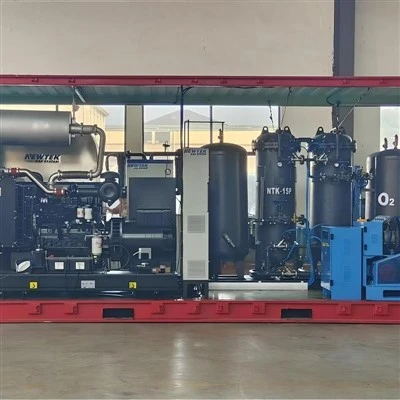
Across the globe, the healthcare sector is undergoing a pivotal transformation in how medical oxygen is produced and delivered, with skid-mounted oxygen generation systems emerging as the linchpin of decentralized medical oxygen production. As healthcare providers and policymakers grapple with persistent supply chain vulnerabilities, uneven access to life-saving oxygen, and the need for resilient healthcare infrastructure, these modular, integrated systems are reshaping the landscape of medical gas engineering, offering a reliable, on-demand alternative to traditional supply models. The industry is experiencing robust growth, fueled by post-pandemic health security priorities, global efforts to expand universal health coverage, and technological advancements that enhance efficiency, accessibility, and adaptability-trends that are expected to accelerate in the coming years.
Decentralized medical oxygen production, powered by skid-mounted systems, addresses one of the most critical gaps in global healthcare: the lack of reliable access to medical grade oxygen (MGO) for millions of people worldwide. Studies indicate that a significant portion of populations in low- and middle-income countries (LMICs) lack access to safe, affordable medical oxygen, a gap that has been magnified by logistical challenges, infrastructure limitations, and disruptions to global supply chains. Unlike traditional approaches-such as bulk liquid oxygen (LOX) delivery and high-pressure oxygen cylinder (O2 cylinder) distribution-skid-mounted systems enable on-site production at the point of care, eliminating the risks of delayed deliveries, stockouts, and transportation inefficiencies that have long plagued healthcare facilities, particularly in remote and underserved regions.
The core appeal of skid-mounted oxygen generation systems lies in their modular, plug-and-play design. These pre-assembled units integrate all critical components-including air compressors, adsorption towers, purification systems, storage tanks, and control panels-onto a single, durable steel skid frame. This design minimizes on-site installation time, reduces the need for extensive construction, and allows for easy relocation if needed, making them ideal for a wide range of healthcare settings: from urban tertiary hospitals and community health centers to rural clinics, field hospitals, and disaster response sites. The shift toward these systems is being driven by a growing recognition that decentralized production is the most sustainable way to achieve oxygen autonomy and supply chain resilience, particularly in regions with limited infrastructure.
At the heart of this industry's growth is the continuous evolution of core technologies, primarily Pressure Swing Adsorption (PSA) and Vacuum Pressure Swing Adsorption (VPSA)-the dominant separation processes used in skid-mounted medical oxygen generators. These technologies leverage the selective adsorption properties of synthetic zeolite molecular sieves to separate oxygen from ambient air, which consists of approximately 21% oxygen (O₂), 78% nitrogen (N₂), and trace gases. The PSA process operates through a cyclic, dual-bed system: during the adsorption phase, compressed air is directed into one tower, where zeolite sieves preferentially adsorb nitrogen, water vapor, carbon dioxide, and hydrocarbons, allowing oxygen and argon to pass through as product gas. During the desorption phase, the second tower is depressurized to release the adsorbed impurities, which are vented to the atmosphere, and the cycle repeats to ensure a steady supply of medical grade oxygen.
Recent technological breakthroughs have further elevated the performance and accessibility of skid-mounted systems. Next-generation zeolite molecular sieve formulations-including advanced lithium-based variants-have improved nitrogen adsorption capacity, reduced energy consumption, and expanded the operating temperature range of these systems, making them viable in extreme environments, from arctic to tropical regions. Additionally, the integration of industrial Internet of Things (IIoT) and artificial intelligence (AI) has transformed system monitoring and maintenance, with most new installations now featuring smart controls that enable real-time performance tracking, remote diagnostics, and predictive maintenance. These smart systems allow operators to adjust cycle timings, receive alerts for potential issues, and optimize energy use-all via mobile or desktop platforms-significantly reducing downtime and improving operational efficiency.
Another key trend shaping the industry is the move toward modular and scalable design. Manufacturers are refining skid form factors to balance compactness with expandability, allowing healthcare facilities to scale oxygen production capacity as demand grows, without the need for major infrastructure overhauls. Containerized skid systems-self-contained units housed in standard shipping containers-are also gaining traction for rapid deployment, with specialized enclosures designed to withstand harsh conditions, such as corrosion in coastal areas and dust in arid or mining regions. These innovations are critical for expanding access to medical oxygen in remote and off-grid areas, where traditional infrastructure is limited.
Renewable energy integration is another emerging focus, addressing the challenge of energy access in off-grid and low-resource regions. Hybrid power solutions-combining solar photovoltaic (PV) panels, wind energy, battery storage, and backup generators-are being paired with skid-mounted systems to ensure uninterrupted operation, even in areas with unreliable electrical grids. This integration not only enhances the resilience of oxygen production but also reduces the carbon footprint of medical oxygen generation, aligning with global sustainability goals and reducing operational costs over time.
The industry's growth is also being supported by evolving regulatory frameworks and global initiatives aimed at standardizing medical oxygen production and expanding access. International organizations are working with governments to establish guidelines for medical grade oxygen purity-typically requiring a minimum of 93% purity, a dew point of ≤-45°C, and no detectable hydrocarbons, in line with global standards. These standards ensure that skid-mounted systems produce safe, effective oxygen for use in ventilators, piped oxygen systems, and respiratory therapy, critical for treating conditions such as pneumonia, chronic obstructive pulmonary disease (COPD), and acute respiratory distress syndrome (ARDS).
Regional market dynamics reflect the varying priorities and challenges of different geographies, but the universal trend is a shift toward decentralized production. In the Asia Pacific region-currently the largest and fastest-growing market for skid-mounted oxygen generation systems-growth is driven by healthcare infrastructure expansion, efforts to improve rural healthcare access, and policies mandating on-site oxygen generation in public hospitals. This region is also a hub for technological innovation, with advancements in compact, energy-efficient systems tailored to the needs of small clinics and remote communities.
Africa, meanwhile, represents a critical frontier for the industry, as the continent faces the widest gap in medical oxygen access. Skid-mounted systems are increasingly seen as the only viable solution to address this gap, given limited grid access and poor logistics infrastructure. Initiatives focused on building regional hub-and-spoke models-where centralized production facilities supply smaller on-site skid systems in surrounding clinics-are gaining traction, helping to scale access while reducing logistical burdens. These models leverage the modularity of skid systems to create a network of decentralized production sites, ensuring that even remote communities have access to life-saving oxygen.
In Latin America and the Caribbean, growth is driven by disaster resilience efforts and the need to strengthen healthcare infrastructure in the face of natural disasters, which often disrupt traditional oxygen supply chains. Skid-mounted systems are being deployed in disaster-prone regions to ensure that healthcare facilities can maintain oxygen production during emergencies, a critical factor in reducing mortality rates during crises.
Key industry terminology underscores the specialized nature of this sector, bridging medical, engineering, and supply chain disciplines. Terms such as decentralized production, oxygen autonomy, supply chain resilience, and plug-and-play installation are central to understanding the industry's value proposition. Other critical terms include medical grade oxygen (MGO), PSA/VPSA technology, zeolite molecular sieves, IIoT integration, renewable hybrid systems, and hub-and-spoke models-all of which are integral to the design, deployment, and operation of skid-mounted oxygen generation systems.
Looking ahead, the skid-mounted oxygen generation industry is poised for continued growth, driven by ongoing technological innovation, expanding global healthcare infrastructure, and a renewed focus on health equity. As manufacturers continue to refine system efficiency, reduce costs, and enhance adaptability, these systems will play an increasingly critical role in ensuring that medical oxygen is accessible to all, regardless of location or infrastructure. The shift to decentralized production is not just a technological trend-it is a vital step toward building more resilient, equitable healthcare systems worldwide, ensuring that life-saving oxygen is available when and where it is needed most.
Industry experts note that the long-term sustainability of this growth will depend on continued investment in research and development, collaboration between governments, international organizations, and industry stakeholders, and the adoption of policies that prioritize decentralized oxygen production as a core component of healthcare infrastructure. As the industry matures, the focus will likely shift to further integrating smart technologies, expanding renewable energy use, and developing even more compact, affordable systems tailored to the unique needs of underserved regions.
In summary, skid-mounted oxygen generation systems are transforming the global medical oxygen landscape, offering a reliable, scalable, and sustainable solution to one of healthcare's most pressing challenges. By enabling decentralized production, these systems are eliminating supply chain vulnerabilities, expanding access to life-saving care, and driving progress toward universal health coverage. As technological advancements continue and global initiatives gain momentum, the industry is set to play an even more critical role in shaping the future of healthcare infrastructure worldwide.