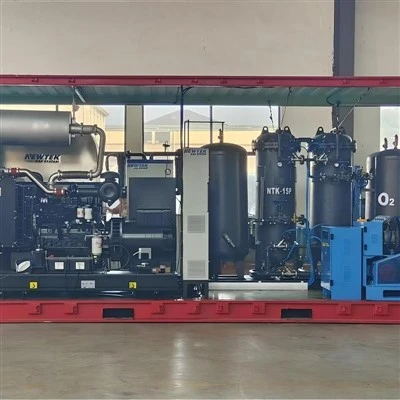
As industrial processes continue to scale up, oxygen demand is no longer limited to small or medium flow rates. In industries such as metallurgy, mining, chemical processing, energy, and environmental engineering, oxygen consumption has grown to a point where conventional PSA oxygen systems begin to approach their technical and economic limits.
Traditional PSA (Pressure Swing Adsorption) oxygen generators remain effective for many applications, but when oxygen demand reaches higher continuous flow levels, new challenges emerge:
Rising specific energy consumption
Larger compressor requirements
Increased footprint and system complexity
Diminishing efficiency at scale
What Is VPSA Oxygen Technology?
Core Principle of VPSA
VPSA oxygen generation operates on the same adsorption principle as PSA-using molecular sieve materials to selectively adsorb nitrogen from air-but introduces a critical difference in the regeneration phase.
Instead of relying solely on pressure reduction to atmospheric level, VPSA systems use vacuum-assisted desorption, allowing nitrogen to be removed from the adsorbent bed more effectively and at lower operating pressures.
This combination of:
Lower adsorption pressure
Vacuum-enhanced regeneration
fundamentally improves system efficiency at higher oxygen production rates.
PSA vs. VPSA
While PSA systems typically operate between:
Adsorption pressure: medium-to-high
Desorption pressure: near atmospheric
VPSA systems operate within a wider pressure differential, using vacuum pumps to achieve deeper regeneration of the adsorbent.
This structural distinction enables VPSA plants to deliver:
Higher oxygen output per unit of adsorbent
Lower compressed air pressure requirements
Improved energy efficiency at large scale
Why VPSA Becomes Advantageous at Higher Capacities
The Energy Efficiency Threshold
At small to medium oxygen flow rates, PSA systems remain cost-effective and straightforward. However, as oxygen demand increases, PSA systems require:
Larger compressors
Higher operating pressures
More adsorbent material
These factors cause specific energy consumption to rise disproportionately.
VPSA technology addresses this challenge by shifting energy consumption away from high-pressure air compression toward lower-pressure compression combined with vacuum regeneration, which is more efficient at scale.
Oxygen Production Economics at Scale
For large industrial consumers, even small differences in energy efficiency translate into significant operating cost variations over time.
VPSA oxygen plants typically offer:
Lower kWh per Nm³ of oxygen at high flow rates
Reduced compressor power demand
More stable energy consumption profiles
When evaluated over long operating hours, VPSA systems often deliver lower total cost of ownership for high-capacity applications.
VPSA System Architecture and Key Components
Low-Pressure Air Compression System
Unlike PSA plants that rely on higher-pressure compressed air, VPSA systems typically operate with:
Lower discharge pressure compressors
Larger volumetric flow handling
This reduces mechanical stress on compressors and improves overall system durability.
Adsorption Skids and Molecular Sieve Beds
VPSA plants use adsorption vessels optimized for:
Lower pressure operation
High flow distribution
Efficient nitrogen adsorption
Because regeneration is enhanced by vacuum, the adsorbent utilization rate is higher, allowing for larger oxygen output without proportional increases in adsorbent volume.
Vacuum Regeneration System
The defining component of a VPSA system is its vacuum pump assembly, which:
Creates deep vacuum during desorption
Improves nitrogen removal efficiency
Shortens regeneration cycles
This vacuum-assisted regeneration is the key enabler of VPSA's superior performance at scale.
Oxygen Purity and Output Characteristics
Typical Purity Range
VPSA oxygen plants commonly produce oxygen with purity levels in the range of:
Approximately 90–93%
This purity level is well-matched to most industrial processes, including combustion enhancement, oxidation, leaching, and aeration.
High Flow Stability
Due to their operating principle, VPSA systems are particularly well-suited for:
Continuous high-flow oxygen demand
Stable base-load operation
Long-duration production cycles
This makes VPSA an ideal solution for facilities with large, steady oxygen consumption profiles.
Energy Efficiency as a Design Driver
Lower Compression Energy Requirement
Because VPSA systems operate at lower adsorption pressures, the energy required for air compression is significantly reduced compared to PSA systems at similar capacities.
This directly impacts:
Electricity consumption
Heat generation
Compressor wear and maintenance frequency
Optimized Pressure Balance
The combination of low-pressure compression and vacuum regeneration creates a more favorable pressure balance across the system.
Instead of expending large amounts of energy to compress air, VPSA systems focus on efficient nitrogen removal, which is energetically advantageous at scale.
VPSA vs. Cryogenic ASU
When VPSA Is Preferable to Cryogenic Oxygen
Cryogenic air separation units (ASUs) are typically chosen for very large oxygen demand and high-purity requirements. However, they involve:
High capital investment
Long construction timelines
Complex operation and maintenance
VPSA oxygen plants offer a middle ground by providing:
High oxygen capacity
Lower capital cost
Faster deployment
Simplified operation
For industrial users that do not require ultra-high purity oxygen, VPSA systems often represent the most balanced solution.
Flexibility vs. Permanence
Compared with cryogenic plants, VPSA systems are:
More modular
Easier to expand or modify
Less tied to permanent infrastructure
This flexibility is increasingly valuable in industries with evolving production requirements.
Industrial Applications Where VPSA Excels
Metallurgy and Steelmaking
In steel and non-ferrous metal production, VPSA oxygen plants support:
Oxygen-enriched combustion
Furnace efficiency improvement
Reduced fuel consumption
The high and continuous oxygen demand in these processes aligns well with VPSA capabilities.
Mining and Mineral Processing
Mining operations often require large volumes of oxygen for:
Leaching processes
Bio-oxidation
Smelting support
VPSA systems provide reliable on-site oxygen generation, particularly in remote locations where bulk oxygen logistics are costly.
Chemical and Environmental Engineering
Large-scale oxidation reactions, wastewater treatment plants, and environmental remediation projects benefit from VPSA systems due to:
Continuous oxygen availability
Stable operating costs
Reduced dependency on external supply
Operational Reliability and Maintenance Considerations
Designed for Continuous Operation
VPSA oxygen plants are typically designed for:
24/7 continuous operation
High availability requirements
Minimal performance fluctuation
Redundant system elements and robust control logic ensure stable oxygen supply even during maintenance activities.
Maintenance Strategy
Although VPSA systems include vacuum pumps in addition to compressors, maintenance requirements remain predictable and manageable.
Key maintenance areas include:
Compressor servicing
Vacuum pump inspection
Valve and adsorbent monitoring
With proper design and preventive maintenance, VPSA plants deliver long-term operational stability.
Automation and Control in Modern VPSA Systems
Intelligent Control Logic
Modern VPSA oxygen plants are equipped with advanced automation systems that manage:
Adsorption and regeneration sequencing
Load-following operation
Energy optimization strategies
This automation ensures consistent oxygen quality and efficient energy use.
Integration with Plant Systems
VPSA systems can be integrated into:
Plant DCS platforms
Energy management systems
Remote monitoring and diagnostics tools
This integration enhances operational transparency and simplifies plant-wide optimization.
Strategic Considerations for Industrial Operators
Choosing between PSA, VPSA, and cryogenic oxygen systems is not simply a technical decision; it is a strategic infrastructure choice.
VPSA oxygen plants are particularly suitable when:
Oxygen demand is high and continuous
Energy efficiency is a critical KPI
Long-term operating cost matters more than minimal upfront cost
Moderate oxygen purity is sufficient
In these scenarios, VPSA offers a strong balance between performance, cost, and operational simplicity.
VPSA as the High-Capacity, Energy-Efficient Solution
VPSA oxygen plants occupy a critical position in the industrial oxygen supply landscape. They bridge the gap between conventional PSA systems and large cryogenic ASUs, delivering high-capacity oxygen generation with superior energy efficiency.
When oxygen demand reaches a level where PSA systems become inefficient, but cryogenic solutions remain excessive, VPSA technology provides a technically sound and economically rational alternative.