

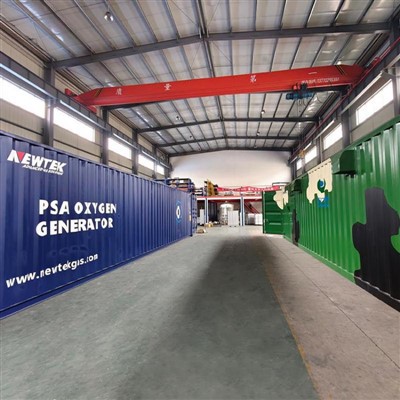
Newtek (Hangzhou) Energy Technology Co., Ltd.
Newtek (Hangzhou) Energy Technology Co., Ltd., a globally recognized manufacturer of on-site gas generation systems, has solidified its position as a leader in pressure swing adsorption (PSA) and vacuum pressure swing adsorption (VPSA) technology. With a focus on oxygen and nitrogen generators, the company serves a diverse range of industries-from gold mining and medical facilities to food packaging and electronics manufacturing-with installations spanning over 100 countries.
At the heart of Newtek's PSA oxygen generators is a critical component: molecular sieves. These porous, crystalline materials-typically zeolites-enable the selective adsorption of nitrogen from ambient air, a process that underpins the production of high-purity oxygen. Newtek's systems, available in skid-mounted, containerized, and modular designs, are engineered to operate in extreme conditions, from the frigid temperatures of polar regions to the high humidity of tropical rainforests. The reliability of these systems hinges on the integrity of their molecular sieves, making the prevention of "poisoning"-a degradation process that impairs adsorption capacity-a core focus of Newtek's design and service philosophy. By integrating advanced protective features and proactive maintenance protocols, the company ensures its molecular sieves maintain performance over extended lifespans, even in challenging environments.
The role of molecular sieves in PSA oxygen generators
Molecular sieves are the functional core of PSA oxygen systems, enabling the separation of oxygen from air through selective adsorption. Their structure-characterized by uniform pores (0.3–1 nanometers in diameter)-allows smaller oxygen molecules to pass through while trapping larger nitrogen molecules, leveraging differences in molecular size and adsorption affinity. This precision makes them indispensable for producing oxygen with consistent purity, a requirement for applications ranging from life-supporting medical oxygen to high-precision industrial processes.
When molecular sieves become "poisoned," their ability to selectively adsorb nitrogen is compromised. Poisoning occurs when contaminants block pores, alter the sieve's chemical structure, or occupy adsorption sites, reducing efficiency and purity. In severe cases, it can render the sieve bed non-functional, leading to system downtime, increased energy consumption, and costly replacements. Understanding the causes of poisoning and implementing targeted prevention strategies.


Common causes of molecular sieve poisoning
Molecular sieve poisoning is a cumulative process driven by contaminants, operational inefficiencies, and environmental stressors:
Contaminants in feed air
Ambient air contains a range of impurities that can degrade molecular sieves, with severity varying by environment:
Moisture: Water vapor is the most pervasive threat. Molecular sieves have a high affinity for water, which binds tightly to their crystalline structure, displacing nitrogen and blocking adsorption sites. Uncontrolled moisture can saturate sieves within months, reducing oxygen purity and increasing energy use.
Oil and hydrocarbons: Compressors, a critical component of PSA systems, can introduce oil droplets or vapor into the air stream. Oil coats sieve surfaces, forming a barrier that prevents nitrogen adsorption; over time, it penetrates pores, causing irreversible structural damage. Hydrocarbons-from industrial emissions, vehicle exhaust, or fuel storage-exhibit similar behavior, binding to sieve sites and reducing capacity.
Sulfur compounds: Hydrogen sulfide (H₂S) and sulfur dioxide (SO₂)-common in industrial zones, oil fields, or near fossil fuel combustion-react chemically with molecular sieves. These reactions break down the sieve's crystalline framework, permanently impairing adsorption.
Particulates: Dust, dirt, and metal oxides from unfiltered air physically block sieve pores, restricting gas flow and reducing contact between air and adsorption sites. This is particularly problematic in mining, construction, or desert environments with high airborne particulate levels.
Inadequate regeneration
PSA systems operate in cyclical phases: adsorption (nitrogen is trapped) and regeneration (trapped nitrogen is released to restore sieve capacity). Incomplete regeneration is a primary driver of poisoning:
Insufficient purge gas: Regeneration relies on a portion of the produced oxygen to "flush" nitrogen from the sieve bed. Inadequate purge flow leaves residual nitrogen in pores, reducing available adsorption sites in subsequent cycles. Over time, this residual nitrogen accumulates, mimicking the effects of poisoning.
Suboptimal pressure and temperature: Regeneration requires precise pressure swings (from high to low) and temperature control. Insufficient pressure drops or low temperatures can trap impurities.
Shortened cycle times: Rushing the regeneration phase to increase oxygen output disrupts the removal of trapped contaminants, accelerating sieve degradation.
Operational and environmental factors
Human error and environmental stress further contribute to molecular sieve poisoning:
Neglected pre-treatment systems: Pre-filters, dryers, and adsorbers are designed to remove contaminants before air reaches the sieve bed. When these components are not replaced or maintained-clogged filters, saturated desiccants-contaminants bypass into the sieve bed unimpeded.
Overloading: Operating a PSA system beyond its rated capacity increases the volume of air processed per cycle, reducing the efficiency of adsorption and regeneration. This exposes sieves to higher contaminant loads, accelerating degradation.
Extreme environmental conditions: High ambient temperatures can reduce sieve adsorption capacity, while rapid temperature fluctuations (common in desert or polar regions) cause thermal stress, weakening the crystalline structure. High altitude, which reduces air density, can strain sieve performance by altering adsorption dynamics.
Preventive measures to avoid molecular sieve poisoning
Preventing molecular sieve poisoning requires a holistic approach, integrating system design, operational best practices, and proactive maintenance. Newtek incorporates these measures into its PSA generators, tailoring solutions to specific environments and industries:
Multi-stage pre-treatment systems
Newtek's PSA oxygen generators feature advanced pre-treatment to remove contaminants before they reach molecular sieves:
High-capacity dryers: Desiccant dryers or membrane systems reduce moisture levels to acceptable limits, even in tropical humidity. These dryers are sized to match ambient conditions, with automated regeneration to maintain effectiveness.
Oil-removal cascades: Coalescing filters capture oil droplets, while activated carbon beds adsorb oil vapor and hydrocarbons, ensuring feed air is oil-free. This is critical for systems using lubricated compressors.
Tiered filtration: HEPA filters remove particulates as small as 0.3 microns, preventing physical pore blockage. For high-dust environments (mining), pre-filtration has cyclone separators to remove larger particles.
Specialized adsorbents: In regions with high sulfur or industrial emissions, Newtek integrates guard beds (activated alumina or zinc oxide) to trap sulfur compounds before they reach the sieve bed.
Adaptive operational controls
Newtek's systems use intelligent controls to optimize sieve performance and regeneration:
PLC-driven cycle optimization: Programmable logic controllers (PLCs) adjust adsorption and regeneration times based on real-time conditions (humidity, temperature, and oxygen demand). This ensures complete regeneration, even in variable environments.
Load-matching algorithms: Systems automatically adjust output to match demand, preventing overloading. Modular designs allow for capacity scaling, ensuring sieves operate within rated limits.
Real-time monitoring: Sensors track feed air quality (moisture, oil content), sieve bed pressure, and oxygen purity. Alerts notify operators of deviations (rising moisture levels) that could signal potential poisoning, enabling corrective action.
Proactive maintenance protocols
Newtek emphasizes ongoing care to preserve sieve integrity:
Scheduled filter and dryer service: The company's maintenance plans have regular replacement of filters, desiccants, and adsorbents, with reminders tailored to operating conditions (more frequent changes in humid climates).
Sieve bed inspections: During routine service, technicians assess sieve condition-checking for caking, oil contamination, or moisture saturation. Early detection allows for targeted regeneration (using heated purge gas) or partial sieve replacement, avoiding full bed failure.
Operator training: Newtek provides comprehensive training on identifying poisoning indicators (declining purity, increased energy use) and performing basic troubleshooting. Detailed manuals outline step-by-step procedures for maintaining pre-treatment systems and optimizing cycles.
Environmentally tailored designs
Newtek's experience in extreme environments informs specialized features that protect sieves:
Climate-controlled enclosures: In cold regions, insulated, heated enclosures prevent moisture condensation in sieve beds. In hot climates, ventilation systems maintain optimal operating temperatures.
Corrosion-resistant components: For coastal or industrial areas, sieve beds and pre-treatment systems use stainless steel and anti-corrosive coatings to withstand salt spray or chemical exposure.
Altitude adaptation: Systems deployed at high altitudes feature adjusted pressure settings and sieve bed sizing to compensate for lower air density, ensuring efficient adsorption and regeneration.
Newtek's industry-specific solutions
Newtek's approach to preventing molecular sieve poisoning is tailored to industry needs:
Medical facilities: Systems have redundant pre-treatment and continuous purity monitoring to ensure compliance with medical standards. Sieve beds are designed for low contamination risk, with rapid response service to minimize downtime.
Mining operations: In dusty, high-humidity mines, generators feature enhanced filtration (cyclone separators + HEPA filters) and rugged enclosures to protect against particulates and moisture.
Oil and gas: Units deployed near refineries or drilling sites have sulfur-removal guard beds and heavy-duty oil filtration to counteract high hydrocarbon and sulfur levels.
Ensuring sieve longevity through proactive protection
Molecular sieve poisoning poses a significant threat to the reliability of PSA oxygen generators, but it is preventable through advanced design, rigorous operation, and proactive maintenance. Newtek (Hangzhou) Energy Technology Co., Ltd. exemplifies this approach, integrating multi-stage pre-treatment, adaptive controls, and tailored maintenance to protect molecular sieves across diverse environments.
By addressing the root causes of poisoning-from feed air contaminants to operational inefficiencies-Newtek ensures its PSA systems deliver consistent performance, supporting critical applications from healthcare to industrial processing. For industries reliant on on-site oxygen generation, safeguarding molecular sieves is not merely a maintenance task but a cornerstone of operational resilience, ensuring uninterrupted productivity and safety.


