


NEWTEK
NEWTEK (Hangzhou) Energy Technology Co., Ltd. has emerged as a global powerhouse in the gas generation systems domain. With over three decades of industry experience since its establishment in 1987, the company has successfully delivered more than 3500 units across 100 countries, firmly establishing its reputation for reliability and innovation.
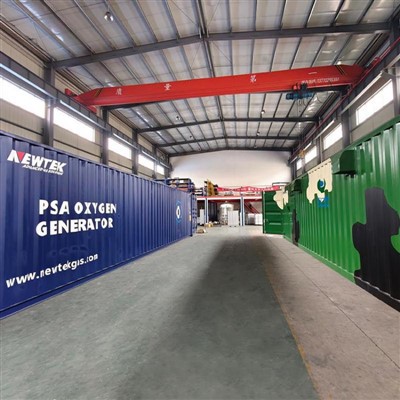
NEWTEK specializes in on - site gas generation solutions, with a particular emphasis on Pressure Swing Adsorption (PSA) technology. Their PSA oxygen generators are at the forefront of this technology, designed to meet the diverse oxygen requirements of various industries.
These generators operate on the principle of PSA, which involves the use of molecular sieves to separate oxygen from ambient air. Under pressure, the molecular sieves selectively adsorb nitrogen and other impurities, allowing oxygen to pass through and be collected. Once the pressure is reduced, the adsorbed nitrogen is released, and the molecular sieves are regenerated for the next cycle.
NEWTEK's PSA oxygen generators offer a high level of flexibility. They can produce oxygen with purities typically ranging from 90% to 95%, and for more specialized applications, can achieve up to 99.5% purity upon request. The capacity of these generators varies, catering to small - scale and large - scale operations, with flow rates adaptable to specific needs.
The modular design of NEWTEK's PSA oxygen generators is another significant advantage. This design allows for easy expansion or downsizing, enabling businesses to adjust their oxygen production capacity as their requirements change. The generators are equipped with advanced automation and control systems. These systems ensure unattended operation, automatic oxygen demand adjustment, and real - time monitoring, guaranteeing seamless and reliable performance.
The company's commitment to quality is evident in its use of high - grade components. Well - known brands of air compressors are utilized, along with high - efficiency cold dryers and filters to ensure the cleanliness of the extracted gas. Large activated carbon filters are employed to remove compressor grease, thus extending the equipment's lifespan. By using international and domestic well - known brands for equipment materials, NEWTEK ensures the durability and reliability of its PSA oxygen generators.
PSA Oxygen Production Technology
The Basics of PSA Technology
Pressure Swing Adsorption (PSA) is a gas separation technology that has gained significant traction in various industries. In the context of oxygen production, PSA technology takes in ambient air, which is primarily composed of nitrogen (about 78%) and oxygen (about 21%), along with trace amounts of other gases.
The process begins with compressing the air to increase its pressure. This compressed air then passes through filtration to remove dust, oil, and moisture. Once pre - treated, the air enters the adsorption towers, which are filled with molecular sieves. Zeolite molecular sieves are commonly used in PSA oxygen generators. These sieves have a unique porous structure that selectively adsorbs nitrogen molecules at higher pressures. Oxygen, with its smaller molecular size, is less readily adsorbed and thus passes through the molecular sieve bed, emerging as the product gas with an increased oxygen concentration.
When one adsorption tower reaches its adsorption capacity (becomes saturated with nitrogen), the system automatically switches the air flow to the other tower. The saturated tower then undergoes a regeneration process. This involves reducing the pressure inside the tower, which causes the adsorbed nitrogen to desorb and be vented out. In some cases, a small amount of product oxygen may be used to further clean the molecular sieve bed, ensuring its efficient regeneration for the next adsorption cycle.

Advantages of PSA Technology Over Traditional Oxygen Production Methods
Compared to traditional oxygen production methods, PSA technology offers several distinct advantages. Cryogenic distillation requires extremely low temperatures (around - 183°C for oxygen separation) to liquefy air and then distill it to separate oxygen and nitrogen. This process is highly energy - intensive, as it requires large - scale refrigeration systems. In contrast, PSA oxygen generators operate at ambient temperatures, significantly reducing the energy consumption associated with oxygen production.
Another advantage of PSA technology is its ability to provide on - site oxygen generation. Traditional methods often rely on the delivery of oxygen from central production facilities, which can be costly and may be subject to supply disruptions. With PSA technology, industries can produce oxygen on - site, ensuring a continuous and reliable supply. This is particularly crucial in remote areas or in situations where a stable oxygen supply is essential.
PSA oxygen generators offer greater flexibility in terms of production capacity and purity. They can be easily adjusted to produce different volumes of oxygen based on demand, and the purity of the generated oxygen can be tailored to meet specific application requirements. This adaptability is a significant advantage over traditional methods, which may be more rigid in their production capabilities.
Healthcare and Medical Applications
Hospital Oxygen Supply
In the healthcare sector, a reliable and continuous supply of oxygen is crucial for patient care. NEWTEK's PSA oxygen generators have found widespread use in hospitals, clinics, and other medical facilities. These generators can be configured to provide a stable oxygen supply, ensuring that patients receive the necessary oxygen therapy.
The ability to produce high - purity oxygen, up to 99.5% in some cases, is essential for critical care units, operating rooms, and patients with respiratory conditions. Patients suffering from chronic obstructive pulmonary disease (COPD) or those recovering from major surgeries often require a consistent supply of high - purity oxygen to aid in their recovery. PSA oxygen generators can meet these needs, providing a cost - effective and reliable alternative to traditional oxygen supply methods.
The automated operation and real - time monitoring features of NEWTEK's generators ensure that the oxygen supply remains stable and that any potential issues are quickly detected and addressed. This helps medical staff focus on patient care without having to worry about oxygen supply disruptions.
Oxygen Therapy in Home Healthcare
The trend towards home healthcare has been facilitated by PSA oxygen generation technology. Many patients with chronic illnesses who require long - term oxygen therapy can now receive it in the comfort of their own homes. Portable and compact PSA oxygen generators are available, allowing patients to move around freely while still having access to oxygen.
These home - use generators are designed to be user - friendly, with simple controls and low maintenance requirements. They can be set to deliver the appropriate oxygen flow rate and purity based on the patient's needs, as prescribed by their healthcare provider. This improves the quality of life for patients and reduces the burden on healthcare facilities, as patients can manage their oxygen therapy at home.
Aquaculture and Fish Farming
Increasing Stocking Densities and Yields
In the aquaculture industry, maintaining optimal oxygen levels in the water is crucial for the health and growth of fish and other aquatic organisms. PSA oxygen generation technology has enabled fish farmers to increase stocking densities and improve yields significantly.
Fish require a minimum oxygen saturation level in the water for proper growth and metabolism. Insufficient oxygen levels can lead to poor digestion, increased susceptibility to diseases, and reduced growth rates. By introducing pure oxygen generated through PSA technology into the fish tanks or ponds, farmers can increase the oxygen saturation in the water, creating a more favorable environment for fish growth.
In recirculating aquaculture systems (RAS), where water is reused, the oxygen demand is particularly high. PSA oxygen generators can provide a continuous supply of oxygen, ensuring that the water quality is maintained and that the fish can thrive. This has led to higher production volumes and better - quality fish, meeting the growing demand for seafood.
Improving Water Quality and Reducing Feed Requirements
PSA - generated oxygen can be used to improve water quality in aquaculture systems. Oxygen can be used to create ozone, which is a powerful oxidizing agent. Ozone can be used to sterilize the water, killing harmful bacteria, viruses, and parasites. This helps to reduce the incidence of diseases in the fish population, leading to healthier fish.
When fish are in an oxygen - rich environment, their metabolism improves, and they require less feed to grow. This reduces the cost of feed for farmers and helps to minimize the environmental impact of aquaculture, as less uneaten feed contributes to water pollution.
Bioremediation and Wastewater Treatment
Accelerating Organic Matter Decomposition
In the field of bioremediation and wastewater treatment, PSA oxygen generation technology plays a vital role in accelerating the decomposition of organic matter. Microorganisms in wastewater treatment plants rely on oxygen to break down organic pollutants. By supplying additional oxygen generated through PSA technology, the activity of these microorganisms can be enhanced.
In activated sludge processes, where microorganisms are used to treat wastewater, increasing the oxygen supply can improve the efficiency of the treatment process. The higher oxygen levels allow the microorganisms to more rapidly consume the organic matter in the wastewater, reducing the levels of biochemical oxygen demand (BOD) and chemical oxygen demand (COD). This results in cleaner effluent that can be safely discharged into the environment.
Supporting Anaerobic Digestion Processes
In some wastewater treatment and bioremediation applications, anaerobic digestion processes are used to break down organic matter in the absence of oxygen. These processes can benefit from the controlled addition of oxygen at certain stages. PSA oxygen generators can be used to provide the necessary oxygen for the initial stages of the process, where aerobic microorganisms help to break down complex organic compounds into simpler forms that can be more easily digested anaerobically.
This combination of aerobic and anaerobic processes, facilitated by PSA - generated oxygen, can improve the overall efficiency of the treatment process, reducing the volume of sludge produced and increasing the production of biogas, which can be used as a renewable energy source.
Cultivation and Agriculture
Enhancing Plant Growth in Controlled Environments
In modern agriculture, especially in controlled - environment agriculture, PSA oxygen generation technology can be used to enhance plant growth. Oxygen is an essential element for plant respiration, and providing an optimized oxygen environment can improve plant health and productivity.
In hydroponic systems, where plants are grown in nutrient - rich water without soil, the oxygen content in the root zone can be increased using PSA - generated oxygen. This promotes better root development, nutrient uptake, and overall plant growth. In enclosed cultivation environments, the oxygen concentration in the air can be adjusted to create a more favorable growth environment for plants, especially during the night when plants consume oxygen for respiration.
Facilitating Mushroom Cultivation
Mushroom cultivation is another area where PSA oxygen generation technology has made significant inroads. Mushrooms require a specific environment to grow, and oxygen plays a crucial role in their growth and development. PSA oxygen generators can be used to control the oxygen and carbon dioxide levels in mushroom cultivation rooms.
By providing a suitable oxygen concentration, mushroom growers can ensure that the mushrooms grow evenly and reach their full potential in terms of size and quality. Controlling the gas composition in the cultivation environment can help to prevent the growth of contaminants and diseases, leading to higher yields and better - quality mushrooms.


