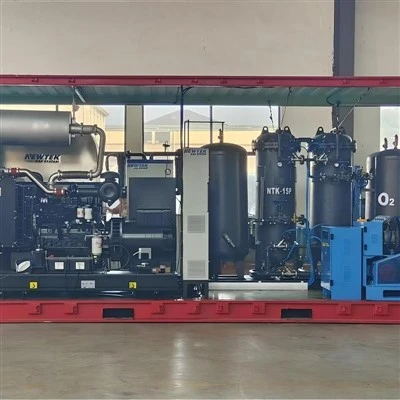
The pulp and paper industry is a continuous, energy-intensive manufacturing sector that runs 24 hours a day across most production lines. From pulp delignification, bleaching, wastewater treatment, to chemical storage protection and special paper coating, multiple processes rely on stable gas sources. Traditional gas procurement methods, including bulk liquid oxygen and liquid nitrogen delivered by tank trucks, carry obvious drawbacks such as high transportation costs, storage safety risks, and supply instability affected by logistics schedules. Pressure Swing Adsorption (PSA) gas generation technology, as an on-site gas production solution, has gained wide adoption in modern paper mills over recent decades. It generates oxygen or nitrogen directly from compressed air through physical adsorption and desorption cycles, matching the continuous gas consumption characteristics of papermaking plants.
Selecting a proper PSA gas supply system cannot rely on universal specifications. Paper mills differ greatly in product types, annual output, process routes, local environmental policies and site conditions. Operators must clarify gas consumption scenarios, technical indicators, equipment configuration rules, maintenance plans and total operation costs before finalizing system design. This article analyzes the practical requirements of PSA gas systems for paper mills in different application links, and summarizes key selection principles for plant owners and engineering contractors.

Main Application Scenarios of PSA Gas in Papermaking Production
Oxygen Supply for Pulp Delignification and Bleaching
Oxygen bleaching is the core process for modern elemental chlorine-free (ECF) and totally chlorine-free (TCF) pulp production. In oxygen delignification towers, oxygen reacts with lignin under high temperature and pressure, breaking down lignin macromolecules while minimizing damage to cellulose and hemicellulose fibers. This process reduces the demand for chlorine-containing bleaching agents, cuts organic halogen compound formation, and lowers the pollutant load of pulp wastewater.
For large integrated pulp mills, oxygen used in bleaching accounts for over 70% of total factory gas consumption. The oxygen generated by PSA systems is fed into bleaching towers after pressure adjustment. Consistent gas purity and stable pressure directly influence pulp brightness uniformity and fiber strength. Unstable oxygen supply will lead to uneven bleaching results, raising reject rates and increasing chemical consumption.
Oxygen for Wastewater Aeration Treatment
Papermaking wastewater contains high concentrations of organic matter, suspended solids and biodegradable pollutants. Most paper mills use aerobic biochemical treatment tanks to decompose COD and BOD. Oxygen-enriched aeration improves dissolved oxygen levels in water, activates aerobic microorganisms and accelerates organic pollutant degradation.
Compared with pure oxygen used in bleaching, aeration oxygen has lower purity requirements. Medium and small paper mills producing corrugated base paper, kraft liner and ordinary tissue paper often deploy PSA oxygen systems specially for sewage treatment. This on-site oxygen supply mode avoids frequent liquid oxygen transportation and reduces long-term operation expenditure.
Nitrogen for Inert Protection and Safety Management
PSA nitrogen systems serve multiple safety and production purposes in paper mills. First, nitrogen blanketing is applied for chemical storage tanks. Bleaching agents, coating additives and various chemical raw materials stored in tanks are prone to oxidation or exothermic reactions when contacting air. Nitrogen fills the top space of tanks to reduce oxygen concentration and prevent deterioration or dangerous chemical reactions.
Second, nitrogen works for fire risk control. Paper mills stock massive flammable materials: wood chips, pulp rolls, finished paper reels and organic auxiliaries. For closed raw material warehouses and oil storage areas, nitrogen can suppress combustion by lowering oxygen content. Third, high-purity nitrogen is required for functional special paper production. During coating and curing of carbonless copy paper, thermal paper and barrier packaging paper, nitrogen isolates air to prevent oxidation of functional coatings, ensuring coating performance and finished product shelf stability.
Technical Index Requirements for PSA Gas Systems in Different Working Conditions
Index Requirements for PSA Oxygen Systems
For pulp oxygen delignification and bleaching, oxygen purity should be maintained between 85% and 93%. Higher purity will bring unnecessary power consumption and raise operating costs. If purity falls below 85%, delignification efficiency drops significantly, requiring more bleaching chemicals and causing inconsistent pulp quality. The outlet pressure of PSA oxygen for bleaching workshops is generally kept at 0.3 MPa to 0.5 MPa, and pressure fluctuation must be controlled within ±0.02 MPa. Since pulp lines run continuously, sudden pressure drops can trigger emergency protection and temporary shutdown.
For wastewater aerobic aeration, the standard of oxygen purity is relaxed to 60%–80%. Flow stability becomes the primary indicator instead of high purity. Fluctuating gas flow will cause unstable dissolved oxygen in biochemical pools, inhibit microbial activity and degrade wastewater treatment efficiency, which may make the factory fail emission standards.
Index Requirements for PSA Nitrogen Systems
Nitrogen purity standards are determined by application types. For tank blanketing of general chemicals and fire prevention in raw material warehouses, nitrogen purity of 99.0% to 99.5% meets operational needs. When producing high-value special paper with oxidation-sensitive coatings, nitrogen purity needs to reach 99.9% or above to eliminate interference from residual oxygen. The outlet pressure of PSA nitrogen systems is usually set from 0.4 MPa to 0.7 MPa, matching long-distance pipeline transmission across plant zones and tank blanketing pressure settings.
PSA Equipment Configuration Principles Based on Paper Mill Scale
Large Integrated Pulp and Paper Mills (Annual Output > 300,000 tons)
Large mills have stable and huge gas demand, so they are recommended to adopt large-capacity PSA oxygen and PSA nitrogen units with standby adsorption modules. The standby group enables non-stop maintenance. When one set of adsorption towers needs routine maintenance or molecular sieve replacement, the standby module can take over gas supply immediately, avoiding heavy economic losses caused by production shutdown.
System design also includes buffer gas tanks with sufficient volume to offset instantaneous gas flow fluctuation during bleaching process switching. The control system supports remote monitoring, real-time data upload and automatic alarm for purity, pressure and equipment faults.
Medium-sized Paper Mills (Annual Output 50,000–300,000 tons)
Medium-sized plants usually adopt separated configuration schemes. An independent PSA oxygen unit serves bleaching and wastewater treatment sections, while a smaller PSA nitrogen unit handles inert protection and special paper production. This separated design prevents mutual interference between oxygen and nitrogen pipelines and facilitates independent maintenance according to different equipment service cycles.
Modular skid-mounted PSA equipment is preferred. It can be expanded later if the factory upgrades production capacity, without complete replacement of the whole gas generation station.
Small Paper Mills (Annual Output <50,000 tons)
Small paper mills often have unstable gas consumption, and capital budgets are relatively limited. Modular PSA equipment is the optimal choice. Users can add adsorption modules step by step along with capacity growth, avoiding excessive upfront investment in fixed assets. Some small mills only need PSA oxygen for sewage aeration, without nitrogen equipment, which further optimizes investment.
Site and Auxiliary Condition Constraints of PSA Systems in Paper Mills
Papermaking plants have unique ambient conditions that impose special requirements on PSA equipment design. The raw material of PSA systems is compressed air extracted from factory ambient air. Workshop air contains fiber dust, wood powder and volatile chemical substances. Therefore, the front air pretreatment unit must be equipped with multi-stage dust filtration, refrigerated drying and oil removal devices.
Dust, water vapor and oil mist will pollute molecular sieve adsorbent inside adsorption towers. Contaminated molecular sieve will suffer degraded adsorption performance, shortened service life, reduced gas output and unstable purity. In addition, workshop ambient temperature changes with seasons. High temperature in summer reduces the adsorption capacity of molecular sieve. Engineers need to reserve cooling margin during system design to guarantee stable gas output all year round.
Space limitation is another common restriction. Most paper mills have compact workshop layout after years of reconstruction. Skid-mounted PSA units integrate air compressors, air pretreatment components, adsorption towers, buffer tanks and control cabinets on one base. This integrated structure saves floor space, reduces civil construction workload and shortens installation and commissioning cycles.

Energy Consumption, Operation and Maintenance Considerations
Energy consumption is a core economic indicator for paper mills. PSA equipment runs continuously all year long, and minor changes in unit power consumption accumulate into substantial production cost differences. High-quality PSA systems customized for papermaking adopt optimized valve switching logic and dense molecular sieve filling technology, reducing compressed air loss and cutting power consumption.
Pneumatic switching valves are key wearing parts of PSA units. They perform frequent cyclic opening and closing. The valves selected for paper mill service must have good wear resistance and long service life. Regular maintenance work includes filter element replacement, molecular sieve inspection, pipeline leakage check and control system calibration. Plant maintenance teams should establish standardized maintenance schedules. Timely inspection can prevent sudden system performance decline and extend the service life of adsorbent materials.
System automation level also affects operation efficiency. Modern PSA gas supply systems are equipped with PLC automatic control. Operators can monitor gas purity, pressure, flow and equipment status on the control panel. The system can automatically adjust operation parameters and trigger alarms when abnormal conditions occur, lowering manual operation intensity and human error risks.
Cost Comparison between On-site PSA Gas and Traditional Gas Supply
Many paper mill owners compare PSA solutions with liquid gas supply before investment. Liquid gas supply requires cryogenic storage tanks, regular tank truck delivery and tank safety inspection. Liquid gas price fluctuates with energy markets and transportation distance. Remote paper mills face higher delivery costs and supply interruption risks under bad weather or traffic control.
PSA on-site gas generation mainly consumes electric power, with raw air available for free. After the one-time equipment investment, the long-term unit gas cost is much lower than liquid gas for plants with stable continuous gas demand. However, PSA systems are less cost-effective for factories with intermittent gas use and low total consumption. Therefore, economic evaluation must combine gas consumption volume, annual operation hours and local electricity price.
Conclusion
Paper mills need targeted PSA gas supply solutions according to production processes, product categories and plant scale. Oxygen produced by PSA systems supports pulp bleaching and wastewater aeration, while PSA nitrogen meets inert protection, fire safety and special paper manufacturing demands. Technical indicators including gas purity, pressure and flow stability must match the requirements of different working links.
When designing PSA gas stations, plant operators should fully consider site environmental features such as fiber dust, high humidity and temperature variation. Equipment configuration, automation scheme and maintenance plan should be determined after comprehensive assessment of capital investment and long-term energy cost. A well-matched PSA gas supply system can not only guarantee stable papermaking production, but also reduce gas supply cost and improve the overall safety level of the whole plant.