The Definitive Guide to PSA Nitrogen Systems for Safe, Compliant, and Cost-Effective Pipeline Pressure and Leak Testing
In the complex landscape of industrial pipeline construction, commissioning, and maintenance, pressure and leak testing stands as a non-negotiable safety and quality checkpoint. Across oil and gas, petrochemical, pharmaceutical, power generation, and manufacturing sectors, pipelines serve as critical arteries for transporting fluids, gases, and raw materials under extreme temperatures and pressures. Ensuring their structural integrity, tightness, and operational reliability before formal commissioning is not only a core engineering requirement but also a mandatory compliance step under global industrial codes such as ASME B31 series, GB 50235, and API standards. Among the array of testing media and methodologies, nitrogen-based pneumatic testing has emerged as the preferred solution for moisture-sensitive, corrosion-prone, and complex pipeline systems-owing to nitrogen's inert, non-flammable, and non-corrosive properties. Central to executing reliable nitrogen testing is the selection of appropriate gas supply equipment; Pressure Swing Adsorption (PSA) nitrogen generators have rapidly become the industrial standard, outperforming traditional nitrogen cylinders and alternative gas generation technologies in scalability, purity control, operational safety, and long-term economics. This article provides a comprehensive, industry-aligned analysis of how PSA gas equipment matches industrial pipeline testing demands, covering the fundamentals of nitrogen leak testing, the technical advantages of PSA systems, operational best practices, and key selection criteria to support engineering, procurement, and operations teams in making informed equipment decisions.
Fundamentals of Nitrogen Leak Testing for Industrial Pipelines: Purpose, Principles, and Industrial Imperatives
Leak testing and pressure testing are twin pillars of pipeline integrity assurance, designed to detect material defects, welding flaws, joint gaps, seal failures, and structural weaknesses that could lead to catastrophic failures, product loss, environmental contamination, or workplace accidents during regular operation. Unlike hydrostatic testing-which uses water as the pressure medium and remains common for large-scale, water-tolerant pipelines-nitrogen pneumatic testing is specifically engineered for systems where moisture introduction is prohibited, such as natural gas pipelines, high-purity chemical transfer lines, LNG facilities, semiconductor process piping, and offshore subsea pipelines. For these applications, residual water can trigger internal corrosion, microbial growth, product contamination, or freezing-induced damage in low-temperature environments, all of which severely shorten service life and raise operational risks.
At its core, industrial nitrogen leak testing functions by introducing high-purity gaseous nitrogen into an isolated pipeline segment at controlled pressure levels, systematically evaluating the system's ability to retain pressure without leakage or deformation. The inert nature of nitrogen is pivotal here: it does not react with pipeline materials, displaces oxygen and residual moisture within the line, and creates a stable test environment that delivers consistent, repeatable results compliant with regulatory requirements. For newly built pipelines, nitrogen testing is typically performed after completion of welding, heat treatment, and non-destructive examination (NDE), serving as the final validation step before pre-commissioning purging and start-up. For in-service pipelines, periodic nitrogen pressure testing supports integrity management programs, helping operators identify slow leaks, material aging, or third-party damage before incidents occur.
Industry standards provide strict guidelines for nitrogen pressure testing parameters to balance accuracy and safety. Per ASME B31.3 (Process Piping) and ASME B31.8 (Gas Transmission and Distribution Piping Systems), pneumatic pressure testing must be conducted at a minimum of 110% of the pipeline's design pressure, with a mandatory pressure hold period-usually 10 minutes or longer-to monitor pressure decay. Critical safety measures include installation of pressure relief valves to prevent over-pressurization, establishment of personnel exclusion zones during high-pressure testing, and stepwise pressure increments to avoid sudden stress shocks. These protocols underscore why nitrogen, rather than compressed air or other gases, is the medium of choice: compressed air contains moisture, oil, and oxygen, which can compromise test validity and damage sensitive pipelines, while nitrogen delivers a clean, dry, inert test environment that aligns with strict code requirements.
Why Nitrogen Is the Superior Testing Medium: Outperforming Hydrostatic and Conventional Pneumatic Methods
To fully appreciate the fit between PSA nitrogen equipment and pipeline testing, it is essential to understand why nitrogen has displaced alternative testing media in modern industrial practice. For decades, hydrostatic testing was the default method for pipeline pressure verification, leveraging water's low cost and high incompressibility to apply stable test pressures. However, its limitations are severe for modern industrial systems: water causes oxidation and pitting corrosion in carbon steel, stainless steel, and alloy pipelines; requires extensive drying and dewatering post-test; is impractical for offshore, elevated, or remote pipeline segments; and poses logistical challenges in arid or cold climates where water access is limited or freezing occurs.
Conventional pneumatic testing using compressed air addresses some hydrostatic drawbacks but introduces new risks. Compressed air contains moisture, oil aerosols, and particulate contaminants that can lodge in pipeline valves, flanges, and instrumentation, leading to blockages or premature wear. More importantly, air-based testing cannot eliminate oxygen, which may react with pipeline materials or process fluids, invalidating test results for high-purity or reactive systems.
Nitrogen resolves these pain points through its unique chemical and physical profile:
Chemical Inertia: Nitrogen is non-reactive with most metals, polymers, and industrial fluids, eliminating corrosion, material degradation, or chemical interaction during testing.
Moisture and Oxygen Displacement: Dry, high-purity nitrogen displaces residual water vapor and oxygen from pipeline interiors, creating a moisture-free, inert atmosphere that protects the system during and after testing.
Controllable Pressure Characteristics: Gaseous nitrogen allows smooth, gradual pressure ramping and precise pressure regulation, critical for avoiding stress fractures in brittle or high-strength pipeline materials.
Leak Detectability: Nitrogen's low viscosity and stable molecular structure enable accurate leak detection via visual soap-bubble testing, electronic gas detectors, or oxygen depletion sensors-methods that are far more sensitive than water-based leak checks for micro-leaks.
These advantages make nitrogen indispensable for pipeline testing; however, the method of nitrogen supply directly impacts test efficiency, cost, and safety. Traditional high-pressure nitrogen cylinders have long been used for small-scale or intermittent testing, but they suffer from crippling limitations for industrial pipeline projects, which often demand continuous, high-volume nitrogen flow over extended periods. This is where PSA nitrogen generators step in as the technically and economically superior solution.
PSA Nitrogen Generators: Core Technology and Alignment with Pipeline Testing Requirements
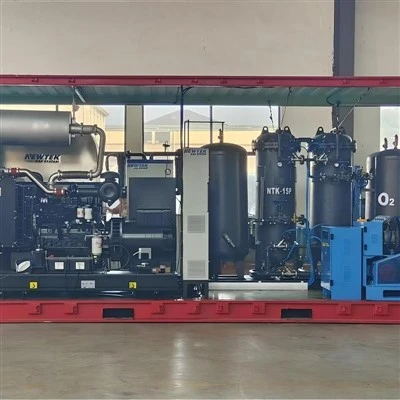
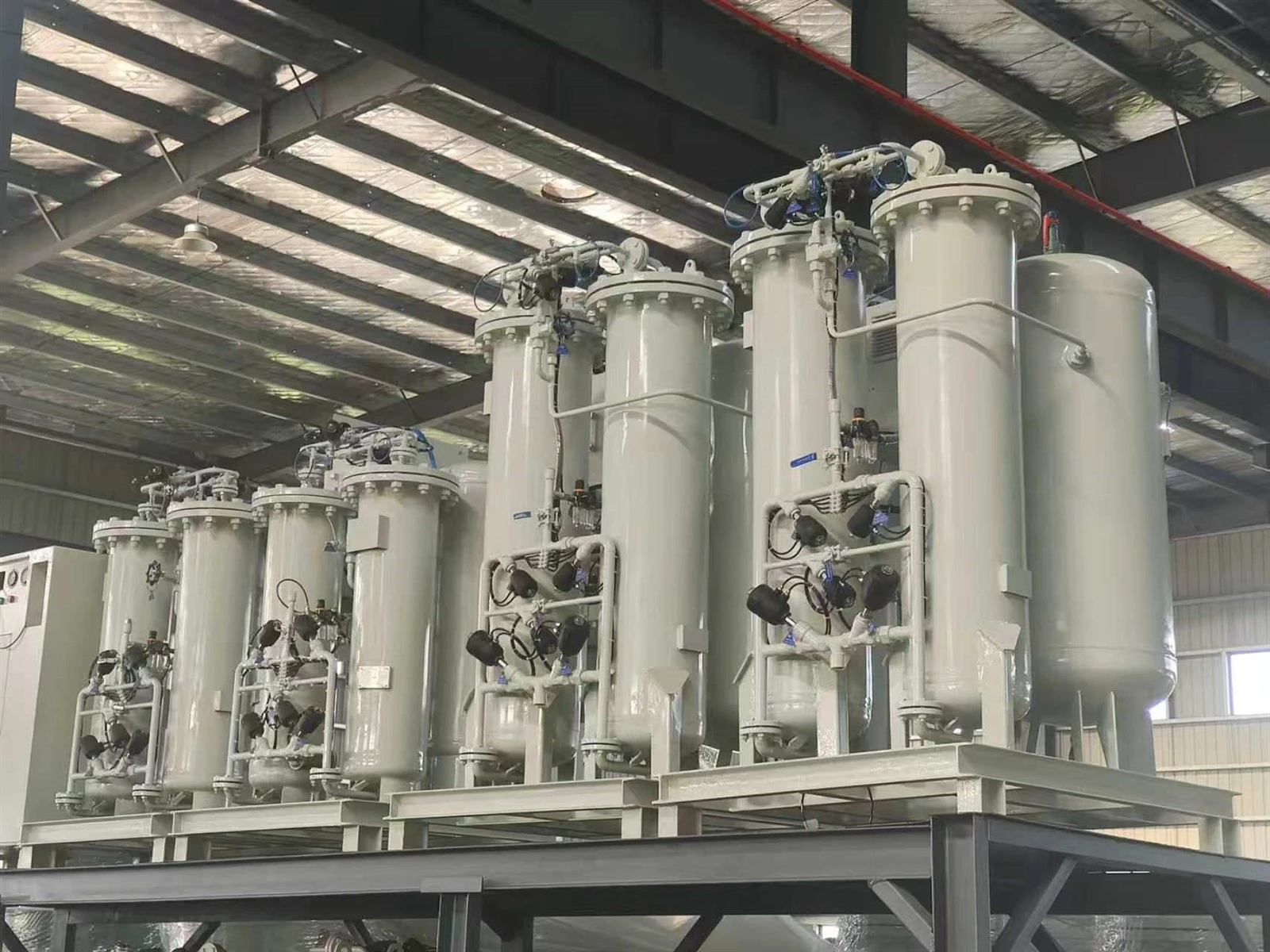
Pressure Swing Adsorption (PSA) is a mature, field-proven gas separation technology that produces high-purity nitrogen on-demand from ambient compressed air, eliminating reliance on cylinder delivery, storage, and handling. Designed specifically for continuous industrial operation, PSA nitrogen generators are engineered to deliver stable flow rates, precise purity control, and consistent pressure output-all critical for meeting the stringent demands of pipeline pressure and leak testing.
Core Working Principle of PSA Nitrogen Generators
PSA systems rely on Carbon Molecular Sieve (CMS) as the key adsorbent material, which leverages the kinetic diameter difference between oxygen and nitrogen molecules (oxygen: ~3.46 Å; nitrogen: ~3.64 Å) to selectively separate nitrogen from compressed air. The standard dual-tower PSA cycle consists of four synchronized stages:
Adsorption: Filtered, dried compressed air enters one adsorption tower, where oxygen, carbon dioxide, and water vapor are rapidly adsorbed onto the CMS surface, while larger nitrogen molecules pass through unimpeded and are delivered as product gas.
Pressure Equalization: Before the CMS bed reaches oxygen saturation, the tower is depressurized slightly, and residual nitrogen is transferred to the parallel tower to improve energy efficiency and gas recovery.
Desorption/Regeneration: The saturated tower is vented to atmospheric pressure, releasing adsorbed oxygen and impurities into the atmosphere, regenerating the CMS for reuse.
Repressurization: The regenerated tower is repressurized with product nitrogen, ready to switch into adsorption mode as the first tower cycles to regeneration.
This closed-loop, fully automated cycle produces nitrogen with purity levels adjustable from 95% up to 99.999%-a critical flexibility for pipeline testing, where different applications require specific purity grades. For standard pipeline pressure testing, 98%–99.5% purity is sufficient; for high-purity chemical, pharmaceutical, or electronics pipelines, 99.9%–99.999% ultra-high purity ensures no residual contaminants affect process integrity.
Key Technical Advantages of PSA Systems for Pipeline Testing
Uninterrupted, Scalable Gas Supply. Industrial pipeline testing often involves long-duration pressure holds, large-diameter line filling, and multi-segment sequential testing-all requiring continuous, high-volume nitrogen flow. PSA generators eliminate the logistical nightmare of cylinder swapping, which causes costly downtime, inconsistent pressure, and safety hazards from handling high-pressure cylinders. Modular PSA systems can be scaled to deliver flow rates from a few cubic meters per hour to thousands of m³/h, matching the needs of short-service piping, long-distance transmission pipelines, and entire plant piping networks.
Precision Purity and Pressure Control. Pipeline testing demands strict consistency in gas quality and pressure to comply with ASME, API, and GB standards. PSA generators integrate PLC-based control systems that monitor and stabilize nitrogen purity, outlet pressure, and flow rate in real time, automatically adjusting operation to maintain setpoints. This precision ensures test results are repeatable, auditable, and fully compliant with regulatory requirements-eliminating invalid tests caused by impure or variable-pressure gas.
Dry, Contaminant-Free Nitrogen Output. A defining advantage of PSA systems is their ability to produce ultra-dry, oil-free nitrogen (dew points as low as −40°C to −70°C), which is critical for moisture-sensitive pipelines. Unlike cylinders, which may contain residual moisture or oil from filling processes, PSA-generated nitrogen passes through multi-stage filtration (coalescing, activated carbon, dust filtration) and refrigerated/desiccant drying, ensuring zero contamination of the test pipeline. This eliminates post-test drying procedures and protects pipeline internals from corrosion.
Enhanced Operational Safety. Pipeline testing sites are high-hazard zones, and gas supply safety is non-negotiable. PSA generators operate at low, stable outlet pressures (typically 5–20 bar gauge, adjustable to test requirements), eliminating the risks of high-pressure cylinder failure, projectile hazards, or accidental over-pressurization. On-site generation also removes the need to store dozens or hundreds of high-pressure cylinders, reducing fire, explosion, and manual handling risks. Modern PSA units include built-in safety interlocks, overpressure relief, and emergency stop functions, fully aligning with industrial safety standards for testing operations.

PSA vs. Nitrogen Cylinders: A Total Cost of Ownership and Operational Comparison for Pipeline Testing
For pipeline testing managers, the choice between PSA generators and nitrogen cylinders hinges on total cost of ownership (TCO), operational efficiency, and project scalability. While cylinders appear to have a low upfront cost, their long-term expenses and operational drawbacks make them uneconomical for industrial-scale testing.
Cost Dynamics
•Nitrogen Cylinders: incur recurring costs for gas purchase, cylinder rental, delivery, transportation, and handling. For large pipeline projects, monthly cylinder bills can escalate rapidly, with price volatility in industrial gas markets adding budget uncertainty. Additional costs include cylinder inspection, maintenance, and waste from partially used cylinders.
•PSA Generators: require a one-time capital investment, with minimal annual maintenance (filter changes, CMS bed replacement every 5–10 years, routine inspections). Industry data shows PSA systems reduce nitrogen costs by 50%–80% compared to cylinders over a 3–5 year period, delivering rapid ROI for continuous or frequent testing operations.
Operational Efficiency
Cylinder-based testing requires constant monitoring of gas levels, frequent cylinder changes, and pressure regulation between multiple cylinders-creating workflow disruptions and extending test timelines. PSA generators produce nitrogen on-demand, at the exact flow and pressure required, with no downtime for refueling. Mobile PSA units further boost flexibility, enabling on-site testing at remote pipeline segments, construction sites, or offshore platforms without relying on cylinder delivery networks.
Space and Logistics
Industrial testing sites often have limited space, and storing a large bank of nitrogen cylinders consumes valuable floor area, creates clutter, and violates safety spacing rules. PSA generators have a compact footprint, with skid-mounted or containerized designs that fit easily on site. Mobile PSA trailers offer plug-and-play mobility, ideal for long-distance pipeline construction projects where testing moves sequentially along the line.
Waste and Sustainability
Cylinder supply generates significant waste: empty cylinders require return transportation, partially used gas is often wasted, and manufacturing cylinders has a high carbon footprint. PSA generators run on ambient air, a free and renewable resource, with zero waste output except cleanly vented oxygen. This aligns with corporate sustainability goals and reduces the carbon footprint of pipeline testing operations.
While membrane nitrogen generators are another on-site option, they are limited to lower purity (≤99.5%) and less stable flow, making them suitable only for basic, low-purity testing. PSA systems, by contrast, deliver the high purity, scalability, and reliability required for critical pipeline testing across all industrial sectors.
Standard Operating Procedure for Nitrogen Pipeline Testing Using PSA Equipment
To maximize the performance of PSA nitrogen generators in pipeline testing, operators must follow a structured, code-compliant procedure that integrates gas supply, system isolation, pressure ramping, and leak detection. Below is the industry-standard workflow optimized for PSA systems:
Pre-Test Preparation and System Isolation
Isolate the target pipeline segment from adjacent systems using full-port ball valves, blind flanges, or spectacle blinds to prevent nitrogen leakage into non-test areas.
Verify that all pressure relief valves, pressure gauges, and temperature sensors are calibrated and functional, in compliance with ASME PTC 25 pressure test standards.
Connect the PSA nitrogen generator's outlet to the pipeline's test inlet via a flexible, pressure-rated hose, ensuring leak-tight connections.
Low-Pressure Purging and Contaminant Removal
Start the PSA generator and deliver dry nitrogen at ≤25% of the pipeline's design pressure to purge air, moisture, and debris from the line. This low-pressure purge ensures the pipeline is clean and dry before high-pressure testing.
Maintain purging until outlet gas samples confirm oxygen and moisture levels meet test specifications (typically <1% oxygen and dew point <−20°C).
Stepwise Pressure Ramping
Gradually increase nitrogen pressure from the PSA system in controlled increments (e.g., 10% of design pressure per step), pausing at each interval to inspect for visible leaks or abnormal deformation.
Continue ramping until reaching the code-required test pressure (usually 110% of design pressure), then initiate the mandatory pressure hold period. The PSA system maintains constant pressure during the hold, compensating for minor temperature-induced pressure changes.
Leak Detection and Integrity Verification
Conduct visual leak inspection using approved soap solution on all welds, flanges, valves, and joints; bubble formation indicates a leak that requires repair.
For micro-leaks, use electronic nitrogen detectors or oxygen sensors (which measure oxygen depletion to calculate nitrogen leakage) for high-sensitivity detection.
After successful testing, gradually depressurize the pipeline using the PSA system's controlled vent function to avoid sudden pressure drops.
Post-Test Procedures
Isolate the PSA generator and disconnect it from the pipeline.
If required, leave a low-pressure nitrogen blanket in the pipeline to maintain inert conditions until commissioning.
Document all test parameters (pressure, time, purity, leak results) for regulatory compliance and project handover.
Selecting the Right PSA Nitrogen Equipment for Your Pipeline Testing Needs
Not all PSA generators are equal; selecting the optimal unit requires matching technical specifications to your pipeline testing profile. Key selection criteria include:
Nitrogen Flow Rate: Calculate peak and continuous flow requirements based on pipeline volume, test pressure, and duration. Oversizing ensures no pressure drop during critical holds; undersizing causes test delays.
Purity Grade: Choose 98%–99.5% purity for standard industrial pipelines; 99.9%–99.999% for high-purity, pharmaceutical, or electronics pipelines.
Outlet Pressure: Select a PSA system with adjustable outlet pressure matching your test pressure requirements (typically up to 20 bar for most pipeline tests).
Mobility and Footprint: For remote or mobile testing, select a skid-mounted or trailer-mounted mobile PSA unit; for fixed plant testing, a stationary skid-mounted system is ideal.
Automation and Control: Prioritize PLC-controlled units with real-time purity, pressure, and flow monitoring for unattended operation and data logging.
Compliance and Certification: Ensure the PSA system meets ISO, ASME, and local industrial safety standards for gas generation equipment.
Leading industrial gas equipment manufacturers offer customized PSA solutions tailored to pipeline testing, including mobile units for construction sites, high-purity models for specialty pipelines, and modular systems for large-scale plant testing.
Conclusion: PSA Gas Equipment as the Cornerstone of Modern Pipeline Testing
Industrial pipeline testing is a critical discipline that demands uncompromising safety, regulatory compliance, and operational efficiency-and nitrogen has firmly established itself as the gold-standard testing medium for modern pipeline systems. The inert, clean, and controllable properties of nitrogen solve the inherent flaws of hydrostatic and compressed air testing, protecting pipeline integrity while delivering accurate, repeatable results.
At the heart of this transformation is PSA nitrogen generation technology, which aligns perfectly with the unique demands of industrial pipeline testing: on-demand, high-volume gas supply; precise purity and pressure control; enhanced safety; and dramatic long-term cost savings compared to cylinder supply. For engineering contractors, pipeline operators, and maintenance teams, investing in the right PSA gas equipment is not just a procurement decision-it is a strategic choice to elevate testing quality, reduce operational risk, and optimize project economics.
As industrial pipelines grow longer, more complex, and more sensitive to contamination, PSA nitrogen generators will continue to be the indispensable partner for safe, compliant, and efficient pipeline pressure and leak testing. By understanding the technology, operational workflows, and selection criteria outlined in this guide, industry professionals can confidently deploy PSA systems to meet current testing needs and adapt to future challenges in pipeline integrity management.
In an era where pipeline safety and operational reliability are under increasing regulatory and public scrutiny, PSA gas equipment is not just a matching solution for industrial pipeline testing-it is the essential foundation for sustainable, high-performance pipeline operations across every industrial sector.