NEWTEK (Hangzhou) Energy Technology Co., Ltd.
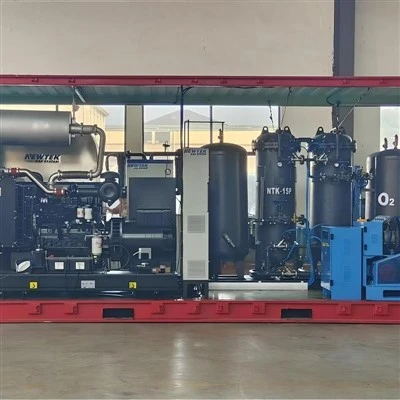
NEWTEK (Hangzhou) Energy Technology Co., Ltd. has emerged as a global vanguard in pressure swing adsorption (PSA) technology, specializing in the design, manufacturing, and deployment of on-site oxygen and nitrogen generation systems. Headquartered in Hangzhou, China, the company operates state-of-the-art production facilities and research centers, leveraging decades of expertise to deliver innovative PSA solutions to over 100 countries. With a portfolio exceeding 3,500 units across diverse sectors-ranging from medical oxygen supply, gold mining, and wastewater treatment to semiconductor manufacturing and renewable energy-NEWTEK's systems are celebrated for their reliability, energy efficiency, and adaptability to extreme operational environments.
At the core of NEWTEK's competitive advantage lies its proprietary PSA technology, engineered to address the multifaceted challenges of on-site gas generation:
Precision Purity and Flow Flexibility: The company's PSA systems produce oxygen with purity levels ranging from 93%±3% (ideal for medical and industrial applications) to 99% (suitable for high-precision processes). Flow rates span from 1.9 Nm³/hr for small-scale medical units to 300 Nm³/hr for large industrial setups, supported by modular, skid-mounted, and containerized configurations that adapt to space and mobility requirements.
Energy-Efficient Operation: NEWTEK's intelligent pressure cycling mechanisms, combined with advanced heat recovery systems, reduce energy consumption by up to 30% compared to traditional cryogenic distillation methods. This efficiency is particularly critical in energy-constrained environments, where every kWh saved directly impacts operational costs and carbon footprints.
Environmental Resilience: Designed to thrive in extreme conditions, NEWTEK's PSA systems incorporate corrosion-resistant materials (stainless steel and composite alloys) and adaptive thermal management systems. These features ensure consistent performance in environments ranging from the high humidity of Southeast Asian jungles to the sub-zero temperatures of Arctic oil fields.


PSA and Membrane Separation Technologies
PSA technology operates on the principle of selective adsorption, where zeolite molecular sieves trap nitrogen from compressed air at high pressure, releasing oxygen as the target product. The process involves rapid pressure cycles (30–120 seconds), enabling dynamic adjustment of flow and purity to meet real-time demand. This agility makes PSA the preferred choice for applications requiring stable, high-purity oxygen.
Membrane separation, in contrast, relies on the differential permeability of polymeric or ceramic membranes to separate oxygen from nitrogen. Oxygen molecules, being smaller, permeate the membrane faster than nitrogen under a pressure gradient. While this approach offers simplicity in design, it is constrained by inherent limitations: purity levels typically cap at 90%, flow rates are restricted to low-to-medium ranges, and performance degrades significantly in harsh environments.
The Inherent Limitations of Membrane Separation
A Trade-off Membranes Cannot Escape
PSA's Unmatched Purity: NEWTEK's PSA systems routinely achieve medical-grade purity (≥93%) and industrial-grade purity (up to 99%), adhering to strict international standards for medical oxygen. In contrast, polymeric membranes struggle to exceed 90% purity. Increasing membrane thickness to enhance purity reduces oxygen flux, while thin membranes prioritizing flow compromise purity-a dilemma that has plagued membrane technology for decades.
Zeolite's Selective Advantage: Zeolite molecular sieves possess a crystalline structure with precisely sized pores (0.3–0.5 nm), enabling them to adsorb nitrogen preferentially over oxygen. This molecular-level selectivity ensures consistent purity even under fluctuating operational conditions, a feat unattainable by membranes, which rely on bulk diffusion and lack the same level of molecular discrimination.
Flow Scalability
PSA's Scalable Architecture: NEWTEK's modular PSA Oxygen generators are designed for easy expansion, with parallel configurations capable of supporting flow rates well beyond 300 Nm³/hr. This scalability is evident in industrial applications, where high-flow PSA units accelerate cyanidation processes by delivering oxygen consistently at scale.
Membrane Systems' Scaling Challenges: Increasing flow in membrane systems requires deploying multiple parallel modules, which quickly escalate capital costs and space requirements. A 100 Nm³/hr membrane setup would occupy twice the footprint of a comparable PSA unit while consuming more energy per Nm³.
Energy Efficiency
PSA's Adaptive Energy Use: NEWTEK's PSA systems optimize energy consumption through pressure energy recovery valves and AI-driven cycle adjustments, which reduce power usage during partial loads. This results in specific energy consumption as low as 1.5 kWh/Nm³, significantly lower than the 2.0–3.0 kWh/Nm³ typical of membrane systems, which require continuous compression regardless of demand fluctuations.
Membranes' Energy Penalty: Membrane separation relies on a steady pressure differential to drive gas permeation, meaning compressors must operate at full capacity even when oxygen demand is low. This inefficiency is particularly pronounced in applications with variable load profiles.
Cost Dynamics
Capital Expenditure
PSA's Long-Term Value: PSA systems have higher upfront costs (a skid-mounted unit starts at $15,000 compared to $10,000 for a basic membrane system), their durability and modularity offer superior long-term value. NEWTEK's PSA units have a service life of 10–15 years with minimal maintenance, thanks to robust zeolite beds and industrial-grade components.
Membranes' Replacement Burden: A 50 Nm³/hr membrane system would incur $10,000–$15,000 in replacement costs over a decade, erasing any initial cost advantage and complicating lifecycle budgeting.
Maintenance and Efficiency Differentials
PSA's Low Maintenance Regime: Routine maintenance for PSA systems involves periodic zeolite regeneration (once every 5–7 years) and valve inspections, resulting in operational costs of $0.10–$0.15/Nm³. The simplicity of the adsorption process minimizes downtime and reduces reliance on specialized technicians.
Membranes' High Upkeep Costs: Membrane systems require frequent cleaning, pre-treatment to remove contaminants, and eventual module replacement, driving operational costs to $0.20–$0.30/Nm³. In comparative studies, NEWTEK's VPSA systems proved 40% more cost-effective than membrane setups over five years in wastewater treatment applications.
PSA's Indispensability in Critical Sectors
Medical Oxygen
Hospital-grade Purity Requirements: Medical oxygen must meet ISO 10083 standards (≥93% purity), a threshold that PSA Oxygen generators achieve reliably. NEWTEK's installations in hundreds of hospitals worldwide, demonstrate the technology's critical role in life-saving applications. Membrane systems, limited to <90% purity, are confined to non-critical uses.
Rapid Deployment and Reliability: Modular PSA units excel in unstable environments, where they provide immediate, reliable oxygen supply without dependence on fragile membrane modules or external gas cylinders.
Industrial Manufacturing
Semiconductor and Electronics: Ultra-high-purity nitrogen (99.9999%) from PSA systems is essential for inerting in semiconductor fabs, a process intolerant of membrane-derived impurities. NEWTEK's units are integral to production lines in Chinese electronics hubs, where even trace contaminants can compromise product quality.
Metal Fabrication and Welding: High-purity oxygen (99%) from PSA enables precise laser cutting and welding in automotive and aerospace manufacturing. Containerized PSA systems deployed in Saudi Arabian metal plants operate 24/7, delivering consistent performance that membrane systems cannot match.
Wastewater Treatment and Environmental Applications
Aerobic Digestion and Ozone Generation: VPSA systems, a variant of PSA, supply high-flow oxygen (85–93% purity) for wastewater aeration, outperforming membranes in energy efficiency and scalability. A 2,000 Nm³/hr VPSA unit in a Chinese wastewater plant treats 100,000 tons of water daily, while membrane systems struggle to meet the flow and purity demands of large-scale operations.
Ozone Production Constraints: Membrane-derived oxygen contains trace nitrogen and moisture, which degrade ozone generators used in water disinfection. PSA's ability to deliver dry, high-purity oxygen makes it the mandatory choice for municipal water utilities worldwide.
Material Science and Operational Challenges
PSA's Material Resilience: Zeolite adsorbents in NEWTEK's systems withstand temperatures up to 200°C and resist degradation from industrial chemicals, making them suitable for harsh environments.
Membranes' Environmental Vulnerabilities: Polymeric membranes lose permeability above 80°C and are susceptible to chemical attack from oils, solvents, and corrosive gases, requiring costly pre-treatment systems. Ceramic membranes, while more durable, remain prohibitively expensive and mechanically fragile, limiting their adoption to niche applications.
PSA's Consistent Output: Zeolite beds maintain adsorption capacity over decades with proper maintenance, as demonstrated by NEWTEK's 10-year case studies in Iranian oil facilities. This predictability is critical for mission-critical operations where downtime is unacceptable.
Membranes' Declining Performance: Membrane permeability decreases by 10–15% annually, necessitating regular performance recalibration or module replacement. This variability excludes membranes from applications requiring stable, long-term oxygen supply.
Market Dynamics and Technological Inertia
PSA's Established Ecosystem: Decades of refinement have embedded PSA as the standard in industries where failure is not an option. NEWTEK's global footprint in over 100 countries reflects this trust, while membrane systems remain marginal players, confined to low-purity, low-flow niches.
Regulatory Hurdles: International standards for medical oxygen (ISO 10083) and industrial gases are explicitly tailored to PSA technology, creating significant barriers for membrane systems to achieve certification. Compliance requirements often mandate PSA's reliability and purity, leaving membranes at a regulatory disadvantage.
PSA's Incremental Advancements: NEWTEK continue to invest in zeolite science and process optimization, developing molecular sieves with higher adsorption capacity and faster cycle times. These improvements further widen the performance gap with membrane technology.
Membrane Innovation Stagnation: Metal-organic frameworks (MOFs) and carbon nanotubes show promise in laboratories, translating these into cost-effective, scalable commercial products has proven elusive. The lack of breakthroughs in membrane materials science has stalled their competitiveness against PSA.
Emerging Membrane Technologies
Ceramic and Composite Membranes: Advanced ceramic membranes offer improved temperature resistance and selectivity, but their production costs remain 3–5 times higher than PSA systems, and their brittleness limits operational flexibility. Composite membranes, which layer polymers with inorganic fillers, aim to balance permeability and durability, but scaling these structures for industrial use remains a technical challenge.
Hybrid Systems: A Compromised Middle Ground: Some propose hybrid PSA-membrane configurations, where membranes pre-enrich air before PSA enhances purity. While this approach may suit specific low-purity, high-flow scenarios, it introduces complexity and cost without addressing membranes' fundamental limitations, making it an impractical substitute for pure PSA in critical applications.
The Enduring Dominance of PSA Technology
Membrane separation technology, despite its simplicity and potential for low-flow applications, faces insurmountable challenges in replacing PSA across most industrial and medical sectors. NEWTEK's leadership in PSA technology highlights the decisive advantages of high purity, scalable flow, energy efficiency, and environmental resilience-attributes that membranes, for now, cannot match.
As industries demand ever higher reliability, purity, and adaptability, PSA systems will continue to set the standard for on-site oxygen generation. Unless membrane materials undergo a revolutionary breakthrough in purity, durability, and cost-effectiveness. PSA Oxygen generators as the technology of choice in critical oxygen production will remain unchallenged. For organizations prioritizing performance, compliance, and long-term value, PSA solutions from NEWTEK offer an unrivaled combination of technical excellence and operational security.