Dissolved Oxygen Stability Directly Affects Fish Metabolism and Survival
In aquaculture engineering, oxygen discussions often focus on oxygen purity percentage. Many farm operators compare 90%, 93%, 95%, or 99% oxygen without evaluating whether the oxygen delivery system can maintain stable dissolved oxygen (DO) concentration over a 24-hour production cycle. For fish and shrimp culture systems, dissolved oxygen stability usually affects biomass survival more directly than peak oxygen purity.
Fish do not consume oxygen purity directly. They absorb dissolved oxygen transferred into water through equipment like diffusers, oxygen cones, low head oxygenators, venturi injectors, or nanobubble systems. A system delivering intermittent 99% oxygen may create more biological stress than a continuously operating 93% PSA oxygen system maintaining stable DO levels.
This distinction becomes critical in intensive environments like:
1. Common Misunderstanding About Oxygen Purity
Oxygen Purity Does Not Equal Stable Dissolved Oxygen
Many aquaculture projects incorrectly assume that higher oxygen purity automatically improves fish growth performance. This assumption ignores the difference between gas-phase oxygen concentration and water-phase dissolved oxygen stability. Fish respond to water chemistry stability rather than gas purity alone.
Dissolved Oxygen Depends on Transfer Conditions
Oxygen transfer efficiency depends on multiple physical variables, making a stable oxygen delivery structure far more important than chasing maximum purity values.
| Parameter | Influence on DO Transfer |
|---|---|
| Bubble size | Smaller bubbles increase contact area |
| Water temperature | Higher temperature reduces oxygen solubility |
| Injector pressure | Affects gas dispersion |
| Retention time | Controls gas-liquid contact duration |
Fish Experience Stress During Oxygen Fluctuation
When dissolved oxygen drops below species-specific thresholds, feeding activity decreases, ammonia tolerance weakens, and immune responses drop.
| Species | Common DO Operating Range |
|---|---|
| Salmon | 7–9 mg/L |
| Tilapia | 5–7 mg/L |
| Shrimp | 5–8 mg/L |
| Trout | 7–10 mg/L |
Peak Purity Cannot Prevent Localized Deficiency: Large tanks often develop oxygen gradients due to decreased water velocity near corners or uneven aerator distribution. Localized hypoxia may occur despite high oxygen purity entering the system. Furthermore, Nighttime Oxygen Depletion creates the highest risk because photosynthesis stops while fish respiration and biofilter bacteria continue consuming oxygen rapidly between 1:00 AM and 5:00 AM.
2. Why Stability Matters
Unlike compressed gas storage applications, aquaculture oxygen demand does not pause between cycles. Gills extract dissolved oxygen continuously from moving water, making any interruption a direct reduction in availability.
- Stable DO Reduces Metabolic Stress: Repeated fluctuations trigger cortisol production and shift energy away from growth toward survival. Stable DO ensures consistent feeding behavior and lower physiological stress.
- Improves Equipment Performance: Transfer devices like oxygen cones (1.5–3 bar) or venturi injectors (2–5 bar) require stable inlet pressure. Fluctuations change bubble sizes and drop dissolution efficiency.
- Prevents Emergency Oxygen Shock: Intermittent high-flow bursts create rapid DO spikes followed by steep declines, causing uneven respiration rates. Continuous injection smooths these out safely.
- Supports Biofilter Activity: Nitrifying bacteria in RAS systems consume 20–40% of total oxygen capacity converting Ammonia → Nitrite → Nitrate. They require continuous stability to prevent ammonia toxicity.
- Reduces Equipment Cycling: Intermittent systems repeatedly cycle valves and compressors, accelerating wear. Steady-state operating PSA systems mitigate this mechanical fatigue.
3. PSA Oxygen Advantages
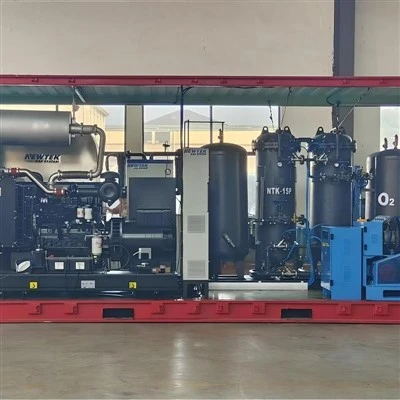
PSA oxygen generators separate oxygen from compressed air using molecular sieve adsorption, alternating between twin towers to maintain continuous flow without waiting for gas delivery.
Air Compressor
Dryer & Filters
PSA Generator
Oxygen Tank
PLC Control System
Centralized Process Monitoring
Most aquaculture PSA systems produce a stable 90–95% oxygen purity range at 4–8 bar outlet pressure. Because oxygen transfer efficiency depends far more on flow continuity and pressure consistency than on small purity differences above 90%, stable 93% oxygen supports DO control loops more effectively than unstable intermittent 99% liquid sources.
Furthermore, integrated Oxygen Buffer Tanks smooth adsorption cycle transitions, while integration with DO Sensors and PLC Control loops automatically scales oxygen flow based on real-time pond metrics. This automation significantly reduces nighttime oxygen risk without relying on manual cylinder switching or late-night operator inspections.
4. Application Scenarios
🔄 RAS Facilities
Stocking densities exceed 60 kg/m³. Biomass cannot tolerate oxygen interruption; systems feed cones downstream of filters continuously.
🦐 Shrimp Farming
Large nighttime swings due to algae respiration. Onsite systems supply nanobubble aerators to safely maintain DO above 5 mg/L.
🐟 Salmon Grow-Out Tanks
Salmon stress spikes below 7 mg/L. Continuous PSA generation supports columns and backup emergency injection loops.
🚢 Fish Transportation
Live transport tanks consume oxygen continuously. Interruption causes CO₂ buildup; buffer cylinders stabilize long-distance hauls.
Offshore Fish Farms: Installed on barges or support platforms, containerized PSA systems feed oxygen into submerged diffuser systems during warm water periods or low tidal exchanges.
5. FAQ
Is 99% oxygen always better for aquaculture?
Not necessarily. Stable dissolved oxygen concentration inside water is usually more important than peak oxygen purity. Oxygen transfer stability, injector pressure, and continuous operation affect fish response more directly.
What oxygen purity do PSA systems usually produce?
Most PSA aquaculture oxygen generators produce oxygen between 90% and 95% purity depending on pressure and flow configuration.
Why does nighttime oxygen become dangerous?
At night, photosynthesis stops while fish respiration, bacterial activity, and organic decomposition continue consuming oxygen. Dissolved oxygen may decline rapidly between midnight and early morning.
Can stable oxygen reduce fish stress?
Yes. Stable dissolved oxygen helps maintain consistent respiration and feeding behavior. Repeated oxygen fluctuation may increase metabolic stress and reduce feed conversion efficiency.
How do PSA systems stabilize oxygen supply?
PSA systems continuously generate oxygen using alternating adsorption towers, oxygen buffer tanks, and automatic control valves. This structure maintains continuous oxygen flow without waiting for cylinder replacement.
Stable Oxygen Delivery Supports Long-Term Aquaculture Operation
In aquaculture engineering, oxygen performance should not be evaluated only by gas purity percentage. For high-density aquaculture operations, dissolved oxygen stability directly affects fish stress response, biofilter activity, feeding behavior, and mortality risk. PSA oxygen systems support these operating conditions by generating oxygen continuously from compressed air instead of depending on intermittent gas delivery.
Need an Oxygen System for Stable Operation?
NEWTEK designs PSA oxygen generation systems for RAS facilities, shrimp farming, offshore aquaculture, hatcheries, and intensive fish grow-out systems.
Request Configuration ➔Related Solutions
PSA Oxygen Generator
Reliable and energy-saving production solution.
Containerized Oxygen Plant
Plug-and-play design for easy installation.
Aquaculture Oxygen Solutions
Customized oxygen supply for fish & shrimp farms.