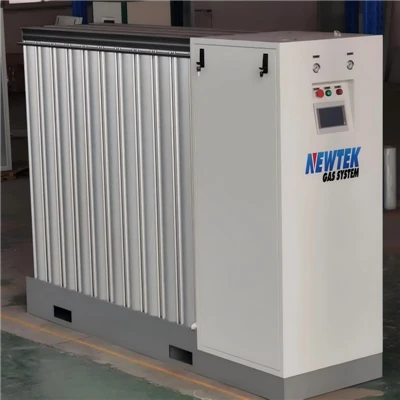
Industry Insight: Integrated Oxygen Solutions Transforming Industrial Gas Supply
Across many industrial sectors, reliable oxygen supply has become a critical factor in maintaining efficient production processes. Industries such as mining, metallurgy, wastewater treatment, chemical processing, glass manufacturing, and energy production depend heavily on stable oxygen delivery to sustain continuous operations. Traditionally, many companies relied on bulk oxygen deliveries or complex multi-supplier equipment installations to meet their needs. However, in recent years, turnkey PSA oxygen generation systems have emerged as a preferred solution for industrial projects worldwide.
Turnkey oxygen systems offer a fully integrated approach to on-site oxygen generation. Instead of sourcing individual components from multiple suppliers and coordinating installation independently, project owners receive a complete oxygen production solution engineered, delivered, and commissioned as a unified system. This shift toward turnkey solutions reflects broader trends in industrial engineering, where companies increasingly prioritize reliability, efficiency, and simplified project execution.
This article explores why turnkey PSA oxygen generation systems are gaining popularity in industrial projects and how they address key challenges faced by modern industrial operators.
The Growing Importance of On-Site Oxygen Generation
Oxygen plays an essential role in numerous industrial processes. In mining and metallurgy, oxygen enhances combustion efficiency and improves mineral recovery rates. In wastewater treatment plants, oxygen supports biological oxidation processes that remove pollutants from water. Chemical plants use oxygen to accelerate reactions, improve yields, and reduce emissions.
Traditionally, industrial facilities obtained oxygen through bulk liquid deliveries or cryogenic storage systems supplied by external gas providers. While effective in some circumstances, these approaches often involve logistical challenges, long-term supply contracts, and high transportation costs.
On-site oxygen generation using PSA technology offers a compelling alternative. PSA systems separate oxygen from compressed air using specialized adsorbent materials that selectively remove nitrogen. The result is a reliable and continuous supply of oxygen produced directly at the facility.
However, the effectiveness of an on-site oxygen solution depends heavily on how the system is designed, integrated, and installed. This is where turnkey solutions provide significant advantages.
Understanding the Turnkey Project Model
A turnkey project refers to a solution that is designed, manufactured, installed, and commissioned by a single provider. Once the system is delivered and operational, the customer can immediately begin using it with minimal additional work.
In the context of PSA oxygen generation systems, a turnkey solution typically includes:
Air compression equipment
Air filtration and drying systems
PSA oxygen generator modules
Oxygen storage tanks
Control and automation systems
Distribution piping and instrumentation
Installation, commissioning, and training services
Instead of coordinating these elements individually, the project owner works with a single engineering partner responsible for the entire oxygen generation infrastructure.
This integrated approach significantly simplifies project execution.
Simplified Project Management
Industrial construction projects often involve numerous contractors, equipment suppliers, and engineering teams. Coordinating multiple vendors can lead to communication gaps, scheduling conflicts, and integration challenges.
Turnkey PSA oxygen systems reduce these complexities by centralizing responsibility within a single provider.
Benefits of this approach include:
Unified engineering design across all system components
Clear project timelines and accountability
Reduced coordination between multiple suppliers
Faster decision-making during installation and commissioning
For project managers overseeing large industrial facilities, this streamlined coordination can significantly reduce administrative workload and project risk.
Faster Installation and Commissioning
Time is often a critical factor in industrial project development. Delays in utility systems such as oxygen supply can postpone the startup of entire production lines.
Turnkey PSA oxygen generation systems accelerate deployment in several ways.
First, many system components are pre-engineered and pre-assembled before delivery. This reduces on-site construction requirements and shortens installation timelines.
Second, integrated systems undergo factory testing before shipment, ensuring that equipment compatibility and performance are verified in advance.
Third, commissioning teams familiar with the system design can complete startup procedures more efficiently than third-party contractors.
As a result, turnkey oxygen plants can often be installed and operational significantly faster than systems assembled from independently sourced equipment.
Improved System Compatibility and Performance
When oxygen generation systems are assembled from equipment supplied by different manufacturers, compatibility issues can arise. Variations in design standards, control interfaces, or performance characteristics may lead to operational inefficiencies.
Turnkey PSA systems avoid these issues because the entire system is engineered as a unified solution.
Integrated design ensures that:
Compressors are matched to PSA airflow requirements
Air treatment systems meet adsorption process specifications
Control systems manage all equipment components seamlessly
Safety systems function cohesively across the entire installation
This system-level optimization improves operational stability and reduces the likelihood of unexpected performance problems.
Greater Reliability for Continuous Operations
Many industries operate 24 hours a day, with minimal tolerance for production interruptions. Oxygen supply failures can quickly halt critical processes.
Turnkey PSA oxygen systems are typically designed with reliability as a primary engineering objective.
Key reliability features often include:
Redundant compressors or critical components
Parallel PSA modules for continuous operation
Automated monitoring and alarm systems
Integrated backup oxygen storage
Because these reliability measures are incorporated during the design phase, turnkey systems often achieve higher operational stability compared to piecemeal installations.
Optimized Energy Efficiency
Energy consumption is one of the largest operational costs in oxygen generation systems. Compressors, air dryers, and adsorption processes require significant electrical power.
Turnkey solutions enable engineers to optimize energy efficiency at the system level.
For example, designers can:
Select compressors with appropriate capacity and efficiency ratings
Reduce pressure losses across filtration and piping systems
Optimize PSA cycle timing and adsorption bed configuration
Integrate variable frequency drives for dynamic load adjustment
These engineering optimizations are more difficult to achieve when system components are sourced independently.
Adaptability to Modular and Containerized Designs
Industrial infrastructure is increasingly adopting modular construction techniques. Many facilities prefer equipment that can be installed quickly and expanded in phases as production grows.
Turnkey PSA oxygen generation systems are well suited to modular design strategies.
Systems can be delivered as:
Skid-mounted packages for easy installation inside industrial buildings
Containerized plants for outdoor or remote installations
Modular units that allow capacity expansion over time
This flexibility allows companies to scale oxygen production without large upfront investments.
Reduced Long-Term Operational Risk
When multiple suppliers are involved in a complex oxygen system installation, determining responsibility for operational issues can become difficult. Equipment compatibility problems, control system conflicts, or maintenance challenges may arise.
With a turnkey solution, the system provider maintains full responsibility for the overall design and performance.
This unified accountability simplifies troubleshooting and support throughout the operational life of the system.
In many cases, turnkey providers also offer long-term service agreements, spare parts support, and technical consultation, further reducing operational risk.
Supporting Remote and Infrastructure-Limited Locations
Industrial operations often take place in remote locations where construction resources and specialized technicians may be limited.
Examples include:
Mining sites in mountainous or desert regions
Offshore infrastructure projects
Rural wastewater treatment facilities
Developing industrial zones with limited technical support
Turnkey PSA oxygen plants simplify deployment in these environments because much of the engineering and assembly work is completed in advance.
Minimal on-site construction and simplified installation requirements make these systems particularly valuable for projects located far from major industrial centers.
Environmental and Sustainability Considerations
Environmental sustainability is becoming an increasingly important factor in industrial project planning.
Turnkey PSA oxygen generation systems can contribute to sustainability goals in several ways:
Eliminating transportation emissions associated with bulk oxygen delivery
Reducing energy consumption through optimized system design
Supporting cleaner combustion processes in industrial furnaces
Improving efficiency in wastewater treatment and environmental remediation
By producing oxygen directly at the point of use, on-site PSA systems reduce reliance on external supply chains and associated environmental impacts.
Industry Applications Driving Adoption
The adoption of turnkey PSA oxygen systems is accelerating across a wide range of industrial sectors.
Key industries include:
Mining and mineral processing
Steel and non-ferrous metallurgy
Chemical and petrochemical manufacturing
Wastewater treatment infrastructure
Glass production and furnace operations
Pulp and paper manufacturing
In each of these sectors, stable oxygen supply directly influences process efficiency, product quality, and operational costs.
Future Trends in Turnkey Oxygen System Engineering
As industrial processes continue to evolve, turnkey oxygen generation systems are expected to incorporate several technological advancements.
Emerging trends include:
Integration with digital monitoring and predictive maintenance systems
Remote performance diagnostics and data analytics
Advanced adsorption materials for higher oxygen recovery rates
Hybrid systems combining PSA and VPSA technologies
Increased modularization for rapid deployment
These developments will further strengthen the role of turnkey PSA systems in industrial gas supply infrastructure.
Conclusion
Turnkey PSA oxygen generation systems are gaining popularity in industrial projects because they address many of the challenges associated with traditional oxygen supply methods. By integrating engineering design, equipment manufacturing, installation, and commissioning into a single solution, turnkey systems simplify project management, improve reliability, and accelerate deployment.
For industries that rely on continuous oxygen supply, the advantages of system-level design, optimized energy efficiency, and unified project responsibility make turnkey PSA solutions an increasingly attractive option.
As industrial facilities continue to pursue higher efficiency, greater operational reliability, and faster project timelines, turnkey oxygen generation systems are likely to play an increasingly central role in the future of industrial gas infrastructure.