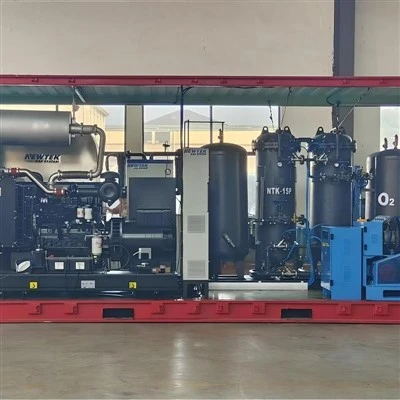
In the ever - evolving landscape of industrial manufacturing, the glass fiber industry has been on a growth trajectory, driven by increasing demand across multiple sectors. From construction and transportation to electronics and energy, glass fiber's unique properties - such as high strength, excellent insulation, and corrosion resistance - make it an indispensable material. As the industry continues to expand, so does the need for efficient and reliable processes. One such area where significant advancements are being made is in the use of oxygen in glass fiber production, and NEWTEK's Pressure Swing Adsorption (PSA) oxygen generators are at the forefront of this transformation.


The Role of Oxygen in the Production
Melting Process Optimization
At the heart of its manufacturing is the melting of raw materials, typically a combination of silica sand, limestone, and other additives. The melting process requires high temperatures, often in excess of 1500°C. Oxygen plays a crucial role in this stage. By enriching the combustion air with oxygen, the flame temperature can be increased, leading to more efficient melting. This not only reduces the energy required for melting but also improves the quality of the molten glass. With NEWTEK's PSA oxygen generators, glass fiber manufacturers can precisely control the oxygen flow rate, ensuring optimal combustion conditions. For example, in a large - scale glass fiber production facility, the use of NEWTEK's PSA oxygen generator with a flow rate of 100 nm³/hr can result in a significant reduction in melting time and energy consumption.
Enhancing Glass Quality
Oxygen also has a direct impact on the quality of the glass fiber. In the molten state, oxygen helps to remove impurities and bubbles from the glass. This results in a more homogeneous and defect - free glass, which is essential for producing high - quality glass fibers. The high - purity oxygen produced by NEWTEK's PSA generators, with a purity level of up to 95%, ensures that the glass melting process is as clean as possible. Impurities in the glass can weaken the fibers and affect their mechanical properties. By using NEWTEK's oxygen generators, manufacturers can minimize these impurities, leading to stronger and more durable glass fibers.
NEWTEK's PSA Oxygen Generator Technology
Pressure Swing Adsorption Principle
NEWTEK's PSA oxygen generators operate on the principle of Pressure Swing Adsorption. Air, which is a mixture of nitrogen (about 78%), oxygen (about 21%), and other trace gases, is compressed and passed through a bed of adsorbent material, usually zeolite molecular sieves. These sieves have a higher affinity for nitrogen than oxygen. Under high pressure, nitrogen is adsorbed onto the surface of the zeolite, while oxygen passes through and is collected as the product. When the adsorbent bed becomes saturated with nitrogen, the pressure is reduced, and the adsorbed nitrogen is desorbed, regenerating the bed for the next cycle. This cyclic process allows for continuous oxygen production. The following table summarizes the key steps in the PSA process:
|
Step |
Pressure Condition |
Gas Adsorption/Desorption |
|
Adsorption |
High Pressure |
Nitrogen is adsorbed, oxygen passes through |
|
Desorption |
Low Pressure |
Nitrogen is desorbed, regenerating the adsorbent |
Key Features of NEWTEK's Generators
High Purity Oxygen Production: NEWTEK's PSA oxygen generators are capable of producing oxygen with a purity of 90% - 95%, meeting the strict requirements of the glass fiber industry. The high - purity oxygen ensures better combustion and glass quality, as mentioned earlier.
Energy - Efficient Design: In an industry where energy costs are a significant factor, NEWTEK's generators stand out for their energy - efficiency. The PSA process itself is more energy - efficient than traditional oxygen - generation methods such as cryogenic distillation. Additionally, NEWTEK has optimized the design of its generators, using advanced control systems to adjust the oxygen production based on the actual demand. This prevents over - production and reduces energy waste.
Compact and Modular Design: Space is often at a premium in industrial facilities. NEWTEK's generators are designed with a compact footprint and a modular structure. The modular design allows for easy installation, expansion, and maintenance. Glass fiber manufacturers can start with a basic system and add more modules as their production capacity grows. For example, a small - to - medium - sized glass fiber plant can initially install a modular PSA generator with a capacity of 50 nm³/hr and later expand it to 150 nm³/hr by adding additional modules.
Impact on the Industry
Cost Savings
The use of it can lead to substantial cost savings for glass fiber manufacturers. By improving the efficiency of the melting process, less energy is consumed, reducing electricity bills. The reduction in melting time also means increased production throughput. For instance, a glass fiber factory that previously relied on traditional combustion methods and now switches to NEWTEK's PSA oxygen - enhanced combustion can save up to 20% on its energy costs annually. Additionally, the higher - quality glass produced reduces the number of rejects, further saving costs associated with rework and waste disposal.
Environmental Benefits
In addition to cost savings, there are significant environmental benefits. The more efficient combustion process resulting from the use of oxygen - enriched air reduces the emission of pollutants such as nitrogen oxides (NOx) and particulate matter. This is in line with the growing global emphasis on environmental sustainability in industrial manufacturing. Glass fiber manufacturers can not only improve their bottom line but also enhance their environmental credentials by adopting NEWTEK's PSA oxygen generators.
Quality and Productivity Improvements
As mentioned earlier, the high - purity oxygen from NEWTEK's generators leads to better - quality glass fibers. These high - quality fibers are in greater demand in the market, allowing manufacturers to command higher prices. Moreover, the increased production throughput due to faster melting times means that manufacturers can meet the growing market demand more effectively. A glass fiber producer that upgrades to NEWTEK's PSA oxygen system may see an increase in its annual production capacity by 15 - 20%, depending on the initial setup and the extent of the upgrade.
Case Studies and Success Stories
A Mid - Sized Manufacturer
Company A, a mid - sized manufacturer, was facing challenges in meeting the increasing market demand for high - quality glass fibers. Their existing combustion system was energy - intensive and produced glass with a relatively high defect rate. After installing NEWTEK's PSA oxygen generator with a capacity of 80 nm³/hr, they noticed a significant improvement. The melting time was reduced by 15%, leading to a 12% increase in production capacity. The defect rate in the glass fibers dropped from 8% to 3%, resulting in higher - quality products that were well - received in the market. The company also saw a 18% reduction in its energy costs, contributing to a significant boost in its profitability.
A Large - Scale Producer
Company B, a large - scale producer with multiple production lines, was looking for a way to optimize its operations and reduce its environmental impact. They installed a modular NEWTEK's PSA oxygen generator system with a total capacity of 300 nm³/hr across their production lines. The results were remarkable. The energy consumption per unit of it produced decreased by 22%. The company was able to increase its production by 20% without significant additional capital investment. The improved glass quality also allowed them to enter new high - end markets, expanding their customer base and increasing their revenue.
Future Outlook
As the glass fiber industry continues to grow, driven by emerging applications in fields such as 5G infrastructure, electric vehicles, and renewable energy, the demand for efficient and high - quality production processes will only increase. NEWTEK is well - positioned to meet this demand with its innovative its technology. The company is constantly investing in research and development to further improve the performance of its generators. Future advancements may include even more energy - efficient designs, higher - purity oxygen production, and enhanced control systems. With it, the industry is set to continue its upward trajectory, delivering high - quality products while becoming more sustainable and cost - effective.
In conclusion, NEWTEK's PSA oxygen generators are playing a pivotal role in transforming the industry. Through improved combustion, enhanced glass quality, cost savings, and environmental benefits, these generators are enabling glass fiber manufacturers to stay competitive in a rapidly evolving market. As the industry looks to the future, the partnership between glass fiber producers and NEWTEK in adopting and advancing PSA oxygen - generation technology is likely to yield even greater rewards.