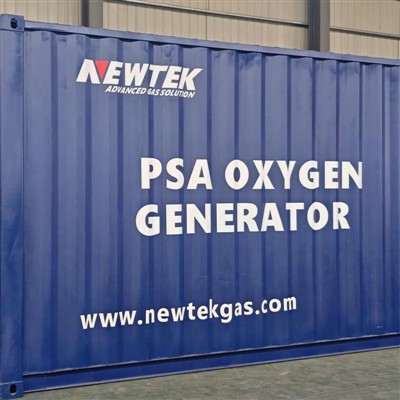
Engineering Problem Solved by Containerized Oxygen Plants
Many mining projects are located hundreds of kilometers from industrial gas production facilities. Transporting liquid oxygen to these locations requires cryogenic tankers, storage vessels, vaporizers, unloading stations, and road access capable of supporting regular deliveries.
A containerized oxygen generator removes the dependency on external oxygen supply chains by producing oxygen directly from atmospheric air at the mining site.
For projects operating in mountainous regions, desert environments, or remote exploration areas, oxygen production can continue as long as electrical power and ambient air are available.
The system converts atmospheric air into oxygen without requiring cryogenic storage tanks or routine oxygen deliveries.

Container Structure and Mechanical Layout
The oxygen plant is housed inside a standard ISO container.
Typical configurations include:
Container frames are manufactured from structural steel and welded according to ISO shipping standards. The enclosure protects process equipment from dust, precipitation, direct sunlight, and salt spray erosion.
Internal equipment layouts divide the container into dedicated operating zones.
A typical arrangement includes:
Equipment spacing is designed to provide access for maintenance personnel and component replacement activities.
Internal Equipment Configuration
Air Compression Module
The compression module increases atmospheric air pressure before oxygen separation.
The module generally contains:
Compressed air is typically supplied at 8–11 bar(g).
The compressor draws ambient air through a filtration system designed to remove airborne particles commonly found in mining environments, including silica dust, ore fines, and blasting residues.
In desert mining operations, multi-stage intake filtration systems may be installed to reduce dust loading on downstream equipment.
Air Treatment Module
Compressed air contains moisture, oil aerosols, and suspended contaminants that can damage adsorption materials. The treatment module removes these contaminants through multiple stages.
Typical components include:
The treatment system reduces moisture concentration before air enters the PSA vessels.
Depending on configuration, pressure dew points may reach -40°C to -70°C.
Dry air prevents water accumulation inside adsorption beds and reduces molecular sieve degradation.
PSA Oxygen Generation Module
The oxygen generation module performs gas separation.
The module consists of:
The vessels are fabricated from carbon steel pressure-rated cylinders and contain zeolite molecular sieve material.
When compressed air enters the vessel, nitrogen molecules attach to the adsorption media while oxygen molecules pass through the bed.
The control system alternates vessel operation between adsorption and regeneration modes, maintaining continuous oxygen production.
Depending on system capacity, the module may contain two, four, or multiple adsorption vessels operating in parallel.
Oxygen Storage Section
Generated oxygen enters a storage vessel located inside or adjacent to the container.
The storage section performs three functions:
Storage vessels are generally designed for pressures ranging from 8 bar(g) to 16 bar(g).
For large mining projects, external oxygen storage tanks may be connected to increase available reserve capacity.
Electrical Distribution System
The container includes a dedicated electrical compartment that houses:
Electrical panels are isolated from process equipment to reduce exposure to heat, vibration, and moisture.
Cable trays route power and signal wiring throughout the container while separating high-voltage and instrumentation circuits.
Environmental Control Systems
Mining operations often expose equipment to extreme environmental conditions. Containerized oxygen generators therefore incorporate environmental management systems.
Ventilation System
Ventilation fans transfer heat generated by compressors and electrical equipment to the outside environment. Airflow rates are selected according to equipment heat loads and ambient temperature conditions.
Insulation System
Cold-climate installations may include insulated wall panels that reduce heat transfer through container surfaces. Insulation thickness commonly ranges from 50 mm to 100 mm depending on site temperatures.
HVAC Equipment
For sites experiencing temperatures above 45°C or below -20°C, dedicated heating and cooling systems may regulate internal operating temperatures. Maintaining stable enclosure temperatures helps protect electronic controls and instrumentation.
Mining Applications
Gold Processing Plants
Gold recovery facilities frequently require oxygen for cyanide leaching circuits. Containerized oxygen generators can supply oxygen to:
The oxygen is transferred through fixed process pipelines and injected into solution streams before contacting the ore.
Copper Leaching Operations
Copper extraction circuits may use oxygen to support oxidation reactions and improve process chemistry. The oxygen generator supplies gas directly to reaction tanks, solution transfer lines, or aeration systems. The required flow rate depends on ore throughput and process design.
Underground Mining Sites
Underground operations often face ventilation limitations. Containerized oxygen plants can support:
The modular design allows installation near shaft infrastructure without constructing permanent oxygen production buildings.
Transportation and Deployment
One advantage of a containerized configuration is transportation efficiency. The entire oxygen plant remains mounted on its structural base frame during transportation.
The container can be moved using:
No disassembly of major process equipment is required during transport. Upon arrival, cranes position the container onto prepared foundations or steel support structures. This approach reduces field assembly activities compared with conventional plant construction.
Site Installation Procedure
Foundation Preparation
The installation site typically includes:
• Reinforced concrete foundation • Structural steel platform • Grounding networkFoundation dimensions depend on container size and operating weight.
Utility Connections
Installation personnel connect:
• Electrical power supply • Oxygen outlet pipeline • Condensate drain system • Communication cablesMost process piping remains installed within the container before shipment.
Commissioning
Commissioning activities include:
• Pressure testing • Leak testing • Valve sequencing verification • Oxygen purity verification • Control system validationOnce operating parameters reach design conditions, oxygen production begins.
Monitoring and Control
The oxygen generator uses PLC-based control architecture.
The system monitors:
Sensors transmit operating data to the PLC, which adjusts valve sequencing and equipment operation.
Remote communication options may include:
Mining operators can monitor performance from central control rooms without entering the container.
Maintenance Access Design
Containerized systems are designed to permit maintenance without removing major equipment. Large access doors and removable wall panels provide entry for technicians.
Routine maintenance activities include:
Equipment layouts reserve access space around critical components to support these tasks.
Common Failure Modes
Understanding failure mechanisms helps maintenance teams schedule preventive inspections.
Reduced Oxygen Purity
Potential causes include: Adsorbent contamination, Valve leakage, Analyzer malfunction
High Compressor Temperature
Potential causes include: Dirty intake filters, Ventilation failure, Elevated ambient temperature
Moisture Carryover
Potential causes include: Dryer malfunction, Saturated desiccant, Drain valve failure
Oxygen Pressure Instability
Potential causes include: Buffer tank undersizing, Regulator malfunction, Pipeline leakage
These conditions can generally be identified through pressure, temperature, and oxygen purity trends recorded by the control system.
Comparison with Conventional Oxygen Plant Construction
A conventional oxygen plant typically requires:
A containerized oxygen generator integrates these systems within a transportable enclosure before shipment. As a result, field installation activities are typically limited to utility connections, commissioning procedures, and final operational testing.
This configuration is frequently selected for mining projects with compressed construction schedules, temporary operating periods, or remote site locations where construction resources are limited.
Technical Specifications
| Parameter | Typical Range |
|---|---|
| Oxygen Purity | 90–95% |
| Oxygen Capacity | 10–5,000 Nm³/h |
| Oxygen Pressure | 4–10 bar(g) |
| Air Pressure | 7–10 bar(g) |
| Dew Point | -40°C to -70°C |
| Container Type | 20 ft / 40 ft ISO Container |
| Ambient Temperature | -30°C to +50°C |
| Control System | PLC + HMI |
| Power Supply | 380V–690V |
| Installation Type | Containerized Modular System |
Key Features
Oxygen production equipment integrated inside a standard ISO container
Pre-installed piping, wiring, and instrumentation before shipment
Suitable for remote mining locations with limited infrastructure
Supports gold, copper, silver, and underground mining applications
Available in skid-mounted and containerized configurations
Designed for transportation by truck, rail, or sea freight
Compatible with SCADA and plant control systems
Expandable capacity through additional container modules
The Containerized Mining Oxygen Generator provides a transportable oxygen production platform that combines air compression, purification, oxygen separation, storage, and control systems within a single enclosure, allowing mining operations to generate oxygen directly at the point of use.
Hot Tags: containerized mining oxygen generator, China containerized mining oxygen generator manufacturers, suppliers, container oxygen plant, Containerized Oxygen Generators, gas production equipment, mobile oxygen, Mobile Oxygen Plant, Oxygen Containing Plants