How Oxygen Supports Heap Leaching
Heap leaching extracts metals by irrigating crushed ore stacked on engineered leach pads. Cyanide solution percolates through the ore bed, dissolves target metals, and flows to collection ponds for recovery.
Oxygen enters the process by dissolving into the leaching solution before contacting the ore. Maintaining dissolved oxygen levels is particularly important in:
At mine sites located above 2,000 meters elevation, reduced atmospheric oxygen pressure can limit natural oxygen transfer. Oxygen injection systems compensate for this condition by introducing concentrated oxygen directly into the process stream.
Working Principle
The system uses PSA technology to separate oxygen from atmospheric air.
Air Compression
An industrial screw compressor compresses ambient air to approximately 7–10 bar(g), creating the pressure required for gas separation.
01
Air Purification
Compressed air passes through filtration and drying equipment to remove:
- Dust particles
- Water vapor
- Oil aerosols
Air treatment protects the adsorption material from contamination and maintains separation performance.
02
Oxygen Separation
The purified air enters twin adsorption vessels filled with zeolite molecular sieve material. Nitrogen molecules are adsorbed inside the vessels while oxygen passes through the bed and enters the oxygen collection system.
The two vessels alternate between adsorption and regeneration cycles, allowing continuous oxygen production.
03
Oxygen Delivery
The produced oxygen is stored in a buffer tank and delivered to the leaching process through oxygen distribution pipelines.
04
Typical operating parameters include:
| Parameter | Range |
|---|---|
| Oxygen Purity | 90–95% |
| Oxygen Flow Rate | 10–5,000 Nm³/h |
| Oxygen Pressure | 4–10 bar(g) |
| Dew Point | ≤ -40°C |
System Configuration
Air Compressor
The compressor supplies compressed air for oxygen generation. Depending on project requirements, the system may use oil-injected or oil-free screw compressors.
Air Treatment Unit
The air treatment section typically includes:
This section removes moisture and contaminants before air enters the adsorption vessels.
PSA Oxygen Generator
The PSA skid contains:
The adsorption vessels are manufactured from pressure-rated carbon steel and designed for continuous industrial operation.
Oxygen Buffer Tank
The buffer tank stabilizes oxygen pressure fluctuations and maintains consistent flow to downstream oxygen injection equipment.
Oxygen Booster (Optional)
For applications requiring elevated injection pressure, an oxygen booster can increase discharge pressure to 15–40 bar(g).
Oxygen Injection Methods
Venturi Injection
A venturi injector creates a pressure differential that draws oxygen into the process solution. This method uses existing pipeline infrastructure and requires minimal installation space.
Oxygen Cone System
An oxygen cone dissolves oxygen into solution under pressure. The enclosed design increases gas-liquid contact time and improves oxygen transfer efficiency.
Sparger Network
Perforated sparger pipes distribute oxygen bubbles into tanks, ponds, or solution reservoirs. Materials commonly include HDPE, polypropylene, and stainless steel.
Irrigation Solution Oxygenation
Oxygen can be introduced into barren solution before distribution through drip emitters or sprinkler systems, allowing oxygenated solution to penetrate the entire ore heap.
Applications
The Oxygen Generator for Heap Leaching is commonly integrated into:
System capacity is selected according to ore throughput, cyanide consumption, dissolved oxygen targets, and irrigation flow rates.

Installation and Integration
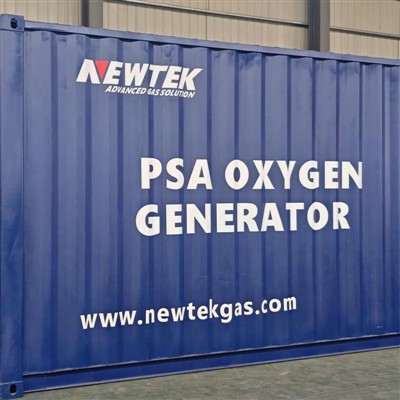
The oxygen generation system is typically supplied as a skid-mounted or containerized package.
Installation includes:
The modular design reduces on-site construction work and simplifies expansion when production capacity increases.
Maintenance Requirements
Routine maintenance focuses primarily on supporting equipment rather than the adsorption system.
Daily Checks
Scheduled Maintenance
Under proper filtration conditions, molecular sieve service life typically ranges from 8 to 12 years.
Why Use an Oxygen Generator for Heap Leaching
Compared with liquid oxygen supply systems, an on-site oxygen generator produces oxygen directly from atmospheric air and transfers it to the leaching process through fixed pipelines.
For remote mining operations, the system eliminates dependence on cryogenic oxygen deliveries, storage tanks, and transportation logistics while providing continuous oxygen supply for heap leaching operations.
Available Configurations:
Hot Tags: oxygen generator for heap leaching, China oxygen generator for heap leaching manufacturers, suppliers, container oxygen plant manufacturers, Containerized Oxygen Generator, Containerized Oxygen Generators, Containerized Oxygen Plant, Mobile Oxygen Plant, oxygen supply