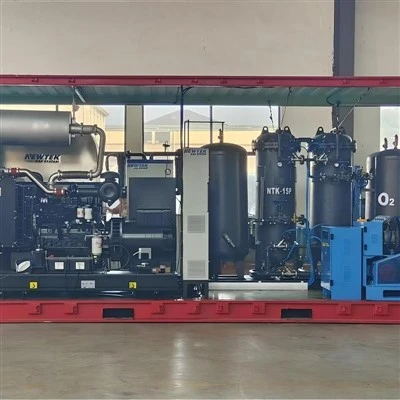
In industrial oxygen supply projects, success is not defined solely by oxygen purity or output capacity. Instead, it is measured by how efficiently a system moves from conceptual design to stable, long-term operation. Delays, interface conflicts, unclear responsibilities, and late-stage modifications frequently undermine project schedules and budgets. Against this backdrop, integrated PSA (Pressure Swing Adsorption) oxygen systems have emerged as a preferred approach for industrial users seeking predictable outcomes, reduced risk, and faster time to operation.
Project Challenges in Conventional Oxygen System Delivery
Fragmented Design Responsibility
In traditional oxygen projects, design responsibility is often split among multiple parties:
Process designers specify oxygen purity and flow
Mechanical contractors select compressors and vessels
Electrical integrators design control panels
Site contractors manage installation
This fragmentation creates gaps in accountability and increases the likelihood of:
Interface mismatches between subsystems
Inconsistent design assumptions
Late-stage rework during commissioning
Each correction introduces schedule delays and cost escalation.
Extended Installation and Commissioning Cycles
On-site assembly of discrete equipment requires:
Civil foundation preparation
Mechanical alignment
Electrical cabling
Control logic debugging
Interlock testing across suppliers
These activities extend installation timelines and expose projects to weather, labor availability, and coordination risks-especially in remote or industrially constrained locations.
Operational Risk at Handover
When systems are assembled from multiple vendors, end users frequently face:
Incomplete documentation
Unclear warranty boundaries
Limited system-level performance guarantees
As a result, operators may struggle to stabilize production during early operation.
What Defines an Integrated PSA Oxygen System?
An integrated PSA oxygen system is engineered as a single functional unit, not a collection of independent components. Integration occurs at multiple levels:
Process Integration
Air compression, pretreatment, adsorption, and oxygen buffering are designed as a unified flow path
Pressure, temperature, and cycle timing are optimized at the system level
Mechanical Integration
Skid-mounted or modular layouts minimize interconnecting pipework
Structural frames support all major components
Vibration, thermal expansion, and maintenance access are considered during design
Electrical and Control Integration
Centralized PLC-based automation
Preconfigured alarms, interlocks, and safety logic
Unified human–machine interface (HMI)
Documentation and Compliance Integration
Single equipment tag system
Consolidated manuals and drawings
Factory-level testing against agreed performance criteria
This level of integration fundamentally changes how oxygen projects are delivered.
Translating Process Requirements into Executable Systems
Early Alignment with End-Use Requirements
Integrated PSA projects begin with a clear definition of:
Oxygen flow rate and purity
Pressure requirements at consumption points
Operating patterns (continuous, batch, peak-demand cycles)
Redundancy and backup expectations
Rather than designing equipment in isolation, system engineers align every subsystem with actual operational needs.
Standardized Yet Configurable Architecture
Modern PSA platforms are built on standardized modules:
Adsorber vessels
Valve manifolds
Control cabinets
Skid frames
These modules are configured rather than reinvented for each project, enabling:
Faster engineering cycles
Proven design reliability
Reduced risk of untested configurations
Customization is applied where it matters-capacity, materials, automation depth-without destabilizing the core system architecture.
Design for Installation and Maintenance
Integrated systems are engineered with downstream execution in mind:
Lifting points and transport constraints
Site footprint optimization
Clear maintenance access zones
Simplified piping and electrical interfaces
This foresight significantly reduces site-related issues later in the project lifecycle.
Manufacturing and Factory Integration
Pre-Assembly at the Factory Level
One of the most critical advantages of integrated PSA systems is factory pre-assembly:
Mechanical assembly of major components
Electrical wiring and panel integration
Instrument installation and calibration
This controlled environment ensures higher build quality than site assembly.
Factory Acceptance Testing (FAT)
Integrated PSA systems undergo comprehensive FAT before shipment:
Pressure and leak testing
Control logic verification
Alarm and interlock simulation
Performance testing under load
FAT allows potential issues to be identified and resolved before deployment, significantly reducing commissioning risk.
Documentation Prepared as a Complete System
Deliverables are issued as a single, coherent package:
Process flow diagrams (PFDs)
Piping and instrumentation diagrams (P&IDs)
Electrical schematics
Operation and maintenance manuals
This unified documentation simplifies both installation and future operation.
Accelerating Site Execution
Reduced On-Site Assembly Scope
Integrated PSA systems typically arrive as:
Skid-mounted units
Modular blocks
Containerized solutions
On-site work is limited to:
Positioning
Utility connections
Tie-in to oxygen distribution
This approach dramatically shortens installation timelines.
Lower Dependence on Specialized Labor
Because critical assembly work is completed at the factory:
Fewer skilled technicians are required on site
Electrical and control integration is minimized
Local contractors can handle most tasks
This is especially valuable in regions with limited technical labor availability.
Improved Safety During Installation
Shorter installation periods and fewer on-site activities reduce:
Hot work exposure
Working-at-height risks
Electrical commissioning hazards
Safety performance is increasingly a key metric in industrial project evaluation.
Predictable and Repeatable Start-Up
Streamlined Commissioning Procedures
Integrated PSA systems follow standardized commissioning protocols:
Step-by-step start-up sequences
Predefined tuning parameters
Clear acceptance criteria
This eliminates guesswork and reduces commissioning duration.
Faster Performance Stabilization
Because the system has already been tested as a whole:
Adsorption cycles stabilize quickly
Oxygen purity reaches target levels faster
Pressure control behaves predictably
Operators can transition to full production with confidence.
Reduced Commissioning Risk
Key risks-such as control mismatches, valve sequencing errors, or compressor–PSA coordination issues-are largely eliminated before site deployment.
Operational Handover
Clear Accountability
With an integrated PSA system:
One supplier is responsible for system performance
Warranty coverage is clearly defined
Troubleshooting is centralized
This clarity is essential during early operational phases.
Operator Training on a Unified Platform
Training is delivered on a single system architecture:
Consistent HMI layouts
Standard alarm philosophy
Predictable maintenance routines
Operators become competent more quickly, reducing reliance on external support.
Lifecycle Support and Scalability
Integrated systems are designed for:
Future capacity expansion
Automation upgrades
Remote monitoring integration
This protects the user's investment as production requirements evolve.
Integrated PSA Systems in Different Industrial Contexts
Mining and Metallurgy
Continuous oxygen demand
Harsh environmental conditions
Need for high availability
Integrated PSA systems provide stable supply with minimal site complexity.
Chemical and Petrochemical Processing
Strict purity and safety requirements
Integration with plant control systems
Redundancy and reliability
System-level engineering ensures compliance and operational stability.
Environmental and Waste Treatment
Variable oxygen demand
Energy efficiency considerations
Remote or decentralized sites
Modular integrated PSA solutions offer flexibility and cost control.
Strategic Benefits Beyond Project Delivery
Lower Total Project Cost
Although integrated PSA systems may appear higher in upfront cost, they reduce:
Engineering hours
Installation labor
Commissioning delays
Rework expenses
The overall project cost is often lower.
Improved Schedule Certainty
Predictable delivery timelines are critical for:
Capacity expansion projects
Regulatory-driven installations
Revenue-critical operations
Integrated systems significantly improve schedule adherence.
Enhanced Long-Term Reliability
Systems engineered and tested as a whole experience:
Fewer early-life failures
More stable long-term operation
Easier maintenance planning
Reliability becomes an engineered outcome, not a hope.
Integration as a Project Delivery Strategy
From design through commissioning, integrated PSA oxygen systems fundamentally reshape how industrial oxygen projects are executed. By consolidating engineering responsibility, reducing site complexity, and validating performance before deployment, these systems address the most persistent challenges in industrial project delivery.
For industrial users facing tighter schedules, higher reliability expectations, and increasing operational complexity, integrated PSA oxygen systems are not merely an equipment choice-they are a project delivery strategy. As industries continue to prioritize efficiency, predictability, and scalability, integration will remain central to successful on-site oxygen generation solutions.