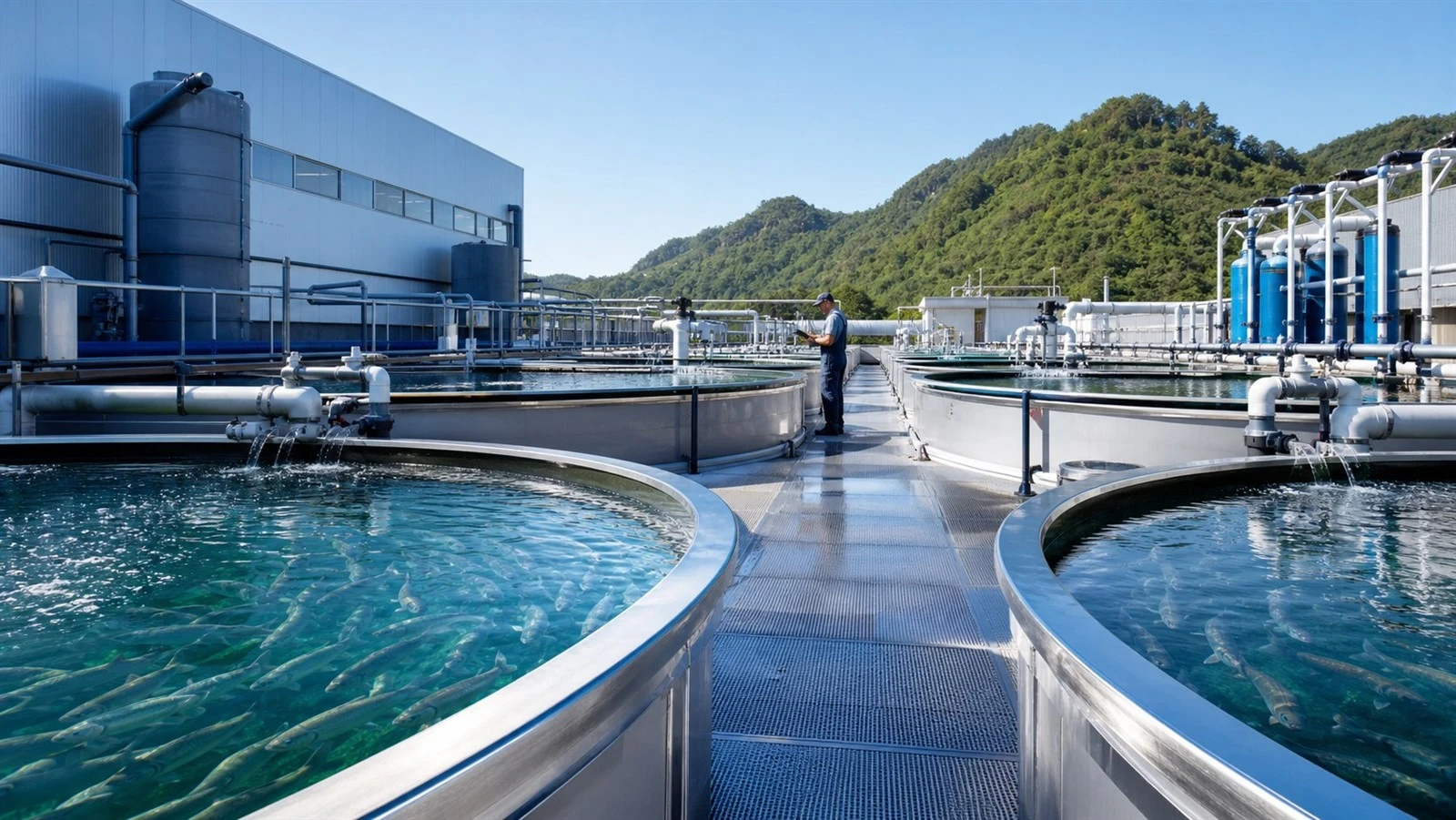
Modern aquaculture increasingly relies on intensive production methods, higher stocking densities, and controlled water environments. As fish and shrimp populations increase, so does the demand for oxygen. Traditional aeration methods remain important, but they may not provide sufficient oxygen under demanding production conditions, particularly in recirculating aquaculture systems (RAS), intensive shrimp farms, and hatcheries.
Insufficient dissolved oxygen can reduce feeding activity, slow growth, impair feed conversion, and increase stress among aquatic animals. Oxygen demand also comes from microorganisms involved in biological filtration and organic waste decomposition. Consequently, maintaining suitable oxygen conditions requires more than installing aerators or oxygen generators. Operators need reliable monitoring throughout the oxygen supply process.
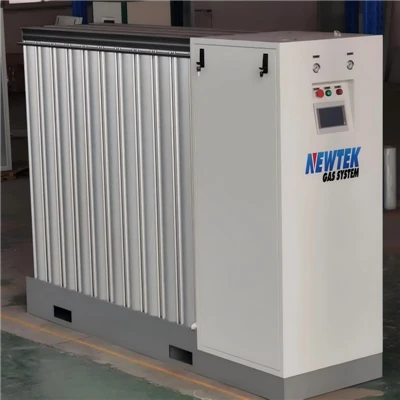
PSA (Pressure Swing Adsorption) oxygen generators provide an on-site source of oxygen-enriched gas for aquaculture applications. However, their operating performance can change because of compressed-air conditions, molecular sieve deterioration, valve operation, or other equipment problems. Automatic oxygen purity monitoring helps identify these changes by continuously measuring the oxygen content of the generated gas, allowing operators to respond before equipment abnormalities develop into more serious supply problems.
Understanding Oxygen Purity and Dissolved Oxygen
Oxygen purity and dissolved oxygen are closely related but represent two different measurements. Oxygen purity describes the percentage of oxygen in the gas produced by a generator, while dissolved oxygen (DO) measures the oxygen actually available in water. Confusing these indicators can lead to incorrect assessments of aquaculture oxygen supply.
A PSA oxygen generator typically uses zeolite molecular sieve to selectively adsorb nitrogen from compressed air, producing oxygen-enriched gas. Depending on the equipment configuration, the output commonly contains approximately 90–95% oxygen. A purity reading of 93%, for example, means that oxygen accounts for approximately 93% of the measured product gas.
Dissolved oxygen, usually expressed in milligrams per liter (mg/L), is directly influenced by water temperature, salinity, stocking density, feeding activity, microbial respiration, and water circulation. Warmer water generally holds less oxygen than cooler water under comparable conditions, making oxygen management particularly important during high-temperature production periods.
The differences between these measurements are summarized below:
|
Measurement |
What It Indicates |
Common Unit |
Operational Significance |
|---|---|---|---|
|
Oxygen purity |
Oxygen percentage in the generated gas |
% |
Verifies PSA generator output quality |
|
Dissolved oxygen |
Oxygen dissolved in culture water |
mg/L |
Indicates oxygen availability to aquatic organisms |
|
Oxygen flow |
Volume of gas supplied to the system |
Nm³/h or L/min |
Helps assess whether the oxygen supply meets demand |
|
Gas pressure |
Pressure of oxygen in the delivery system |
MPa or bar |
Indicates whether gas can reach the intended injection points |
These indicators should be evaluated together. An oxygen generator may maintain stable purity while dissolved oxygen decreases because of insufficient gas flow, poor transfer efficiency, or increased biological demand. Conversely, declining purity may indicate a problem with the oxygen generation process itself.
How Automatic Oxygen Purity Monitoring Works
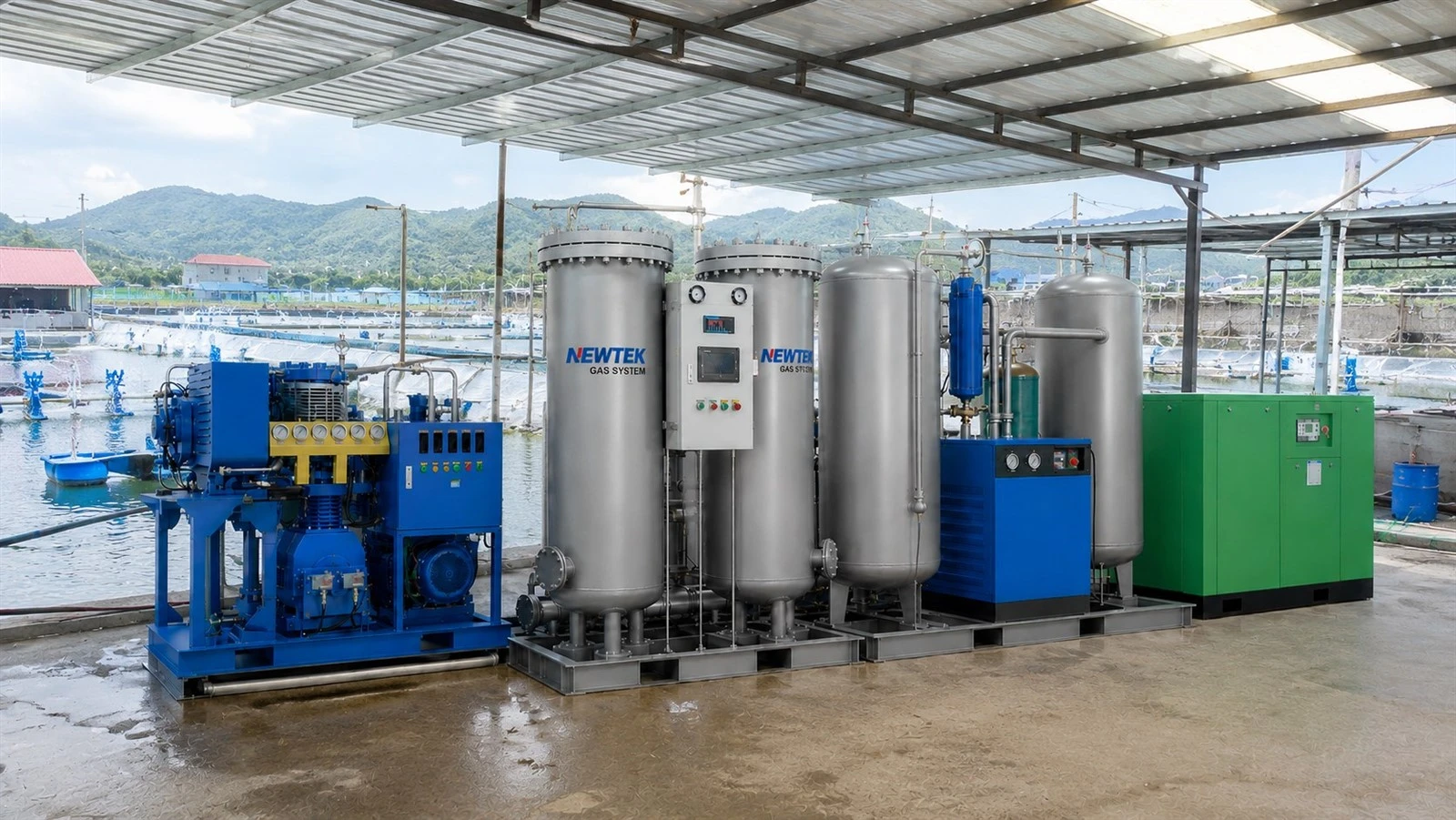
A PSA oxygen generator operates through alternating adsorption and regeneration cycles. Compressed air enters adsorption vessels containing molecular sieve, where nitrogen is retained and oxygen-enriched gas passes through to the storage and distribution system. Automatic monitoring measures the quality of this product gas without requiring operators to perform repeated manual tests.
A typical monitoring arrangement includes several components:
- Oxygen sampling point: Collects product gas for analysis.
- Sampling line: Transfers the gas sample to the analyzer.
- Oxygen purity sensor: Measures the oxygen percentage.
- Digital analyzer: Displays and processes measurement readings.
- Alarm module: Identifies abnormal measurements.
- PLC control system: Coordinates monitoring and predefined responses.
- Communication interface: Transfers operating data to centralized platforms.
The analyzer continuously evaluates the sampled gas and sends measurement signals to the control system. Common industrial interfaces include 4–20 mA and Modbus communication. When purity falls below a predefined operating limit, the system can activate alarms, record abnormal readings, or initiate a configured response.
Depending on system design, responses may include notifying operators, switching to a standby oxygen source, or diverting off-specification gas. Continuous measurement also provides historical operating records, helping maintenance personnel identify gradual performance deterioration that occasional manual testing may overlook.
Oxygen Analyzer Technologies and Selection
Different analyzer technologies are available for measuring oxygen purity. Paramagnetic analyzers use oxygen's magnetic properties to determine its percentage in a gas mixture and are widely applied in industrial oxygen measurement. They can provide stable measurements for oxygen-rich gas, although installation conditions and instrument specifications must be considered.
Electrochemical analyzers measure oxygen through a chemical reaction within a sensing cell. They are available in portable and continuous monitoring configurations, but their sensing elements have a finite service life and require periodic calibration or replacement. Zirconia analyzers use a solid electrolyte to measure oxygen partial pressure and are suitable for certain industrial gas-analysis applications.
For aquaculture applications, buyers should evaluate the following factors:
- Measurement range: The analyzer must cover the expected oxygen purity range of the PSA generator.
- Measurement accuracy: Accuracy and repeatability should be appropriate for the required operating limits.
- Response time: Faster detection can improve the response to sudden changes in gas quality.
- Sensor service life: Consider calibration intervals and replacement requirements.
- Operating conditions: Check pressure, temperature, gas flow, and environmental compatibility.
- Communication capabilities: Confirm compatibility with 4–20 mA, RS-485, Modbus, or the existing PLC system.
- Maintenance accessibility: Ensure technicians can inspect and calibrate the analyzer without unnecessary disruption to oxygen supply.
The most suitable technology depends on actual process requirements rather than a universal ranking. The analyzer should be specifically rated for the expected oxygen-rich gas composition and installation conditions.
How Automatic Monitoring Improves Aquaculture Production
Early Identification of Equipment Problems
Oxygen purity can change when the PSA system experiences abnormal operating conditions. Inadequate compressed-air pretreatment, moisture exposure, molecular sieve deterioration, or switching valve problems may reduce nitrogen separation efficiency. Automatic monitoring helps identify these changes before they remain undetected for extended periods.
When purity readings show a declining trend, maintenance personnel can investigate:
- Compressor pressure and air supply.
- Air dryer and filtration performance.
- Molecular sieve condition.
- Adsorption vessel pressure differences.
- Switching valve operation.
- Abnormal adsorption cycle timing.
This makes equipment diagnosis more targeted and helps reduce the likelihood of unexpected production interruptions.
Supporting Stable Oxygen Supply
The purity of generated gas affects the amount of oxygen available for transfer into water. If purity decreases while total gas flow remains unchanged, the oxygen mass delivered may also decrease. This can become important in intensive production facilities where oxygen supply is closely matched to biological demand.
However, stable purity does not guarantee adequate dissolved oxygen. Gas flow, injection pressure, bubble size, water circulation, and oxygen transfer efficiency must also be considered. Combining purity measurements with DO sensors helps operators distinguish between gas-generation problems and downstream oxygenation issues.
Reducing Production Risks and Improving Efficiency
High stocking density, intensive feeding, elevated temperatures, and microbial activity can increase oxygen demand. If the oxygen generation system cannot maintain suitable performance during these periods, fish and shrimp may experience unfavorable water conditions that affect feeding and growth.
Automatic monitoring provides earlier warnings when gas quality changes, while integrated alarms can notify personnel or activate backup oxygen arrangements. When combined with flow meters and DO sensors, the collected data can also help operators evaluate oxygen consumption and identify opportunities to reduce unnecessary generation without compromising biological requirements.
Applications Across Different Aquaculture Systems
The importance of oxygen purity monitoring depends on the production method and oxygen delivery arrangement. Different aquaculture environments have different oxygen requirements, so monitoring configurations should reflect actual operating conditions.
Recirculating Aquaculture Systems (RAS)
RAS facilities continuously circulate water through mechanical filtration, biological treatment, and oxygenation equipment. A central oxygen supply problem may affect multiple tanks, making generator monitoring and downstream water-quality measurement particularly important.
A comprehensive monitoring arrangement should consider:
- Oxygen purity at the generator outlet.
- Oxygen receiver pressure.
- Gas flow to individual oxygenation units.
- Dissolved oxygen at tank inlets and outlets.
- Water circulation rate.
- Biofilter oxygen requirements.
- Backup oxygen availability.
Stable gas purity combined with declining DO in one tank may indicate a local distribution or oxygen transfer problem rather than a generator malfunction.
Intensive Shrimp Farming
Intensive shrimp farming and biofloc systems face considerable oxygen demand from both cultured animals and microorganisms. As shrimp biomass and feeding rates increase, oxygen requirements change throughout the production cycle.
Operators should pay particular attention to early-morning dissolved oxygen conditions, periods following intensive feeding, high-temperature operating periods, areas with limited water circulation, and biofloc systems with high microbial activity.
Early-morning monitoring is especially important in outdoor ponds because photosynthetic oxygen production stops during the night, while aquatic organisms and microorganisms continue consuming oxygen.
Fish Hatcheries and Nursery Facilities
Hatcheries and nursery facilities contain multiple tanks holding eggs, larvae, fry, or juvenile fish. These production stages may have different oxygen requirements, and the consequences of unsuitable water conditions can be significant.
Automatic purity monitoring helps identify changes in the central oxygen generation system before they affect the distribution network. However, a single analyzer at the generator outlet cannot confirm that every tank receives sufficient oxygen. Independent DO sensors, appropriate pipeline sizing, and backup oxygen arrangements should also be considered for critical production areas.
Offshore and Cage Aquaculture
Conventional open-net cage farming often relies on natural water exchange rather than centralized oxygen injection. Therefore, automatic oxygen purity monitoring is not necessarily a primary requirement for every cage farm.
It becomes more relevant in associated applications such as:
- Marine hatcheries and nursery facilities.
- Land-based holding and quarantine systems.
- Live-fish transportation.
- Temporary fish holding before processing.
- Oxygenated treatment and transport tanks.
In these applications, the purity analyzer verifies the quality of generated gas, while separate water-side instruments determine whether oxygen is being transferred effectively.
Integrating Purity Monitoring with Dissolved Oxygen Control
Automatic oxygen purity monitoring provides greater operational value when integrated with other instruments. A comprehensive system may combine gas purity analyzers, pressure transmitters, flow meters, water temperature sensors, and dissolved oxygen probes to evaluate both oxygen production and actual water conditions.
These measurements help operators identify the source of a problem:
- Stable purity with declining DO: Investigate gas flow, oxygen transfer efficiency, water circulation, and biological demand.
- Declining purity with stable gas flow: Inspect the PSA generator, molecular sieve, compressed-air pretreatment, and switching valves.
- Declining purity and flow: Check the generator's overall operating condition and upstream air supply.
- Stable purity and DO with increasing oxygen consumption: Evaluate whether production demand is rising and whether generation capacity remains sufficient.
A PLC can process these signals and activate predefined alarms or backup arrangements. For facilities with a standby oxygen source, a critical purity deviation or generator shutdown may trigger automatic changeover.
However, backup equipment must have sufficient capacity, appropriate pressure regulation, and compatible connections. Critical installations should also consider analyzer faults, power interruptions, and communication failures to avoid depending on a single monitoring component.
Maintenance and Long-Term Monitoring
Automatic monitoring reduces the need for repeated manual purity measurements, but regular maintenance remains necessary. A sensor that has not been calibrated properly may provide misleading information, while a blocked sampling line or damaged connection can affect measurement reliability.
A practical maintenance program should include:
- Analyzer inspection: Check readings, display status, and instrument alarms.
- Sampling line inspection: Look for leaks, blockages, and physical damage.
- Sensor maintenance: Check service life and measurement stability.
- Calibration: Follow the analyzer manufacturer's recommended procedures.
- Alarm testing: Verify warning and fault notification functions.
- Communication testing: Confirm signal transmission to the PLC.
- Historical data review: Identify abnormal purity trends and recurring deviations.
Calibration should use suitable reference gases and procedures specified for the analyzer. Operators should also distinguish between calibration and verification: calibration establishes or adjusts measurement response, while verification checks whether the instrument continues to perform within acceptable limits.
Historical data provides additional value. Changes in purity over time, compressor pressure, adsorption cycles, and generator operating hours can reveal developing equipment problems. Maintaining these records helps technicians identify abnormal trends and plan maintenance before performance deteriorates significantly.
Conclusion
Automatic oxygen purity monitoring improves aquaculture oxygen management by providing continuous information about the quality of gas produced by PSA oxygen generators. It helps identify equipment abnormalities, supports preventive maintenance, and reduces the likelihood that declining generator performance remains unnoticed.
Its effectiveness depends on integration with dissolved oxygen sensors, gas flow and pressure measurements, and appropriate control systems. Oxygen purity alone cannot confirm that fish and shrimp are receiving sufficient oxygen because water-side conditions and biological demand also determine actual oxygen availability.
For intensive aquaculture facilities, combining gas-quality monitoring with water-quality management creates a more reliable approach to oxygen supply. With suitable equipment selection, regular calibration, historical data analysis, and backup arrangements, operators can improve system reliability, respond more effectively to changing production requirements, and maintain more stable conditions for aquatic animal growth.