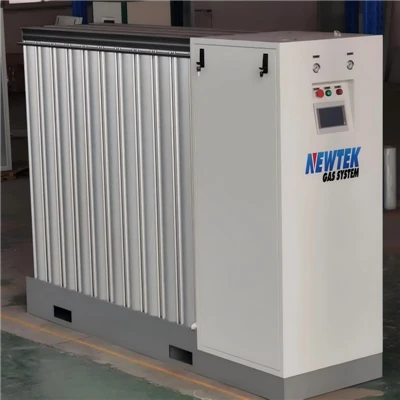
Oxygen availability directly affects fish health, feeding activity, growth performance, and overall farm productivity. As aquaculture operations move toward higher stocking densities and more controlled production environments, maintaining suitable dissolved oxygen (DO) levels becomes increasingly important. In intensive ponds, recirculating aquaculture systems (RAS), hatcheries, and indoor fish farms, natural oxygen exchange and conventional aeration may not always meet the oxygen demand.
An oxygen generator provides an on-site source of oxygen-enriched gas that can be delivered directly into culture water through oxygen cones, diffusers, or other transfer equipment. Compared with relying entirely on delivered oxygen cylinders or liquid oxygen, on-site generation can offer greater control over daily supply and reduce dependence on external deliveries. However, the benefits depend on selecting equipment that matches the farm's actual oxygen consumption, operating conditions, and distribution requirements.
Buyers should therefore evaluate more than the generator's rated output or advertised oxygen purity. Production capacity, gas quality, energy consumption, installation conditions, control functions, maintenance requirements, and long-term operating costs all influence whether a system can support stable fish-farming operations.
Assessing the Farm's Actual Oxygen Demand
The first step in selecting an oxygen generator is to estimate the farm's oxygen demand. Choosing equipment based only on pond volume or the number of fish can lead to an undersized or unnecessarily expensive system. Oxygen consumption varies according to species, fish biomass, water temperature, feeding intensity, stocking density, and production stage.
For example, a farm raising large quantities of fish in a high-density RAS facility may require a more consistent oxygen supply than an extensive pond operation with lower stocking density and greater natural water exchange. Oxygen demand can also increase as fish grow and total biomass rises.
Buyers should assess several operating factors:
Total fish biomass: Estimate the combined live weight of fish across all production tanks or ponds.
Species requirements: Different species have different oxygen requirements and tolerance levels.
Water temperature: Warmer water generally holds less dissolved oxygen, while fish metabolism and oxygen demand may increase.
Stocking density: Higher biomass per unit of water usually increases oxygen consumption.
Feeding schedules: Feeding and digestion can increase oxygen demand, particularly in intensive systems.
Biological filtration: Nitrifying bacteria in RAS biofilters also consume oxygen.
Peak operating conditions: Equipment should account for periods of high demand rather than only average daily consumption.
A practical assessment should distinguish between average oxygen consumption and peak demand. The generator must provide sufficient capacity during demanding operating periods, while the distribution system must deliver that oxygen to the required locations.
It is also important to account for future expansion. If a farm plans to add production tanks, increase stocking density, or introduce additional filtration equipment, the oxygen supply system should allow for reasonable capacity growth. However, excessive oversizing can increase capital investment and energy consumption without delivering corresponding operational benefits.
Choosing the Appropriate Oxygen Generation Technology
Several oxygen supply methods are used in aquaculture, including PSA oxygen generation, membrane-based separation, liquid oxygen storage, and compressed oxygen cylinders. Each has different requirements for equipment, infrastructure, operating costs, and supply management.
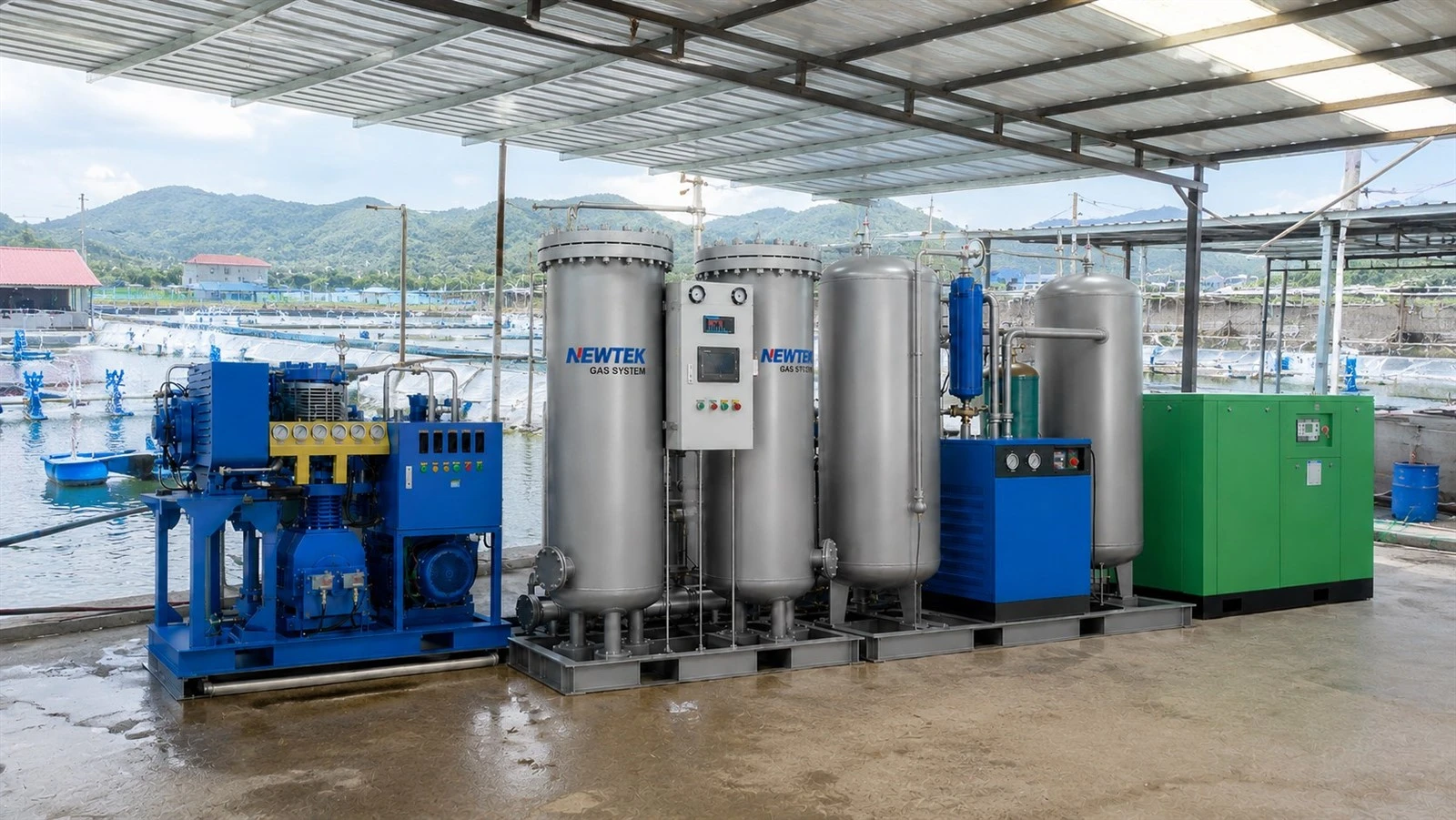
PSA (Pressure Swing Adsorption) is widely used for on-site oxygen generation. It relies on zeolite molecular sieve to selectively adsorb nitrogen from compressed air. By alternating adsorption and regeneration between vessels, the system produces oxygen-enriched gas continuously.
PSA systems are suitable for fish farms that require a relatively stable on-site oxygen supply and have access to reliable electricity and compressed-air equipment. Their output can be adjusted according to the configuration and capacity of the selected generator.
Other supply methods may be appropriate under different circumstances:
Membrane oxygen separation: Uses selective gas permeation and may suit applications with different purity and capacity requirements.
Liquid oxygen (LOX): Provides a high-capacity oxygen source but requires storage tanks, delivery arrangements, and appropriate safety management.
Compressed oxygen cylinders: Can serve small-scale operations, emergency supplies, or temporary applications, although frequent replacement may become inconvenient for high-consumption farms.
For many farms seeking continuous on-site production, PSA technology offers a practical balance between supply control and operational flexibility. Nevertheless, buyers should compare the complete supply arrangement rather than assuming one technology is suitable for every aquaculture operation.
Evaluating Oxygen Purity and Generator Capacity
Oxygen purity and production capacity are two of the most important technical specifications when comparing oxygen generators. They determine the quality and quantity of gas available for downstream oxygen transfer.
PSA oxygen generators commonly produce oxygen with a purity of approximately 90–95%, although some configurations are designed for different output ranges. The appropriate purity depends on the oxygenation method, fish-farming requirements, and the system's overall oxygen transfer efficiency.
Higher purity does not automatically mean better performance in every installation. A generator producing a larger volume of oxygen at a suitable purity may deliver more usable oxygen than a smaller unit with a higher purity rating. Buyers should therefore evaluate purity and output together.
The following specifications should be reviewed when comparing equipment:
|
Technical Parameter |
What Buyers Should Check |
Why It Matters |
|---|---|---|
|
Oxygen purity |
Rated purity and allowable operating deviation |
Determines the oxygen percentage in the generated gas |
|
Production capacity |
Output in Nm³/h under specified operating conditions |
Indicates the volume of gas available |
|
Outlet pressure |
Operating pressure and adjustable range |
Determines compatibility with pipelines and oxygenation equipment |
|
Power consumption |
Total electrical demand at rated output |
Affects long-term operating expenses |
|
Operating mode |
Continuous operation and automatic control capability |
Supports stable oxygen production |
|
Control system |
PLC, alarms, monitoring, and communication interfaces |
Helps manage operating conditions and abnormal events |
|
Installation requirements |
Space, ventilation, ambient conditions, and utility connections |
Determines whether the equipment fits the farm infrastructure |
Buyers should pay particular attention to the conditions under which the rated capacity is specified. Oxygen output may vary with inlet air pressure, ambient temperature, cooling conditions, and other operating parameters. A quotation should clearly identify the reference conditions used for the stated production capacity.
It is also necessary to distinguish between gas output and oxygen actually transferred into the water. Some oxygen is lost during distribution and injection, so the generator's nominal output should not be treated as the exact amount of oxygen absorbed by fish-farming water.
Matching the Generator with the Oxygen Distribution System
Selecting an oxygen generator without evaluating the downstream distribution system can result in poor overall performance. The generator may produce gas at the specified purity and flow rate, but inadequate pipelines, unsuitable injection equipment, or insufficient contact time can reduce oxygen transfer efficiency.
Different fish-farming systems use different oxygen delivery methods. Oxygen cones and pressurized oxygenation equipment are common in RAS installations, while fine-bubble diffusers may be used in ponds, tanks, and other aeration arrangements. The choice depends on water depth, circulation patterns, oxygen demand, and installation design.
Buyers should examine the following components:
Oxygen pipelines: Confirm that pipe diameter and material are suitable for the required flow, pressure, and operating environment.
Pressure regulation: Ensure that the generator outlet pressure matches the requirements of downstream equipment.
Oxygen injection devices: Select diffusers, oxygen cones, or other transfer equipment according to the water system.
Gas flow control: Use appropriate flow meters and valves to distribute oxygen according to demand.
Water circulation: Confirm that oxygenated water can reach all relevant areas of the tank or pond.
Backflow protection: Consider suitable protection against water entering the oxygen supply pipeline.
Distribution monitoring: Check whether each critical production area receives an appropriate oxygen supply.
Oxygen transfer efficiency is influenced by bubble size, water depth, gas-liquid contact time, pressure, and water movement. Smaller bubbles can provide a larger gas-liquid contact area, but the actual performance depends on diffuser design, operating pressure, and maintenance condition.
In RAS facilities, oxygen supply may be connected to several tanks, biofilters, and water treatment units. A centralized system should therefore be designed to balance oxygen delivery across different branches. Flow control at individual distribution points can help operators avoid excessive supply to one area while another receives insufficient oxygen.
Considering Energy Consumption and Operating Costs
The purchase price of an oxygen generator is only one part of the total investment. For fish farms operating continuously, electricity consumption can have a significant effect on long-term operating expenses.
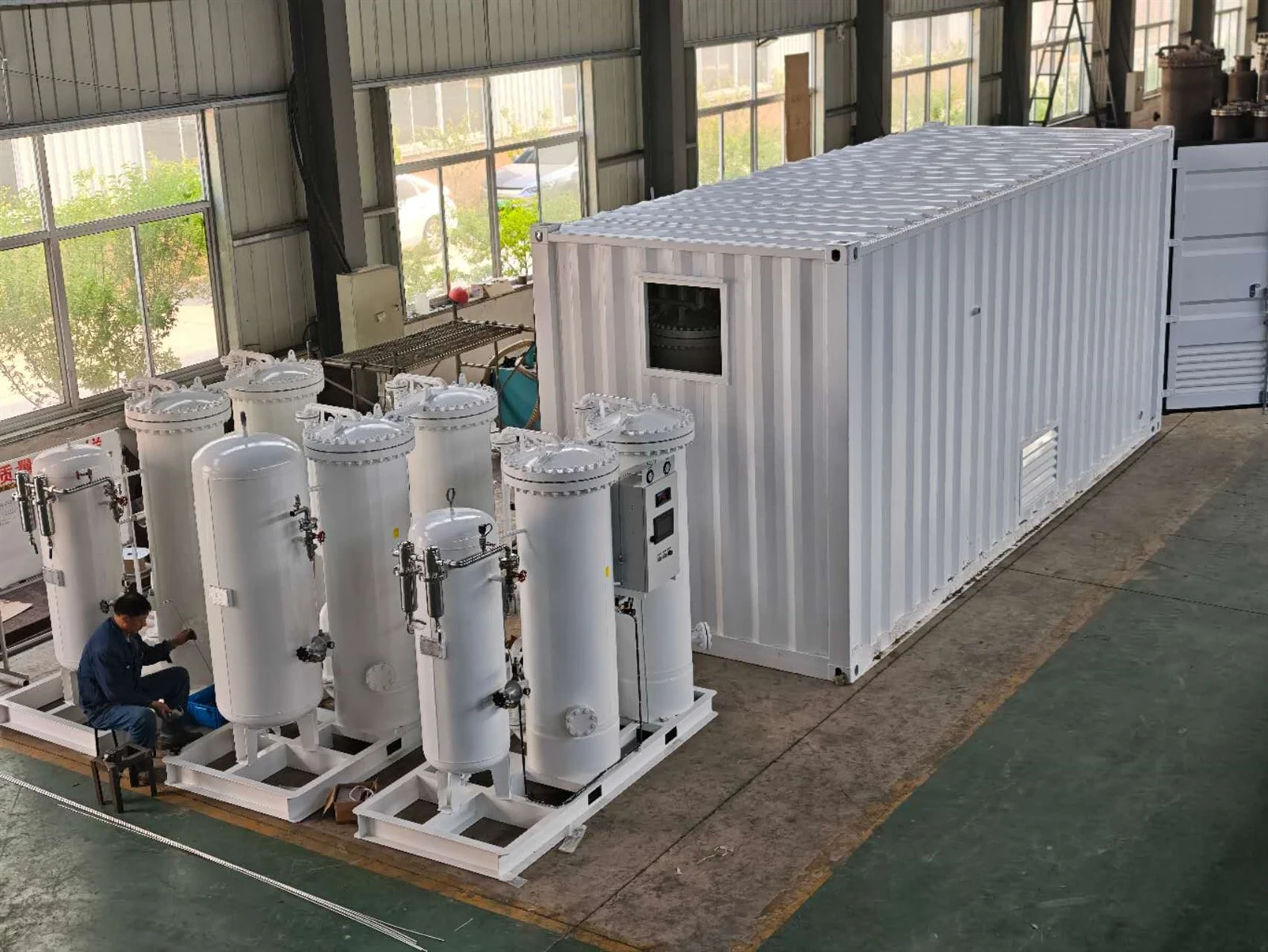
A PSA oxygen generation system generally includes an air compressor, air treatment equipment, adsorption vessels, control components, and supporting equipment. The compressor is often a major contributor to overall power consumption. Cooling equipment, dryers, and auxiliary components may also affect the system's energy requirements.
When comparing quotations, buyers should examine:
Total power consumption of the complete system rather than the generator module alone.
Specific energy consumption per unit of oxygen output, where reliable data is available.
Compressor efficiency and operating pressure requirements.
Air dryer and filtration energy requirements.
Cooling system demand.
Expected daily operating hours.
Maintenance costs and replacement parts.
Electricity prices at the installation site.
A lower initial equipment price does not necessarily result in lower lifetime costs. A system with higher energy consumption may become more expensive over several years of continuous operation. Conversely, a more efficient unit may require a higher initial investment but reduce operating expenses over time.
Buyers should request performance data under clearly defined operating conditions. Comparing energy figures without checking whether they refer to the complete system, a specific operating point, or only selected components can produce misleading conclusions.
Checking Automation and Monitoring Functions
Oxygen supply requirements can change throughout the day as water temperature, fish activity, feeding schedules, and stocking conditions change. Automatic monitoring helps operators understand generator performance and identify abnormalities without relying entirely on manual inspections.
A well-configured oxygen generation system may include PLC-based control, automatic operating sequences, digital displays, and alarm functions. More advanced configurations can also support remote monitoring and communication with centralized farm management systems.
Important monitoring functions include:
Oxygen purity monitoring: Tracks the oxygen percentage in the generated gas.
Pressure monitoring: Identifies abnormal pressure conditions in the system.
Flow monitoring: Helps confirm whether the required gas volume is being delivered.
Compressor status monitoring: Provides information about air supply equipment.
Operating alarms: Notifies personnel of abnormal conditions or equipment faults.
Data recording: Supports performance analysis and maintenance planning.
Communication interfaces: Allows integration with PLCs or external monitoring platforms.
One important distinction is that oxygen purity monitoring does not replace dissolved oxygen monitoring. Purity measures the oxygen content of the generated gas, while DO sensors measure oxygen dissolved in the culture water.
A fish farm should use both types of measurement where appropriate. The generator's analyzer verifies gas quality, while water-side DO probes help operators determine whether the oxygen supply is sufficient for the fish and biological processes.
For critical production facilities, alarm thresholds and response procedures should be established according to the farm's operating requirements. Backup oxygen arrangements should also be considered to protect fish stocks in the event of equipment failure or power interruption.
Selecting Equipment for Different Fish Farming Systems
Oxygen generator requirements vary considerably between aquaculture production models. Buyers should select equipment according to the farm's water management approach, oxygen transfer method, and operating scale.
Recirculating Aquaculture Systems (RAS)
RAS facilities reuse and treat water through mechanical filtration, biological filtration, and other treatment processes. Oxygen must be supplied not only to fish tanks but also to biological treatment components where aerobic processes occur.
Key considerations include:
Continuous oxygen availability for multiple tanks.
Compatibility with oxygen cones or other pressurized injection equipment.
Stable outlet pressure and sufficient flow.
Integration with water circulation and DO monitoring systems.
Backup oxygen supply for critical production areas.
Centralized oxygen generation can simplify supply management, but pipeline design and distribution control are essential when multiple tanks operate simultaneously.
Intensive Pond Farming
Intensive pond farming may require additional oxygen during high-biomass periods, hot weather, and periods of increased feeding activity. Oxygen generators can supplement mechanical aeration or provide oxygen-enriched gas through suitable injection systems.
Buyers should consider pond depth, water circulation, oxygen distribution across the pond, and the practicality of installing pipelines and injection equipment. The generator should be sized according to actual oxygen demand rather than pond area alone.
Indoor Fish Farms and Hatcheries
Indoor farms and hatcheries often operate with controlled water conditions and multiple tanks. Stable oxygen supply is particularly important when fish are held at high densities or during sensitive early production stages.
The system should support accurate flow distribution, continuous operation, and convenient monitoring. For hatcheries, buyers should also consider whether oxygen can be delivered independently to different tanks so that changes in one production area do not disrupt the others.
Marine and Offshore Aquaculture Support Facilities
Open-water cage systems usually benefit from natural water exchange, so a centralized oxygen generator may not be necessary for every installation. However, oxygen generation can be useful in associated land-based facilities, fish holding tanks, hatcheries, quarantine systems, and live-fish transportation operations.
In these applications, equipment selection should focus on portability or installation requirements, operating environment, oxygen demand, and compatibility with the intended delivery system.
Evaluating Installation Conditions and Maintenance Requirements
Even a technically suitable oxygen generator may experience operational problems if the installation environment is not properly prepared. PSA systems require a stable compressed-air supply, adequate ventilation, suitable electrical connections, and enough space for inspection and maintenance.
Before purchasing, buyers should confirm the following site conditions:
Installation space: Allow sufficient room for the generator, compressor, air treatment equipment, and oxygen storage components.
Ventilation: Provide suitable airflow to manage equipment heat and maintain a safe installation environment.
Electrical supply: Verify voltage, frequency, power capacity, and protection requirements.
Ambient conditions: Check the permitted operating temperature and humidity range.
Compressed-air quality: Ensure that filtration and drying arrangements meet the generator's requirements.
Maintenance access: Leave sufficient clearance for replacing filters, inspecting valves, and servicing other components.
Regular maintenance is essential for stable oxygen production. Operators should follow the manufacturer's maintenance schedule and monitor key components throughout the equipment's service life.
Common maintenance tasks include:
Inspecting air filters and replacing them when necessary.
Checking air dryer performance and drainage.
Monitoring compressor operating conditions.
Inspecting valves and pneumatic components.
Checking molecular sieve performance.
Verifying oxygen analyzer calibration.
Testing alarms and automatic control functions.
Reviewing historical operating data for abnormal trends.
Moisture and oil contamination in compressed air can affect molecular sieve performance. Proper upstream air treatment is therefore essential to maintaining stable PSA operation.
Assessing Supplier Capability and After-Sales Support
The supplier's technical capability is another important purchasing consideration. An oxygen generator is part of a complete gas supply system, and equipment selection often requires coordination between oxygen demand calculations, compressor configuration, gas treatment, storage, pipelines, and downstream oxygenation equipment.
Buyers should assess whether the supplier can provide technical information and support beyond a basic equipment quotation.
Important evaluation points include:
Application experience: Familiarity with oxygen supply requirements in aquaculture and related industries.
Technical selection support: Ability to recommend capacity, purity, and pressure according to actual operating conditions.
System configuration: Experience integrating compressors, dryers, filters, oxygen storage, and control systems.
Customization capability: Ability to adapt equipment layout, electrical specifications, and control functions to the installation site.
Documentation: Availability of technical drawings, operating manuals, maintenance schedules, and electrical documentation.
Commissioning support: Assistance with installation checks, startup, and performance verification.
Spare parts availability: Access to replacement filters, valves, sensors, and other service components.
After-sales response: Clear arrangements for technical consultation, troubleshooting, and maintenance support.
A reliable quotation should specify the equipment scope, rated operating conditions, included accessories, utility requirements, warranty terms, and service responsibilities. Buyers should also clarify whether installation, commissioning, operator training, and remote technical assistance are included or quoted separately.
Comparing suppliers on these points helps prevent misunderstandings after delivery and provides a clearer basis for evaluating the complete investment.
Conclusion
Selecting an oxygen generator for a fish farm requires a comprehensive assessment of oxygen demand, production capacity, gas purity, distribution design, energy consumption, automation, installation conditions, and supplier support. The most suitable equipment is not necessarily the unit with the highest purity or largest rated output, but the system that can provide an appropriate and reliable oxygen supply under the farm's actual operating conditions.
Buyers should begin with a realistic assessment of current and future oxygen requirements, then evaluate how the generator will integrate with pipelines, oxygen injection equipment, and water-quality monitoring systems. Energy efficiency and maintenance requirements should also be considered because they directly affect long-term operating costs.
For intensive fish farming, a properly selected PSA oxygen generation system can support more controlled on-site oxygen production. When combined with dissolved oxygen monitoring, suitable distribution equipment, preventive maintenance, and backup arrangements, it becomes an important part of maintaining stable water conditions and supporting sustainable aquaculture production.