As intensive aquaculture continues to expand worldwide, fish farms are facing a common challenge: how to maintain biological stability while pushing production density higher. In modern aquaculture systems, survival rate is no longer determined by feed alone, genetics alone, or water exchange alone. Instead, dissolved oxygen management has become one of the most decisive operational variables.
When fish biomass increases in ponds, tanks, raceways, or recirculating systems, oxygen demand rises faster than many operators expect. A small fluctuation in dissolved oxygen can trigger feeding suppression, immune stress, metabolic slowdown, or even mass mortality within hours.
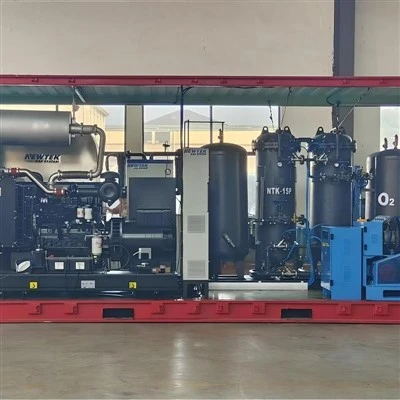
This is exactly why more professional aquaculture operators are adopting PSA oxygen systems as part of their long-term infrastructure strategy. Unlike traditional supply methods that depend on delivery schedules or intermittent operation, PSA systems create a stable oxygen ecosystem directly on site-giving fish farms greater control over survival, growth, and operational risk. NEWTEK has become one of the manufacturers helping aquaculture businesses achieve this transition with specialized oxygen generation solutions designed for fish farming applications.
Why More Farms Choose NEWTEK
NEWTEK Aquaculture Oxygen Solutions
NEWTEK (Hangzhou) Energy Technology Co., Ltd. is a manufacturer specializing in industrial oxygen and nitrogen generation technologies.
In aquaculture, NEWTEK focuses on oxygen systems engineered specifically for:
- Fish farms
- Shrimp farms
- Hatcheries
- RAS facilities
- Aquatic research centers
According to published company information, NEWTEK serves customers in over 100 countries and offers modular oxygen systems designed for continuous operation in demanding aquatic environments.
Key advantages include:
Custom Capacity Selection
From small hatcheries to industrial fish farms.
Intelligent Monitoring
Supports automated oxygen management.
Modular Expansion
Capacity can scale with farm growth.
Global Engineering Support
Supports export projects and international installation.



Why Survival Rates Drop in Intensive Aquaculture
In low-density farming, natural water exchange, algae photosynthesis, and mechanical aeration may be enough to maintain acceptable dissolved oxygen levels.
But intensive aquaculture changes everything.
When stocking density rises, several biological processes begin competing for oxygen:
- Fish respiration
- Microbial decomposition
- Organic waste breakdown
- Feed metabolism
- Biofilter bacterial activity
As biomass accumulates, oxygen consumption becomes highly dynamic.
The most dangerous periods usually include:
After Feeding
Fish metabolism accelerates, increasing respiratory demand.
Nighttime
Photosynthesis stops, while respiration continues.
Hot Weather
Warm water holds less dissolved oxygen.
Disease Outbreaks
Stressed fish consume oxygen inefficiently.
If oxygen levels fall during these periods, farms may experience:
- Reduced appetite
- Aggressive behavior
- Surface gasping
- Slower growth
- Secondary infections
- Unexpected mortality
These are not isolated problems-they directly reduce profitability and production predictability.
The Biological Relationship Between Oxygen and Fish Survival
Fish extract oxygen through their gills, and oxygen supports nearly every metabolic process.
When dissolved oxygen remains stable, fish can:
- Maintain healthy blood oxygen levels
- Convert feed more efficiently
- Build stronger immune responses
- Recover faster from stress
- Develop more uniformly
When oxygen becomes unstable, however, fish shift into survival mode.
This often causes:
Reduced Digestive Activity
Feed remains underutilized, increasing feed waste.
Higher Cortisol Production
Stress hormones weaken disease resistance.
Slower Tissue Repair
Minor injuries become infection risks.
Uneven Growth
Larger fish dominate, smaller fish weaken.
Maintaining stable oxygen is therefore not simply about keeping fish alive-it is about keeping the entire population biologically competitive.
How PSA Technology Supports Aquaculture Oxygen Management
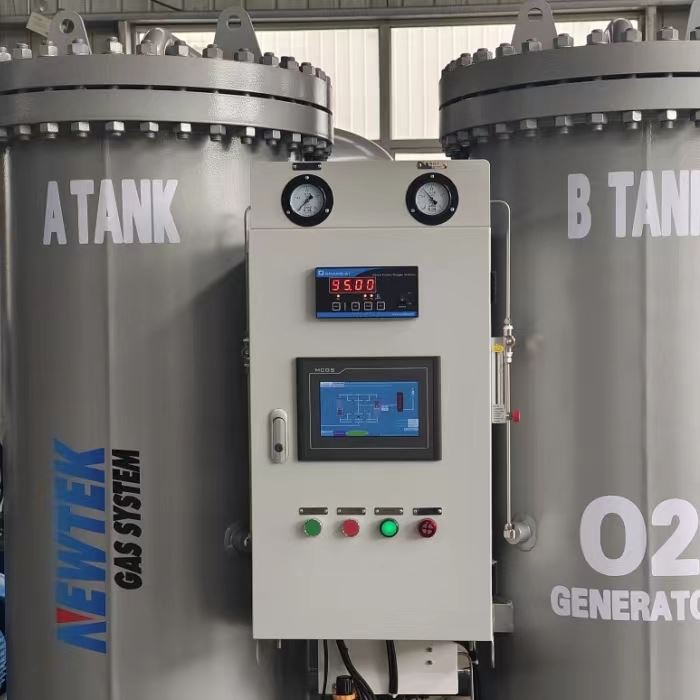
PSA stands for Pressure Swing Adsorption.
This technology separates oxygen from ambient air using molecular sieve adsorption media, creating a continuous oxygen supply directly at the farm.
The process generally includes:
Air Compression
Ambient air is compressed and filtered.
Gas Separation
Nitrogen is selectively adsorbed.
Oxygen Collection
Oxygen is delivered for immediate use.
Continuous Cycling
Twin adsorption towers alternate automatically to maintain uninterrupted output.
NEWTEK's aquaculture systems can produce oxygen purity ranging from 90% to 99.5%, depending on project requirements and configuration.
This stable oxygen output allows farms to maintain dissolved oxygen within their target range without depending on external supply logistics.
Stabilizing Dissolved Oxygen During Peak Demand
One major reason survival rates improve is response speed.
In intensive aquaculture, oxygen demand can spike unexpectedly.
Common triggers include:
- Feeding cycles
- Sudden temperature changes
- High biomass migration
- Biofilter loading
- Storm-related water mixing
Traditional oxygen supply methods often react too slowly.
PSA systems, however, can be integrated with sensors and automated controls.
When dissolved oxygen drops below a preset threshold:
- Sensors detect the change
- Control systems activate oxygen delivery
- Output stabilizes water conditions
- Fish avoid stress exposure
NEWTEK supports intelligent control integration for automated dissolved oxygen management in aquaculture environments.
Better Survival During Seasonal Temperature Stress
Summer is often the highest-risk season for fish mortality.
As water temperature rises:
- Oxygen solubility decreases
- Fish metabolism increases
- Organic decomposition accelerates
This creates a double burden.
Fish need more oxygen at exactly the time water holds less of it.
With PSA oxygen systems, farms can inject oxygen continuously during these critical seasonal periods, preventing sudden oxygen crashes.
This is particularly valuable for:
- Tilapia farming
- Trout farming
- Catfish operations
- Shrimp ponds
- Marine cage systems
Operators often report better stock stability during heatwaves when oxygen generation is managed proactively.
Improving Survival in Hatcheries and Juvenile Systems
Larvae and juvenile fish are far more sensitive than adult fish.
Even minor oxygen instability can affect:
- Embryonic development
- Swim bladder formation
- Bone structure
- Early feeding behavior
A stable oxygen environment helps improve:
Hatch Success
Egg development remains more consistent.
Fry Activity
Juveniles feed sooner and adapt faster.
Lower Early Mortality
More stock reaches nursery stage.
NEWTEK's aquaculture oxygen solutions are widely promoted for hatcheries, juvenile production, and aquatic seedling cultivation where oxygen precision directly impacts survival outcomes.
Reducing Stress in Recirculating Aquaculture Systems
Recirculating Aquaculture Systems (RAS) depend on environmental precision.
In RAS facilities, oxygen affects more than fish respiration.
It also impacts:
- Biofilter bacteria
- Nitrogen conversion efficiency
- Water circulation balance
- Organic waste processing
If oxygen falls:
- Ammonia can rise
- Nitrite accumulation may increase
- Fish stress compounds quickly
PSA systems support continuous oxygen stability, helping RAS facilities maintain biological equilibrium under heavy production loads.
Lower Emergency Mortality Risks
Unexpected mortality events often happen during:
- Power fluctuations
- Equipment failure
- Algal bloom collapse
- Overstocking periods
- Transport delays for external oxygen supply
On-site oxygen generation gives farms more independence.
Instead of waiting for delivered oxygen, operators maintain control directly at the farm.
This reduces:
- Operational downtime
- Emergency supply costs
- Production losses
- Supply chain vulnerability
For farms operating in remote regions, this can be the difference between a manageable incident and a catastrophic biomass loss.
Long-Term Business Impact of Better Survival Rates
Improved survival does more than reduce mortality.
It transforms farm economics.
Higher survival rates often lead to:
- Better harvest consistency
- More predictable feed planning
- Lower disease treatment costs
- Reduced fingerling replacement expenses
- Improved buyer confidence
Over time, oxygen infrastructure becomes a profit protection system-not just a utility investment.
That is why more commercial aquaculture operators now view PSA oxygen systems as core production equipment rather than optional support systems.
FAQ
1. What dissolved oxygen range is suitable for intensive aquaculture?
Many freshwater species perform best between 5–8 mg/L, although exact requirements depend on species, temperature, and stocking density.
2. Can PSA oxygen systems work for shrimp farming?
Yes. Shrimp and crab systems often require stable oxygen to reduce stress during molting and improve survival.
3. Can oxygen output be adjusted automatically?
Yes. Modern systems can integrate sensors and automation controls for real-time oxygen regulation.
4. Is PSA suitable for both indoor and outdoor farms?
Yes. These systems can be installed in hatcheries, indoor RAS facilities, pond farms, and marine support stations.
5. Does oxygen stability really affect profitability?
Absolutely. Stable oxygen improves survival, feed efficiency, stock uniformity, and harvest planning-all of which influence farm margins.
Increase Fish Survival with Smarter Oxygen Solutions
Looking to improve dissolved oxygen stability, reduce stock mortality, and support higher-density aquaculture production? NEWTEK provides customized PSA oxygen systems designed for hatcheries, RAS facilities, shrimp farms, and commercial fish farming projects worldwide.