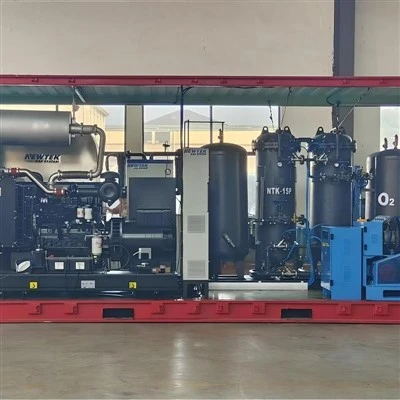
The global healthcare industry has undergone significant transformation in recent years, with an increasing emphasis on adaptability, efficiency, and patient-centric care. Among the critical advancements is the evolution of medical oxygen supply systems. Traditional oxygen generators, while reliable, often struggle to meet the dynamic demands of modern healthcare facilities. This raises a pivotal question: Should healthcare providers prioritize modular solutions for medical oxygen supply? This article explores the advantages of modular oxygen systems, with a focus on NEWTEK, a pioneer in medical-grade PSA (Pressure Swing Adsorption) oxygen generation technology.

The Growing Demand for Flexible Oxygen Solutions
Medical oxygen is indispensable in hospitals, clinics, and home care settings. From emergency resuscitation to chronic respiratory disease management, its availability directly impacts patient outcomes. However, conventional oxygen generators face limitations:
Fixed Capacity: Traditional systems are designed for specific output ranges, making scalability costly and time-consuming.
Space Constraints: Large footprints limit deployment in compact or multi-departmental environments.
Operational Rigidity: Adapting to fluctuating demand-such as during pandemics or seasonal respiratory crises-is challenging.
In contrast, modular oxygen systems like those developed by NEWTEK redefine flexibility. By enabling incremental expansion and customization, they address the shortcomings of legacy infrastructure.
Key Advantages of Modular Oxygen Systems
Modular solutions are not merely a trend but a strategic response to evolving healthcare needs. Below is a comparative analysis of traditional vs. modular oxygen systems:
| Criteria | Traditional Systems | Modular Systems (e.g., NEWTEK) |
|---|---|---|
| Scalability | Requires complete system replacement | Supports phased capacity upgrades |
| Space Efficiency | Large, fixed installations | Compact, stackable modules |
| Deployment Speed | Lengthy installation and commissioning | Rapid integration into existing workflows |
| Adaptability | Limited to predefined use cases | Configurable for diverse clinical scenarios |
| Maintenance | High downtime during repairs | Fault isolation minimizes service disruption |
| Energy Efficiency | Static energy consumption | Optimized usage based on real-time demand |
The table highlights how modular systems outperform traditional models in critical operational metrics.
| Models | Capacity (Nm3/hr) | Purity | Power consumption of 1Nm3 oxygen produced (kw/h) | Number of bottles filled in 12 hours (pcs) | Operator needed |
| NTK95-5P | 5 | 95%+-1% | 3.54 | 10 | 2 |
| NTK95-10P | 10 | 95%+-1% | 2.52 | 20 | 2 |
| NTK95-15P | 15 | 95%+-1% | 2.31 | 30 | 2 |
| NTK95-20P | 20 | 95%+-1% | 2.13 | 40 | 2 |
| NTK95-25P | 25 | 95%+-1% | 2.01 | 50 | 2 |
| NTK95-30P | 30 | 95%+-1% | 2.09 | 60 | 2 |
| NTK95-40P | 40 | 95%+-1% | 1.81 | 80 | 2 |
| NTK95-50P | 50 | 95%+-1% | 1.94 | 100 | 2 |
| NTK95-60P | 60 | 95%+-1% | 1.62 | 120 | 2 |
| NTK95-80P | 80 | 95%+-1% | 1.92 | 160 | 2 |
| NTK95-100P | 100 | 95%+-1% | 1.83 | 200 | 2 |
NEWTEK's Modular PSA Oxygen Generator: A Case Study in Innovation
NEWTEK, a leader in medical oxygen technology, has pioneered a modular PSA oxygen generator that exemplifies the benefits of adaptable design. Below are its defining features:
-
Scalability Without Compromise
NEWTEK's modular system allows healthcare providers to start with a base unit and add modules as demand grows. For example:
A rural clinic may begin with a single module for outpatient care.
During a surge, additional modules can be activated without interrupting service.
Long-term, hospitals can integrate modules for ICU, surgery, or emergency departments.
This "pay-as-you-grow" model eliminates the need for costly overprovisioning.
-
Multi-Scenario Compatibility
The system's versatility is unmatched:
Hospital Wards: Continuous oxygen supply for general patient care.
ICU: High-purity oxygen delivery for critical cases.
Home Oxygen Therapy: Compact configurations for chronic respiratory patients.
Plateau Emergency: Robust performance in low-oxygen environments like high-altitude regions.
-
Medical-Grade Safety and Compliance
NEWTEK's technology adheres to stringent international standards, including:
ISO 13485: Quality management for medical devices.
ISO 1008: Specifications for medical oxygen concentrators.
CE Certification: Compliance with EU health and safety requirements.
These certifications ensure reliability and patient safety across applications.
Applications Across Healthcare Settings
To illustrate the practicality of modular systems, consider the following scenarios:
Scenario 1: Urban Hospital Expansion
A metropolitan hospital plans to add 200 beds to its ICU. With traditional systems, this would require months of construction and system overhauls. NEWTEK's modular units, however, enable seamless integration into existing infrastructure, reducing downtime and capital expenditure.
Scenario 2: Rural Healthcare Access
In remote areas, centralized oxygen plants are impractical. NEWTEK's portable modules provide on-site generation, eliminating dependency on oxygen cylinders and logistics.
Scenario 3: Disaster Response
During natural disasters or pandemics, modular systems can be rapidly deployed to field hospitals, ensuring uninterrupted oxygen supply even in resource-limited environments.
The Economic Argument for Modularity
While upfront costs for modular systems may align with traditional models, their long-term value is undeniable:
Reduced Waste: Modules operate at optimal efficiency, avoiding energy waste from underutilized capacity.
Lower Maintenance Costs: Modular design simplifies repairs and upgrades.
Future-Proofing: Healthcare facilities can adapt to technological advancements without replacing entire systems.
Industry Trends Supporting Modular Adoption
Data underscores the shift toward modular solutions:
The global medical oxygen market is projected to grow at a CAGR of 6.5% from 2023–2030 (Grand View Research).
Over 40% of healthcare administrators cite "operational flexibility" as a top priority in equipment procurement (Frost & Sullivan).
Modular PSA systems are expected to capture 35% of the medical oxygen generator market by 2025 (MarketsandMarkets).
Conclusion: Modularity as the Future of Oxygen Supply
The question of whether to adopt modular oxygen systems is no longer speculative-it is imperative. NEWTEK's PSA medical modular oxygen generators exemplify how innovation can align with clinical and operational demands. By offering scalability, compliance, and multi-scenario adaptability, modular solutions empower healthcare providers to deliver safe, efficient, and personalized care.
As the industry navigates rising patient expectations and unpredictable challenges, modular systems are not just an option but a necessity. For facilities seeking to future-proof their oxygen supply infrastructure, the answer is clear: Yes, modular solutions should be chosen.
About NEWTEK
NEWTEK specializes in advanced PSA oxygen generation technologies tailored for medical, industrial, and emergency applications. With a commitment to R&D and global certifications, NEWTEK ensures reliable, cost-effective, and sustainable oxygen solutions. For inquiries, contact: sales@newtekgas.com.