In the rapidly expanding global aquaculture industry, maintaining optimal water quality is the cornerstone of healthy fish populations. Among the most pressing challenges faced by salmon farmers is hypoxia (low dissolved oxygen), a silent killer linked to devastating diseases such as bacterial gill disease (BGD), columnaris, and parasitic infections. A critical symptom of these conditions-swollen gill filaments and excessive mucus production-often signals an urgent need for intervention. This article explores how innovative oxygenation technology, exemplified by NEWTEK's PSA Oxygen plant systems, is transforming aquaculture practices by addressing hypoxia, preventing disease outbreaks, and safeguarding salmon health.
in Experts in fighting fish farming diseases

My fish farm wants to shorten the growth cycle of fish
The Crisis of Hypoxia in Salmon Farming
The Link Between Low Oxygen and Gill Pathology
Salmon rely on gills for oxygen uptake, waste excretion, and ion regulation. When dissolved oxygen (DO) levels drop below 5 mg/L-common in densely stocked farms or poorly managed systems-the gills become stressed. Swelling and mucus overproduction are direct responses to hypoxia, as fish attempt to protect delicate gill tissues from damage. However, these adaptations backfire:
Impaired Gas Exchange: Thickened mucus and swollen filaments reduce oxygen absorption, exacerbating hypoxia.
Pathogen Invasion: Damaged gills become gateways for bacteria (e.g., Flavobacterium branchiophilum) and parasites (e.g., Ichthyobodo necator).
Economic and Ecological Impacts
Hypoxia-induced diseases cost the aquaculture sector billions annually. For example:
Mortality Rates: BGD outbreaks can kill 30–50% of stocks within days.
Treatment Costs: Antibiotics and emergency oxygenation measures strain budgets.
Sustainability Concerns: Overuse of chemicals risks antibiotic resistance and environmental contamination.
Traditional Solutions and Their Limitations
Conventional Approaches to Hypoxia
Farmers historically relied on:
Mechanical Aerators: Surface paddlewheels or air stones to boost DO.
Chemical Oxygenators: Peroxide or calcium-based compounds for emergency use.
Stocking Density Reductions: Lowering fish numbers to reduce oxygen demand.
Why These Methods Fall Short
Inconsistent Oxygen Distribution: Traditional aerators struggle to maintain stable DO in large or deep ponds.
High Operational Costs: Frequent chemical treatments are expensive and unsustainable.
Reactive, Not Preventive: Most interventions occur post-outbreak, rather than addressing root causes.


NEWTEK Oxygenation Systems: A Game-Changer for Salmon Health
Technology Overview
NEWTEK's patented oxygenation systems leverage cutting-edge engineering to deliver precision DO control. Key features include:
Nanobubble Diffusion: Generates ultrafine oxygen bubbles (<200 nm) that dissolve rapidly, achieving >90% oxygen transfer efficiency (OTE) versus 10–30% for conventional aerators.
AI-Driven Monitoring: Real-time sensors track DO, temperature, and pH, automatically adjusting oxygen output.
Energy Efficiency: Solar-compatible units reduce power consumption by 40% compared to paddlewheels.
Solving the Gill Disease Puzzle
By maintaining DO levels at 6–8 mg/L-the optimal range for salmon-NEWTEK systems directly address the triggers of gill pathology:
- Preventing Gill Stress: Stable oxygen levels eliminate mucus overproduction and filament swelling.
- Blocking Pathogens: Healthy gill barriers resist bacterial and parasitic colonization.
- Enhancing Immunity: Adequate oxygen supports metabolic processes critical for immune function.
Case Studies – Success Stories from the Field
Norwegian Salmon Farm: Eradicating BGD with NEWTEK
A 2022 trial at a Norway-based farm (stocking density: 25 kg/m³) compared traditional aeration vs. NEWTEK's system:
Results After 6 Months:
| Parameter | Traditional Aeration | NEWTEK System |
|---|---|---|
| Avg. DO (mg/L) | 4.2 | 7.5 |
| BGD Incidence | 35% | 2% |
| Feed Conversion Ratio | 1.15 | 1.02 |
| Conclusion: NEWTEK reduced disease-related mortality by 90% and improved growth efficiency. | ||
Canadian Hatchery: Tackling Columnaris Outbreaks
A British Columbia hatchery plagued by recurring columnaris infections adopted NEWTEK's oxygenation units in 2023. Post-implementation:
DO Stability: Maintained 7.2 mg/L even during summer temperature spikes.
Disease Reduction: Columnaris cases dropped from 20% to <1% within 3 months.
Cost Savings: Eliminated $50,000/year in antibiotic and emergency aerator expenses.
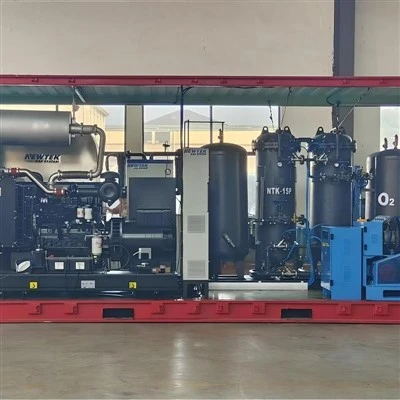
Various types of machines participating in the experiment
Includes Modular Equipment, Twin Tower Structures, and Containerized Oxygen Production equipment designed specifically for the fish farming industry


Beyond Oxygen – Synergies with Holistic Farm Management
While NEWTEK's systems are revolutionary, maximizing their benefits requires integration with broader best practices:
Water Quality Management
Ammonia Control: High DO enhances nitrification, converting toxic ammonia (NH3) to nitrate.
pH Balance: Stable oxygen levels mitigate pH fluctuations that stress fish.
Stocking Density Optimization
Science-Based Limits: NEWTEK's data analytics provide DO-driven recommendations for safe stocking levels.
Sustainable Disease Prevention
Reduced Chemical Reliance: Consistent DO minimizes need for antibiotics or parasiticides.
Probiotic Synergy: Oxygen-rich water enhances the efficacy of probiotic treatments.
The Future of Aquaculture – Innovations on the Horizon
Smart Aquaculture 4.0
NEWTEK is pioneering IoT-enabled systems that integrate with farm-wide networks, enabling:
Predictive Analytics: AI models forecast hypoxia risks based on weather, feeding schedules, and biomass.
Remote Control: Farmers adjust DO settings via smartphone apps.
Green Energy Integration
Solar/Wind Hybrid Units: Pilot projects in Scotland show 100% renewable-powered oxygenation is feasible.
Global Expansion
With salmon demand projected to rise by 70% by 2030, NEWTEK's solutions are scaling to support:
Offshore Farms: Robust systems for deep-water pens.
Tropical Regions: Adaptive tech for warm-water aquaculture.
A Paradigm Shift in Salmon Farming
The combination of swollen gills, excessive mucus, and hypoxia is no longer an inevitable crisis. Through NEWTEK's oxygenation systems, farmers now wield a proactive tool to safeguard fish health, boost productivity, and meet the world's growing demand for sustainable protein. As the aquaculture industry embraces this technology, the vision of disease-free, eco-friendly salmon farming is becoming a reality-one breath of oxygen at a time.

One-stop fish farming disease control oxygen production equipment expert
My friend, I provide any oxygen solution related to fish farming.