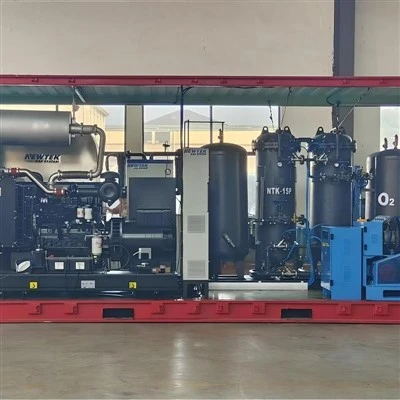
Across the global aquaculture industry, a quiet revolution is underway in water quality management, with Pressure Swing Adsorption (PSA) oxygen generation technology emerging as the preferred solution for sustainable, reliable dissolved oxygen (DO) supply. As aquaculture operations grapple with rising production demands, increasingly strict environmental regulations, and the challenges of maintaining optimal water conditions for aquatic species, PSA systems are displacing traditional oxygen supply methods-such as liquid oxygen (LOX) delivery, oxygen cylinders, and conventional aerators. This shift is driven by the unique alignment of PSA technology with the core needs of modern aquaculture, from intensive land-based recirculating aquaculture systems (RAS) to open-pond farms and containerized aquaculture setups, offering a blend of efficiency, cost-effectiveness, and environmental sustainability that traditional methods cannot match.
At the heart of the aquaculture industry's shift to PSA oxygen generation is the critical role of dissolved oxygen in aquatic health and productivity. Dissolved oxygen is the lifeline of aquaculture: aquatic species-from finfish like bass and tilapia to crustaceans such as shrimp and crabs-rely on adequate DO levels to support respiration, growth, and immune function. Even minor fluctuations in DO can have devastating consequences: low DO levels (below 4-5 mg/L for most commercial species) trigger stress responses, reduce feed conversion efficiency, increase susceptibility to diseases, and in severe cases, lead to mass mortality events known as "fish kills". Traditional aeration methods, such as paddlewheels and diffusers, often struggle to maintain consistent DO levels, especially in high-density aquaculture (HDA) operations, where the biological oxygen demand (BOD) from fish respiration, uneaten feed, and organic waste decomposition is significantly higher.
PSA oxygen generation technology addresses these challenges by providing a continuous, on-demand supply of high-purity oxygen that can be directly injected into aquaculture systems, ensuring precise control over DO levels. Unlike traditional oxygen supply methods, which rely on external delivery and storage, PSA systems generate oxygen on-site by separating it from ambient air through a purely physical process-eliminating the logistical vulnerabilities, storage risks, and cost inefficiencies associated with LOX and oxygen cylinders. The core of PSA technology lies in synthetic zeolite molecular sieves, which selectively adsorb nitrogen (accounting for 78% of ambient air) under pressure, allowing oxygen (21% of ambient air) to pass through as a high-purity product gas (typically 90-95% purity), ideal for aquaculture applications.
One of the primary drivers behind aquaculture farms' adoption of PSA technology is its cost-effectiveness over the long term. Traditional LOX delivery requires ongoing expenses for transportation, storage (including vacuum-insulated dewars), and handling, with costs escalating in remote or coastal regions where logistics are challenging. Oxygen cylinders, meanwhile, are labor-intensive to transport, refill, and maintain, and their limited capacity makes them impractical for large-scale or high-density operations. PSA systems, by contrast, have minimal operational costs-relying only on electricity to power air compressors and control systems-and require little maintenance beyond periodic replacement of zeolite sieves (typically every 5-10 years). This on-site generation model eliminates the need for recurring delivery fees and storage costs, delivering significant savings for farms of all sizes, from small-scale pond operations to large commercial RAS facilities.
Another key advantage of PSA oxygen generation is its scalability and adaptability, which aligns with the diverse needs of modern aquaculture. Aquaculture operations vary widely in size, species, and setup-from small outdoor ponds to indoor containerized systems and industrial RAS facilities-and PSA systems can be tailored to match these varying requirements. Modular PSA units, often skid-mounted for easy installation, can be scaled up or down to adjust oxygen output based on seasonal demand, stock density, and water temperature. For example, during summer months, when high temperatures reduce water's oxygen-holding capacity and increase aquatic species' metabolic rates (and thus oxygen demand), PSA systems can be ramped up to maintain optimal DO levels. Conversely, during winter, when water temperatures drop and oxygen demand decreases, systems can be adjusted to operate at lower capacity, reducing energy consumption.
The rise of high-density and intensive aquaculture methods-such as RAS, containerized aquaculture, and indoor recirculating systems-has further accelerated the adoption of PSA technology. These systems, which allow for higher stock densities (often 10 times that of traditional pond farming), require precise control over water quality parameters, including DO, to prevent overcrowding-related stress and disease outbreaks. PSA systems excel in these environments, as they can deliver a continuous supply of high-purity oxygen directly into water circulation systems, ensuring uniform DO distribution throughout the tank or pond. This precision is critical for maintaining the health and growth of aquatic species in intensive setups, where even small variations in DO can lead to significant losses. Additionally, PSA-generated oxygen can be integrated with oxygen diffusers or injectors to maximize dissolution efficiency, ensuring that the majority of generated oxygen is absorbed into the water rather than escaping into the atmosphere.
Environmental sustainability is another key factor driving aquaculture farms to adopt PSA oxygen generation technology. As global regulations on aquaculture waste and carbon emissions become stricter, farms are seeking eco-friendly solutions to reduce their environmental footprint. Traditional LOX production relies on energy-intensive cryogenic distillation processes, which generate significant greenhouse gas emissions. PSA systems, by contrast, use a low-energy physical separation process, consuming far less electricity and producing fewer emissions per unit of oxygen generated. Additionally, PSA systems eliminate the risk of LOX spills, which can harm aquatic life and contaminate water sources, and reduce the carbon footprint associated with transporting oxygen over long distances. For farms focused on sustainable or organic certification, PSA technology offers a way to meet environmental standards while maintaining productivity.
PSA technology also addresses the challenge of oxygen supply in remote or off-grid aquaculture operations, which are increasingly common as the industry expands to new regions. Many aquaculture farms are located in rural or coastal areas with limited access to reliable LOX delivery or electrical grids. Modular PSA systems can be paired with renewable energy sources-such as solar photovoltaic (PV) panels, wind turbines, and battery storage-to create hybrid power solutions, ensuring uninterrupted oxygen production even in off-grid locations. This resilience is critical for remote farms, where power outages or delivery delays can lead to catastrophic losses. Additionally, the compact, skid-mounted design of many PSA units makes them easy to install in remote locations, with minimal on-site construction required.
Technological advancements in PSA systems have further enhanced their appeal to aquaculture farms. Modern PSA units feature advanced control systems, often integrated with industrial Internet of Things (IIoT) technology, allowing operators to monitor and adjust oxygen output in real time. These smart systems can track DO levels in the water, automatically adjust oxygen production to maintain optimal levels, and send alerts for potential issues-such as sieve degradation or compressor malfunctions-reducing the need for manual monitoring and minimizing downtime. Additionally, improvements in zeolite molecular sieve technology have increased oxygen production efficiency, reduced energy consumption, and expanded the operating temperature range of PSA systems, making them viable in extreme environments-from tropical coastal farms to cold-water inland operations.
The adoption of PSA oxygen generation technology is also being supported by the growing recognition of its role in improving aquaculture productivity and product quality. By maintaining consistent, optimal DO levels, PSA systems help aquatic species grow faster, reach market size more quickly, and produce higher-quality meat. Fish and crustaceans raised in well-oxygenated water have better feed conversion ratios, lower mortality rates, and fewer disease-related issues, resulting in higher yields and greater profitability for farms. For example, in intensive shrimp farming operations, PSA-generated oxygen has been shown to reduce mortality rates by up to 30% and increase growth rates by 15-20%, significantly improving farm profitability. Additionally, consistent DO levels help reduce the accumulation of harmful substances such as ammonia, nitrite, and hydrogen sulfide, which are produced by organic waste decomposition and can be toxic to aquatic species.
Regional trends in aquaculture further highlight the growing adoption of PSA technology. In Asia Pacific, the world's largest aquaculture market, farms are increasingly turning to PSA systems to support the expansion of intensive RAS and shrimp farming operations. Countries with large aquaculture sectors, such as China, India, and Vietnam, are seeing widespread adoption of modular PSA units, driven by the need to meet rising demand for seafood while adhering to stricter environmental regulations. In North America and Europe, the growth of indoor RAS facilities-focused on sustainable, local seafood production-has fueled demand for high-efficiency PSA systems that can maintain precise DO levels in closed-loop environments. In coastal and remote regions of Africa and Latin America, PSA systems paired with renewable energy are helping small-scale farmers improve productivity and reduce reliance on expensive imported oxygen supplies.
Key industry terminology underscores the integral role of PSA technology in modern aquaculture, bridging aquaculture science, engineering, and environmental management. Terms such as dissolved oxygen (DO), biological oxygen demand (BOD), recirculating aquaculture systems (RAS), zeolite molecular sieves, and modular PSA units are central to understanding the technology's value proposition. Other critical terms include oxygen dissolution efficiency, on-site oxygen generation, renewable hybrid systems, and IIoT integration-all of which are key to the design, deployment, and operation of PSA systems in aquaculture settings.
Looking ahead, the adoption of PSA oxygen generation technology in aquaculture is poised to accelerate, driven by ongoing technological innovations, growing demand for sustainable seafood, and stricter environmental regulations. As manufacturers continue to refine PSA system efficiency, reduce costs, and enhance adaptability, these systems will become an indispensable tool for aquaculture farms of all sizes. The shift to PSA technology is not just a technological upgrade-it is a critical step toward building a more sustainable, resilient, and productive aquaculture industry, capable of meeting global seafood demand while minimizing environmental impact.
Industry experts note that the long-term success of PSA adoption in aquaculture will depend on continued research and development to further improve energy efficiency and scalability, as well as greater collaboration between technology providers, aquaculture operators, and regulatory bodies. As the industry matures, the focus will likely shift to integrating PSA systems with advanced water quality monitoring tools and AI-driven control systems, creating fully automated, self-optimizing aquaculture environments that maximize productivity while minimizing environmental footprint.
In summary, PSA oxygen generation technology is transforming the aquaculture industry by addressing the critical need for reliable, efficient, and sustainable dissolved oxygen supply. By eliminating the logistical and cost barriers of traditional oxygen methods, offering scalability for diverse farm setups, and supporting environmental sustainability, PSA systems are helping aquaculture farms improve productivity, reduce losses, and meet the demands of a rapidly evolving global seafood market. As the industry continues to prioritize sustainability and efficiency, PSA technology will remain at the forefront of aquaculture innovation, driving the next era of responsible seafood production.