


NEWTEK
NEWTEK (Hangzhou) Energy Technology Co., Ltd. is a leading innovator in on-site gas generation, specializing in pressure swing adsorption (PSA) systems tailored for medical and industrial applications. With a focus on reliability, efficiency, and adaptability, the company has established itself as a key provider of oxygen-generation solutions for healthcare settings worldwide. NEWTEK's PSA oxygen equipment is engineered to address critical challenges in medical emergency scenarios, where consistent, high-purity oxygen supply can mean the difference between life and death.
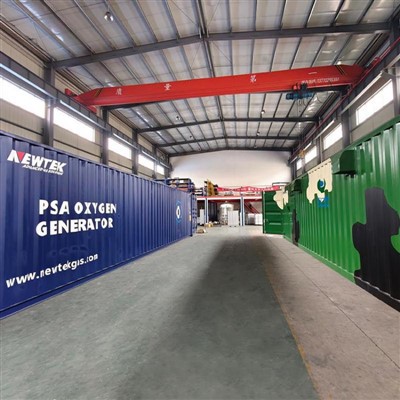
At the core of NEWTEK's offerings is its modular PSA oxygen generator lineup, designed to produce medical-grade oxygen (93±3% purity, with options for 99.5% purity) on demand. These systems utilize zeolite molecular sieves to separate oxygen from ambient air, operating through cyclic adsorption and desorption to maintain continuous output. Key features have automated operation-adjusting flow rates in real time to match demand-compact footprints suitable for space-constrained environments, and rapid startup (typically within 30 minutes) to meet urgent needs.
NEWTEK's equipment is built for durability, with molecular sieves rated for over a decade of use, minimizing maintenance disruptions. Its systems integrate seamlessly with medical infrastructure, ensuring compatibility across diverse emergency scenarios. For medical emergency applications, these attributes translate to reliable oxygen supply without reliance on finite cylinders or centralized systems, a critical advantage in high-stakes environments.
NEWTEK's latest models incorporate advanced filtration systems that remove particulate matter, moisture, and trace contaminants, ensuring compliance with strict international medical standards. This attention to purity is particularly vital in emergency settings, where even minor impurities could compromise patient recovery or exacerbate respiratory conditions. The systems are designed with user-friendly interfaces, allowing healthcare workers with minimal technical training to operate them efficiently during high-pressure situations.

Enhancing Preparedness in Resource-Limited Settings
Rural clinics
In rural clinics, where cylinder deliveries are infrequent and often unreliable, small-scale PSA systems serve as primary oxygen sources, enabling treatment of conditions. These systems require minimal training to operate, with automated alerts for maintenance or purity deviations, making them feasible for settings with limited technical staff.
Conflict zones
In conflict zones, where infrastructure is frequently damaged, NEWTEK's ruggedized PSA units-designed to withstand vibrations, dust, and temperature extremes-provide a consistent oxygen supply in field hospitals. Their ability to run on diesel generators or solar power ensures functionality even when grid electricity is unavailable, supporting trauma care and managing respiratory injuries from smoke or chemical exposure.
Application Breakthroughs of PSA Oxygen-generation Technology
Mobile emergency medical services require oxygen solutions that are portable, efficient, and capable of sustaining long-duration missions. Traditional oxygen cylinders, limited by capacity and weight, have long constrained these services, risking interrupted supply during extended transports or in remote areas.
NEWTEK's PSA technology has revolutionized this space through compact, vehicle-mounted systems. These units, scaled to fit in ambulances or helicopter medical bays, generate oxygen continuously from ambient air, eliminating the need to carry multiple cylinders. In ground ambulances, integrated PSA systems connect directly to on-board ventilators, providing uninterrupted oxygen to patients with acute respiratory distress during transit. This ensures paramedics can focus on patient care rather than monitoring cylinder levels or swapping tanks.
In disaster response, mobile medical units equipped with NEWTEK's PSA systems serve as self-sustaining oxygen hubs. Following earthquakes, floods, or wildfires-where infrastructure is damaged and cylinder deliveries are delayed-these units establish immediate oxygen supply points, supporting triage and stabilization efforts. Their ability to operate independently of grid power (when paired with generators) further enhances their utility in post-disaster scenarios, ensuring oxygen remains available even in the most challenging conditions.
A recent advancement in this field is the integration of NEWTEK's PSA systems with hybrid-powered emergency vehicles. These vehicles combine battery storage with solar panels, allowing the oxygen generator to operate for extended periods without refueling-critical for prolonged disaster relief operations in remote areas. In regions hit by hurricanes, where fuel supplies are scarce, these hybrid systems ensure oxygen production continues, supporting ongoing rescue and treatment efforts.
Application in Emergency Departments of Hospitals
Hospital emergency departments (EDs) face unpredictable surges in patient volume-from mass casualty incidents to seasonal respiratory outbreaks-straining traditional oxygen supply systems. Centralized hospital oxygen lines, while reliable under normal conditions, can falter during peak demand, and cylinder stockpiles are cumbersome to manage and prone to depletion.
NEWTEK's PSA oxygen generator systems address these vulnerabilities by acting as flexible, on-site backups or primary supply sources in EDs. Designed to integrate with existing hospital infrastructure, they automatically ramp up production during surges, ensuring oxygen flow remains stable for intubation, trauma resuscitation, or treatment of severe hypoxemia.
A key breakthrough lies in their adaptability: during routine hours, the system operates at lower capacity, conserving energy; when a surge hits, it scales output to meet spikes in demand. This dynamic response prevents the pressure drops that can compromise ventilator function or reduce oxygen delivery to patients. EDs in rural hospitals, which often struggle with inconsistent cylinder deliveries, benefit from PSA systems as a primary supply, ensuring they can treat acute cases without interruptions.
NEWTEK's ED-specific systems feature built-in redundancy. In the event of a component failure, the generator automatically switches to a backup module, preventing service interruptions. This redundancy is critical in EDs, where even a brief oxygen outage during a resuscitation attempt could have fatal consequences. The systems' data-logging capabilities provide detailed records of oxygen usage and purity, aiding in compliance with healthcare regulations and facilitating post-incident reviews to improve emergency protocols.
Application in ICU and Respiratory Support
Intensive care units (ICUs) and critical care settings demand oxygen of exceptional purity and stability, as patients rely on precise oxygen concentrations to survive. NEWTEK's PSA technology has emerged as a cornerstone of these environments, offering breakthroughs in reliability and customization.
For ECMO, which circulates blood through an artificial lung to oxygenate it, high-purity oxygen (≥95%) is essential to avoid contamination and ensure effective gas exchange. NEWTEK's PSA systems deliver this purity consistently, integrating with ECMO machines to provide a steady stream of oxygen, reducing the risk of complications.
In neonatal ICUs, where premature infants require gentle, humidified oxygen to protect underdeveloped lungs, NEWTEK's systems are equipped with specialized humidification and temperature control modules. These adapt oxygen output to match the infant's minute respiratory needs, preventing oxygen toxicity or deprivation-critical for avoiding long-term complications.
Beyond stationary ICU use, PSA-integrated portable ventilators represent another breakthrough. These devices, equipped with miniaturized PSA generators, enable critical care transport within hospitals (moving a ventilated patient from the ED to the ICU) or between facilities, ensuring continuous oxygenation without disconnecting from life support.
The latest innovations in this area have "smart" oxygen delivery system that combines NEWTEK's PSA oxygen generator with an AI-driven algorithm. These algorithms analyze a patient's respiratory patterns, adjusting oxygen flow in real time to minimize waste while maintaining optimal saturation levels. In patients with acute respiratory distress syndrome (ARDS), the system can detect periods of shallow breathing and reduce flow temporarily, then increase it during deeper inhalations-enhancing efficiency without compromising care.
Application in High-Altitude Emergency Situations
High-altitude regions-where atmospheric pressure and oxygen levels are significantly lower-pose unique challenges for medical emergency care. Reduced ambient oxygen can exacerbate altitude sickness, acute mountain sickness, and heart or respiratory failure, while delivering oxygen cylinders to remote mountain communities is logistically complex and costly.
NEWTEK's PSA oxygen systems have overcome these barriers through designs optimized for low-pressure environments. Unlike traditional concentrators, which struggle to extract oxygen from thin air, NEWTEK's high-altitude models adjust adsorption cycles to compensate for lower atmospheric density, maintaining 93% purity even at elevations above 4,000 meters.
These systems are deployed in mountain clinics, remote military outposts, and trekking emergency stations, providing immediate oxygen for acute cases and preventive care. In Himalayan rescue camps, PSA generators supply oxygen to climbers suffering from high-altitude pulmonary edema (HAPE), a life-threatening condition where rapid oxygen administration is critical. Their ability to operate on solar power or low-grade electricity further enhances their utility in off-grid regions, ensuring oxygen access where infrastructure is limited.
A notable breakthrough is the development of lightweight, portable PSA units specifically for high-altitude search-and-rescue missions. Weighing under 10 kilograms, these units can be carried by rescue teams on foot, providing oxygen to stranded climbers or injured hikers in remote areas where vehicle access is impossible. Equipped with rugged casings to withstand extreme temperatures and rough handling, these units have proven invaluable in saving lives in some of the world's harshest environments.
Combination with Other Emergency Medical Technologies
A defining breakthrough of NEWTEK's PSA technology is its seamless integration with emerging emergency medical technologies, creating interconnected systems that enhance patient care.
One key integration is with real-time patient monitoring platforms. PSA systems equipped with IoT sensors share oxygen flow rates, purity levels, and equipment status with central monitoring dashboards, allowing clinicians to adjust oxygen delivery remotely based on a patient's vital signs (oxygen saturation, respiratory rate). In emergency rooms, this means a physician can tweak oxygen output for a stabilizing patient without leaving another critical case, streamlining care during busy shifts.
Another integration is with automated external defibrillators (AEDs) and resuscitation carts in pre-hospital settings. Compact PSA units mounted on these carts provide on-demand oxygen for use during CPR, ensuring that rescue breaths or ventilations deliver oxygen-rich air-improving the chances of restoring spontaneous circulation.
In mass casualty incidents, networked PSA systems can be deployed as modular oxygen hubs. These hubs, linked to a central control system, distribute oxygen to multiple triage stations simultaneously, adjusting supply to prioritize the most critical patients-ensuring equitable resource allocation in chaotic scenarios.
Recent advancements have seen NEWTEK's PSA systems integrated with telemedicine platforms. In remote areas, where specialists are scarce, this allows off-site clinicians to monitor oxygen therapy in real time, guiding local healthcare workers on adjustments to flow rates or purity levels. A trauma specialist in a urban hospital can remotely optimize oxygen delivery for a patient in a rural clinic, ensuring consistent, high-quality care regardless of location.


