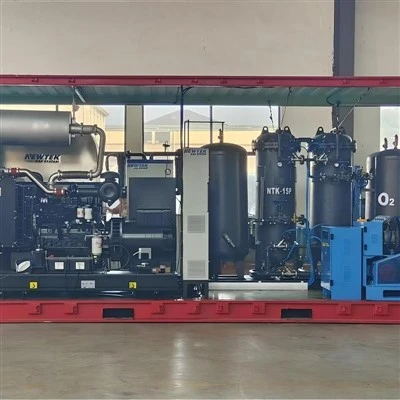
Medical oxygen is an essential resource for clinics providing emergency care, respiratory support, minor surgical procedures, patient stabilization, and other clinical services. A consistent oxygen supply allows medical teams to respond to changing patient needs without unnecessary delays. However, clinics that depend entirely on delivered oxygen cylinders or bulk liquid oxygen may encounter challenges related to transportation, storage, inventory management, supply interruptions, and long-term operating costs.
An on-site medical Pressure Swing Adsorption (PSA) oxygen system offers an alternative approach. By producing oxygen at the healthcare facility, a clinic can reduce its dependence on routine external deliveries while gaining greater control over its oxygen supply arrangements.
The benefits extend beyond oxygen production itself. Depending on the clinic's size, patient volume, oxygen consumption patterns, and existing medical gas infrastructure, an appropriately designed system can support supply continuity, improve inventory planning, simplify logistics, and provide a more predictable basis for long-term operational budgeting.
Nevertheless, medical oxygen production requires careful planning. Equipment selection must account for applicable medical gas standards, required oxygen purity, flow and pressure conditions, distribution system compatibility, maintenance requirements, and backup arrangements. On-site production should form part of a complete medical oxygen supply strategy rather than being treated as an isolated equipment purchase.
This article examines the principal benefits clinics can gain from on-site medical PSA oxygen, the operating considerations that influence its value, and the factors healthcare facilities should evaluate before investing in a system.

Greater Control Over Medical Oxygen Availability
The most immediate benefit of on-site medical PSA oxygen is greater control over the timing and availability of oxygen production.
Clinics relying on external deliveries must coordinate orders, delivery schedules, cylinder exchanges, and stock levels. These activities are manageable when supply chains operate normally, but they can become difficult when transport is delayed, demand increases unexpectedly, or suppliers experience temporary shortages.
An on-site system produces oxygen at the facility according to its operating requirements. This reduces the need to arrange every routine supply replenishment through an external supplier.
How this benefits clinic operations
Fewer routine delivery dependencies: Clinics can reduce the frequency of oxygen deliveries when on-site production meets an appropriate proportion of demand.
More flexible supply planning: Production can be scheduled around normal operating hours and anticipated consumption.
Better preparedness for demand fluctuations: A properly sized installation can help accommodate changes in oxygen use within its specified operating capacity.
Greater operational visibility: Staff can monitor equipment status, oxygen output, and relevant system parameters rather than relying solely on the number of cylinders remaining in storage.
This benefit is particularly relevant to clinics in remote areas, island communities, rural districts, and locations where transport arrangements are difficult to coordinate.
However, on-site production does not eliminate every supply risk. Equipment downtime, power interruptions, maintenance requirements, and unexpected increases in consumption must still be addressed. A suitable backup supply and clear contingency procedures remain essential for patient safety.
Lower Dependence on Delivered Oxygen Cylinders
Oxygen cylinders are a familiar supply method for healthcare facilities. They can be useful for emergency reserves, mobile applications, transport, and locations with limited infrastructure. However, depending on cylinders as the primary source for continuous clinical demand creates recurring logistical responsibilities.
Each delivery involves more than the cost of oxygen itself. Clinics may also need to coordinate transportation, cylinder handling, storage space, empty-cylinder returns, supplier communication, and stock verification.
An on-site medical PSA oxygen system can reduce these recurring activities when the facility has sufficient demand to justify the installation.
| Cylinder-based supply consideration | Potential benefit of on-site production |
|---|---|
| Repeated ordering and delivery coordination | Fewer routine replenishment orders |
| Empty-cylinder collection and replacement | Reduced dependence on cylinder exchange cycles |
| Storage and stock-counting workload | Simpler routine inventory management |
| Delivery delays | Greater control over routine oxygen availability |
| Changing delivery quantities | Production planning based on actual demand |
| Supplier scheduling requirements | More operational independence for routine supply |
The extent of these benefits depends on how much oxygen the clinic consumes and how its current supply contract is structured. A small outpatient clinic with occasional oxygen use may still find delivered cylinders practical, while a facility with sustained daily demand may benefit more from producing oxygen on-site.
The appropriate comparison should include the full supply arrangement rather than focusing only on the purchase price of oxygen.

More Predictable Long-Term Oxygen Supply Costs
Oxygen expenditure can represent a recurring operating cost for clinics. When oxygen is purchased through external deliveries, the total cost may include product charges, transportation, cylinder rental or deposits, handling, and other supplier-specific fees.
These expenses can vary with location, order frequency, contract conditions, and market circumstances.
An on-site PSA system changes the cost structure. Instead of purchasing all routine oxygen as a delivered product, the clinic invests in equipment and pays for the electricity, maintenance, consumables, testing, and other operating resources required to produce oxygen.
Understanding the cost structure
A practical financial assessment should consider the following categories:
Initial investment: PSA equipment, air treatment components, oxygen storage, piping modifications, installation, commissioning, and required testing.
Electricity consumption: Power used by the compressor, PSA equipment, cooling equipment, and associated systems.
Preventive maintenance: Inspection, servicing, filter replacement, and maintenance of valves, instruments, and other components.
Quality assurance: Oxygen purity verification, calibration, medical gas testing, and applicable compliance activities.
Backup supply: Cylinders or another approved reserve arrangement, including storage and replacement costs.
Equipment lifecycle costs: Planned component replacement, service support, and eventual equipment renewal.
The financial benefit comes from comparing these costs with the clinic's existing total expenditure on delivered oxygen.
For a clinic with stable, substantial consumption, reducing repeated delivery expenses may improve long-term cost predictability. A facility with low or irregular demand, however, may not generate sufficient savings to offset the capital and maintenance costs of an on-site system.
A sound investment decision should therefore be based on a lifecycle cost analysis using actual consumption records, supplier invoices, local electricity tariffs, and realistic maintenance estimates.
Improved Oxygen Inventory Management
Managing oxygen inventory is an important operational responsibility, particularly when patient demand varies from day to day.
A cylinder-based clinic must know how many full cylinders are available, how many are in use, when replacements are expected, and whether the reserve is sufficient for emergencies. Errors in stock records or delays in replenishment can create avoidable pressure on staff.
On-site production can simplify routine inventory management by shifting the focus from frequent cylinder replacement to equipment operation, output monitoring, and reserve capacity.
Practical operational improvements
Less frequent stock replenishment: If routine demand is met by on-site production, staff may spend less time tracking delivery dates and arranging replacement cylinders.
Better demand records: Monitoring oxygen output and operating hours can help management understand consumption patterns and identify changes in demand.
Clearer reserve planning: Clinics can establish backup inventory according to expected consumption, equipment reliability, and the time needed to restore normal supply.
More organized storage areas: Reducing the number of cylinders required for routine use may free space for other clinical or operational purposes, subject to the facility's remaining backup requirements.
Inventory simplification should not be confused with eliminating reserve oxygen. Medical facilities need a defined contingency plan for equipment faults, power failure, maintenance, and other events that could interrupt production.
Better Preparedness for Remote and Underserved Locations
Clinics in remote or underserved areas may face additional challenges when obtaining medical oxygen. Long transport distances, limited delivery frequency, difficult road conditions, severe weather, and restricted supplier coverage can all affect supply planning.
For these facilities, the principal value of on-site production may be operational independence rather than financial savings alone.
A suitably designed medical PSA oxygen system can provide a local production source without requiring every unit of routine oxygen to arrive by road, sea, or air. This may be particularly useful for community health centres, rural clinics, island medical facilities, and healthcare projects where frequent deliveries are difficult to arrange.
Infrastructure requirements still matter
Before selecting equipment for a remote location, the clinic should assess:
Availability and stability of electrical power.
Ambient temperature, humidity, dust, and ventilation conditions.
Availability of trained personnel for routine inspections.
Access to maintenance support and replacement components.
Space for equipment, storage, and maintenance access.
Availability of an emergency oxygen reserve.
Local requirements for medical gas installation and quality assurance.
Remote facilities may also need additional protection against power interruption. Backup power, where appropriate, should be evaluated together with the oxygen system's startup characteristics, electrical load, and expected duration of emergency operation.
A local production system can reduce transport dependence, but it must be supported by infrastructure and maintenance arrangements suited to the location.
Support for Multiple Clinical Applications
Medical oxygen is used across a range of clinical services. Its role and consumption rate vary according to patient condition, clinical procedures, equipment requirements, and the type of healthcare facility.
An appropriately designed on-site medical PSA oxygen installation may support several applications through a compatible medical gas distribution system.
| Clinical application | Role of medical oxygen |
|---|---|
| Emergency treatment | Supports oxygen therapy when clinically indicated |
| Respiratory care | Supplies oxygen for prescribed respiratory support |
| Patient stabilization | Provides an oxygen source during assessment and treatment |
| Minor surgical procedures | Supports clinical oxygen requirements where applicable |
| Recovery areas | Supplies oxygen for patients requiring monitored recovery support |
| Observation and treatment rooms | Supports oxygen therapy for patients under clinical supervision |
| Selected diagnostic and treatment services | Meets defined oxygen requirements where the equipment and procedures require it |
The actual number of supported applications depends on the clinic's system design, oxygen consumption profile, distribution pressure, required flow, and applicable medical standards.
Clinics should avoid sizing a system solely according to the number of beds or treatment rooms. Two facilities with similar bed counts may have very different oxygen demand because of differences in service scope, patient acuity, operating hours, and clinical equipment.
A proper assessment should identify simultaneous demand, peak flow, expected future changes, and the minimum supply capacity required during foreseeable operating conditions.
More Effective Planning for Peak Demand
A clinic's oxygen demand is rarely constant. Consumption can increase during respiratory illness surges, emergency events, changes in patient volume, or the introduction of additional treatment services.
An on-site PSA oxygen system can help a clinic plan around these variations, provided the equipment is sized for the expected load and operated within its specified performance range.
Design for actual demand, not average demand alone
Average daily consumption is useful for estimating routine production requirements, but it does not necessarily represent the highest flow the medical gas system must deliver.
A comprehensive assessment should distinguish between:
Average oxygen consumption over a typical day.
Peak hourly demand.
Simultaneous use across clinical departments.
Required distribution pressure.
Oxygen purity requirements under the applicable medical standard.
Potential demand increases during emergency or seasonal periods.
The reserve capacity needed during maintenance or equipment failure.
This information helps determine the appropriate system capacity, storage arrangement, and backup strategy.
For example, a clinic with several oxygen-dependent treatment areas may require enough capacity to support simultaneous use rather than simply meeting its average daily consumption. The design must also consider whether the system can maintain the specified oxygen quality and pressure under the expected operating conditions.
If the installation is undersized, increased demand may exceed production capacity. If it is substantially oversized, the clinic may incur unnecessary capital and operating costs. Demand analysis is therefore a critical part of system selection.
Greater Visibility Into Equipment Performance
Modern medical PSA oxygen installations can incorporate monitoring instruments and control functions that help operators assess system operation.
Depending on the configuration, these may include oxygen purity monitoring, pressure indicators, flow measurement, equipment alarms, operating-status displays, and fault indications.
Such functions can help technical personnel identify abnormal operating conditions and arrange corrective action before a minor issue becomes a more serious operational problem.
What should clinics monitor?
Oxygen quality: The system should provide appropriate monitoring and verification of oxygen purity in accordance with its intended medical use and applicable requirements.
Production pressure and flow: These parameters help determine whether the system is supplying the distribution network within the specified operating range.
Equipment status: Compressor operation, PSA cycle performance, and relevant alarms can support routine inspection and troubleshooting.
Air treatment condition: Compressed-air quality affects PSA performance. Moisture, oil, particles, and other contaminants must be controlled according to equipment specifications.
Maintenance indicators: Operating hours, service records, and component replacement schedules help the clinic plan preventive maintenance.
Monitoring is valuable only when it is connected to clear operating procedures. Staff should understand what each alarm means, who is responsible for responding, and how the clinic will maintain oxygen availability while a fault is investigated.
Monitoring equipment also does not replace formal quality testing, commissioning, or required verification of the medical gas supply.
Integration With the Clinic's Medical Gas Distribution System
Producing oxygen on-site is only one part of supplying it safely to clinical areas. The oxygen must also be delivered through a suitable distribution arrangement that meets the clinic's clinical and technical requirements.
Depending on the project, the overall installation may include a PSA oxygen production unit, compressed-air preparation equipment, oxygen storage, pressure regulation, monitoring instruments, medical gas piping, alarms, and a backup oxygen source.
The design should establish how these components work together and how the clinic will manage the transition between its primary and backup supplies.
Important integration considerations
Required supply pressure: The system must be compatible with the operating requirements of the medical gas distribution network and connected equipment.
Peak flow capacity: Piping, regulation equipment, and the oxygen source must accommodate expected simultaneous demand.
Gas quality: The complete supply arrangement must satisfy applicable medical oxygen quality requirements.
Alarm and monitoring arrangements: Appropriate monitoring should help personnel recognize supply pressure problems, abnormal oxygen quality, and relevant equipment faults.
Backup connection: The emergency supply must be designed to support continuity when the primary production system is unavailable.
Commissioning and validation: The installation should undergo the required inspections, testing, and documentation before clinical use.
The existing medical gas network should be assessed before equipment is selected. A clinic expanding from cylinder-based supply may need piping modifications, additional monitoring, changes to its backup arrangements, or other engineering work.
The objective is not simply to connect a production unit to existing pipes. It is to establish a complete medical oxygen supply system that performs appropriately under normal and contingency conditions.
Support for Healthcare Service Development
Clinics may expand their services as local healthcare needs change. A facility that initially provides consultations and basic treatment may later introduce additional observation beds, respiratory care services, or other procedures that require medical oxygen.
Planning for potential growth during the initial system design can help avoid unnecessary disruption later.
An assessment of future demand should consider the expected number of treatment spaces, changes in clinical services, anticipated operating hours, and the possibility of increased oxygen consumption.
However, future flexibility should be based on realistic requirements rather than assumed expansion. A larger system is not automatically a better investment. Equipment selection should balance expected demand, current budget, available space, utility capacity, and lifecycle operating costs.
Where additional capacity may be needed, the clinic should clarify whether the selected installation can accommodate the expected load within its specified performance range and what modifications would be required to support future demand.
This approach allows the facility to make a more informed infrastructure investment while maintaining an appropriate focus on present clinical needs.
How Clinics Can Evaluate the Financial Return
The financial case for on-site medical PSA oxygen depends on several factors: oxygen consumption, delivery charges, electricity costs, equipment price, maintenance requirements, expected service life, and the cost of maintaining a backup supply.
A clinic should compare the total cost of its existing supply arrangement with the full cost of operating the proposed installation.
A simplified evaluation can use the following framework:
Current annual supply cost
= Delivered oxygen purchases + transportation and handling + cylinder rental or related charges + other supply expenses.
Estimated annual on-site operating cost
= Electricity + maintenance + consumables + testing and quality assurance + backup supply expenses + other operating costs.
Estimated annual operating difference
= Current annual supply cost − Estimated annual on-site operating cost.
The initial equipment investment and installation expenses must then be considered separately when estimating the payback period or total lifecycle cost.
A positive annual operating difference does not automatically mean the investment is suitable. The clinic must also evaluate reliability, backup requirements, compliance costs, staffing capacity, and the consequences of supply interruption.
For low-consumption facilities, delivered cylinders may remain the more economical option. For clinics with regular, substantial oxygen demand and high delivery costs, on-site production may offer a stronger financial case.
Medical Safety and Compliance Must Remain the Priority
Cost savings and logistical independence are important, but medical oxygen systems must first meet the clinical and regulatory requirements of the facility.
Not every PSA installation is automatically suitable for medical use. Equipment must be specifically selected, configured, tested, and operated for the intended application. The required oxygen specification and the applicable national or regional standards should be confirmed before purchase.
Clinics should evaluate the following areas during project planning:
Medical oxygen quality: Confirm the required composition and purity, applicable pharmacopeial or regulatory specifications, and the methods used to verify gas quality.
Equipment suitability: Ensure the complete installation is designed for the intended medical application and relevant operating conditions.
Risk management: Establish procedures for equipment faults, power loss, pressure deviations, abnormal oxygen quality, and unexpected increases in demand.
Backup arrangements: Maintain an appropriate emergency supply and define how staff will switch to it when necessary.
Staff training: Train responsible personnel in routine inspections, alarm response, safe operation, and emergency procedures.
Preventive maintenance: Establish documented inspection, servicing, calibration, and testing schedules.
Commissioning and documentation: Complete the required verification and acceptance procedures before supplying oxygen for clinical use.
The clinic should also confirm whether local regulations require specific approvals, inspections, medical gas certification, or documented quality-management procedures.
These requirements should be addressed at the design stage rather than left until installation is complete.
Common Mistakes Clinics Should Avoid
The benefits of on-site oxygen production depend on appropriate planning. Several common mistakes can reduce the value of an otherwise suitable investment.
| Common mistake | Why it matters | Better approach |
|---|---|---|
| Selecting equipment based only on bed count | Bed count may not reflect peak oxygen demand | Assess actual consumption, peak flow, and simultaneous use |
| Comparing only the purchase price of oxygen | Delivery and handling expenses may be overlooked | Compare full lifecycle costs |
| Ignoring electricity reliability | Production may be affected by a power interruption | Assess power quality and appropriate backup arrangements |
| Assuming every PSA system meets medical requirements | Intended use and gas quality specifications can differ | Verify applicable standards and product suitability |
| Eliminating backup oxygen too early | Equipment faults can interrupt supply | Maintain a documented contingency plan |
| Underestimating maintenance needs | Poor maintenance can affect performance and availability | Establish a preventive maintenance programme |
| Ignoring distribution-system limitations | The network may not deliver the required pressure or flow | Evaluate the complete medical gas system |
| Failing to train operators | Alarms or abnormal conditions may not receive timely attention | Assign responsibilities and train relevant personnel |
Avoiding these mistakes helps clinics evaluate on-site oxygen production as a complete infrastructure project rather than a simple equipment replacement.
Conclusion
On-site medical PSA oxygen can offer clinics several practical benefits, including greater control over oxygen availability, reduced dependence on routine cylinder deliveries, improved inventory management, more predictable long-term operating costs, and stronger supply planning for remote locations.
It may also support a range of clinical services and provide better visibility into equipment performance when the installation includes appropriate monitoring and maintenance arrangements.
However, the value of the system depends on the clinic's actual oxygen demand, local supply conditions, electrical infrastructure, medical gas distribution network, and regulatory obligations. A careful assessment of peak flow, required oxygen quality, lifecycle cost, backup capacity, and maintenance support is essential before making an investment decision.
For clinics with sustained oxygen demand and challenging delivery logistics, an appropriately engineered on-site PSA oxygen system can become a valuable part of the facility's medical gas infrastructure. The strongest results come from combining suitable equipment with validated medical oxygen quality, trained personnel, preventive maintenance, and a dependable contingency supply.
FAQ
What is on-site medical PSA oxygen?
On-site medical PSA oxygen is oxygen produced at a healthcare facility using Pressure Swing Adsorption technology. The system separates oxygen from compressed air and supplies the resulting gas according to its specified performance characteristics. For clinical use, the complete installation must meet the applicable medical oxygen quality, safety, and regulatory requirements.
Can a clinic completely stop using oxygen cylinders after installing a PSA system?
Not necessarily. The system may reduce routine cylinder consumption, but clinics generally need an appropriate backup oxygen supply for equipment failure, maintenance, power interruption, or unexpected demand. The required reserve depends on the facility's risk assessment and applicable regulations.
Is on-site PSA oxygen suitable for every clinic?
No. Suitability depends on oxygen consumption, operating hours, required flow and pressure, electricity availability, installation space, maintenance support, and the cost of the alternative supply. Clinics with low or irregular consumption may find delivered cylinders more practical.
How should a clinic determine the required system capacity?
The clinic should assess historical oxygen consumption, peak demand, simultaneous clinical use, required distribution pressure, expected service development, and backup requirements. Bed count alone is not a sufficient basis for equipment selection.
What maintenance does an on-site medical PSA oxygen system require?
Maintenance depends on the system configuration and manufacturer specifications. It commonly includes inspection of the compressor and air treatment equipment, filter replacement, checks of valves and instruments, review of operating parameters, calibration where required, and verification of oxygen quality. A documented maintenance schedule should be established before the system enters service.
What should a clinic confirm before purchasing a medical PSA oxygen system?
The clinic should confirm the intended medical application, applicable oxygen quality standards, rated output and pressure, peak-flow capability, energy consumption, installation requirements, monitoring functions, backup arrangements, maintenance support, commissioning procedures, and total lifecycle cost.
Does on-site oxygen production guarantee uninterrupted supply?
No. Although it can reduce dependence on external deliveries, production equipment can still be affected by power loss, maintenance, component faults, or operating conditions outside its specified range. Continuity depends on suitable equipment design, monitoring, preventive maintenance, emergency procedures, and an appropriate backup oxygen source.