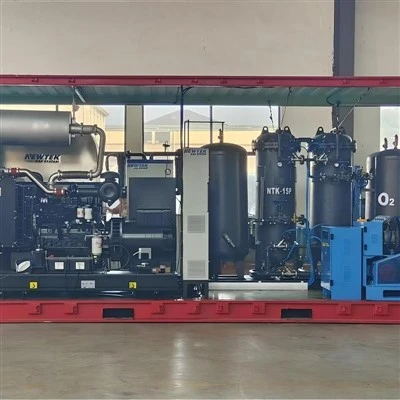
Cylinder filling factories play an important role in the industrial and medical gas supply chain. They receive gas from production facilities or bulk supply sources, prepare it for filling, transfer it into high-pressure cylinders, and distribute the finished products to hospitals, manufacturers, welding workshops, construction companies, laboratories, and other end users.
However, running a cylinder filling factory involves more than filling cylinders. Operators must manage gas procurement, transportation costs, production scheduling, filling pressure, gas quality, cylinder inventory, energy consumption, equipment utilization, and delivery deadlines. As customer demand increases, these responsibilities become more complex, particularly when the factory depends entirely on externally supplied gas.
Pressure Swing Adsorption (PSA) technology provides an alternative way to produce oxygen or nitrogen directly at the filling facility. Instead of purchasing all required gas from an external producer, a factory can use a PSA system as an on-site gas source and integrate it with suitable compression, storage, purification where required, filling manifolds, and cylinder handling equipment.
The benefits depend on the gas being produced, the factory's daily filling volume, the required product specifications, and the design of the complete filling line. PSA technology is not a universal solution to every operational problem, but it can address several important challenges associated with gas availability, procurement costs, production planning, and supply-chain management.
This article examines the main problems PSA technology can help cylinder filling factories solve, how an on-site system works within a filling operation, and what operators should evaluate before investing in the equipment.

Reducing Dependence on External Gas Suppliers
One of the most significant challenges for cylinder filling factories is dependence on external gas suppliers.
A factory that purchases all its oxygen or nitrogen must coordinate procurement according to its filling schedule. If a supplier experiences production interruptions, transportation delays, maintenance shutdowns, or unexpected order backlogs, the filling factory may struggle to maintain its planned output.
This problem becomes more serious when the factory serves customers who expect regular deliveries or require gas on short notice.
An on-site PSA system allows the factory to produce gas according to its operating requirements. When the installation has sufficient capacity and operates within its specified performance range, it can supply part or all of the factory's routine gas demand.
Problems addressed
Supplier delivery delays: On-site production reduces the need to wait for every routine gas replenishment.
Uncertain external availability: The factory gains another source of supply under its own operational control.
Procurement scheduling pressure: Production planning can be coordinated more closely with the filling schedule.
Unexpected increases in demand: A suitably sized system can support higher consumption within its rated capacity.
Limited supplier coverage: Facilities in remote industrial areas may reduce the logistical difficulties associated with frequent gas deliveries.
The level of independence achieved depends on the installed production capacity, equipment availability, power supply, maintenance arrangements, and reserve inventory.
For this reason, factories should not assume that on-site production automatically eliminates the need for external suppliers. Maintaining an alternative supply arrangement may still be commercially and operationally appropriate, especially when customer demand is critical or highly variable.
Controlling the Cost of Purchased Gas
Gas procurement can represent a substantial recurring expense for a cylinder filling factory. The actual cost may include the gas itself, transportation, handling, storage-related expenses, supplier service charges, and other contractual fees.
When a factory purchases gas from an external producer, these costs are influenced by supplier pricing, delivery distance, order frequency, market conditions, and contract terms.
PSA technology changes the cost structure by allowing the factory to produce gas on-site. Instead of purchasing all routine gas as a finished product, the business invests in production equipment and manages the electricity and maintenance resources needed to operate it.
Comparing the two supply models
| Cost category | External gas procurement | On-site PSA production |
|---|---|---|
| Gas acquisition | Recurring purchase payments | Production cost based on operating requirements |
| Transportation | May involve regular delivery charges | Routine delivery dependence can be reduced |
| Production equipment | Mainly managed by the gas supplier | Requires capital investment by the factory |
| Electricity | Usually included indirectly in the purchased gas price | Direct operating expense |
| Maintenance | Primarily handled by the external producer | Managed through internal or contracted service |
| Storage and filling | Depends on the factory's arrangement | Still required as part of the filling operation |
| Supply contingency | May require reserve stock or alternative suppliers | Requires equipment redundancy or an alternative supply arrangement |
The financial advantage depends on the difference between the factory's existing delivered-gas cost and the total cost of producing gas on-site.
A factory with high and stable demand may have a stronger business case than a small facility with occasional filling orders. However, the lowest production cost per unit is not the only consideration. Product quality, equipment availability, energy efficiency, maintenance expenses, and customer requirements must also be evaluated.
A practical investment assessment should use actual procurement invoices, annual gas consumption, electricity tariffs, expected maintenance expenses, and the proposed equipment's rated performance.
Managing Fluctuations in Gas Demand
Cylinder filling factories rarely experience perfectly consistent demand throughout the year. Orders may rise before construction projects, during industrial maintenance periods, in response to seasonal healthcare requirements, or when distributors replenish their inventories.
A factory that depends on external gas deliveries must anticipate these changes and place orders early enough to maintain sufficient stock. Underestimating demand may interrupt filling operations, while excessive purchasing can tie up working capital in inventory.
On-site PSA production gives the factory greater flexibility in coordinating gas production with its filling schedule.
How PSA supports production planning
Routine demand: The system can supply gas for normal daily filling requirements within its rated output.
Peak operating periods: Capacity planning can account for periods when several filling manifolds operate simultaneously or order volumes increase.
Inventory replenishment: Gas production can be coordinated with storage levels and the factory's planned cylinder dispatches.
Order prioritization: The production team can schedule filling operations around available gas production and storage capacity.
Reduced dependence on delivery forecasts: The factory can base more of its routine production planning on measured consumption and available production capacity.
However, PSA output is not unlimited. Production capacity must be evaluated against the factory's actual gas consumption, while compression and filling equipment must meet the required delivery pressure and instantaneous flow.
The system also needs sufficient buffer storage to accommodate the difference between the relatively continuous gas production process and the intermittent demand created by cylinder filling.
A suitable design therefore considers both the total daily filling volume and the maximum gas flow required during the busiest production period.
Reducing the Risk of Production Interruptions
A cylinder filling factory may have sufficient staff, empty cylinders, filling manifolds, and customer orders but still be unable to operate if its gas supply is interrupted.
Production interruptions can create several consequences:
Filling schedules fall behind.
Delivery commitments become harder to meet.
Employees and filling equipment may remain underutilized.
Urgent orders may require expensive alternative procurement.
Customers may turn to competing suppliers if delays become frequent.
On-site PSA production can reduce exposure to interruptions caused by external gas deliveries. It also allows the factory to manage production schedules with a clearer understanding of its own equipment capacity.
Nevertheless, an on-site production system introduces its own potential failure points. Compressor faults, electrical interruptions, air treatment problems, valve failures, and maintenance activities can affect gas output.
The factory should therefore consider reliability as a complete system-design issue rather than relying on the PSA unit alone.
Measures that support continuity
Establish an appropriate preventive maintenance programme.
Monitor production pressure, gas flow, and product quality.
Maintain adequate buffer storage for normal operational fluctuations.
Define procedures for switching to an alternative gas source.
Evaluate backup power requirements where power interruption presents a significant risk.
Consider equipment redundancy according to the factory's required availability.
Keep critical spare parts and arrange qualified service support.
For factories with strict delivery commitments, continuity planning should include realistic estimates of equipment downtime and the time needed to restore normal production.

Improving Production Scheduling and Filling Line Utilization
The efficiency of a cylinder filling factory depends on coordination between gas production, compression, storage, cylinder preparation, filling, testing, and dispatch.
If gas availability is unpredictable, filling equipment may sit idle while operators wait for supply. When gas arrives in large batches, the factory may also need to reorganize its filling schedule around unloading and storage requirements.
An on-site PSA system can help align gas production with the factory's normal operating pattern.
From gas procurement to coordinated production
A typical oxygen or nitrogen cylinder filling operation may involve the following stages:
Gas generation: The PSA system produces gas from prepared compressed air according to its specified operating conditions.
Gas quality verification: The produced gas is monitored and verified against the required product specification.
Buffer storage: Suitable storage helps balance production output with changing downstream demand.
Gas compression: A compatible booster or compressor raises the gas to the pressure required for the intended cylinder filling process.
Filling manifold operation: Gas is distributed to the connected cylinders through suitable filling equipment and controls.
Cylinder inspection and handling: Cylinders are checked and prepared in accordance with the factory's operating procedures and applicable requirements.
Final verification and dispatch: Filled cylinders undergo the required checks before release to customers.
The precise configuration varies according to the gas, filling pressure, cylinder type, and local regulatory requirements.
When production and filling are properly coordinated, operators can reduce unnecessary waiting time and plan equipment utilization more effectively.
However, PSA output alone does not determine filling-line throughput. Booster capacity, cylinder size, initial cylinder pressure, final filling pressure, manifold configuration, changeover time, and safety procedures all affect the number of cylinders that can be filled within a shift.
A complete production assessment should therefore examine the performance of the entire filling line.
Reducing the Logistics Burden of Bulk Gas Deliveries
External gas procurement often involves transportation from a production facility to the filling factory. Depending on the gas and supply method, the factory may need to coordinate specialized vehicles, delivery appointments, unloading areas, storage arrangements, and supplier documentation.
These activities consume time and may introduce additional operational costs.
For facilities located far from major gas production centres, transportation can become a particularly important factor in the total cost of supply.
By producing gas on-site, a factory can reduce the volume of routine gas deliveries required for its supported production demand.
Potential benefits include:
Fewer delivery arrangements for routine gas replenishment.
Reduced exposure to transport delays.
Less dependence on delivery vehicle availability.
More flexible planning for daily filling operations.
Reduced handling associated with incoming gas shipments.
Better control over the timing of routine production.
These benefits do not mean that cylinder transportation disappears. Finished cylinders still need to be handled, stored, loaded, and delivered to customers. The factory may also continue to receive backup gas or other supplies from external providers.
The value of on-site production lies in reducing one part of the supply chain: the regular transportation of gas to the filling facility.
Making Better Use of Factory Space
Gas supply arrangements can affect how a filling factory uses its available floor space and outdoor storage areas.
Depending on the existing configuration, the facility may need designated areas for incoming gas containers or storage equipment, unloading operations, temporary inventory, and the movement of supply vehicles.
When routine gas replenishment becomes less frequent, some logistical activities may become easier to schedule. The factory may also be able to revise how it organizes its incoming supply area.
However, on-site PSA production also requires dedicated space for the production unit, compressor, air treatment equipment, storage vessels, controls, and maintenance access.
The installation must provide appropriate ventilation, heat management, access for service work, and separation from unsuitable environments. Gas compression and filling equipment also require space appropriate to their pressure ratings and safety requirements.
The correct comparison is therefore not simply the area occupied by incoming gas storage versus the area occupied by a PSA unit. It should consider the layout of the complete facility, including production, storage, filling, inspection, vehicle movement, and emergency access.
Before purchasing equipment, factory operators should prepare a layout that shows how the proposed installation will fit into the existing site without creating congestion or compromising safety.
Improving Control Over Gas Quality
Gas quality is a central concern for cylinder filling factories. Different customers may require different purity levels, moisture limits, contaminant limits, or other product specifications.
For example, industrial oxygen, medical oxygen, and high-purity nitrogen do not necessarily have the same quality requirements. The intended application determines the relevant specification and verification procedures.
PSA technology can produce oxygen or nitrogen within a defined performance range, but the factory must select a system designed for its specific product requirements.
Factors that influence gas quality
Feed-air condition: The quality of compressed air supplied to the PSA equipment affects system performance. Moisture, oil, particles, and other contaminants must be controlled according to the equipment specifications.
Adsorbent and cycle performance: The separation process depends on appropriate operating conditions and the condition of the adsorbent material.
Flow demand: Operating outside the system's rated capacity can affect output purity and production performance.
Downstream equipment: Compression, piping, valves, storage vessels, and other components must be suitable for the intended gas and application.
Monitoring and testing: Instruments and verification procedures must be appropriate to the product specification and applicable regulations.
A factory should define its target gas specification before selecting equipment. The supplier should then confirm the guaranteed output capacity, purity range, operating pressure, feed-air requirements, and relevant test conditions.
For medical oxygen filling, the quality requirements can be more stringent than those for many industrial applications. The complete production and filling arrangement must satisfy the applicable medical gas standards and regulatory requirements. A general industrial PSA installation should not be assumed to be suitable for medical oxygen without the necessary design, qualification, quality assurance, and approvals.
Supporting Expansion Into New Customer Markets
As a cylinder filling business grows, it may seek new customers or expand into different industrial sectors. Demand can come from welding and metal fabrication, water treatment, chemical processing, manufacturing, healthcare, laboratories, and other applications.
An on-site PSA system may support this growth when the new demand matches the gas type and quality specifications the equipment can deliver.
For example, a factory supplying industrial oxygen to metalworking customers may consider whether additional production capacity could support a larger customer base. A nitrogen filling operation may evaluate demand from manufacturers that use nitrogen for purging, packaging, or other industrial processes.
However, market expansion requires more than increasing gas production.
The business must verify customer specifications, local regulatory obligations, cylinder compatibility, distribution requirements, filling pressure, and the commercial viability of the new market. Certain applications may require gas purity levels or contaminant limits that differ from the factory's existing products.
Before accepting new contracts, operators should confirm that the complete installation can produce, compress, fill, test, and deliver the required gas within the agreed specification.
A realistic expansion plan should also assess additional equipment, utility capacity, staffing, maintenance support, and working capital.
Improving Production Cost Visibility
Factories that purchase finished gas from external suppliers may find it difficult to identify every factor influencing the final cost of each filled cylinder. The purchase price is visible, but the effects of transportation, supplier pricing changes, inventory requirements, and delivery frequency may be distributed across different operating accounts.
With on-site production, the factory can establish a more direct relationship between gas output and operating expenses.
By recording electricity consumption, production volume, operating hours, maintenance costs, and rejected or nonconforming output, managers can develop a clearer picture of the cost of producing each unit of gas.
Useful performance indicators
| Indicator | What it helps management evaluate |
|---|---|
| Gas output per operating hour | Actual production performance |
| Electricity consumption per unit of gas | Energy efficiency |
| Production cost per unit | Direct operating economics |
| Equipment availability | Time the system is available for production |
| Gas purity compliance | Consistency with product specifications |
| Filling-line utilization | How effectively downstream equipment is used |
| Cylinder filling throughput | Finished-cylinder output over a defined period |
| Maintenance cost | The financial impact of servicing and component replacement |
These indicators can help management identify operational inefficiencies, compare actual results with supplier guarantees, and plan maintenance more effectively.
The measurements should be based on consistent units, defined operating conditions, and verified instruments. Comparisons are unreliable when gas output, purity, pressure, or ambient conditions differ significantly.
Addressing the Gap Between Gas Production and Cylinder Filling
PSA systems generally produce gas as part of an ongoing operating process, whereas cylinder filling occurs in batches. This creates a difference between the rate at which gas is generated and the rate at which it is consumed.
If the factory's filling demand suddenly exceeds the available production rate, insufficient buffer capacity may restrict filling operations even when the PSA equipment is functioning normally.
Conversely, if gas production greatly exceeds the filling line's consumption for extended periods, the factory may incur unnecessary energy costs or operate equipment inefficiently.
Buffer storage helps manage the difference between continuous production and intermittent filling demand.
What should be considered when sizing storage?
Average gas consumption during a normal shift.
Peak filling flow and the duration of peak demand.
PSA production rate under the specified operating conditions.
Required pressure at the storage and filling stages.
Booster compressor capacity.
Expected filling schedule and cylinder changeover time.
Minimum operating reserve and contingency requirements.
Applicable pressure-vessel and gas-system regulations.
Storage vessels must be designed, installed, inspected, and operated according to applicable pressure equipment requirements. Their capacity should not be selected using a simple estimate of daily demand alone.
A well-designed arrangement coordinates PSA output, buffer storage, compression, and filling manifolds so that the factory can maintain an appropriate balance between production and consumption.
What PSA Technology Cannot Solve on Its Own
PSA technology can address several supply-chain and production challenges, but it cannot eliminate every operational problem in a cylinder filling factory.
Understanding these limitations helps operators avoid unrealistic expectations and make better investment decisions.
It cannot guarantee uninterrupted operation without supporting systems. Power interruptions, compressor faults, maintenance, and component failures can affect production. Backup supply and contingency procedures remain necessary.
It cannot replace proper cylinder management. Cylinders still require inspection, handling, testing where applicable, and compliance with relevant filling and service requirements.
It cannot correct an undersized filling line. If the booster, manifold, or downstream equipment cannot meet the required flow and pressure, increasing gas production alone will not resolve the bottleneck.
It cannot automatically guarantee every purity specification. The system must be designed for the intended gas quality, operated within its specified limits, and supported by appropriate testing.
It cannot ensure profitability regardless of demand. Low utilization, high electricity costs, excessive maintenance expenses, or substantial capital investment can weaken the financial case.
It cannot replace skilled operation. Personnel must understand the equipment, monitor operating parameters, follow safety procedures, and respond correctly to alarms.
For this reason, PSA technology should be evaluated as one part of a complete gas production and cylinder filling operation.
How to Determine Whether PSA Is Suitable for a Cylinder Filling Factory
Before purchasing equipment, factory operators should carry out a technical and commercial assessment.
Establish current gas consumption
Collect records of monthly purchases, daily filling volume, peak demand, seasonal variation, and customer requirements. Distinguish between gas purchased and gas actually used in production.
Define the product specification
Confirm the required gas type, purity, pressure, moisture limits, and any other relevant product quality requirements. Medical and specialized industrial applications may have additional regulatory obligations.
Calculate production capacity
Determine the required gas output and peak flow. Confirm whether the proposed PSA system can meet the required specification under the stated operating conditions.
Evaluate compression and filling equipment
Review booster capacity, filling pressure, manifold configuration, cylinder size, and expected changeover time. Estimate finished-cylinder output based on the complete line rather than the gas production unit alone.
Assess utilities and site conditions
Confirm electrical capacity, compressed-air requirements, ventilation, ambient conditions, equipment access, and available installation space.
Compare lifecycle costs
Include the capital investment, electricity, maintenance, consumables, testing, staffing, storage, backup supply, and other recurring expenses. Compare these costs with the factory's existing delivered-gas expenditure.
Establish continuity and maintenance plans
Define preventive maintenance intervals, alarm response procedures, backup supply arrangements, critical spare parts, and service responsibilities.
Confirm commissioning and acceptance criteria
Agree on the conditions for verifying production capacity, gas quality, pressure, energy consumption where specified, and integration with the filling line.
Following these steps helps the factory determine whether on-site PSA production offers a practical advantage and what system configuration is appropriate.
Conclusion
PSA technology can help cylinder filling factories address several recurring operational problems, including dependence on external gas suppliers, rising procurement costs, unpredictable replenishment schedules, production interruptions caused by delivery delays, and limited visibility into production expenses.
By producing oxygen or nitrogen on-site, a factory may gain greater control over gas availability, improve coordination between production and filling, reduce some transportation-related expenses, and establish more direct operating cost measurements.
The actual benefits depend on the factory's demand profile, gas specifications, electricity costs, equipment utilization, and existing supply arrangements. A complete assessment must include the PSA unit, air treatment, gas storage, compression, filling manifolds, monitoring, maintenance, and backup provisions.
For factories with stable gas demand and a suitable technical and financial case, on-site PSA production can become an important part of a more controlled and efficient cylinder filling operation. The best results come from matching equipment capacity to real production requirements and managing the entire gas supply and filling process as one integrated system.
FAQ
Which problems can PSA technology solve for cylinder filling factories?
It can help reduce dependence on external gas deliveries, improve routine supply availability, support production scheduling, reduce certain transportation costs, and provide better visibility into gas production expenses. The degree of improvement depends on system capacity and factory operating conditions.
Can a PSA system supply gas directly to cylinder filling equipment?
Yes, when the system is appropriately designed and integrated with suitable storage, compression, controls, and filling manifolds. PSA output pressure alone may not be sufficient for high-pressure cylinder filling, so a compatible booster or compressor is commonly required.
Can on-site PSA production reduce the cost of filling cylinders?
It can reduce total supply costs when the cost of producing gas on-site is lower than the cost of purchasing and receiving an equivalent amount of gas. Electricity, maintenance, equipment investment, testing, and backup supply must all be included in the comparison.
How should a factory determine the required PSA capacity?
Capacity selection should consider daily gas consumption, peak flow, gas purity, operating hours, filling pressure requirements, buffer storage, and expected demand changes. The output capacity of the gas production system should also be evaluated alongside booster and filling-line performance.
Is PSA suitable for medical oxygen cylinder filling?
It may be suitable when the complete installation is specifically designed, qualified, operated, and verified for medical oxygen production and filling under the applicable regulatory requirements. The factory must confirm the required oxygen quality, monitoring, testing, documentation, and approval procedures before supplying medical oxygen.
Does on-site PSA production eliminate the need for external suppliers?
Not necessarily. Some factories may retain external suppliers for emergency backup, maintenance periods, demand peaks, or products outside the PSA system's capability. The appropriate arrangement depends on the factory's continuity requirements and commercial strategy.
What equipment is typically required for a PSA cylinder filling plant?
A typical installation may include a PSA gas production unit, an air compressor, air treatment equipment, gas storage vessels, a booster compressor, filling manifolds, monitoring instruments, control equipment, and suitable safety systems. The exact configuration depends on the gas, product specification, cylinder pressure, required throughput, and local regulations.