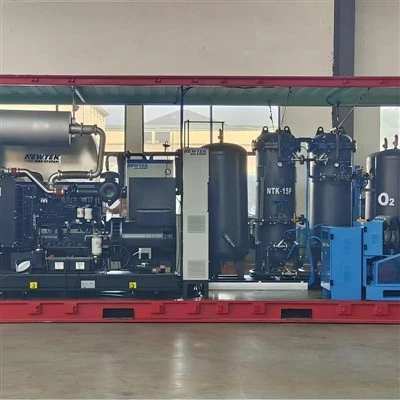
Oxygen plays an important role in many mining and mineral processing operations, including gold leaching, silver extraction, cyanide detoxification, non-ferrous metal smelting, and wastewater treatment. In these applications, oxygen availability can influence reaction rates, process stability, production efficiency, and operating costs.
For mining companies considering on-site oxygen generation, one of the first technical questions is which oxygen purity standard will meet the requirements of the intended process. Industrial PSA oxygen generators commonly produce oxygen at approximately 90%–95% purity, providing an alternative to conventional air supply or delivered industrial oxygen for suitable applications.
However, different mining processes do not necessarily require the same oxygen specification. A gold leaching circuit may prioritize oxygen transfer into slurry, while a smelting operation may require a specific oxygen concentration and delivery pressure at the furnace. Wastewater treatment, meanwhile, depends on oxygen demand, treatment chemistry, and the efficiency of the aeration or injection system.
Selecting a generator based only on its advertised oxygen purity can therefore lead to unnecessary investment or insufficient process performance. Mining operators need to evaluate purity alongside oxygen consumption, flow rate, outlet pressure, operating conditions, and supply continuity.
This article explains how to assess oxygen purity requirements across different mining scenarios and what procurement teams should confirm before selecting an industrial oxygen generation system.
Understanding PSA Oxygen Purity Standards
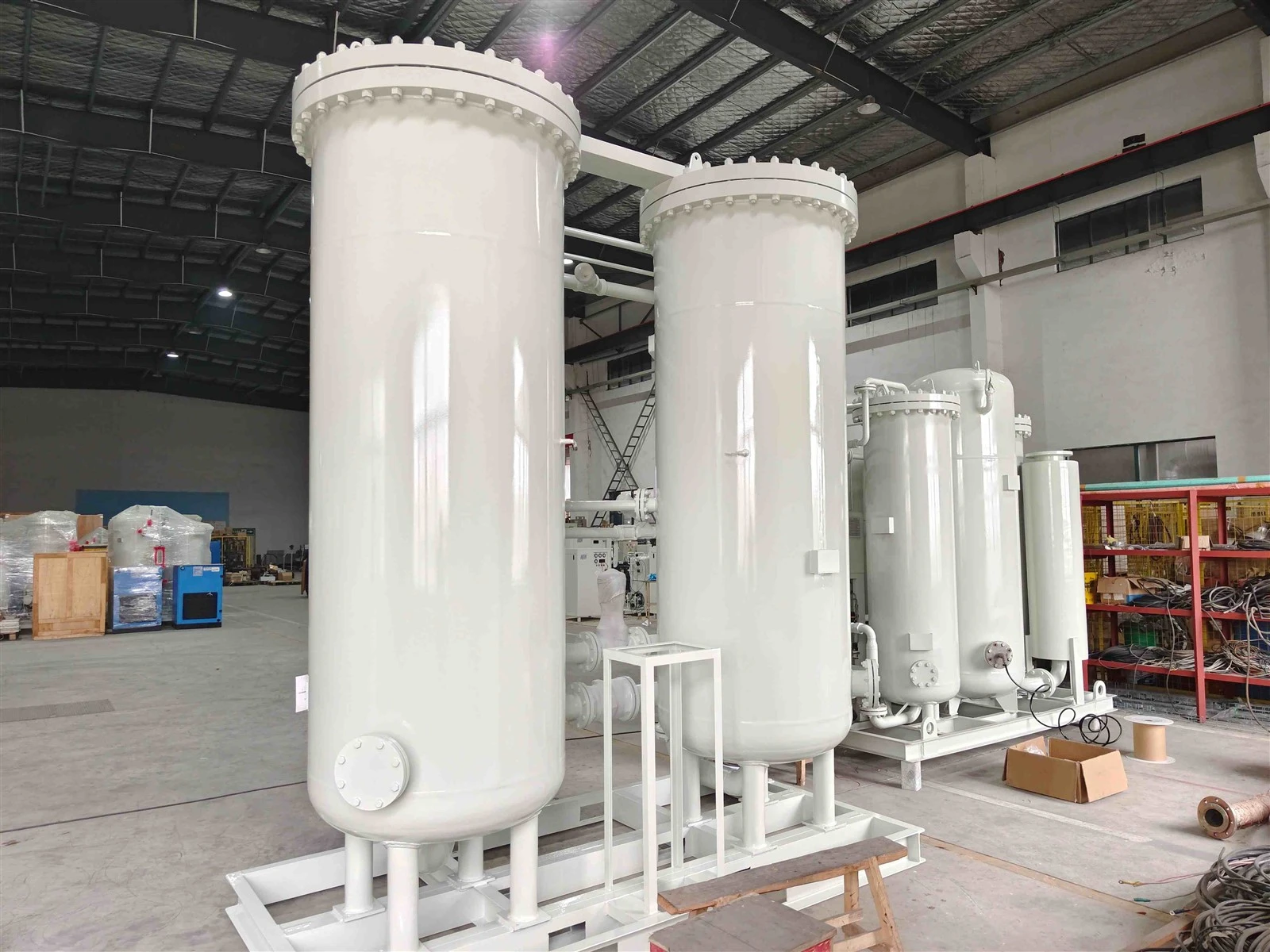
Pressure swing adsorption (PSA) technology separates oxygen-enriched gas from compressed air by using a molecular sieve to preferentially adsorb nitrogen. The system alternates between adsorption and regeneration stages to maintain oxygen production.
Conventional industrial PSA oxygen generators commonly operate within a purity range of approximately 90%–95%, although the achievable purity depends on the equipment configuration and operating conditions.
For mining applications, three commonly encountered specification points are 90%, 93%, and 95% oxygen. These are useful reference values for preliminary equipment evaluation, but they are not universal purity standards assigned to particular mining processes.
| Nominal Oxygen Purity | Key Procurement Consideration |
|---|---|
| 90% | May be suitable where the process accepts a lower oxygen concentration and the required flow and pressure can be maintained |
| 93% | A common industrial specification that may offer a practical balance between oxygen concentration and equipment output |
| 95% | May be appropriate when a higher oxygen concentration is required, subject to the generator's guaranteed capacity and operating conditions |
The actual purity requirement should be established by the process engineer, equipment specification, or relevant project design documentation.
It is also important to distinguish oxygen purity from oxygen output. A generator may deliver less oxygen per hour when configured for a higher purity. Published industrial equipment data demonstrate that capacity can vary with the selected purity setting.
Consequently, a quotation should identify the guaranteed oxygen purity and the corresponding oxygen flow rate under stated operating conditions. A purity figure without a matching capacity specification is insufficient for evaluating a mining oxygen supply project.
Gold Leaching: Evaluate Oxygen Requirements Against Metallurgical Performance
Gold leaching is a major application for industrial oxygen generation. In suitable cyanidation processes, oxygen participates in the chemical reactions involved in dissolving gold from ore. When oxygen availability becomes a limiting factor, introducing oxygen-enriched gas can help maintain the required dissolved oxygen conditions.
For many gold leaching applications, PSA oxygen in the approximate range of 90%–95% is a practical starting point for engineering evaluation. The appropriate value depends on ore characteristics, slurry conditions, process design, and the oxygen transfer system.
Why oxygen purity matters
Conventional air contains approximately 21% oxygen. Oxygen-enriched gas provides a higher oxygen concentration at the injection point, potentially improving oxygen availability when the existing air supply or transfer arrangement is insufficient.
However, higher gas purity does not automatically produce a proportional improvement in gold recovery. The result depends on multiple factors, including ore mineralogy, sulfide content, cyanide concentration, particle size, slurry density, agitation, and residence time.
The process may benefit more from improving gas dispersion or mixing than from increasing oxygen purity alone.
What should buyers specify?
Before selecting a generator for gold leaching, mining operators should confirm:
Ore processing capacity in tonnes per day.
Estimated oxygen consumption under normal and peak operating conditions.
Required dissolved oxygen conditions in the leaching tanks.
Target oxygen purity and delivery pressure.
Oxygen injection method and transfer efficiency.
Operating hours and required equipment availability.
Expected changes in production capacity over the project life.
For example, a plant processing higher volumes of ore may require a larger oxygen supply even if its required purity remains unchanged. Conversely, a plant with inefficient oxygen transfer may consume more gas without achieving the desired process performance.
The recommended approach is to establish the oxygen demand through metallurgical process calculations and, where necessary, testwork before finalizing the generator specification.
Silver Extraction and Combined Gold-Silver Processing
Silver extraction can involve cyanidation and other processing methods in which oxygen availability influences selected reaction stages. Some operations process ores containing both gold and silver, meaning the oxygen supply must accommodate the requirements of the combined flowsheet.
The suitable oxygen purity depends on the process rather than the metal being recovered. Where silver recovery uses an oxygen-dependent leaching process, approximately 90%–95% PSA oxygen may be considered for evaluation, subject to confirmation by the process design.
Why the complete process matters
Different ores can have significantly different oxygen consumption characteristics. Sulfide minerals, competing chemical reactions, slurry conditions, and variations in feed composition can affect the amount of oxygen needed to maintain stable processing conditions.
If gold and silver circuits operate simultaneously, the oxygen system must account for their combined demand. It should also consider fluctuations in consumption during changes in throughput or process conditions.
A generator selected only according to average consumption may not provide sufficient output during peak demand.
For procurement teams, the key questions are whether the selected purity meets the process requirement, whether the generator can deliver the required flow continuously, and whether the distribution system can maintain the necessary pressure at each point of use.
Cyanide Detoxification: Match Purity to the Treatment Chemistry
Cyanide detoxification is used in certain gold and silver processing facilities to reduce residual cyanide in process streams before discharge, recycling, or further treatment.
Some detoxification methods use oxygen in oxidation reactions. In these applications, an on-site oxygen generator may supply oxygen-enriched gas to the treatment system.
However, the required oxygen specification depends on the selected detoxification chemistry, reactor design, treatment capacity, and operating conditions.
Is 93% oxygen sufficient?
A nominal purity of approximately 93% may be a reasonable starting point for evaluating certain oxygen-dependent treatment systems, but it should not be treated as a universal requirement. Some processes may accept a different purity, while others may have more specific requirements for oxygen concentration, flow, or pressure.
The process engineer should establish the oxygen consumption rate, injection method, and required operating conditions.
If the detoxification circuit shares an oxygen source with a leaching circuit, the system must be sized to accommodate simultaneous demand. A buffer receiver may help manage short-term fluctuations, but storage capacity cannot compensate for a generator that is persistently undersized.
The final design should also include appropriate monitoring and control arrangements to ensure the oxygen supply remains within the specified operating range.

Pressure Oxidation and Specialized Metallurgical Processes
Some mining operations use pressure oxidation or other specialized oxidation processes to treat refractory ores and complex mineral concentrates.
These applications can have more demanding operating conditions than conventional atmospheric leaching. Depending on the process, oxygen may need to be supplied at elevated pressure and integrated with specialized reaction vessels and associated process equipment.
Why pressure and purity must be evaluated together
A generator that produces the required oxygen concentration may not provide sufficient outlet pressure for a pressurized process. Additional oxygen compression or a specifically engineered supply arrangement may be necessary.
Similarly, the required oxygen purity must be established from the process design rather than assumed to be identical to that used in conventional gold leaching.
Before purchasing a system, confirm:
Required oxygen concentration at the process connection.
Normal and maximum oxygen consumption.
Generator outlet pressure and downstream operating pressure.
Whether an oxygen booster is required.
Required control accuracy and supply continuity.
Oxygen compatibility of the downstream equipment.
The design must also address pressure protection, oxygen-compatible materials, leak prevention, and appropriate operating procedures.
For these applications, equipment selection should be led by the process engineering specification. A standard industrial PSA configuration should not be assumed to meet the requirements of every high-pressure oxidation process without technical verification.
Copper and Other Non-Ferrous Metal Smelting
Oxygen enrichment is used in selected non-ferrous metallurgical operations, including copper, zinc, and other metal-processing applications. Depending on furnace design and process chemistry, oxygen enrichment can affect combustion, oxidation reactions, and overall furnace performance.
Industrial oxygen generation is used in selected non-ferrous smelting and furnace applications.
Nevertheless, there is no single oxygen purity specification suitable for all smelting operations.
The required concentration depends on the furnace technology, oxygen injection arrangement, fuel or feed characteristics, and metallurgical objectives. Some processes may use oxygen-enriched air, while others require a more specifically defined oxygen supply.
What purity should be considered?
The approximate 90%–95% range can be considered during preliminary assessment of suitable oxygen-enrichment applications. The final specification must be confirmed against the furnace manufacturer's requirements and process engineering calculations.
A higher oxygen concentration may be beneficial in some processes, but it can also affect equipment capacity, compressed-air demand, and energy consumption. Buyers should compare the process benefits with the cost of producing and delivering oxygen at the required concentration.
In addition to purity, the specification should establish normal and peak flow rates, injection pressure, allowable concentration variation, and required operating availability.
For larger or particularly demanding smelting operations, a detailed technical assessment may identify a different oxygen production technology or supply arrangement as more suitable than a conventional PSA installation.
Mine Wastewater Treatment and Environmental Management
Mining and mineral processing facilities may use oxygen in selected wastewater treatment systems, including biological treatment and oxidation processes.
The oxygen requirement depends on the wastewater composition, treatment method, organic or chemical loading, and required treatment performance. Some facilities can use ordinary air, while others may benefit from oxygen-enriched gas because of process-specific oxygen demand or space limitations.
Industrial PSA oxygen generators are used in wastewater treatment and related industrial applications.
How should oxygen purity be selected?
The starting point should be the treatment process's oxygen demand and required dissolved oxygen conditions, where applicable.
An oxygen concentration of approximately 90%–95% may be suitable for selected oxygen-dependent treatment systems, but the actual requirement must be verified for the specific installation.
Oxygen purity alone does not determine the amount of oxygen transferred into wastewater. Transfer efficiency depends on the diffuser or injection system, water depth, mixing, temperature, and other process conditions.
If transfer efficiency is poor, increasing generator purity may not solve the problem. The treatment equipment and oxygen delivery method should be reviewed alongside the gas specification.
For mining projects where wastewater treatment and metallurgical processes share an oxygen source, the system design must account for simultaneous consumption, pressure requirements, and the consequences of supply interruption.
Ozone Generation and Other Oxidation Applications at Mining Sites
Certain mining operations use oxidation processes for water treatment, contaminant control, or other environmental management purposes. Where ozone is required, oxygen can serve as the feed gas for an ozone generator.
The required feed-gas purity depends on the ozone generator design and its specified operating conditions. A standard PSA oxygen generator may be suitable for some installations, but the complete feed-gas requirements must be checked before procurement.
Buyers should verify the permitted oxygen concentration, moisture content, contaminant limits, feed pressure, and flow rate specified by the ozone equipment manufacturer.
The relationship between oxygen purity and ozone production is not determined by purity alone. Ozone generator design, electrical operating conditions, gas flow, cooling, and feed-gas quality also affect performance.
For this reason, mining operators should obtain compatible specifications for both the oxygen generator and the downstream oxidation equipment rather than selecting them independently.
How Higher Oxygen Purity Affects Capacity and Operating Costs
One of the most important purchasing considerations is the relationship between oxygen purity, generator output, and energy consumption.
Many industrial PSA generators can be configured for different oxygen concentrations within their operating range. Increasing the target purity may reduce the available oxygen flow from a particular machine or require a larger configuration to achieve the same output. Equipment specifications published by industrial manufacturers illustrate this relationship.
For mining operators, this means the highest available purity is not automatically the most economical choice.
A process that can operate satisfactorily at a lower oxygen concentration may not benefit enough from a higher purity to justify the additional equipment or operating costs. On the other hand, specifying insufficient purity can undermine process performance or require modifications after installation.
A proper cost comparison should include:
Capital cost of the oxygen generation system.
Guaranteed oxygen flow at the specified purity.
Compressed-air demand and electricity consumption.
Required outlet pressure and any booster equipment.
Routine maintenance and replacement components.
Backup capacity and redundancy requirements.
Installation, commissioning, and long-term technical support.
Buyers should request performance data at the exact purity and output conditions required for the project. Comparing two generators at different purity levels or reference conditions can lead to an inaccurate assessment of their relative performance.
Technical Information Required Before Requesting a Quotation
A clear technical specification allows an oxygen equipment supplier to recommend a suitable configuration rather than simply quoting a standard model.
| Information | Details to Provide |
|---|---|
| Mining application | Gold leaching, silver extraction, detoxification, smelting, or wastewater treatment |
| Oxygen purity | Required concentration and permitted variation |
| Oxygen flow | Normal consumption and peak demand in Nm³/h |
| Delivery pressure | Required pressure at the process connection |
| Operating schedule | Daily operating hours and expected duty cycle |
| Site altitude | Elevation above sea level |
| Ambient conditions | Temperature, humidity, dust, and corrosive exposure |
| Power supply | Voltage, frequency, and available electrical capacity |
| Installation format | Indoor, outdoor, skid-mounted, or containerized |
| Supply continuity | Standby equipment, redundancy, and acceptable downtime |
| Downstream equipment | Spargers, reactors, furnaces, treatment systems, or oxygen boosters |
| Maintenance arrangements | Local service capability, spare parts, and operator training |
For remote mines, installation and maintenance arrangements deserve particular attention. The availability of replacement parts, remote troubleshooting, commissioning support, and trained personnel can affect the practical reliability of the oxygen supply.
Where oxygen interruption could significantly affect production or create a safety concern, the project should evaluate standby equipment or an alternative supply source according to the site's risk assessment.
Conclusion
The suitable purity of PSA oxygen for a mining operation depends on the process, not simply on the industry category. Gold and silver leaching, cyanide detoxification, selected metallurgical oxidation processes, non-ferrous smelting, and wastewater treatment may all use oxygen-enriched gas, but their actual requirements can differ substantially.
For many suitable industrial applications, approximately 90%–95% oxygen provides a useful starting range for technical evaluation. However, the final purity must be confirmed against the process specification, and it must be considered together with oxygen flow, delivery pressure, output stability, and operating costs.
For mining companies planning an oxygen generation project, the most effective purchasing approach is to quantify the process demand, establish the required oxygen specification, and compare equipment performance under the same operating conditions.
A properly specified system can help support stable process operation and predictable oxygen supply costs. Rather than selecting the highest available purity by default, buyers should choose a configuration that meets the actual production requirements and remains practical to operate and maintain throughout the project's service life.