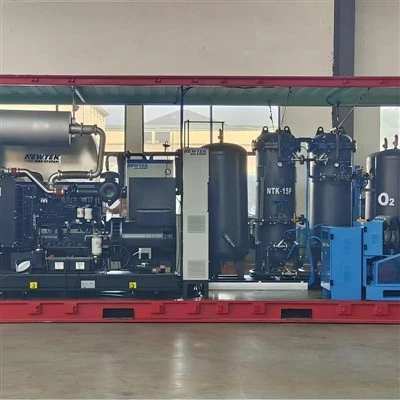
Oxygen availability is one of the most important factors affecting water quality, fish health, feeding efficiency, and production stability in intensive aquaculture. As stocking densities increase and farms adopt recirculating aquaculture systems (RAS), biofloc technology, indoor fish farming, and high-density pond management, maintaining sufficient dissolved oxygen becomes increasingly demanding.
An aquaculture Pressure Swing Adsorption (PSA) oxygen generator produces oxygen from compressed air and supplies it to the farm's oxygen distribution system. When correctly designed, it can provide an on-site oxygen source for fish tanks, ponds, oxygenation cones, side-stream oxygenation equipment, and other compatible applications.
However, selecting an oxygen generator based only on its nominal capacity is not sufficient. A system that produces the required volume of oxygen may still fail to meet the farm's needs if its output purity, delivery pressure, operating stability, energy consumption, or integration with the oxygen transfer equipment is unsuitable.
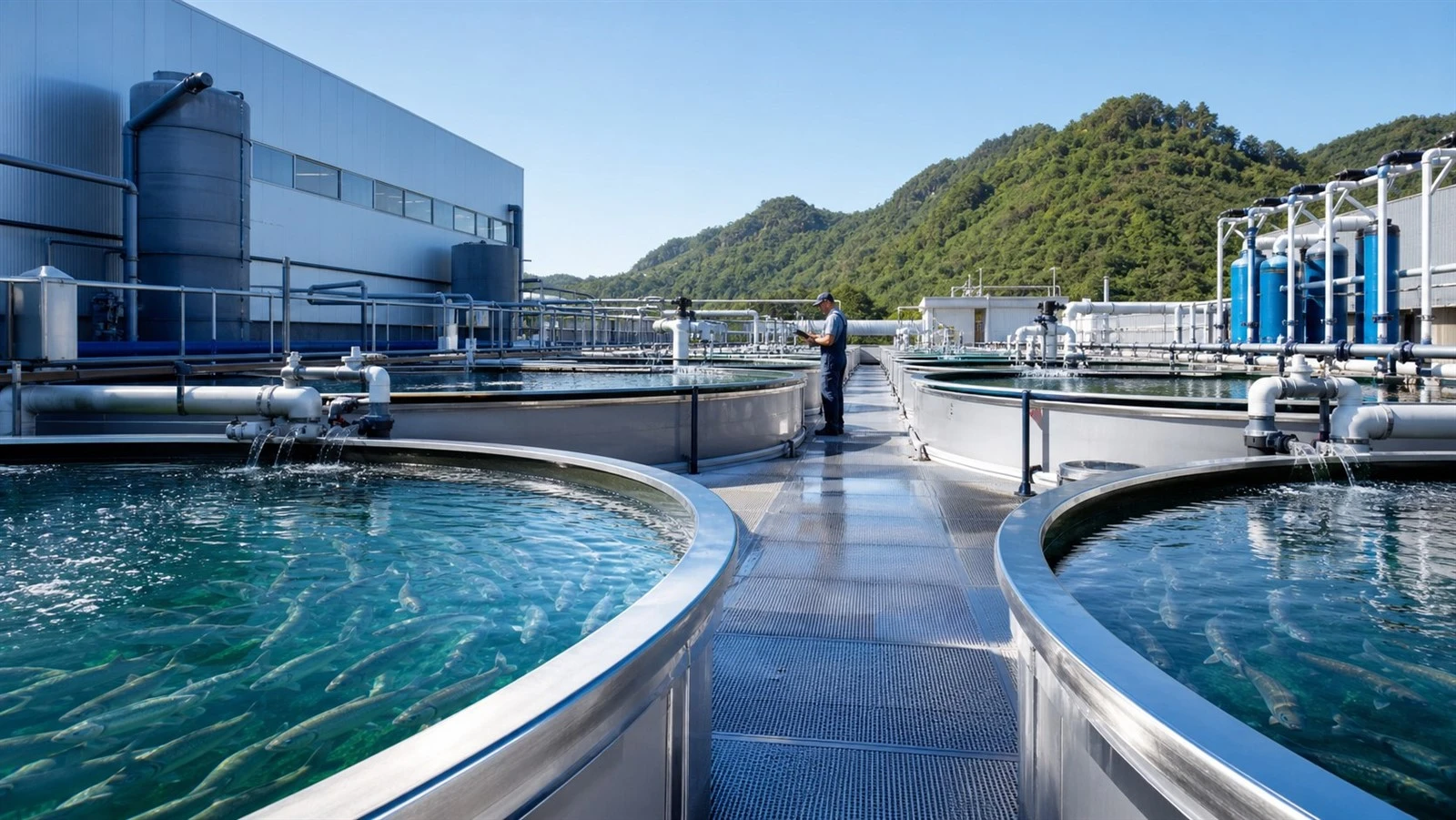
The technical requirements also differ between aquaculture operations. A small indoor fish farm may need a compact system for several tanks, while a large shrimp farm or commercial fish hatchery may require continuous oxygen production, multiple distribution zones, automatic monitoring, and emergency backup arrangements.
This article explains the principal technical parameters aquaculture operators should evaluate when selecting a PSA oxygen generator, how those parameters affect farm performance, and what information should be prepared before requesting a system quotation.
Oxygen Production Capacity: Nm³/h or m³/h
Oxygen production capacity is the first parameter to evaluate because it determines how much oxygen the system can supply over a given period.
Manufacturers commonly specify output in cubic metres per hour, often expressed as Nm³/h when the gas volume is referenced to defined standard conditions. The reference temperature and pressure should be confirmed because different manufacturers may use different conventions.
For aquaculture applications, the required capacity depends on the species, biomass, feeding rate, water temperature, stocking density, system design, and oxygen transfer efficiency.
How to estimate oxygen demand
A practical assessment begins with the oxygen consumption of the farm rather than the advertised capacity of a machine.
The total oxygen requirement may include:
Oxygen consumed by fish, shrimp, or other cultured species.
Oxygen demand associated with biological filtration.
Oxygen consumed by microorganisms in biofloc systems.
Demand created by organic waste decomposition.
Oxygen requirements during feeding and periods of elevated metabolic activity.
Losses associated with oxygen transfer and distribution.
Reserve capacity for changing biomass or unexpected operating conditions.
For example, a farm may have several production tanks that each require a different oxygen transfer rate. The total system demand must account for simultaneous consumption rather than simply multiplying an assumed average by the number of tanks.
This is a simplified engineering relationship. Actual system calculations must also account for the oxygen concentration in the supplied gas, gas utilization, operating pressure, and the performance of the selected transfer equipment.
Important: Oxygen generator output and oxygen transferred into water are not the same quantity. A generator may produce sufficient gas volume while the farm still experiences low dissolved oxygen if the transfer equipment is inefficient or poorly matched to the operating conditions.
Oxygen Purity: Commonly 90%–95%, Depending on the System
Oxygen purity describes the proportion of oxygen in the product gas. PSA oxygen generators for aquaculture commonly operate within a specified purity range that may be around 90%–95%, depending on the equipment design and rated operating conditions.
The appropriate purity should be confirmed against the requirements of the farm's oxygen transfer equipment and production process.
Higher oxygen concentration can reduce the volume of non-oxygen gases introduced with the supply. This can be beneficial where the farm needs a compact gas supply, uses oxygen cones, or operates a distribution system designed around oxygen-enriched gas.
However, purity must be evaluated together with output capacity. A generator's maximum flow rate may differ depending on the required purity, and the supplier should state the guaranteed output at the specified operating point.
What aquaculture operators should confirm
| Parameter | What to verify |
|---|---|
| Rated oxygen purity | The guaranteed concentration at the specified operating conditions |
| Output at rated purity | Whether the stated capacity is available at the required purity |
| Purity stability | How the system performs as flow demand changes |
| Monitoring method | Whether oxygen concentration is measured continuously or checked periodically |
| Alarm settings | How abnormal purity is detected and communicated |
| Operating limits | Conditions under which the specified purity can be maintained |
A common purchasing mistake is comparing two machines by capacity alone when their output purity differs. A technically meaningful comparison requires the same purity target, reference conditions, and delivery pressure.
For aquaculture, the final decision should also consider how the gas will be transferred into the water. Fine-bubble diffusers, oxygen cones, packed columns, and other oxygenation devices may have different requirements for gas flow and concentration.
Delivery Pressure: Match the Oxygen Generator to the Transfer Equipment
Delivery pressure determines whether oxygen can reach the intended oxygenation equipment at the required flow.
Different aquaculture installations operate at different pressures. A shallow pond with diffusers may require a different pressure range from a deep tank, a pressurized oxygenation cone, or a side-stream oxygenation system.
The required pressure depends on several factors:
Water depth at the injection point.
Hydrostatic pressure.
Pressure losses in pipes, valves, filters, and fittings.
Backpressure generated by the oxygen transfer device.
Required gas flow through each distribution branch.
The design and operating characteristics of the oxygen generator.
For a submerged diffuser, the gas pressure must exceed the local water pressure and the additional losses through the diffuser and distribution network. As water depth increases, the pressure requirement generally increases.
An oxygen generator should not be selected solely according to the maximum pressure listed in a product brochure. The relevant question is whether the system can provide the required flow and purity at the actual delivery pressure.
Practical selection considerations
Confirm the operating pressure required by the oxygen transfer equipment.
Calculate pressure losses in the distribution network.
Check whether a downstream booster or pressure-regulating device is necessary.
Verify the generator's rated capacity at the specified outlet conditions.
Confirm that the pipes, valves, regulators, and fittings are suitable for oxygen service.
If the pressure is insufficient, oxygen delivery may fall below the required rate. Excessive pressure, on the other hand, can create unnecessary energy use or exceed the ratings of downstream equipment.
The system should therefore be designed around the pressure and flow requirements of the complete oxygen delivery arrangement.
Gas Flow Stability and Continuous Operation
Aquaculture oxygen demand changes over time. Fish consume oxygen continuously, but demand can increase with feeding, higher water temperatures, greater biomass, and other operating conditions.
For intensive farms, the oxygen supply may need to operate for extended periods with minimal interruption. Flow stability is therefore an important technical parameter.
A PSA oxygen generator should be evaluated for its ability to maintain the required output under the farm's normal operating conditions. Operators should also understand how the system responds when demand changes or when equipment enters a maintenance cycle.
Key questions to ask the supplier
What is the minimum stable output?
What is the maximum continuous output at the required purity?
How does oxygen purity change when flow demand varies?
What is the normal start-up time?
Can the system operate continuously for the farm's required duty cycle?
What happens when the system experiences an alarm or a component fault?
Is the equipment suitable for automatic operation with limited operator intervention?
The answers should be supported by technical specifications rather than general descriptions.
Where demand fluctuates substantially, the farm may need a combination of suitable production capacity, oxygen storage, flow regulation, and automatic control. The design should avoid frequent operating changes that reduce efficiency or make oxygen supply less predictable.
Air Compressor Capacity and Compressed-Air Quality
PSA oxygen generators rely on compressed air as their feed gas. The compressor and air treatment equipment are therefore critical components of the complete installation.
Insufficient feed-air flow can reduce oxygen output. Poor compressed-air quality can also affect the performance and service life of the separation equipment.
A typical system may include an air compressor, air receiver, cooling equipment, filters, moisture separation, and a dryer, depending on the design and operating conditions.
Parameters to verify
Feed-air flow: The compressor must provide the required volume of air at the specified pressure and operating conditions.
Compressor discharge pressure: The feed pressure must fall within the oxygen generator manufacturer's specified range.
Moisture control: Excess moisture must be managed according to the system's feed-air quality requirements.
Oil and particle removal: Air treatment components must control contaminants that could affect the adsorption process.
Ambient operating conditions: Temperature, humidity, and altitude may influence compressor performance and system capacity.
Duty cycle: The compressor should be suitable for the intended operating hours and production load.
For farms in hot or humid climates, air treatment deserves particular attention. High ambient temperatures can affect compressor performance, while humidity increases the importance of suitable moisture removal.
A quotation should clearly identify which components are included. If the quoted oxygen generator requires a separate compressor, dryer, or air treatment package, those items must be included in the total project evaluation.
Energy Consumption: kWh per Unit of Oxygen
Electricity is a major operating expense for an on-site oxygen production system. The total energy consumption depends on the compressor, PSA equipment, cooling system, control components, and any additional pressure-boosting equipment.
For aquaculture operators, comparing energy consumption per unit of oxygen can help evaluate the long-term cost of different system configurations.
However, the comparison is meaningful only when the machines are assessed at equivalent output purity, delivery pressure, and operating conditions.
What should be included in the calculation?
Air compressor electricity consumption.
PSA equipment power consumption.
Cooling and auxiliary equipment.
Downstream oxygen boosting, if required.
Energy used by other components included in the oxygen supply package.
The resulting unit may be expressed as kWh/Nm³, provided the gas volume and measurement conditions are consistently defined.
Lower specific energy consumption can reduce operating costs, but it should not be evaluated in isolation. A low-energy system that cannot provide the required purity, flow, or pressure is not suitable for the application.
The farm should request power consumption data at its intended operating point rather than relying on the rated power of a single component.
Dissolved Oxygen Requirements in the Water
Although the PSA oxygen generator produces gas, the ultimate objective in aquaculture is to maintain appropriate dissolved oxygen (DO) levels in the water.
DO is usually measured in milligrams per litre (mg/L). The required level depends on the cultured species, life stage, temperature, salinity, stocking density, feeding rate, and production system.
Some species and production stages tolerate lower oxygen levels than others, but sustained oxygen deficiency can reduce feeding, growth, survival, and overall production performance.
Why generator specifications must be linked to water quality
A farm can install a high-capacity oxygen generator and still experience inadequate DO if:
The oxygen transfer device is poorly matched to the tank or pond.
Water circulation creates oxygen-deficient zones.
Gas distribution is uneven.
Biomass has increased beyond the original design assumptions.
Water temperature has risen and oxygen demand has changed.
Biological filtration or organic decomposition creates additional oxygen demand.
DO sensors are poorly positioned or incorrectly calibrated.
The system should therefore be designed around the required oxygen transfer rate, not simply the volume of gas that can be produced.
Operators should establish species-specific DO targets with reference to appropriate aquaculture guidance and actual farm conditions. Continuous or appropriately frequent DO monitoring can help detect changes before they become serious operational problems.
The oxygen generator, transfer equipment, water circulation system, and monitoring instruments should be treated as interconnected parts of the farm's water-quality management strategy.
Oxygen Transfer Efficiency and Distribution Design
Oxygen transfer efficiency determines how much of the supplied oxygen actually enters the water. It is one of the most important factors in sizing an aquaculture oxygen supply system.
Different oxygen transfer methods have different performance characteristics.
| Oxygen transfer method | Typical application considerations |
|---|---|
| Fine-bubble diffusers | Gas transfer depends on bubble size, water depth, diffuser condition, and circulation |
| Oxygen cones | Often used where concentrated gas-water contact is required in a controlled flow |
| Packed-column oxygenation | Performance depends on water flow, packing design, gas contact, and operating conditions |
| Side-stream oxygenation | Can be integrated into a controlled water circulation loop |
| Surface aeration | Common in ponds and some tanks, with performance affected by equipment design and water conditions |
The most suitable option depends on the farm's scale, water circulation arrangement, species, and required oxygen transfer rate.
For example, a deep tank with an appropriately designed oxygen cone may achieve a different transfer performance from a shallow pond using diffusers. As a result, the two installations may require different gas production capacities even if their biological oxygen demand is similar.
A supplier should not estimate the generator size without understanding the intended oxygen transfer method.
The design should account for oxygen utilization, water flow, gas pressure, and the performance data of the selected transfer equipment.
Automatic Control and Oxygen Monitoring
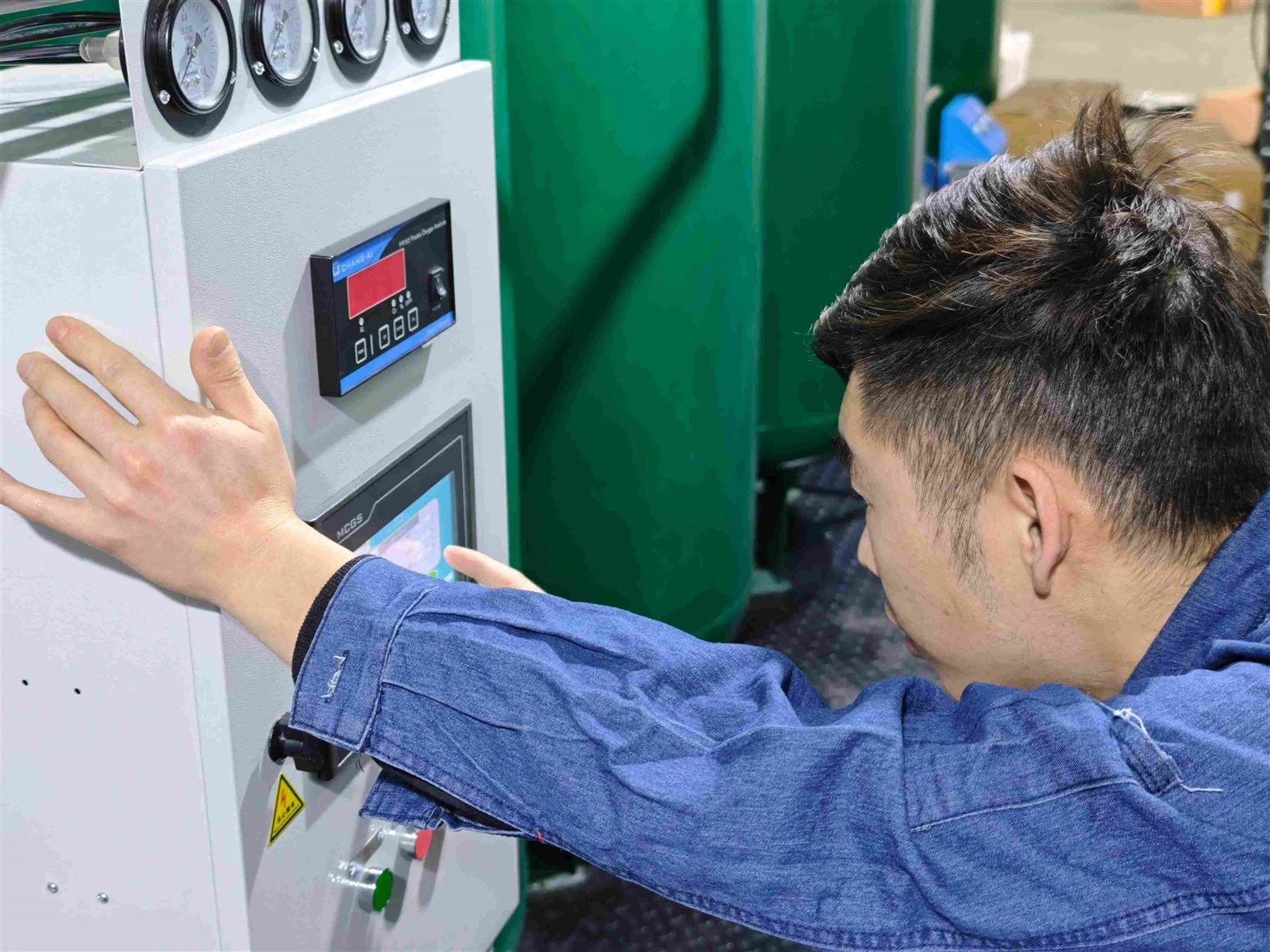
Automatic control can help aquaculture farms maintain more consistent oxygen supply conditions while reducing the need for continuous manual adjustment.
Depending on the configuration, a PSA oxygen system may include a control panel, operating-status indicators, alarms, and instruments for monitoring oxygen purity, pressure, or flow.
The farm's wider control system may also use DO sensors to monitor oxygen conditions in tanks, ponds, or circulation loops.
These instruments measure different things:
Oxygen purity monitoring evaluates the concentration of oxygen in the product gas.
Pressure monitoring indicates whether gas is available at the expected delivery pressure.
Flow monitoring helps verify how much gas is being supplied.
Dissolved oxygen monitoring measures oxygen dissolved in the water.
These measurements should not be treated as interchangeable. A normal product-gas purity reading does not prove that dissolved oxygen is adequate in every tank.
Useful control functions
Automatic start and stop according to defined operating requirements.
Low-pressure and abnormal-purity alarms.
Flow regulation for separate tanks or distribution zones.
DO-based control where suitable sensors and control logic are installed.
Remote status monitoring where supported.
Alarm notification and escalation procedures.
Automatic control should be designed with appropriate safeguards. A failed sensor, incorrect calibration, or communication fault must not cause the system to stop supplying oxygen without an appropriate response.
For high-density aquaculture, monitoring should be combined with emergency procedures and an independent backup oxygen source.
Operating Temperature, Humidity, and Installation Environment
Aquaculture facilities often operate in environments with high humidity, water spray, salt exposure, and elevated ambient temperatures. These conditions can influence the service life and reliability of electrical and mechanical equipment.
The PSA oxygen generator and its supporting equipment should be selected for the actual installation environment.
Environmental parameters to evaluate
Ambient temperature: High temperatures can reduce compressor performance and affect the operating conditions of the oxygen production system.
Humidity: Moisture management is important for compressed-air treatment and for protecting electrical components.
Ventilation: Compressors and other equipment may release heat that must be removed from the installation area.
Corrosion exposure: Coastal farms and facilities exposed to salt-laden air may require appropriate materials, coatings, and maintenance practices.
Dust and contaminants: Air intake location and filtration should account for the surrounding environment.
Installation enclosure: Outdoor or semi-outdoor installations may require weather protection, suitable ventilation, and appropriate access for maintenance.
The supplier should specify the permitted ambient temperature and humidity ranges and clarify whether additional environmental protection is required.
A system installed in a clean, temperature-controlled equipment room may need a different configuration from one operating beside an outdoor shrimp pond in a hot coastal climate.
System Availability, Backup Oxygen, and Emergency Response
In intensive aquaculture, oxygen interruption can quickly become a serious risk, especially at high stocking densities and elevated water temperatures.
The reliability of the oxygen supply should therefore be evaluated alongside output capacity and energy consumption.
A single production unit may be appropriate for some applications, but farms with high-value stock or limited time to respond to oxygen failure may require additional redundancy.
Reliability measures to consider
Backup oxygen storage or an alternative oxygen source.
Emergency power where appropriate.
High and low DO alarms.
Independent monitoring for critical tanks.
Backup pumps and circulation equipment where needed.
Automatic switching procedures, where suitable.
Preventive maintenance and critical spare parts.
Staff training and documented emergency response procedures.
The backup strategy should reflect the time available to protect the stock if the primary supply fails.
For example, a high-density indoor fish farm may require a faster response and greater redundancy than a low-density pond system. The required reserve also depends on water volume, biomass, species sensitivity, water temperature, and the effectiveness of emergency aeration.
A PSA oxygen generator should be viewed as part of a complete oxygen management system, not as the sole safeguard against low dissolved oxygen.
Oxygen Storage and Buffer Capacity
Oxygen production and oxygen consumption do not always occur at exactly the same rate. Buffer storage can help balance short-term differences between generator output and the demand of the distribution network.
A suitable storage arrangement may help maintain stable delivery pressure, accommodate temporary increases in demand, and reduce the immediate effect of short-duration variations in production.
The required storage capacity depends on:
Normal oxygen consumption.
Peak oxygen demand.
The duration of demand peaks.
PSA production capacity.
Delivery pressure.
The control strategy.
The expected response time of backup equipment.
Storage should not be sized using a generic rule without considering the actual system. The pressure rating, vessel design, safety devices, installation location, and inspection requirements must comply with the relevant regulations.
For facilities where oxygen availability is critical, the design should distinguish between buffer storage for normal operation and reserve capacity intended for emergencies.
These two functions may require different sizing assumptions.
Maintenance Requirements and Service Life
The long-term performance of a PSA oxygen generator depends on appropriate maintenance of the complete system.
A typical installation may contain an air compressor, filters, dryer, adsorption vessels, valves, oxygen monitoring instruments, control components, and associated piping. Additional equipment may be required depending on the system design.
Maintenance requirements should be confirmed before purchase because they influence operating costs and system availability.
| Component | Typical maintenance considerations |
|---|---|
| Air compressor | Routine service, lubrication where applicable, cooling, and operating checks |
| Air filters | Inspection and replacement according to service conditions |
| Air dryer | Performance checks and maintenance specified by the manufacturer |
| PSA adsorption system | Inspection of operating performance and relevant components |
| Valves and controls | Functional checks and replacement when necessary |
| Oxygen purity instrument | Calibration or verification at the required intervals |
| Pressure and flow instruments | Inspection and calibration where applicable |
| Electrical controls | Inspection of wiring, alarms, and protective functions |
| Oxygen distribution equipment | Leak checks, cleanliness, and inspection appropriate to oxygen service |
The maintenance programme should be based on the manufacturer's instructions, operating hours, environmental conditions, and actual performance data.
Farms should also confirm the availability of local service support, replacement parts, technical documentation, and operator training.
A lower initial purchase price may not represent the best long-term value if spare parts are difficult to obtain or service support is limited.
How to Select the Right PSA Oxygen Generator for an Aquaculture Farm
The selection process should begin with the farm's biological and operational requirements, then translate those requirements into engineering parameters.
Define the aquaculture system
Identify the cultured species, biomass, stocking density, water temperature, system type, and expected production changes.
Estimate oxygen demand
Calculate the oxygen required by the cultured animals and other relevant processes. Include peak demand rather than relying solely on average consumption.
Determine oxygen transfer performance
Identify the transfer equipment and estimate its effective oxygen transfer efficiency under actual operating conditions.
Set the gas specification
Confirm the required oxygen purity, flow, delivery pressure, and operating hours.
Evaluate the complete equipment package
Review the compressor, air treatment equipment, PSA system, storage, controls, and any required pressure-boosting equipment.
Check site conditions
Confirm ambient temperature, humidity, power supply, ventilation, installation space, corrosion exposure, and maintenance access.
Establish the control and backup strategy
Define DO monitoring, alarms, emergency oxygen, backup power where appropriate, and staff responsibilities.
Compare total operating costs
Evaluate equipment investment, electricity consumption, maintenance, consumables, service support, and expected operating life.
Confirm performance guarantees
Request documented output capacity at the required oxygen purity and pressure, along with the stated reference conditions and energy consumption.
This process helps ensure that the selected system matches the actual needs of the farm rather than a generic capacity estimate.
Conclusion
Selecting an aquaculture PSA oxygen generator requires more than choosing a machine with a particular output rating. Oxygen production capacity, purity, delivery pressure, feed-air requirements, energy consumption, flow stability, environmental suitability, and maintenance requirements all influence system performance.
Most importantly, generator output must be matched to the oxygen transfer equipment and the biological oxygen demand of the aquaculture operation. Dissolved oxygen levels depend on the interaction between gas supply, water circulation, oxygen transfer efficiency, biomass, temperature, and other water-quality conditions.
A well-designed installation should therefore combine an appropriately sized PSA oxygen generator with suitable gas distribution, oxygen transfer equipment, monitoring, automatic control where appropriate, and a dependable emergency supply strategy.
For intensive fish farming, shrimp cultivation, hatcheries, and recirculating aquaculture systems, this integrated approach can help maintain more stable oxygen availability, improve operational control, and support sustainable production planning.
FAQ
What oxygen purity is suitable for aquaculture PSA oxygen generators?
Many systems are designed to produce oxygen within a specified range around 90%–95%, but the appropriate purity depends on the equipment design and oxygen transfer requirements. The supplier should confirm guaranteed capacity at the required purity and delivery pressure.
How do I calculate the required oxygen generator capacity for a fish farm?
Start by estimating the oxygen demand of the cultured species and other biological processes. Then account for the effective oxygen transfer efficiency, peak demand, and required operating reserve. The final gas flow should be confirmed through an engineering assessment of the complete oxygenation system.
Does a higher-capacity oxygen generator always improve dissolved oxygen?
No. Dissolved oxygen also depends on oxygen transfer efficiency, water circulation, biomass, temperature, and the distribution of oxygen throughout the system. A larger generator cannot compensate automatically for poorly designed transfer equipment or inadequate water circulation.
What delivery pressure should an aquaculture oxygen generator provide?
The required pressure depends on water depth, piping losses, and the oxygen transfer method. A system using shallow-water diffusers may have different pressure requirements from one using an oxygen cone or pressurized side-stream equipment.
How much electricity does a PSA oxygen generator consume?
Electricity consumption depends on the required oxygen output, purity, delivery pressure, compressor efficiency, air treatment equipment, and operating conditions. Request total system power consumption and specific energy consumption at the intended operating point.
Can a PSA oxygen generator operate continuously?
A system designed for continuous duty can supply oxygen within its rated operating conditions, provided that utilities, maintenance, and environmental requirements are met. The farm should still establish backup oxygen and emergency procedures appropriate to its stocking density and risk level.
Why is dissolved oxygen monitoring necessary when a PSA oxygen generator is installed?
Oxygen purity and gas flow indicate the condition of the oxygen supply, but they do not directly establish the amount of oxygen dissolved in the water. DO monitoring helps operators identify oxygen shortages caused by changing biomass, water temperature, transfer performance, or distribution problems.
What information should I provide when requesting an aquaculture oxygen generator quotation?
Provide the cultured species, total biomass or production target, water volume, system type, estimated oxygen demand, transfer equipment, required oxygen purity, delivery pressure, operating hours, local ambient conditions, power supply, and backup requirements. This information allows the supplier to propose a system based on the farm's actual operating conditions.