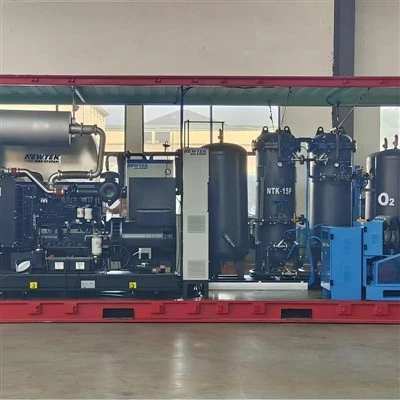
Medical institutions depend on a continuous and appropriately controlled oxygen supply to support patient care. Hospitals, clinics, emergency treatment centers, and other healthcare facilities may use oxygen in emergency departments, operating rooms, intensive care units, recovery wards, and general inpatient areas. Any interruption, inadequate supply pressure, or failure to meet medical gas quality requirements can affect clinical operations and patient safety.
A Pressure Swing Adsorption (PSA) oxygen generation system can provide an on-site source of oxygen by separating oxygen from compressed air. For medical institutions, this approach may reduce dependence on delivered gas and improve supply autonomy when the system is correctly designed, installed, operated, and maintained.
However, purchasing medical oxygen equipment involves considerably more than comparing generator capacities and prices. A healthcare facility must consider medical gas regulations, required oxygen purity, peak demand, distribution pressure, redundancy, backup supply, power reliability, infection-control requirements, maintenance resources, and the qualifications of the equipment supplier.
Most importantly, oxygen produced by an industrial PSA system is not automatically suitable for medical use. A system intended to supply patients must meet the applicable medical oxygen quality specifications and regulatory requirements in the destination country. Equipment selection, testing, certification, and clinical risk management must be addressed before the system is approved for patient use.
This article explains the key considerations medical institutions should evaluate before purchasing a PSA oxygen generation system, helping hospital administrators, biomedical engineers, facility managers, and project contractors make informed procurement decisions.
Confirm the Medical Oxygen Standards and Regulatory Requirements
The first step is to establish whether the proposed equipment and its output can legally and safely be used for the intended medical application.
Medical oxygen is subject to quality and safety requirements that differ from those applied to many industrial oxygen applications. Requirements vary by jurisdiction, product classification, intended use, and the configuration of the supply system.
Verify the applicable oxygen quality specification
Before purchasing equipment, determine the oxygen quality requirements applicable to the healthcare facility. These may include oxygen concentration or purity, limits for specified impurities, moisture requirements, and other parameters defined by the relevant medical oxygen specification or pharmacopoeia.
For example, the European Pharmacopoeia includes a monograph for Oxygen 93 per cent, which defines requirements for that medicinal gas. Other markets may apply different pharmacopoeial specifications, national standards, or regulatory pathways.
The project team should not assume that a general statement such as "93% oxygen" proves compliance with every requirement for medical use. Oxygen concentration is only one part of the quality assessment.
The supplier should identify the intended medical oxygen specification, explain how the system meets it, and provide the documentation and testing procedures needed to demonstrate conformity.
Check the regulatory status of the complete system
A medical oxygen generation project may involve several regulated elements, including the oxygen generation equipment, medical gas pipeline system, storage and backup arrangements, monitoring instruments, and associated control equipment.
Depending on the country, the installation may require authorization from health authorities, medical gas system approval, facility engineering review, or other regulatory procedures.
For example, a project may need to address applicable requirements under the U.S. Food and Drug Administration framework, local medical gas regulations, or relevant national standards for medical gas pipeline systems. The exact obligations depend on the location and the proposed use.
Purchasers should establish the approval pathway before placing an order. This avoids the risk of receiving equipment that can generate oxygen but cannot be approved for the intended healthcare application.
Request supporting documentation
Relevant documents may include:
Medical oxygen quality specifications and test reports.
Equipment technical specifications and performance guarantees.
Applicable product approvals, certificates, and declarations.
Quality management documentation where required.
Installation, operation, and maintenance manuals.
Commissioning and acceptance-testing procedures.
Medical gas pipeline interface and connection specifications.
Recommended inspection intervals and spare-parts lists.
Certificates should be checked for scope, validity, issuing organization, and relevance to the exact equipment configuration being purchased. A certificate for one component does not necessarily establish compliance of the entire medical gas installation.

Calculate Oxygen Demand Based on Actual Clinical Requirements
The required oxygen capacity is one of the most important purchasing decisions. An undersized system may struggle during periods of high clinical demand, while an unnecessarily large system may increase capital expenditure, electricity consumption, and maintenance costs.
A medical institution should calculate demand from its actual patient-care requirements rather than selecting a generator solely according to the number of beds.
Assess the number and type of oxygen outlets
The calculation should consider the number of oxygen outlets, their intended clinical uses, and the expected utilization of different departments.
Relevant areas may include:
Emergency departments and resuscitation rooms.
Intensive care units.
Operating theatres and post-anesthesia recovery areas.
General inpatient wards.
Maternity and neonatal care areas.
High-dependency units.
Treatment and observation rooms.
Not every outlet will operate at maximum demand simultaneously. The engineering team should therefore apply appropriate demand assumptions and diversity factors in accordance with the applicable medical gas design standard and the hospital's clinical requirements.
However, diversity factors must not be selected simply to reduce equipment size. Emergency demand, future clinical expansion, and the consequences of supply failure must be considered carefully.
Distinguish average demand from peak demand
Average oxygen consumption is useful for estimating operating costs, but it is not sufficient for sizing the supply system.
A hospital may experience substantial changes in oxygen demand due to patient admissions, seasonal respiratory illness, emergency events, changes in clinical practice, or the introduction of new departments.
The design should identify:
Expected average oxygen consumption.
Peak hourly and daily demand.
Short-term variations in flow.
Required delivery pressure at peak demand.
Anticipated changes in clinical capacity.
Demand associated with any additional connected medical equipment.
Where reliable historical consumption data exist, they should be reviewed alongside the hospital's planned clinical services. For a new facility, the engineering team should use a documented demand model based on the intended bed capacity, department layout, clinical equipment, and applicable design standards.
Consider future demand without oversizing unnecessarily
Hospitals often add wards, treatment areas, or oxygen outlets over time. Purchasing a system with no provision for future requirements can make later expansion expensive.
The procurement specification should distinguish between the initial demand and the expected future demand. This allows the supplier to evaluate whether the installation should include additional generation capacity, modular equipment arrangements, or provision for a future system upgrade.
Future planning should not compromise the safety or performance of the initial installation. Any expansion must preserve medical oxygen quality, pipeline performance, and required redundancy.
Evaluate Oxygen Purity and Medical Gas Quality Control
Oxygen quality is a clinical safety requirement, not merely a product specification.
A medical oxygen generation system must consistently produce gas that meets the applicable requirements at the point where it enters the medical gas distribution system. The project team should evaluate how quality is measured, monitored, documented, and protected when operating conditions change.
Understand the specified oxygen concentration
PSA oxygen systems separate oxygen from other components of atmospheric air through adsorption and desorption processes. The resulting gas has an oxygen concentration determined by the system design and operating conditions.
Some medical oxygen systems are designed to produce oxygen at a nominal concentration of approximately 93%, but the actual specification must be confirmed for the intended market and medical application.
The procurement document should state the required operating range and the applicable medical oxygen standard. It should also identify the conditions under which the supplier guarantees the stated performance.
Confirm impurity control
Oxygen concentration alone does not demonstrate that a gas supply meets all medical quality requirements.
Depending on the applicable specification, the quality assessment may include water content and selected impurities or contaminants. The feed-air treatment system, intake location, compressor configuration, filters, and maintenance practices can influence the final gas quality.
The supplier should explain which quality parameters are controlled by the equipment, which are verified during commissioning, and which require periodic testing.
Where additional purification or monitoring components are necessary, they should be included in the equipment scope and maintenance plan rather than left as unspecified future requirements.
Specify continuous monitoring and alarms
Medical oxygen systems should include appropriate monitoring of the parameters necessary to maintain safe operation. Depending on the design and applicable requirements, these may include oxygen concentration, supply pressure, flow, equipment status, and abnormal operating conditions.
Alarm arrangements should make it possible for authorized personnel to identify a developing problem and respond before patient care is compromised.
The procurement specification should clarify:
Which parameters are measured continuously.
Which alarms are provided.
Where alarms are displayed or transmitted.
What happens when oxygen quality falls outside the specified range.
How instruments are calibrated or verified.
How alarm events are recorded and investigated.
An oxygen analyzer is useful only when its performance is maintained and the facility has a defined response to its readings. Monitoring must be integrated with the hospital's operating procedures and medical gas safety responsibilities.
Prioritize Supply Continuity and Redundancy
A hospital's oxygen supply cannot be evaluated using normal production performance alone. The design must also account for equipment failure, maintenance, utility interruptions, unexpected demand, and other events that could interrupt the supply.
A PSA oxygen generation system may improve supply autonomy, but it should not be treated as the sole safeguard against oxygen interruption.
Evaluate generation redundancy
The appropriate equipment configuration depends on the required continuity level, facility size, clinical services, and applicable medical gas standards.
The engineering team should assess whether a single generation unit is acceptable or whether multiple units are required to provide operational redundancy.
Where multiple units are used, the design should clarify how they operate, how demand is shared, and whether the remaining equipment can support the required clinical load if one unit becomes unavailable.
Redundancy should be evaluated at the system level. Installing two generation units does not necessarily provide full protection if both depend on a single vulnerable compressor, electrical supply, control component, or other shared element.
Provide an independent backup oxygen source
A medical facility should have an appropriate backup arrangement for circumstances in which the primary generation system cannot supply the required oxygen.
Depending on the facility and applicable regulations, backup may involve oxygen cylinders, a bulk oxygen supply, or another approved source. The appropriate configuration depends on the clinical demand, local infrastructure, available storage space, and required response time.
Backup capacity should be calculated using the expected demand during an outage and the time needed to restore the primary supply or establish an alternative source.
The facility should also define how the backup source is activated, how remaining capacity is monitored, and who is authorized to manage the changeover.
Plan for maintenance and unexpected shutdowns
Maintenance should be scheduled without compromising the availability of oxygen for patient care. The system design should allow required service work to be performed while maintaining the specified supply through redundant equipment or an approved backup source.
The supplier should identify components that require routine replacement, expected service intervals, and the likely duration of major maintenance activities.
Hospitals should also maintain documented procedures for unexpected shutdowns, including communication with clinical departments, escalation to facility management, and activation of backup supply arrangements.
Verify Delivery Pressure and Medical Gas Pipeline Compatibility
Even when oxygen purity and generation capacity meet the specification, the system may not provide satisfactory service if delivery pressure is insufficient or the distribution network is poorly designed.
Determine the required operating pressure
The required pressure depends on the medical gas pipeline system, connected clinical equipment, applicable standards, and the hospital's design.
The project team should specify the required pressure at the generation system outlet and the minimum pressure that must be maintained at critical points of use under the expected demand conditions.
Pressure losses through filters, regulators, storage equipment, valves, and pipelines must be considered during engineering design.
The supplier should provide the relevant pressure-flow performance data rather than quoting only a nominal outlet pressure without explaining the corresponding flow conditions.
Assess the existing pipeline network
For an existing hospital, the purchasing decision should begin with a review of the current medical gas distribution system.
Important questions include:
Can the existing pipeline support the proposed flow?
Are the pipes, valves, regulators, and connections suitable for the intended medical gas service?
Is the pipeline system compliant with applicable medical gas standards?
Are the existing alarms and pressure-monitoring arrangements adequate?
Will the new source require changes to the manifold, isolation arrangements, or control system?
A generator should not be connected to an existing hospital pipeline simply because the fittings appear compatible. The integration must be designed, inspected, tested, and approved by qualified personnel.
Include commissioning and pipeline acceptance testing
Before clinical use, the completed installation must undergo the required commissioning and acceptance tests. Depending on applicable standards and project scope, these may include leak testing, pressure verification, gas identity testing, quality testing, alarm verification, and confirmation that the system performs correctly under simulated demand conditions.
The precise test requirements must be established by the responsible medical gas engineer and relevant authorities. Testing should not be reduced to a basic demonstration that oxygen flows through the pipeline.
Assess the Hospital's Power Supply and Utility Infrastructure
PSA oxygen generation systems generally depend on electrical power for compressors, controls, valves, monitoring instruments, and other supporting equipment. A reliable power supply is therefore essential to continuous operation.
Calculate the complete electrical load
The procurement specification should include the electrical requirements of the complete system, not just the oxygen generation unit.
Relevant loads may include:
Air compressors.
Air-treatment equipment.
Cooling equipment.
PSA process controls.
Oxygen monitoring instruments.
Ventilation systems.
Control panels and communication equipment.
The supplier should provide connected load, starting current, voltage, frequency, phase configuration, and other electrical information required for design.
The facility's electrical engineer should confirm that the available supply can support the equipment under expected operating conditions without creating unacceptable voltage fluctuations or overloading existing infrastructure.
Consider emergency power
Hospitals may have emergency generators, uninterruptible power supplies, or other backup arrangements. However, the existence of emergency power does not automatically mean the oxygen generation system can operate through a power failure.
The electrical design should verify whether the relevant equipment is connected to an appropriate emergency source, whether starting loads can be supported, and how the system behaves during power transfer.
The project should also establish which components require uninterrupted power and whether monitoring, alarm, and control functions remain available during a supply interruption.
Evaluate the water and drainage requirements
Depending on the equipment design, the system may require cooling water, condensate drainage, or other utilities. The supplier should specify the required flow, quality, pressure, and operating conditions where relevant.
Condensate management is particularly important for compressed-air equipment. Drainage arrangements should prevent unwanted accumulation and comply with the facility's environmental and maintenance requirements.
Consider Installation Space, Ventilation, and Environmental Conditions
A hospital may have limited space for new utility equipment, particularly when upgrading an existing facility. A containerized PSA system can be useful when a dedicated outdoor installation is practical, but the site still requires careful assessment.
Select an appropriate installation location
The location should provide adequate access for delivery, lifting, installation, inspection, and maintenance. It should also allow the system to be connected to the medical gas pipeline and required utilities without creating unnecessary pressure losses or operational complications.
The installation should not obstruct emergency routes, interfere with other essential hospital services, or create unacceptable noise or environmental impacts near patient-care areas.
The project team should evaluate flood risk, drainage, nearby buildings, access restrictions, and the availability of space for backup oxygen equipment.
Provide adequate ventilation and heat removal
Compressors and other equipment generate heat during operation. A plant room or container enclosure must remove that heat while maintaining the required environmental conditions for electrical and mechanical components.
Ventilation design should consider ambient temperature, solar exposure, equipment heat load, dust, and the potential consequences of an oxygen leak.
For oxygen systems, ventilation is also an important safety measure because a leak can increase oxygen concentration in the surrounding atmosphere. Oxygen enrichment can make combustible materials ignite more easily and burn more intensely.
The design should therefore consider oxygen-compatible components, leak prevention, appropriate ventilation, and suitable monitoring where required by the risk assessment.
Evaluate noise and vibration
Compressor operation can produce noise and vibration that affect nearby hospital departments or surrounding buildings.
The supplier should provide relevant noise data and identify any measures required to meet the project's acoustic requirements. Depending on the installation, these measures may include equipment isolation, acoustic treatment, enclosure design, or location planning.
Noise reduction measures must not compromise ventilation, cooling, maintenance access, or equipment safety.
Review Infection Control and Clinical Risk Management
Medical oxygen supply equipment is part of the healthcare facility's essential infrastructure. Its installation and operation should be coordinated with the hospital's clinical engineering, facilities management, infection-control, and medical gas safety teams.
Protect the integrity of the medical gas system
The installation and maintenance of medical gas pipelines should be carried out by qualified personnel using approved procedures and materials.
Uncontrolled modifications, inappropriate connections, contamination, or incorrect labeling can create risks beyond the generation equipment itself. The facility should maintain accurate pipeline diagrams, isolation-point identification, and records of commissioning and maintenance.
Any changes to the system should follow a documented management-of-change process that evaluates the potential impact on patient care and other hospital services.
Prevent disruption to clinical operations
Installation work in an operating hospital must be planned to minimize interruption to existing oxygen supplies and other essential utilities.
The project plan should identify the affected areas, required isolation periods, temporary supply arrangements, communication responsibilities, and procedures for restoring service.
Clinical departments should receive clear information about any planned changes that could affect their oxygen supply. Work should not begin until the necessary permits, approvals, and contingency arrangements are in place.
Establish clear responsibility for oxygen quality
The hospital should define who is responsible for monitoring medical oxygen quality, reviewing alarm events, authorizing maintenance, and approving a return to clinical service after a fault or repair.
These responsibilities may be shared among the equipment supplier, medical gas engineer, biomedical engineering team, facilities management, quality department, and other designated personnel.
Clear accountability helps ensure that an abnormal result leads to an appropriate action rather than being overlooked or treated as an equipment issue with no clinical significance.

Compare Total Cost of Ownership Rather Than Purchase Price Alone
A PSA oxygen system may offer economic advantages when a facility has substantial, predictable oxygen demand. However, the financial case should be based on the complete cost of supplying medical oxygen, not only the initial equipment price.
Initial investment
The capital budget may include the oxygen generation equipment, compressors, air-treatment system, storage or backup equipment, pipeline modifications, electrical work, foundations, installation, commissioning, and training.
If the hospital requires additional buildings, container modifications, acoustic treatment, or environmental protection, these costs should also be included.
A low equipment quotation may exclude important elements that later become additional project expenses. The purchasing team should compare quotations using a consistent scope of supply.
Electricity and maintenance costs
Electricity is often a major operating cost for an on-site oxygen generation system. Consumption depends on the equipment configuration, required output, operating pressure, ambient conditions, and actual demand profile.
The supplier should provide energy-consumption data under clearly defined operating conditions. Where possible, the hospital should compare expected consumption with realistic annual demand rather than relying only on a single nominal figure.
Maintenance costs may include filters, service parts, instrument calibration, compressor servicing, labor, and occasional replacement of major components. The cost model should also account for backup oxygen, periodic testing, and any required external inspection.
Compare on-site generation with delivered oxygen
Delivered oxygen may involve cylinder purchases or rentals, transportation, handling, storage, and supply-chain management. An on-site system may reduce some of these costs, but the savings depend on local oxygen prices, electricity tariffs, transport distance, demand, and equipment utilization.
The economic assessment should compare both options over an appropriate project life. It should also account for the cost of redundancy and backup supply, because these are essential elements of medical oxygen safety rather than optional expenses.
A system should not be selected solely because its projected payback period is short. Medical quality, regulatory compliance, and continuity of supply remain mandatory requirements.
Evaluate the Supplier's Medical Oxygen Experience and Technical Support
Medical oxygen systems require more specialized planning than many general industrial gas applications. Supplier selection should therefore consider the company's experience with medical oxygen requirements, system integration, commissioning, and long-term support.
Review relevant project experience
Ask whether the supplier has delivered systems for comparable healthcare facilities and whether those projects involved the same medical oxygen specification and regulatory environment.
Relevant experience may include hospitals, clinics, emergency treatment facilities, and other medical institutions with similar demand and installation constraints.
The purchaser should request evidence of completed projects where appropriate, including the scope of supply, commissioning procedures, and the nature of the technical support provided.
Confirm the scope of supply
A complete quotation should identify the included equipment and services. Depending on the project, these may include the compressor, air pretreatment, PSA generation equipment, oxygen analyzer, control system, storage equipment, pipeline interfaces, alarms, installation support, and commissioning.
The quotation should also identify excluded items, customer-provided utilities, civil works, and the responsibilities of each party.
This is particularly important when several contractors are involved. Unclear responsibility for the medical gas pipeline, backup source, or quality-testing arrangements can delay commissioning and create compliance gaps.
Assess after-sales support and spare parts
Medical oxygen systems may operate for long periods and require scheduled servicing. The supplier should explain its response arrangements, availability of spare parts, technical training, and recommended maintenance program.
For hospitals in remote locations, the ability to diagnose faults and obtain replacement components promptly may be particularly important.
The purchasing team should also confirm the warranty terms, what events are excluded from coverage, and whether the supplier provides technical assistance during commissioning and subsequent operation.
Establish Commissioning, Training, and Acceptance Requirements Before Ordering
A successful purchase should include a clear plan for demonstrating that the installed system meets the agreed technical and medical requirements.
Define measurable acceptance criteria
The contract should specify the required oxygen quality, flow, pressure, and relevant operating conditions. It should also identify the tests required to demonstrate performance and the documents that must be supplied at handover.
Acceptance criteria should be consistent with the applicable medical oxygen specification, regulatory requirements, and project design.
Where performance depends on ambient temperature or other operating conditions, the contract should identify the conditions under which the guaranteed values apply.
Require appropriate testing before clinical use
The system should undergo the required factory testing, site acceptance testing, commissioning, and medical gas quality verification. The exact scope depends on the equipment design, installation, and applicable standards.
The hospital should not authorize clinical use until the responsible personnel have confirmed that all required tests, approvals, and documentation are complete.
If the oxygen quality is outside the specified range or an essential safety function is not working, the system should be managed according to the approved nonconformance and corrective-action procedure.
Train the operating and maintenance teams
Training should cover normal operation, alarm response, startup and shutdown, preventive maintenance, emergency procedures, and the limits of operator authority.
Personnel should understand how to recognize abnormal pressure, purity, flow, or equipment conditions and whom to contact when an issue arises.
The hospital should maintain operating procedures and training records, and it should arrange refresher training when equipment or procedures change.
Medical Oxygen Procurement Checklist
Before approving a purchase, the hospital's procurement and engineering teams can use the following checklist to identify important gaps.
| Evaluation area | Questions to confirm before purchase |
|---|---|
| Regulatory compliance | Does the system meet the applicable medical oxygen requirements in the destination country? |
| Oxygen quality | Are the required concentration, impurity limits, and verification procedures clearly specified? |
| Capacity | Has demand been calculated using actual clinical services, peak requirements, and future plans? |
| Pressure | Can the system maintain the required pressure at the point of use under peak demand? |
| Continuity | Are generation redundancy and backup oxygen arrangements appropriate for clinical risk? |
| Monitoring | Are oxygen quality, pressure, equipment status, and required alarms covered? |
| Power supply | Can the available electrical system support normal operation and required emergency arrangements? |
| Installation | Are space, ventilation, drainage, access, noise, and environmental conditions acceptable? |
| Pipeline integration | Has the existing or proposed medical gas pipeline been assessed by qualified personnel? |
| Operating costs | Have electricity, maintenance, testing, backup supply, and spare parts been included? |
| Supplier capability | Does the supplier have relevant medical oxygen experience and appropriate technical support? |
| Commissioning | Are acceptance tests, documentation, training, and approval responsibilities defined? |
This checklist should be adapted to the hospital's size, clinical services, local regulations, and project scope. It is a procurement aid, not a replacement for a formal engineering design or regulatory approval.
FAQ
Is PSA oxygen suitable for hospital use?
A PSA oxygen generation system can be suitable for medical use when it is specifically designed and approved for the intended application and its output meets the applicable medical oxygen quality requirements. The hospital must also establish appropriate monitoring, backup supply, commissioning, maintenance, and regulatory compliance arrangements.
Is oxygen at approximately 93% purity acceptable for medical institutions?
That depends on the applicable medical oxygen specification and the destination country's regulatory requirements. Some jurisdictions recognize medicinal oxygen specifications at approximately 93% concentration, but concentration alone does not establish compliance. The relevant impurity limits, testing requirements, documentation, and system approvals must also be satisfied.
Can a hospital rely entirely on its PSA oxygen generation system?
The hospital should not assume that the primary generator alone provides adequate protection against supply interruption. The required redundancy and backup source should be determined through clinical risk assessment and applicable medical gas standards. Backup capacity must be sufficient for the expected demand and the time needed to restore the primary supply.
How much oxygen capacity does a hospital need?
Capacity depends on the number and type of oxygen outlets, clinical departments, expected utilization, peak demand, required delivery pressure, and future development plans. A qualified medical gas engineer should calculate demand using the applicable design standard and documented assumptions rather than relying solely on bed count.
What is the difference between oxygen generator capacity and actual hospital supply capacity?
Generator capacity describes the output available under specified operating conditions. Actual supply capacity also depends on pressure losses, distribution-pipeline limitations, storage and regulation arrangements, equipment availability, and the required redundancy. The system should be evaluated as a complete supply network.
What should a hospital check before connecting a new generator to an existing pipeline?
The facility should verify the pipeline's design capacity, material compatibility, regulatory status, pressure requirements, isolation arrangements, and alarm configuration. Qualified personnel must complete the required integration, testing, and approval procedures before the system is used for patient care.
Is on-site oxygen generation always cheaper than delivered oxygen?
No. The financial result depends on oxygen consumption, local electricity costs, delivered-gas prices, transportation expenses, maintenance, equipment utilization, and the investment required for redundancy and backup. A lifecycle cost comparison is more useful than comparing the purchase price with a single cylinder price.
Conclusion
Purchasing a PSA oxygen generation system for a medical institution is a clinical infrastructure decision as well as an equipment procurement decision. The system must satisfy the applicable medical oxygen quality requirements, provide sufficient flow and pressure, integrate correctly with the medical gas pipeline, and maintain supply continuity under normal and abnormal conditions.
Before purchasing, hospitals should calculate actual clinical demand, verify regulatory compliance, evaluate oxygen quality monitoring, design appropriate redundancy and backup arrangements, assess electrical and environmental conditions, and compare total ownership costs. Supplier experience, commissioning procedures, training, maintenance support, and clearly defined acceptance criteria are equally important.
Most importantly, medical oxygen quality must be demonstrated rather than assumed from a generator's nominal purity rating. A system should not be placed into clinical service until the required testing, documentation, and approvals have been completed.
By evaluating the complete medical gas supply arrangement before placing an order, healthcare institutions can make a more informed investment and establish a safer foundation for continuous oxygen availability in patient care.