

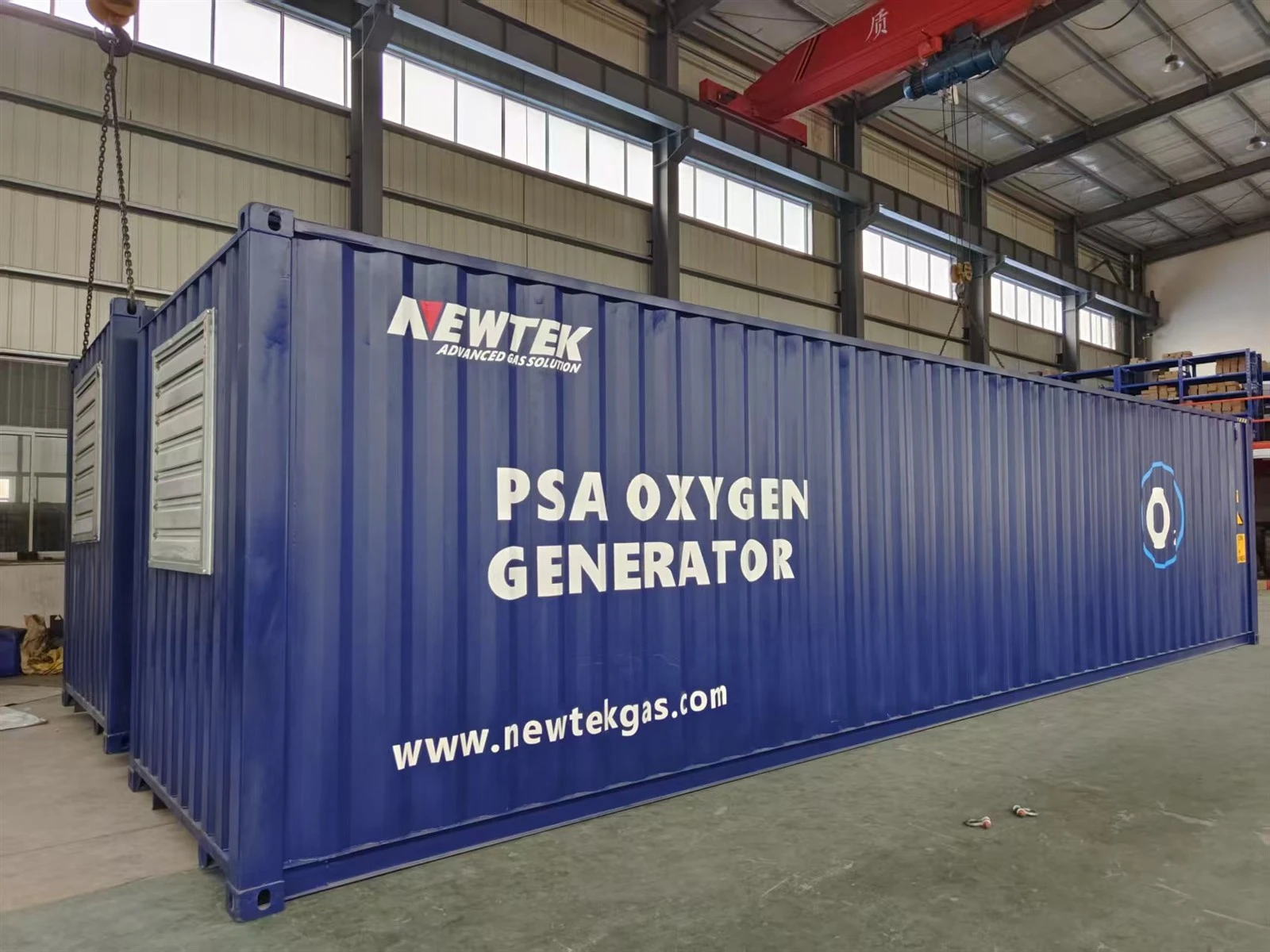
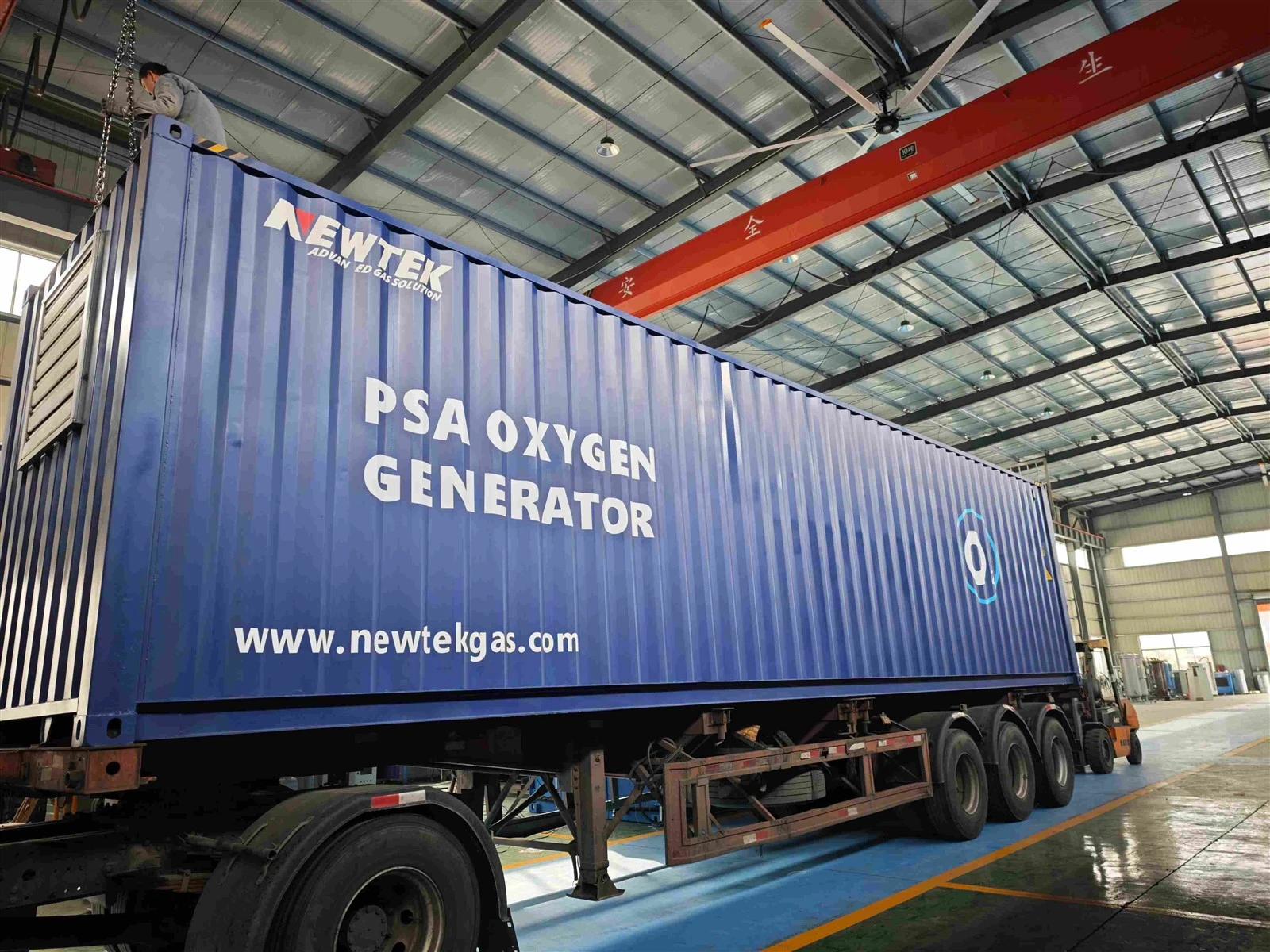
Containerized Pressure Swing Adsorption (PSA) gas systems provide an integrated way to generate industrial gases close to the point of consumption. By housing gas-generation equipment and its supporting components inside a purpose-designed container, these systems can reduce the need for separate equipment buildings and simplify deployment at industrial sites where conventional plant construction is difficult, time-consuming, or impractical.
However, a containerized configuration is not automatically suitable for every working environment. Ambient temperature, humidity, dust, corrosive substances, altitude, electrical infrastructure, ventilation, gas demand, and maintenance access all affect system performance. A container that operates effectively at a coastal industrial facility may require different protective measures at a desert mine, a remote construction site, or a tropical aquaculture farm.
For project owners, engineering contractors, and industrial gas users, the key question is not simply whether a containerized PSA gas system can be installed at a particular location. The more important question is whether the system can deliver the required gas flow, purity, and pressure under the site's actual operating conditions while remaining safe, maintainable, and economically practical.
This article explains the working conditions suited to containerized PSA gas systems, the environmental limits that must be evaluated, and the engineering considerations that influence equipment selection and long-term operation.
Sites Where Permanent Plant Buildings Are Difficult to Construct
One of the most suitable applications for containerized PSA gas systems is a site where building a conventional equipment room would create additional construction costs, delays, or logistical difficulties.
Industrial projects frequently need an on-site gas supply without having an existing building available for compressors, air-treatment equipment, gas-generation equipment, controls, and associated components. A containerized arrangement integrates these components into a coordinated package, provided the equipment layout and environmental protection are designed for the intended installation.
Remote industrial facilities
Mining operations, mineral-processing plants, remote workshops, and isolated production facilities may be located far from established industrial infrastructure. Constructing a dedicated plant building at these locations can require additional civil engineering, transportation, and labor.
A containerized system can reduce the amount of separate building work required. The equipment package can be transported to the prepared installation area, connected to the required utilities, and commissioned according to the project plan.
Nevertheless, remote deployment still requires suitable foundations, access for lifting and transportation, electrical power, ventilation, and maintenance arrangements. The container reduces some construction requirements; it does not eliminate the need for site preparation.
Temporary or project-based operations
Some industrial applications operate for a defined project period. Examples include industrial demolition, ship dismantling, temporary metal-cutting facilities, and certain construction projects.
In these environments, a containerized gas supply may be attractive because the equipment can potentially be relocated after the project ends. Actual relocatability depends on the container structure, installed equipment, lifting points, transportation dimensions, utility connections, and the procedures required to prepare the system for movement.
A system intended for repeated relocation should be designed accordingly from the beginning. Equipment that is suitable for a stationary installation may require additional structural protection, connection arrangements, and transport-related inspection before it can be moved regularly.
Outdoor Installations With Appropriate Environmental Protection
Containerized PSA gas systems are often selected for outdoor installation because their enclosures can protect internal equipment from direct exposure to weather. However, an ordinary shipping container is not automatically an appropriate industrial equipment enclosure.
The container structure, insulation, doors, seals, ventilation, cooling, electrical protection, and corrosion resistance must be selected according to the expected environmental conditions.
Rainfall and water exposure
Sites with frequent rain, seasonal storms, or high humidity require effective protection against water ingress. Water entering the equipment enclosure can damage electrical components, corrode metal surfaces, compromise insulation, and affect control-system reliability.
The installation should include appropriate roof and door sealing, drainage, cable-entry protection, and foundation arrangements that prevent standing water from accumulating around the container. The enclosure should be inspected after severe weather events, particularly where wind-driven rain or flooding is possible.
Where flood risk exists, the site design should consider the expected flood level, drainage route, equipment elevation, and the consequences of water reaching electrical or gas-system components.
Wind and severe weather
Wind loads should be considered when selecting the container structure, foundations, anchoring system, and external equipment supports. Sites exposed to strong seasonal winds, cyclones, or other severe weather may require additional structural engineering.
External pipework, cable trays, ventilation openings, and cooling equipment must also be protected against mechanical damage and weather exposure.
The equipment supplier and site engineer should verify that the enclosure and its installation arrangements are suitable for the applicable local wind and structural requirements.
Solar radiation
Direct sunlight can significantly increase the temperature of a metal enclosure, especially in hot climates. Even when the ambient air temperature appears acceptable, the internal temperature may exceed the operating limits of electrical components, compressors, valves, and other equipment.
Depending on the design, suitable measures may include thermal insulation, reflective exterior coatings, shading, forced ventilation, or mechanical cooling. The required solution should be determined from the equipment heat load, local climate, and allowable internal operating temperature.
The objective is not merely to keep the container comfortable for personnel. It is to maintain every critical component within its specified operating range.
Ambient Temperatures Within the Designed Operating Range
Temperature is one of the most important factors affecting the suitability of a containerized PSA gas system.
A system designed for a moderate industrial climate may not maintain its specified output under extreme heat or cold without additional engineering measures. The actual permissible temperature range must be confirmed with the equipment manufacturer because it depends on the gas being produced, the PSA process design, compressor selection, cooling arrangements, control components, and other configuration details.
Hot climates and high-temperature environments
Desert mining sites, tropical industrial facilities, and outdoor installations in regions with prolonged high temperatures may experience substantial thermal loads.
High ambient temperatures can affect compressor performance, cooling efficiency, electrical equipment, and the operating conditions of the PSA process. Depending on the design, the equipment may require greater cooling capacity or additional environmental protection.
The project specification should define the expected maximum ambient temperature and whether the system must operate continuously at that temperature. It should also account for solar heating of the container and the heat released by equipment operating inside it.
A supplier should confirm the expected gas production, purity, and delivery pressure at the stated design conditions. A nominal capacity measured under reference conditions should not automatically be assumed to remain available under extreme site temperatures.
Cold climates
Cold-weather installations present different challenges. Low temperatures can affect compressor startup, condensate drainage, lubricants, seals, instrument response, and exposed pipelines.
If the gas system operates in a region where freezing conditions are possible, the design may require enclosure heating, thermal insulation, suitable materials, freeze protection, or special arrangements for condensate management.
Outdoor piping and drain lines deserve particular attention because freezing water can obstruct drainage or damage components. Where compressed air is used as the feed gas, effective moisture removal remains essential, and the treatment system must operate within its specified temperature conditions.
For installations in regions with large seasonal temperature changes, equipment selection should consider both the lowest expected temperature and the highest temperature during normal operation.
Humidity and Moisture Conditions That Can Be Properly Controlled
High relative humidity is common in tropical regions, coastal facilities, wastewater treatment plants, and aquaculture operations. These environments can be suitable for containerized PSA gas systems when moisture ingress, condensation, and air pretreatment are properly managed.
The main concern is not simply whether the outdoor air feels humid. It is whether moisture affects the feed-air treatment system, the enclosure, electrical equipment, and other components.
Moisture in the compressed-air supply
PSA gas-generation systems commonly require compressed air that meets specified quality requirements. Excessive moisture or contamination in the feed gas can affect the performance of adsorption materials and may increase maintenance requirements.
The compressed-air preparation system should therefore be selected according to the required feed-air quality and the actual operating environment. Depending on the design, it may include aftercooling, moisture separation, filtration, drying, and condensate drainage.
The required pressure dew point and other air-quality parameters should be defined by the equipment manufacturer rather than assumed from general industrial practice.
Condensation inside the container
Temperature differences between the enclosure and outdoor air can cause condensation on metal surfaces, electrical cabinets, and piping. Persistent condensation may lead to corrosion, insulation problems, or electrical faults.
Appropriate enclosure ventilation, humidity control, insulation, drainage, and anti-condensation measures can reduce these risks. Electrical cabinets may require suitable environmental protection and internal heating where specified by the design.
In humid environments, the supplier should clarify the intended humidity range, enclosure protection, and maintenance measures required to preserve equipment condition.
Dusty Sites With Suitable Filtration and Equipment Protection
Dust is common in mining, quarrying, cement production, material handling, agricultural processing, and construction. A containerized PSA gas system can be suitable for these locations if its air intake, cooling system, electrical enclosure, and external components are designed for the expected dust loading.
Protect the feed-air intake
The quality of the air entering the compressor affects the performance and service life of the downstream equipment. Dust, oil aerosols, and other contaminants may increase filter loading or create additional maintenance demands.
The intake location should be selected to minimize exposure to dust-generating operations, vehicle exhaust, and other contaminants. Where the environment is particularly dusty, the system may require suitable intake filtration, protected air-intake arrangements, and more frequent filter inspection.
Air-treatment components should be selected to meet the gas-generation equipment's specified inlet requirements. Installing an additional filter without assessing its pressure drop and maintenance implications is not always the best solution.
Prevent dust accumulation inside the enclosure
Dust can accumulate on cooling surfaces, motors, electrical cabinets, and moving components. Excessive buildup may reduce heat dissipation and interfere with equipment operation.
The container design should provide appropriate protection against dust ingress while still meeting ventilation and cooling requirements. Air filters, ventilation openings, and cooling equipment must be inspected and cleaned at intervals appropriate to the site conditions.
In environments containing combustible dust, the project must also assess ignition hazards, electrical equipment suitability, and applicable hazardous-area requirements. A standard industrial enclosure should not be assumed to provide protection against every combustible-dust hazard.
Coastal and Corrosive Environments With Appropriate Material Selection
Coastal industrial facilities, shipyards, offshore-support locations, and chemical-processing sites may expose containerized equipment to salt spray, corrosive gases, or aggressive cleaning chemicals.
These conditions do not automatically prevent the use of a containerized PSA system, but they can influence material selection, enclosure protection, electrical design, and maintenance frequency.
Salt spray and corrosion
Salt deposited on metal surfaces can accelerate corrosion, particularly where moisture remains on the equipment. Corrosion may affect the container structure, fasteners, electrical connectors, external piping, and equipment supports.
Depending on the exposure level, the design may require marine-grade protective coatings, suitable corrosion-resistant materials, protected electrical connections, and regular cleaning and inspection.
The appropriate level of protection should be based on the actual environment rather than on a general description such as "coastal." A sheltered coastal workshop and an exposed marine facility may require substantially different specifications.
Chemical exposure
Some industrial sites contain acidic or alkaline vapors, cleaning chemicals, or process gases that can attack enclosure materials and equipment surfaces.
The supplier should be informed of the relevant chemicals, their concentrations where known, expected exposure frequency, and whether direct contact or airborne exposure is possible. Material compatibility should be assessed for the enclosure, seals, piping, cable insulation, and other affected components.
Where corrosive gases may enter the compressor intake, the intake location and air-quality treatment requirements deserve particular attention. Standard filtration should not be assumed to remove every corrosive gas or vapor.
Locations With Reliable Electrical Power and Defined Utility Conditions
Although a containerized system reduces some infrastructure requirements, it still depends on utilities appropriate to its configuration.
A project should evaluate the available electrical supply, grounding, protection devices, cable routing, and power quality before selecting the equipment.
Electrical supply
The electrical design should confirm the required voltage, frequency, phase configuration, connected load, starting current, and protection requirements. Compressor motors and other major loads may impose substantial starting or transient demands.
If the site uses a generator set or an isolated power network, the electrical engineer should verify that it can support the required loads under the expected operating conditions. Voltage fluctuations, frequency variation, and insufficient starting capacity can cause equipment trips or unstable operation.
The supplier should provide the necessary electrical data early enough for the project team to size cables, transformers, generators, and protection devices correctly.
Grounding and electrical protection
The container and installed equipment should be grounded and bonded according to the approved electrical design and local regulations. Cable entries and electrical enclosures should be suitable for the environmental conditions, including moisture, dust, and corrosion where applicable.
Where the site has hazardous-area classifications, the electrical design must comply with the applicable requirements for that specific area. A containerized installation is not automatically suitable for a hazardous zone simply because the equipment is enclosed.
Water, drainage, and auxiliary utilities
Depending on the equipment configuration, the system may require cooling air, cooling water, drainage, or other auxiliary services. These requirements should be confirmed before installation.
Condensate from compressed-air equipment must be handled according to applicable environmental and waste-management requirements, particularly where oil or other contaminants may be present.
The project team should also determine whether the site needs backup power, spare parts, or additional utility capacity to support the required operating continuity.
Sites With Stable and Clearly Defined Gas Demand
Environmental suitability alone does not determine whether a containerized PSA system is appropriate. The gas demand must also match the capabilities of the proposed equipment.
Before selecting a system, the project owner should identify the required gas flow, purity, pressure, operating schedule, and variation in consumption.
Continuous industrial consumption
A containerized system may be appropriate for a facility that requires gas throughout the working day or across continuous production shifts. Examples may include certain metal-processing operations, industrial combustion applications, and other processes with established gas demand.
For these projects, the supplier should assess the continuous operating duty, required output, maintenance schedule, and consequences of an unexpected interruption.
The generator should be selected based on the actual demand profile rather than a single peak-flow figure. An undersized system may fail to meet process demand, while an excessively large system may create unnecessary capital and operating costs.
Variable or intermittent demand
Some applications have irregular consumption patterns. Industrial cutting, demolition, and maintenance operations may require gas in cycles rather than at a constant flow.
The system design should consider peak demand, average consumption, operating duration, and the frequency of demand changes. Depending on the application, a properly designed storage or buffer arrangement may help manage short-term variations.
However, storage capacity, pressure regulation, and generator output must be engineered as a coordinated system. A storage vessel should not be added without confirming its pressure rating, safety requirements, and suitability for the gas service.
Required gas purity and pressure
Different industrial processes have different gas-quality requirements. The selected system must be capable of meeting the required purity and delivery pressure under the expected operating conditions.
The project specification should distinguish between the gas quality produced at the generator outlet and the quality required at the point of use. Pressure losses, pipeline materials, contamination, and downstream equipment can influence the final supply conditions.
Where gas purity is critical to product quality or process safety, appropriate analyzers, alarms, sampling arrangements, and documented verification procedures should be included in the system design.
Applications Where Local Gas Generation Offers Operational Advantages
Containerized PSA gas systems are particularly relevant when users want to generate gas near the point of consumption instead of depending entirely on delivered gas. Their suitability depends on the specific gas, process requirements, site conditions, and economics.
Mining and mineral processing
Mining projects may need industrial gases for defined production or maintenance activities. Remote locations can make regular gas deliveries difficult, while site operations may change as the mine develops.
A containerized system can provide a packaged installation close to the process area, subject to the mine's ventilation, hazardous-area, access, and emergency requirements.
For mining applications, the project should evaluate dust exposure, vibration, transport access, available power, and the site's maintenance capabilities. If the intended installation is underground, additional engineering and regulatory review is essential.
Industrial demolition and metal cutting
Industrial demolition, ship dismantling, and large metal-cutting operations may benefit from a gas supply located near the work area. A containerized arrangement can simplify the deployment of supporting equipment at a project site.
However, gas production must be integrated with the cutting equipment, pressure regulation, distribution piping, and fire-prevention measures. The design should account for changes in demand, the movement of personnel and machinery, and the need to isolate equipment during maintenance.
For temporary projects, the ability to relocate the equipment may be an advantage, provided the system was designed for transport and the required inspection and recommissioning procedures are followed.
Aquaculture and wastewater treatment
Some aquaculture operations use oxygen to support dissolved-oxygen management, while wastewater treatment processes may use oxygen to support biological treatment or other defined operations.
These applications can benefit from on-site gas production where demand is sufficiently predictable and the equipment can be installed near the point of use.
The design must consider required oxygen flow, transfer efficiency, water quality, seasonal changes in demand, and the consequences of supply interruption. Aquaculture facilities in particular should assess backup arrangements because a loss of oxygen supply may affect stock survival.
For wastewater facilities, the supplier should account for corrosive atmospheres, moisture, chemical exposure, and the installation's drainage and electrical requirements.
Industrial gas supply for remote facilities
Remote workshops, isolated production plants, and certain industrial service sites may use containerized systems when regular cylinder deliveries are expensive or difficult to schedule.
The economic assessment should compare equipment investment, electricity consumption, maintenance, gas demand, transportation costs, and the availability of backup supply. On-site generation is not necessarily the lowest-cost option for every facility, particularly where demand is low or highly irregular.
Working Conditions That Require Additional Engineering Measures
Certain environments may still be suitable for containerized PSA gas systems, but only after additional controls are designed and verified.
| Working condition | Main concern | Possible engineering response |
|---|---|---|
| High ambient temperature | Reduced cooling performance and changes in operating conditions | Enhanced cooling, insulation, shading, and verified temperature ratings |
| Freezing weather | Frozen condensate, affected seals, and difficult startup | Enclosure heating, insulation, freeze protection, and suitable materials |
| High humidity | Condensation, corrosion, and electrical problems | Moisture control, drainage, enclosure protection, and inspection |
| Heavy dust | Filter loading, reduced cooling, and equipment contamination | Protected intake, suitable filtration, sealed enclosures, and more frequent cleaning |
| Coastal salt spray | Corrosion of structural and electrical components | Appropriate coatings, corrosion-resistant materials, and planned inspections |
| Corrosive chemicals or vapors | Material degradation and contaminated intake air | Chemical compatibility review, suitable materials, and intake relocation where feasible |
| High altitude | Reduced air density and possible capacity changes | Manufacturer performance assessment and appropriate equipment sizing |
| Unstable power supply | Motor starting problems, trips, and control-system faults | Electrical assessment, correctly sized power equipment, and suitable protection |
| Hazardous atmosphere | Ignition risk and unsuitable electrical equipment | Formal hazardous-area assessment and compliant equipment selection |
| Frequent relocation | Mechanical damage and connection problems | Transport-oriented design, secure mounting, and recommissioning procedures |
The proposed measures are examples rather than universal requirements. The final design should be based on measured or documented site conditions, equipment specifications, and the applicable engineering standards.
High-Altitude Installations Need Special Performance Verification
At higher elevations, lower atmospheric pressure reduces the density of the air entering the compressor. This can affect compressor capacity, cooling performance, and the output of equipment that depends on compressed air.
The effect on a PSA gas system depends on its design, compressor sizing, operating pressure, and control strategy. It should therefore be evaluated using manufacturer performance data rather than a generic correction factor.
For a high-altitude mine or industrial plant, the supplier should confirm the expected gas flow, purity, pressure, and power consumption at the actual installation elevation.
Cooling systems and electrical components may also have altitude-related operating limitations. If the site experiences both high altitude and high ambient temperatures, these conditions should be assessed together because their combined effects can be more demanding than either condition alone.
Safe Installation and Maintenance Access Are Essential
A containerized system is suitable only when it can be installed, inspected, and maintained safely throughout its service life.
Foundation and access
The installation area should provide a stable foundation capable of supporting the container and its equipment. The design should consider equipment weight, load distribution, wind forces, vibration, drainage, and access for lifting operations.
Space must be reserved for opening doors, removing filters, servicing compressors, replacing components, and performing electrical inspections. The fact that all equipment fits inside the container does not mean it can be maintained efficiently if working clearances are inadequate.
Ventilation and heat removal
Compressors, motors, and other equipment can release significant heat during operation. The enclosure must be designed to remove that heat without compromising the environmental protection of the equipment.
Ventilation arrangements should consider air intake location, exhaust discharge, recirculation, dust loading, and any risk associated with the gas being produced. Where cooling equipment is used, its capacity should be verified for the actual ambient design conditions.
Emergency isolation and access control
The installation should provide clearly identified isolation points, emergency shutdown arrangements where required, and unobstructed access for authorized personnel.
Gas lines, electrical connections, and other services should be labeled and documented. The operating team should understand how to isolate the system safely during abnormal operation or maintenance.
For oxygen-generating systems, the design must also address oxygen enrichment, fire prevention, oxygen-compatible materials, and appropriate monitoring where the risk assessment indicates it is necessary.
How to Confirm Whether a Site Is Suitable Before Purchasing
A structured site assessment helps prevent problems that might otherwise be discovered only after equipment delivery.
Before requesting a quotation, the project owner should prepare a clear set of operating and environmental requirements.
Site information
Provide the supplier with:
Installation location and elevation.
Expected minimum and maximum ambient temperatures.
Relative humidity and rainfall conditions.
Dust, salt spray, chemical exposure, or other relevant contaminants.
Indoor or outdoor installation requirements.
Available electrical voltage, frequency, and power capacity.
Foundation dimensions and transportation access.
Applicable local regulations and hazardous-area classifications.
The more accurately these conditions are documented, the more reliably the supplier can assess the equipment configuration.
Process requirements
The project specification should also identify:
Type of gas required.
Required gas purity and delivery pressure.
Average and peak consumption.
Daily operating hours and expected annual operating schedule.
Variations in demand and the consequences of supply interruption.
Required storage or buffer capacity, if applicable.
Backup supply expectations.
Maintenance capabilities and service response requirements.
These details help determine whether the proposed system can meet the process requirements under actual operating conditions.
Supplier verification
Before finalizing the equipment, request confirmation of the design ambient range, expected output under site conditions, power requirements, enclosure protection, ventilation and cooling arrangements, and any limitations on installation location.
The supplier should also clarify which components are included, which utilities must be provided by the customer, and what commissioning tests are required.
For remote or harsh environments, it is particularly important to confirm maintenance access, spare-parts requirements, inspection intervals, and the procedure for restarting the system after a shutdown.
FAQ
What is the ideal ambient temperature for a containerized PSA gas system?
There is no single ideal temperature range for every system. The permitted ambient range depends on the equipment design, gas type, compressor configuration, cooling arrangement, and other components. The project should specify the site's minimum and maximum temperatures and obtain written confirmation that the system can deliver the required performance under those conditions.
Can a containerized PSA gas system operate outdoors year-round?
It can operate outdoors year-round if the container and its equipment are designed for the site's seasonal conditions. Rain protection, temperature control, ventilation, drainage, corrosion protection, and severe-weather resistance may all be required. The system's suitability should be verified against the actual local climate and applicable regulations.
Is a containerized system suitable for desert mining sites?
It may be suitable, but high temperatures, dust, solar radiation, limited water availability, and difficult maintenance access must be considered. The design may require enhanced cooling, suitable intake filtration, protected electrical equipment, and a maintenance plan adapted to the site's conditions.
Can these systems be installed in coastal industrial facilities?
Yes, where the equipment is designed for the expected salt spray, humidity, and corrosion exposure. Suitable coatings, corrosion-resistant components, protected electrical connections, and regular inspections may be necessary. The required protection level depends on the site's actual exposure.
Does a containerized configuration eliminate the need for a separate equipment building?
A containerized arrangement can reduce or eliminate the need for a conventional building dedicated to the packaged equipment. However, the site still needs appropriate foundations, utility connections, access, ventilation, cooling, drainage, and compliance with local requirements. Additional structures may still be necessary for some installations.
Is a containerized PSA gas system suitable for continuous operation?
It can be designed for continuous operation if its rated capacity, operating conditions, maintenance schedule, and supporting utilities match the process requirements. The supplier should confirm the expected performance under the actual ambient conditions and clarify any operating limitations or maintenance-related interruptions.
What information is most important when requesting a quotation?
The most important information includes the required gas type, purity, flow, pressure, operating schedule, site location, temperature range, humidity, dust or corrosive exposure, available power supply, and installation constraints. Providing this information early helps the supplier recommend a suitable configuration and identify any additional environmental protection required.
Conclusion
Containerized PSA gas systems are well suited to industrial projects that need an integrated gas-generation package near the point of use, particularly where permanent buildings are difficult to construct, installation time is important, or equipment may need to be relocated.
Their suitability depends on more than the container itself. Ambient temperature, humidity, dust, corrosion, altitude, power supply, ventilation, gas demand, and maintenance access all influence equipment selection and operating performance.
The most effective approach is to define the actual working conditions before selecting the system, verify the required output under those conditions, and specify the necessary environmental protection, utilities, safety controls, and maintenance arrangements. For demanding applications such as mining, demolition, aquaculture, wastewater treatment, and remote industrial production, this engineering assessment is essential to avoiding undersized equipment, unnecessary operating costs, and preventable downtime.
A containerized installation should therefore be treated as a complete engineered gas-supply system rather than simply a set of machines placed inside a metal enclosure. When its configuration is matched to the site environment and process requirements, it can provide a practical and maintainable option for on-site industrial gas production.


